Downsizing and Storage Transition Planning Guide for 2026 |
| DOWNSIZING AND STORAGE TRANSITION PLANNING GUIDE
⏱ 11 min read ·
📄 #2,151 words
Complete downsizing guide with room-by-room checklists, storage timelines, and expert tips. Start 3-6 months early for a stress-free transition.
|
A successful downsizing transition requires 3 to 6 months of preparation, a room-by-room sorting system, and temporary storage for items you cannot immediately place. Start by measuring your new space, categorizing belongings into keep, donate, sell, or store piles, and securing a storage unit sized to hold 25 to 40 percent of your current possessions during the overlap period.

| Key Points: | |
|---|---|
| • | Begin downsizing 3 to 6 months before your move date to reduce stress by up to 40 percent |
| • | 70 percent of downsizers use self-storage for 1 to 6 months during their transition |
| • | A 10x10 storage unit holds contents of a 2-bedroom home; costs $50 to $150 monthly |
| • | Start with low-emotion areas like closets and pantries before tackling sentimental items |
| • | Climate-controlled storage protects furniture, electronics, and documents from temperature damage |
Why Downsizing Requires a Structured Plan
Downsizing is a common step for seniors planning retirement transitions, along with empty nesters, divorcing couples, and families relocating for work. Without a clear system, most people underestimate the time required by 50 percent or more. The emotional weight of sorting decades of belongings compounds the logistical challenges of coordinating sales, moves, and new space limitations.
A structured plan prevents three common failures: rushed decisions that lead to regret, storage units filled with items you never retrieve, and moving costs that double due to poor coordination. The following guide breaks the process into manageable phases with specific timelines and checklists.
Phase 1: Assessment and Goal Setting (3 to 6 Months Before Move)
Measure every room in your new space before touching a single box. Record dimensions for each room, noting closet depths, ceiling heights, and doorway widths. Compare these measurements against your current furniture to identify what physically cannot fit. A standard sofa requires 84 to 96 inches of wall space; a king bed needs a minimum 10x12 foot room.
Create Your Space Inventory
Walk through your current home with a notebook or phone, documenting every piece of furniture and major item. Note dimensions for anything you want to keep. This inventory becomes your decision-making tool throughout the process.
Calculate your reduction percentage using this formula: subtract new square footage from current square footage, then divide by current square footage. A move from 2,400 to 1,200 square feet requires eliminating 50 percent of your possessions. Most people need to reduce by 30 to 60 percent when downsizing.
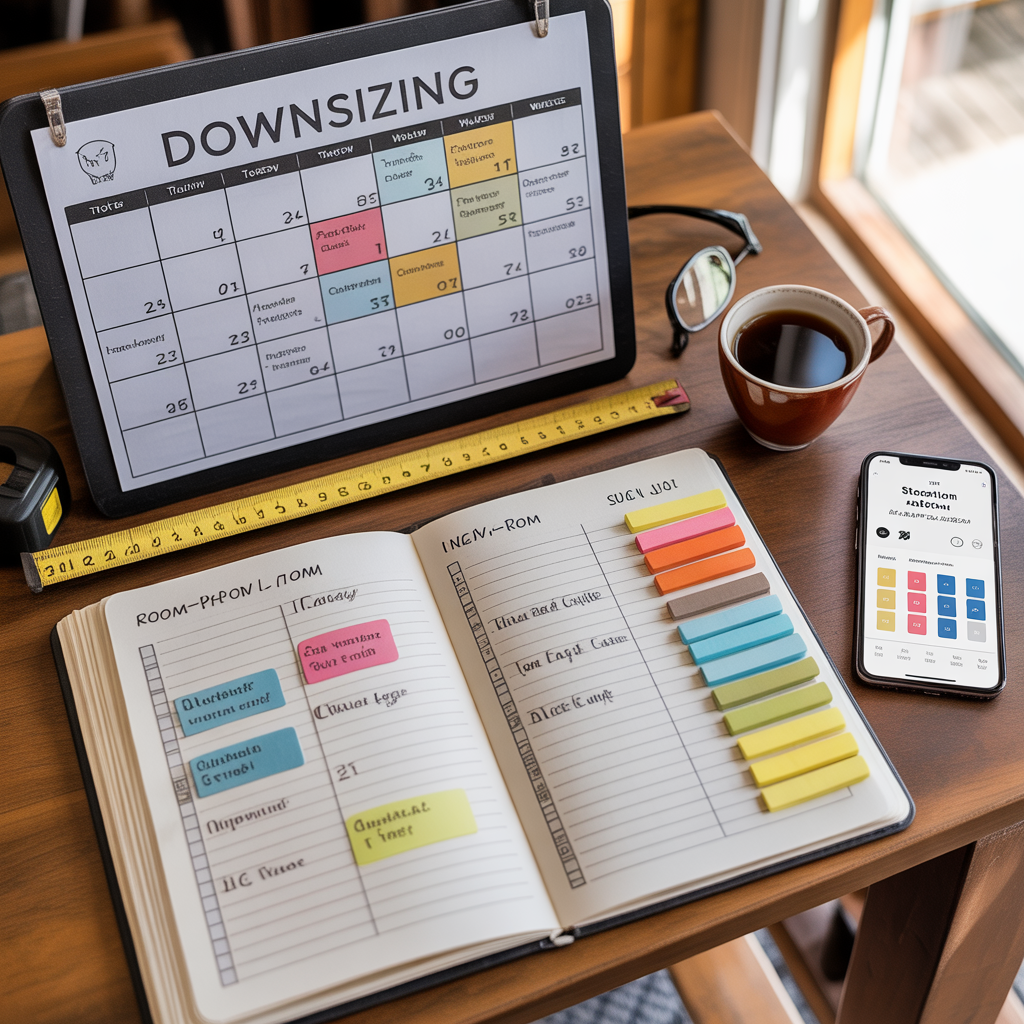
Set Your Timeline Milestones
| Weeks Before Move | Task | Time Required |
|---|---|---|
| 12 to 16 | Measure new space, create inventory | 4 to 6 hours |
| 8 to 12 | Sort low-emotion areas | 2 to 3 hours weekly |
| 4 to 8 | Sort sentimental items, secure storage | 3 to 4 hours weekly |
| 1 to 4 | Final packing, move coordination | 8 to 12 hours weekly |
Phase 2: Room-by-Room Decluttering System
The four-box method remains the most effective sorting system: keep, donate or sell, store, and discard. Process one room completely before moving to the next. This approach builds momentum and provides visible progress that sustains motivation through the harder decisions ahead.
Start With Low-Emotion Spaces
Begin with utility areas where emotional attachment runs lowest. Tackle the garage, basement, linen closets, and pantry first. These spaces often contain duplicates, expired items, and forgotten purchases that create easy wins. Most households eliminate 20 to 30 percent of their total possessions from these areas alone.
Apply the one-year rule strictly: if you have not used an item in 12 months, it goes into the donate, sell, or discard pile. Exceptions include seasonal items, emergency supplies, and documented heirlooms with specific plans for future use.
Kitchen Downsizing Strategy
Kitchens typically require the largest reduction percentage. Most households own 3 to 5 times more kitchen items than they use regularly. Keep only items used weekly or for specific annual traditions. A downsized kitchen needs one set of dishes for 8, one quality pot and pan set of 5 to 7 pieces, and one drawer of essential utensils.
Duplicate small appliances represent the easiest cuts. You need one blender, one mixer, one coffee maker. Specialty appliances used fewer than 4 times yearly should be sold or donated unless they hold significant sentimental value.
Bedroom and Closet Reduction
Clothing typically needs a 50 to 70 percent reduction when downsizing. Use the reverse hanger method: turn all hangers backward, then flip them forward when you wear each item. After 3 months, anything still backward gets donated. For immediate decisions, keep only items that fit, flatter, and have been worn in the past year.
Bedroom furniture presents the biggest spatial challenge. King beds rarely fit downsized master bedrooms comfortably. Consider whether a queen bed with better surrounding space serves you better than a cramped king arrangement.
Managing Sentimental Items
Sentimental items require a different approach than utility sorting. Schedule these sessions when you feel emotionally strong, limit sessions to 2 hours maximum, and have a trusted friend or family member present. Fatigue leads to either keeping everything or discarding items you later regret.
Digitize photographs, documents, and paper memorabilia before discarding originals. A single external hard drive holds 50,000 to 100,000 photos. Scan children's artwork, greeting cards, and letters at 300 DPI for archival quality. This preserves memories while eliminating 90 percent of physical storage needs.
Phase 3: Storage Transition Planning
Temporary storage bridges the gap between your current home and settled life in your new space. Most downsizers need storage for 1 to 6 months while they finalize sales, complete moves, and determine what truly fits their new lifestyle. Planning your storage needs prevents both paying for unused space and cramming items unsafely.
Calculating Your Storage Unit Size
Storage unit sizing follows predictable patterns based on home size and reduction percentage. Use these guidelines for initial estimates:
- 5x5 unit (25 square feet): Contents of 1 large closet or seasonal items from a 1-bedroom apartment
- 5x10 unit (50 square feet): Contents of 1 bedroom or a studio apartment
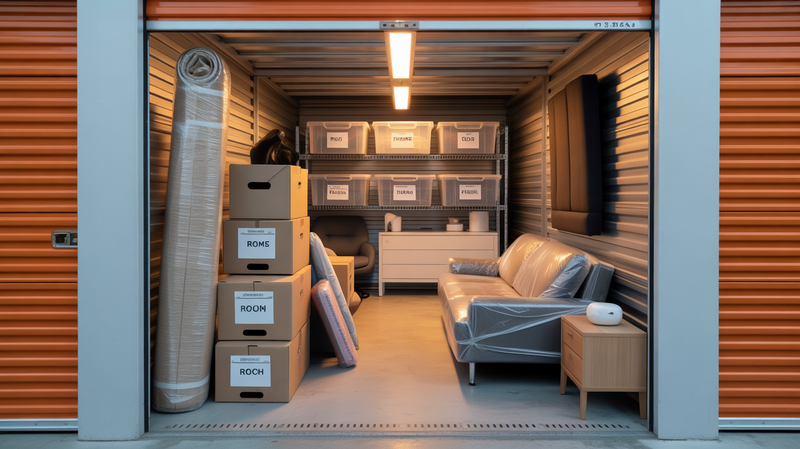
- 10x10 unit (100 square feet): Contents of a 2-bedroom home or half of a 3-bedroom home
- 10x15 unit (150 square feet): Contents of a 3-bedroom home
- 10x20 unit (200 square feet): Contents of a 4-bedroom home or includes vehicles
For Vail Valley residents managing mountain home transitions, our storage size guide provides detailed comparisons with visual references for each unit dimension.
Climate Control Considerations
Climate-controlled storage maintains temperatures between 55 and 80 degrees Fahrenheit year-round. This protection becomes essential for electronics, wooden furniture, leather goods, photographs, documents, and musical instruments. Standard units experience temperature swings of 20 to 40 degrees daily, which causes warping, cracking, and moisture damage over time.
In mountain climates like the Vail Valley, winter temperatures drop below zero while summer highs exceed 85 degrees. These extremes accelerate damage to sensitive items. Our climate-controlled storage units maintain consistent conditions that protect your belongings during extended transition periods.
Packing for Storage Access
Pack with retrieval in mind, not just protection. Place items you might need during the transition near the front. Create a center aisle through your unit for access to back items. Stack heavy boxes on the bottom, lighter boxes on top, and never stack higher than your comfortable reaching height.
Label boxes on multiple sides with contents and room destination. Use clear plastic bins for items you may need to locate quickly. Disassemble furniture when possible; a bed frame in pieces takes 40 percent less space than assembled.
Phase 4: Selling, Donating, and Disposing
Items leaving your possession need destinations before moving day. Procrastinating on sales and donations creates last-minute chaos and often results in items going to landfills that could have found new homes.
Selling Strategies by Item Value
High-value items over $500 deserve individual attention through consignment shops, specialty dealers, or curated online marketplaces like Chairish or 1stDibs. These venues take 20 to 50 percent commissions but reach buyers willing to pay market prices.
Mid-value items from $50 to $500 sell efficiently through Facebook Marketplace, Craigslist, or estate sales. Price items at 20 to 30 percent of retail for quick sales. Bundling related items, such as an entire kitchen set or bedroom furniture suite, attracts buyers and clears inventory faster.
Low-value items under $50 rarely justify individual selling effort. Donate these items or include them in estate sale lots priced for volume clearance.
Donation Logistics
Schedule donation pickups 2 to 3 weeks in advance; popular charities book quickly. Habitat for Humanity ReStores accept furniture and building materials. Goodwill and Salvation Army take general household goods. Specialized organizations accept books, medical equipment, and professional clothing.
Document donations with photographs and itemized lists for tax deductions. The IRS allows deductions for items in good or better condition at fair market value. A typical downsizing donation generates $1,000 to $5,000 in deductible value.
Phase 5: Moving Day Coordination
Moving day success depends on preparation completed in previous phases. By this point, you should have a clear inventory of what goes where: new home, storage, donation, or disposal.
Labeling System for Split Destinations
Use colored tape or stickers to mark items by destination. Red for new home immediate unpack, blue for new home but unpack later, green for storage, yellow for donation pickup. This system allows movers to sort efficiently without reading every label.
Create a "First Night" box containing essentials: medications, phone chargers, toiletries, change of clothes, basic tools, and important documents. Keep this box with you, not on the moving truck.
Winter Moving Considerations
Mountain community moves between November and March require additional planning. Snow delays add 1 to 3 days to typical moving schedules. Book movers 6 to 8 weeks in advance during winter months when availability decreases. Protect furniture with moving blankets and plastic wrap against moisture from snow and slush.
For travelers using Eagle County Airport during transitions, our airport-adjacent storage facility offers convenient access with 24/7 availability through smart lock technology, eliminating coordination challenges between flight schedules and storage access.
Post-Move Storage Assessment
Schedule a storage unit review 30 days after settling into your new home. Items that seemed essential during the sorting process often reveal themselves as unnecessary once you establish new routines. Most downsizers release an additional 20 to 30 percent of stored items within the first 3 months.
The 90-Day Rule
If you have not retrieved an item from storage within 90 days and cannot name a specific upcoming use, that item should be sold, donated, or discarded. Storage costs compound; a $100 monthly unit costs $1,200 annually. Items worth less than their storage cost over 12 months do not justify keeping.
Set calendar reminders for 30, 60, and 90 days post-move to reassess storage contents. Each review should result in unit downsizing or elimination as you confirm what your new life actually requires.

Frequently Asked Questions
How do I emotionally prepare for downsizing keepsakes?
Start by photographing every sentimental item before making decisions. This creates a permanent record regardless of what you keep. Limit yourself to one memory box per decade of life or per family member. Ask whether the item sparks specific memories or just general guilt about discarding it. Consider passing heirlooms to family members who will actively use them rather than storing them indefinitely.
What size storage unit do I need for a 3-bedroom home?
A full 3-bedroom home typically requires a 10x15 unit (150 square feet) or larger. However, downsizing transitions rarely involve storing an entire home. Most people store 25 to 40 percent of their possessions, requiring a 10x10 unit for a 3-bedroom home. If storing furniture plus boxes, add 25 percent to your estimate.
How can I sell or donate items quickly during downsizing?
Estate sale companies handle everything for 25 to 35 percent commission and clear homes in 2 to 3 days. For self-managed sales, price items at 20 percent of retail and accept all reasonable offers. Schedule donation pickups for the day after your sale to clear remaining items immediately. Local buy-nothing groups on Facebook move items within 24 to 48 hours.
How do I downsize kitchen items without regret?
Keep only items used in the past month plus essential seasonal tools like roasting pans and holiday serving pieces. Photograph specialty items before donating for recipe reference. Most downsized kitchens function well with 30 to 40 percent of original contents. Replace worn items with quality multi-purpose alternatives rather than keeping specialized single-use tools.
Should I use self-storage or keep items with family?
Self-storage provides controlled access, climate protection, and clear boundaries. Family storage often creates relationship strain, access complications, and unclear timelines. Use family storage only for items they genuinely want and will use. For transitional storage during downsizing, professional facilities offer month-to-month flexibility without imposing on relationships.
|