How to Calculate the True Cost of Self Storage (Hidden Fees) |
| HOW TO CALCULATE THE TRUE COST OF SELF STORAGE INCLUDING HIDDEN FEES
⏱ 14 min read ·
📄 #2,675 words
Learn how to calculate the true cost of self storage, including hidden fees like admin charges, insurance, and rate increases. Complete pricing breakdown inside.
|
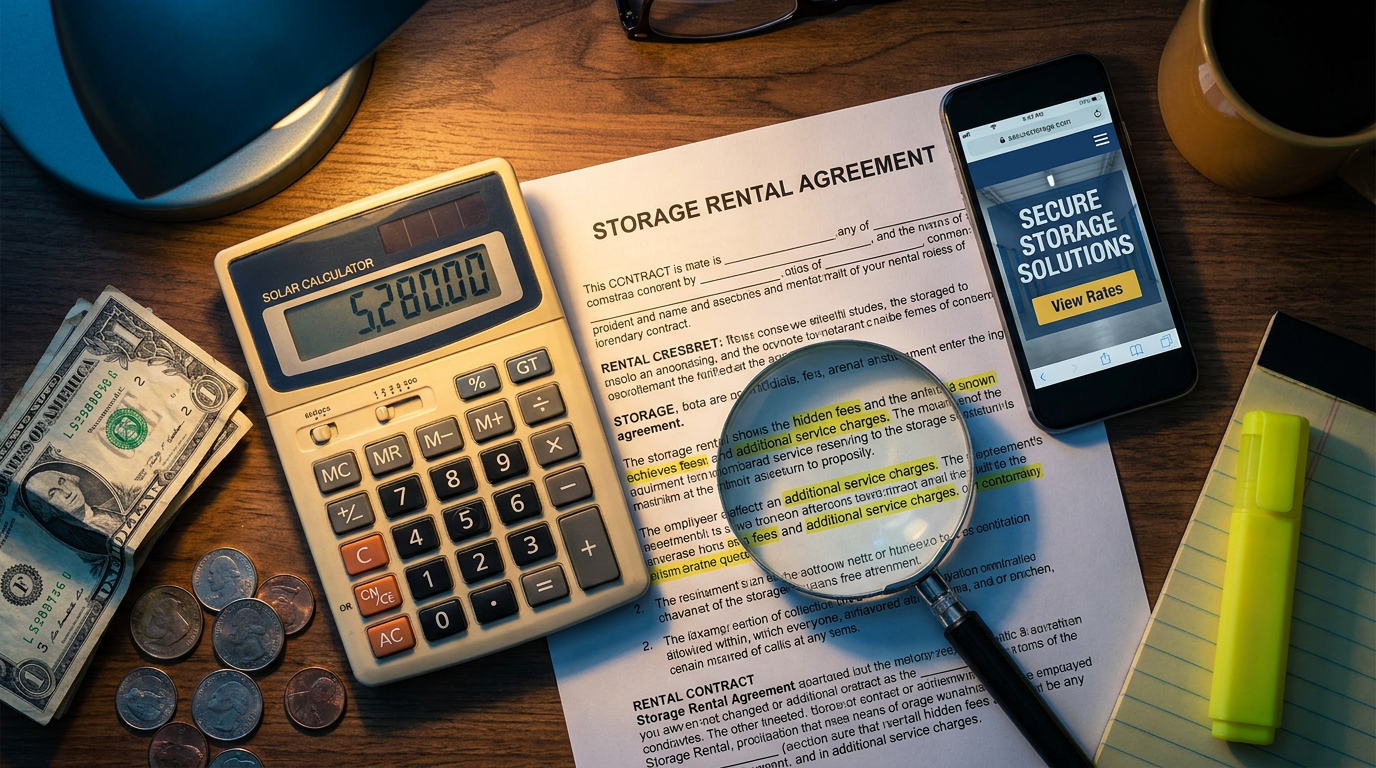
T he true cost of self storage is typically 20-40% higher than the advertised monthly rate. A unit listed at $100/month often costs $120-$140/month after administrative fees, mandatory insurance, deposits, and rate increases are factored in. To calculate your actual cost, add the base rent plus admin fees ($15-$50), insurance ($10-$30/month), and any required deposits, then multiply by your expected rental duration.
| Key Points: | |
|---|---|
| • | Administrative fees range from $15-$50 at most facilities, charged as a one-time move-in cost |
| • | Mandatory insurance or tenant protection adds $10-$30/month to your base rate |
| • | Security deposits of $25-$100 are common, though some facilities waive this requirement |
| • | Rate increases of 8-15% typically occur after 6-12 months of tenancy |
| • | Climate-controlled units cost 25-50% more than standard units but prevent damage in extreme temperatures |
The Storage Cost Formula: What You Actually Pay
According to Honey Store It's 2024 pricing analysis, the average self storage unit in the United States costs between $89 and $225 per month depending on size and location. However, this figure represents only the base rental rate. The actual monthly expense includes several additional charges that facilities may not prominently advertise.
Your true monthly cost follows this formula: Base Rent + Insurance + Fees ÷ Rental Months = Actual Monthly Cost . For a 10x10 unit advertised at $150/month with a $30 admin fee and $15/month insurance over 6 months, your actual cost is $160/month ($150 + $15 + $30÷6).
Understanding this calculation before signing a lease prevents budget surprises. The Self Storage Association reports that 65% of renters underestimate their total storage costs by failing to account for ancillary charges.
Administrative and Move-In Fees Breakdown
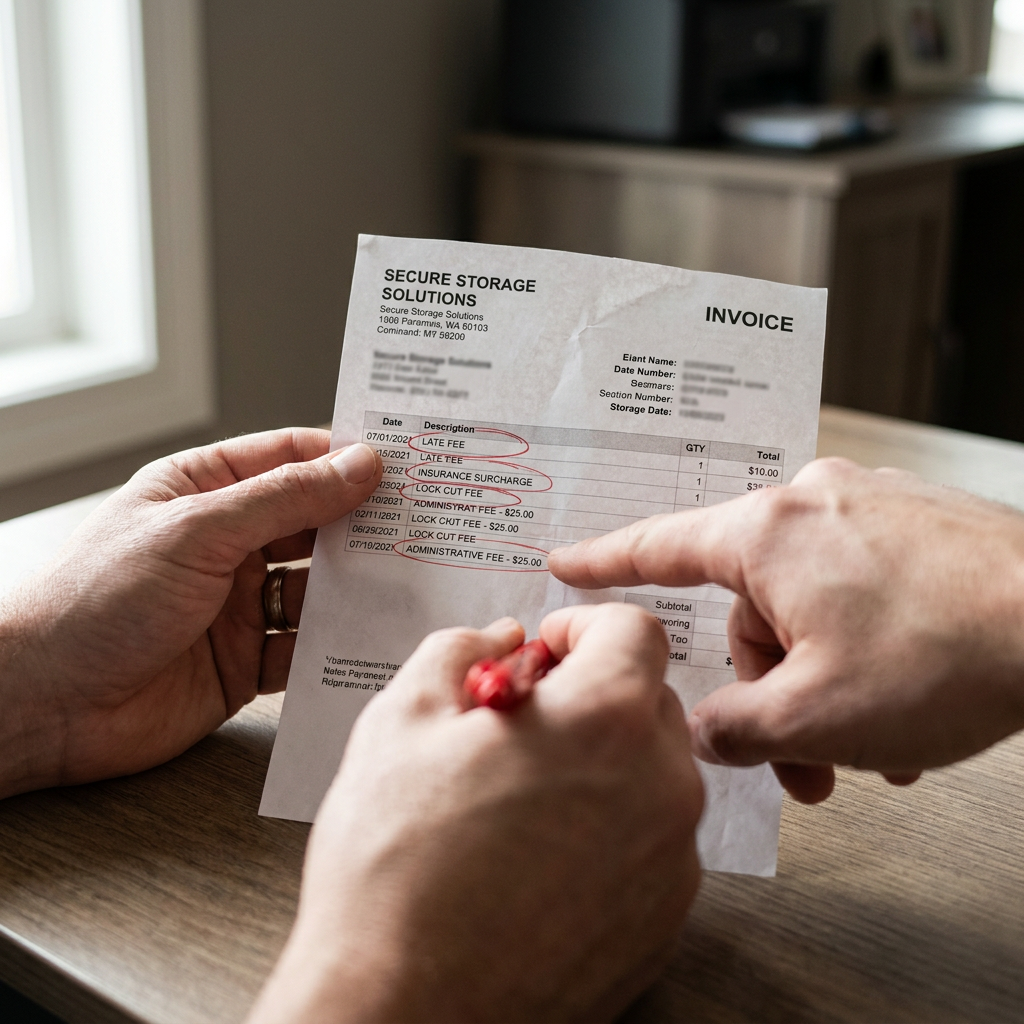
Administrative fees represent one-time charges assessed when you rent a unit. These fees cover paperwork processing, account setup, and facility overhead. Most storage companies charge between $15 and $50, though some premium facilities in high-demand markets like Denver, Aspen, or Vail charge up to $75.
Move-in fees differ from administrative fees at some facilities. A move-in fee covers the cost of preparing your unit, which may include cleaning, lock changes, or access credential setup. This charge typically ranges from $10 to $35. Some facilities bundle these into a single "setup fee" while others itemize each charge separately.
How to Identify Admin Fee Structures
Request a complete fee schedule before signing any rental agreement. Ask specifically: "What is the total amount due at move-in?" This question forces the facility to disclose all upfront costs. Compare the answer against the advertised monthly rate to understand the true first-month expense.
Facilities that advertise "no admin fees" or "no deposit required" often provide better value for short-term rentals. At Vail Airport Storage, for example, renters pay only the first month's rent at move-in with no deposit required, reducing initial costs by $50-$100 compared to competitors.
Insurance and Tenant Protection Costs
Storage insurance protects your belongings against theft, fire, water damage, and other covered events. Most facilities require proof of insurance coverage or enrollment in their tenant protection program. This requirement adds $10-$30 per month to your storage cost.
According to Rec Nation Storage's pricing guide, tenant protection plans typically offer coverage tiers ranging from $2,000 to $10,000. A $2,000 coverage plan costs approximately $10-$12/month, while $10,000 coverage runs $25-$30/month.
Insurance Options Comparison
| Coverage Type | Monthly Cost | Coverage Amount | Best For |
|---|---|---|---|
| Facility Tenant Protection | $10-$30 | $2,000-$10,000 | Basic household items |
| Homeowners/Renters Extension | $0-$5 | Varies by policy | Those with existing coverage |
| Third-Party Storage Insurance | $8-$20 | $5,000-$25,000 | Valuable items, antiques |
| SafeLease Protection | $10-$25 | $2,000-$15,000 | Comprehensive facility coverage |
Check your existing homeowners or renters insurance policy before purchasing facility coverage. State Farm, Allstate, USAA, and other major insurers often extend coverage to off-site storage locations at no additional cost. Contact your insurance provider to verify coverage limits and any exclusions that may apply.
Learn more about tenant protection plans and coverage options to determine the right level of protection for your stored belongings.
Security Deposits and Refund Policies
Security deposits at storage facilities typically range from $25 to $100, with most facilities charging the equivalent of one month's rent. This deposit is refundable upon move-out, provided you leave the unit clean and undamaged with no outstanding balance.
Deposit refund timelines vary significantly between facilities. Some process refunds within 7-10 business days, while others take 30-45 days. Ask about the refund process and timeline before renting. Request written documentation of the deposit amount and refund conditions.
Facilities Without Deposit Requirements
An increasing number of storage facilities have eliminated deposit requirements to attract customers. This trend benefits renters who need short-term storage or prefer to minimize upfront costs. Month-to-month rental agreements without deposits provide maximum flexibility for seasonal residents, military families, and those in transition.
When comparing facilities, calculate the total first-month cost including all deposits and fees. A unit with a lower monthly rate but a $100 deposit may cost more over a 3-month rental than a slightly higher-priced unit with no deposit.
Rate Increases: The Hidden Long-Term Cost
Storage facility rate increases represent the most significant hidden cost for long-term renters. Industry data shows that most facilities raise rates by 8-15% after the initial 6-12 months of tenancy. Some large national operators, including Public Storage, Extra Space Storage, and CubeSmart, have faced criticism for aggressive rate increase practices.
A 2024 Consumer Financial Protection Bureau report noted that storage rate increases often exceed inflation by 3-5 percentage points annually. A unit rented at $100/month can cost $130-$150/month after 2-3 years of successive increases.
Strategies to Minimize Rate Increases
Ask about the facility's rate increase policy before signing a lease. Some facilities guarantee rates for 6-12 months, while others reserve the right to increase rates with 30 days notice at any time. Get rate protection commitments in writing when possible.
Locally owned facilities often provide more stable pricing than national chains. According to industry research from the Self Storage Association, independent operators raise rates 40% less frequently than publicly traded storage REITs. Facilities like Vail Airport Storage, which are locally owned and operated, typically prioritize customer retention over aggressive revenue optimization.
Consider prepaying for multiple months if the facility offers a discount. Some facilities offer 5-10% discounts for quarterly or annual prepayment, which also locks in your rate for the prepaid period.
Climate Control: When the Premium Is Worth It
Climate-controlled storage units cost 25-50% more than standard units. A 10x10 standard unit priced at $100/month typically costs $125-$150/month with climate control. This premium protects temperature-sensitive items from damage caused by extreme heat, cold, or humidity fluctuations.
In mountain climates like Colorado's Vail Valley, where temperatures range from -20°F in winter to 90°F in summer, climate-controlled storage maintains consistent temperatures between 55-80°F year-round. This protection is essential for electronics, wooden furniture, musical instruments, wine collections, and important documents.
Items That Require Climate Control
Electronics and appliances: Temperature fluctuations cause condensation that damages circuit boards and internal components. The Consumer Electronics Association recommends storing electronics in environments between 50-80°F with humidity below 80%.
Wooden furniture and antiques: Wood expands and contracts with temperature changes, causing cracking, warping, and joint separation. Antique Traders Association guidelines specify climate-controlled storage for furniture valued over $500.
Documents, photographs, and artwork: Paper products absorb moisture and become brittle in extreme temperatures. The National Archives recommends storage temperatures between 65-70°F for long-term document preservation.
Read our complete guide on what climate-controlled storage means and when you actually need it to make an informed decision.
Lock and Access Fees
Many storage facilities charge for locks, either as a one-time purchase ($10-$25) or a monthly rental fee ($3-$5/month). Some facilities require specific lock types for insurance purposes, limiting your ability to use locks you already own.
Modern facilities increasingly use smart lock technology that eliminates traditional lock purchases. Noke Bluetooth smart locks allow smartphone-based access without physical keys or combinations. This technology provides complete access logs, digital key sharing with family members or movers, and motion-detection alerts, all without additional lock purchase costs.
Access Hour Restrictions
Facilities with limited access hours may charge premium fees for after-hours access. Some facilities restrict access to 6 AM - 10 PM, while others offer true 24/7 storage access at no additional cost. If you need flexibility to access your belongings during evenings, weekends, or holidays, verify access policies before signing.
Gate access fees are rare but exist at some facilities. These charges ($5-$10/month) cover the cost of access credentials, key fobs, or gate codes. Ask whether gate access is included in your monthly rent or billed separately.
Move-Out Fees and Cleaning Charges
Move-out fees are less common than move-in fees but still exist at some facilities. These charges, typically $25-$50, cover unit inspection and turnover costs. Review your rental agreement for move-out fee provisions before signing.
Cleaning fees apply if you leave the unit in poor condition. Most facilities expect units returned "broom clean" with no debris or damage. Cleaning charges range from $25 for minor cleaning to $100+ for units requiring significant work. Sweep your unit and remove all items, including packing materials, to avoid these charges.
Damage Assessment Disputes
Document your unit's condition at move-in with dated photographs. This documentation protects you from disputes about pre-existing damage at move-out. Take photos of walls, floors, doors, and any existing marks or wear.
Request a move-out inspection before your final day. Walking through the unit with a facility representative allows you to address any concerns before they become charges on your account.
Late Payment Fees and Lien Processes
Late payment fees typically range from $10-$50 or 10-20% of your monthly rent, whichever is greater. Most facilities assess late fees after a 5-10 day grace period following your due date. These fees compound quickly if payments remain outstanding.
Storage facilities have legal authority to place liens on stored property for unpaid rent. State lien laws vary, but most allow facilities to auction contents after 30-90 days of non-payment. Colorado's Self-Service Storage Facility Lien Act permits auctions after 45 days of default following proper notice.
Avoiding Late Fees
Set up automatic payments to avoid missed due dates. Most facilities offer autopay enrollment through credit card, debit card, or bank account draft. Some facilities offer $5-$10 monthly discounts for autopay enrollment.
If you anticipate payment difficulties, contact the facility immediately. Many operators work with tenants facing temporary hardship, offering payment plans or grace period extensions. Communication prevents lien proceedings and protects your belongings.
True Cost Calculation Worksheet
Use this worksheet to calculate your actual storage costs before committing to a rental agreement. Request specific amounts from each facility you're considering to make accurate comparisons.
| Cost Category | Typical Range | Your Facility |
|---|---|---|
| Monthly Base Rent | $50-$300 | $_____ |
| Administrative/Setup Fee (one-time) | $15-$50 | $_____ |
| Security Deposit (refundable) | $0-$100 | $_____ |
| Insurance/Tenant Protection (monthly) | $10-$30 | $_____ |
| Lock Purchase or Rental | $0-$25 | $_____ |
| Climate Control Premium (monthly) | $0-$75 | $_____ |
| Expected Rate Increase (after 6-12 months) | 8-15% | _____% |
| Total First Month Cost | Varies | $_____ |
Calculate your 6-month and 12-month total costs to compare facilities accurately. A facility with higher monthly rent but no fees may cost less over time than a cheaper unit with multiple add-on charges.
Questions to Ask Before Renting
Arm yourself with these specific questions when comparing storage facilities. The answers reveal true costs and help you avoid surprises.
Upfront costs: "What is the total amount due at move-in, including all fees, deposits, and first month's rent?"
Insurance requirements: "Is insurance mandatory? Can I use my own homeowners/renters policy? What coverage levels do you offer and at what cost?"
Rate increases: "What is your rate increase policy? How much notice do you provide? What was the average rate increase for existing tenants last year?"
Access: "What are your access hours? Is 24/7 access included or an additional charge? Are there any gate fees?"
Move-out: "Are there any move-out fees or cleaning charges? How is my deposit refunded and when?"
Visit our frequently asked questions page for answers to common storage rental questions.
Comparing Storage Facility Types
Different facility types carry different fee structures. Understanding these differences helps you choose the right option for your budget and needs.
| Facility Type | Typical Hidden Fees | Rate Increase Frequency | Best For |
|---|---|---|---|
| National Chains (Public Storage, Extra Space) | Admin fees, mandatory insurance, lock sales | Every 6-9 months | Short-term rentals under 6 months |
| Regional Operators | Varies widely by company | Every 9-12 months | Medium-term rentals 6-18 months |
| Locally Owned Facilities | Often minimal or none | Annually or less | Long-term rentals over 12 months |
| Portable Storage (PODS, 1-800-PACK-RAT) | Delivery fees, pickup fees, damage waivers | Typically stable | Moving situations, temporary needs |
Storage Costs by Unit Size
Understanding average costs by unit size helps you budget accurately. These figures represent national averages; prices in high-demand markets like resort communities may be 20-40% higher.
5x5 units (25 sq ft): $30-$75/month. Fits boxes, small furniture, seasonal items. Equivalent to a small closet.
5x10 units (50 sq ft): $50-$125/month. Fits a studio apartment's contents, mattress set, or several large boxes. Equivalent to a walk-in closet.
10x10 units (100 sq ft): $75-$175/month. Fits a one-bedroom apartment's contents, including appliances and furniture. Equivalent to a small bedroom.
10x15 units (150 sq ft): $100-$225/month. Fits a two-bedroom apartment or small house contents. Equivalent to a large bedroom.
10x20 units (200 sq ft): $125-$300/month. Fits a three-bedroom house or vehicle storage. Equivalent to a one-car garage.
10x30 units (300 sq ft): $175-$400/month. Fits a four-bedroom house or multiple vehicles. Equivalent to a 1.5-car garage.
Use our storage unit size guide to determine exactly how much space you need for your belongings.
Saving Money on Self Storage
Apply these strategies to reduce your total storage costs without sacrificing security or convenience.
Choose the right size: Renting a unit larger than necessary wastes money every month. Measure your items and use a size guide to select appropriately. A 10x10 unit costs $50-$100 more per month than a 5x10.
Negotiate move-in specials: Many facilities offer first-month free or 50% off promotions for new customers. Ask about current specials even if not advertised online.
Avoid peak seasons: Storage demand peaks during summer moving season (May-September). Renting during off-peak months (October-April) may yield better rates and promotional offers.
Use existing insurance: If your homeowners or renters policy covers off-site storage, you can decline facility insurance and save $10-$30/month.
Prepay for discounts: Facilities offering 5-10% discounts for quarterly or annual prepayment provide savings while locking in your rate.
Consider location: Facilities in industrial areas or slightly outside city centers typically cost 15-25% less than those in prime retail locations.
Business Storage Tax Deductions
If you use storage for business purposes, your costs may be tax-deductible. The IRS allows businesses to deduct storage expenses as ordinary and necessary business expenses under Section 162.
Contractors storing tools and equipment, retailers holding inventory, and home-based businesses needing overflow space can all potentially deduct storage costs. Keep detailed records of payments and document the business purpose of stored items.
Learn more about self storage tax deductions for business owners to maximize your savings. Consult a tax professional for advice specific to your situation.
Final Thoughts on Storage Pricing
The true cost of self storage extends well beyond the advertised monthly rate. Administrative fees, insurance requirements, deposits, and rate increases can add 20-40% to your expected costs. By calculating total expenses before signing a lease and asking the right questions, you protect your budget from unwelcome surprises.
Facilities that offer transparent, all-inclusive pricing provide the best value for most renters. Look for no deposit requirements, included smart lock technology, flexible month-to-month terms, and clear rate increase policies. These features indicate a customer-focused operation that prioritizes long-term relationships over short-term revenue extraction.
Whether you need storage for a few months during a move or several years while managing a vacation property, understanding the complete cost picture helps you make an informed decision that fits your budget and protects your belongings.
|