Vehicle and Equipment Storage Near Vail: What to Compare |
| VEHICLE AND EQUIPMENT STORAGE NEAR VAIL: WHAT TO COMPARE
⏱ 12 min read ·
📄 #2,314 words
Compare vehicle and equipment storage near Vail by type, security, access, and cost. Indoor units start at $150/month; outdoor parking from $50/month.
|
V ehicle and equipment storage near Vail requires comparing five factors: storage type (indoor enclosed, drive-up, or outdoor parking), climate protection, security features, 24/7 access availability, and unit dimensions that fit your specific vehicle. Indoor car storage in the Vail corridor averages $150 to $300 per month, while outdoor parking starts around $50 monthly, according to current market rates in Eagle County.
| Key Points: | |
|---|---|
| • | Indoor enclosed storage costs $150 to $345/month for vehicles; outdoor parking runs $50 to $209/month |
| • | A 10x20 unit (200 sq ft) fits most cars, trucks, and SUVs; trailers need 10x25 or 10x30 units |
| • | Climate-controlled units maintain 55 to 80 degrees F, preventing battery drain and interior damage in Colorado winters |
| • | Gypsum facilities offer 15 to 25 minute access to Vail Village with easier trailer maneuvering than mountain locations |
| • | Smart lock technology provides 24/7 access without physical keys, critical for seasonal vehicle retrieval |
Why Gypsum Is the Practical Storage Base for Vail Area Owners
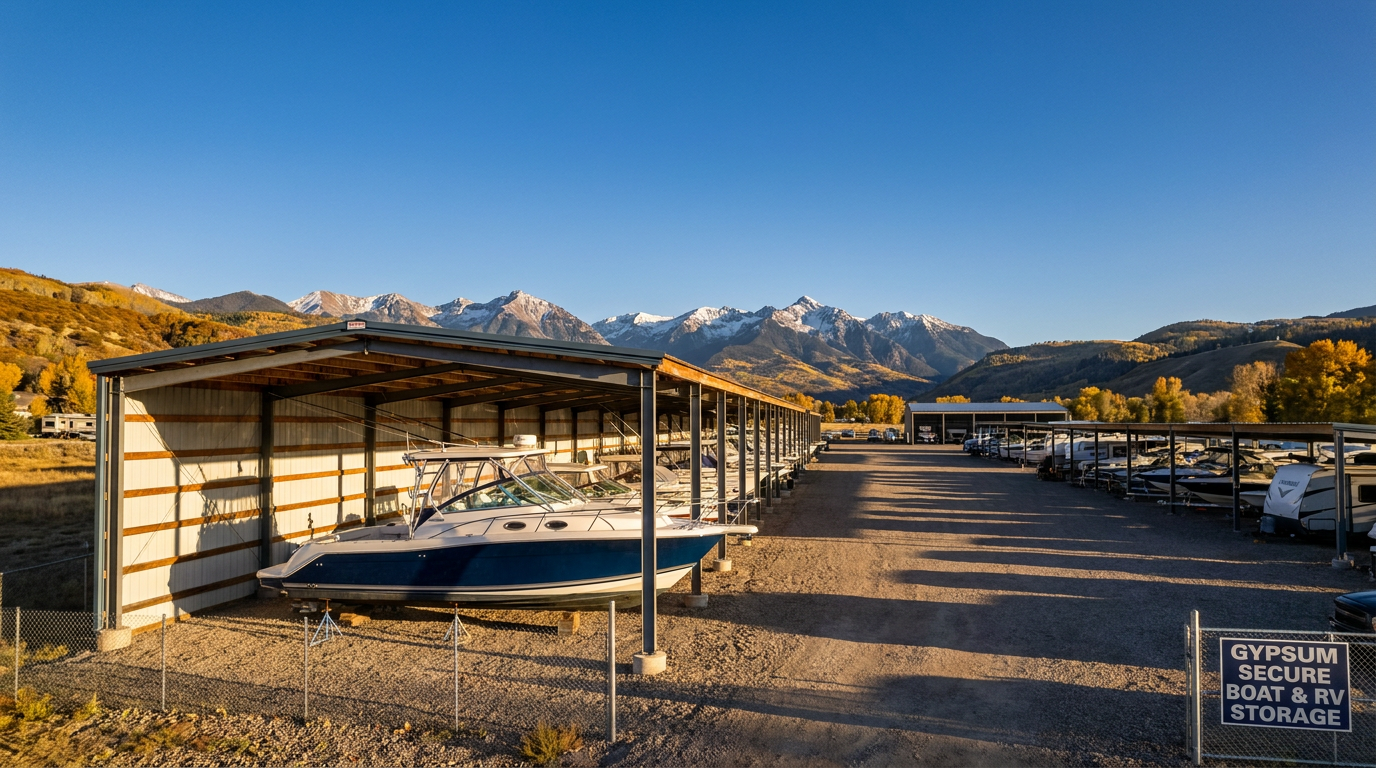
Most vehicle storage facilities serving Vail are located in Gypsum, not Vail Village itself. This location offers distinct advantages for vehicle and equipment owners. Gypsum sits at 6,300 feet elevation compared to Vail's 8,150 feet, resulting in milder temperature swings and easier winter access along Interstate 70.
The drive from Gypsum to Vail Village takes approximately 25 to 30 minutes via I-70 East. Facilities near Eagle County Regional Airport (EGE) provide convenient access for seasonal residents who fly in and out. The lower valley location also means wider roads and larger parking areas designed for trailer maneuvering.
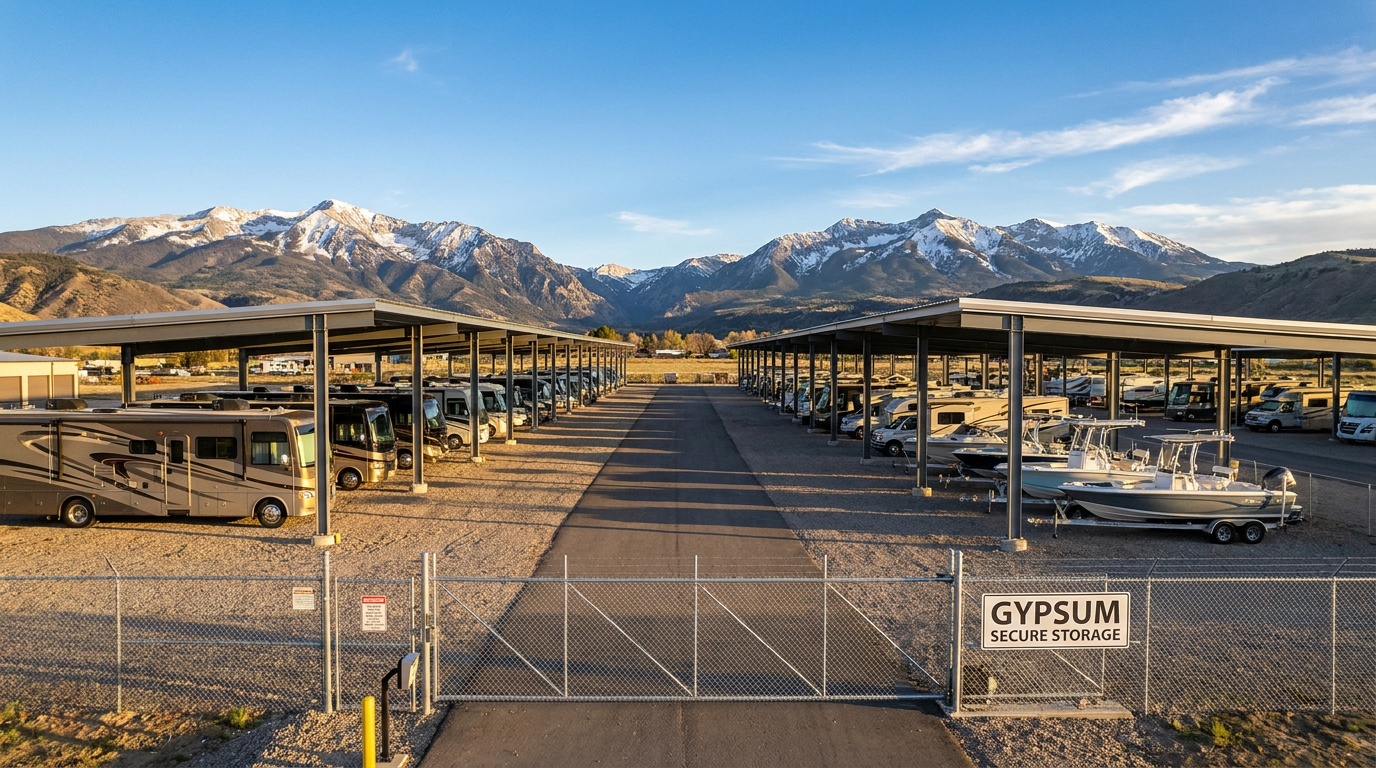
Storage facilities in Avon and Edwards exist but typically offer smaller footprints with limited vehicle-specific options. The Gypsum corridor, including facilities along Plane Street and Cooley Mesa Road, was developed specifically to accommodate RVs, boats, trailers, and oversized equipment that mountain town lots cannot fit.
Indoor Versus Drive-Up Versus Outdoor Storage: A Direct Comparison
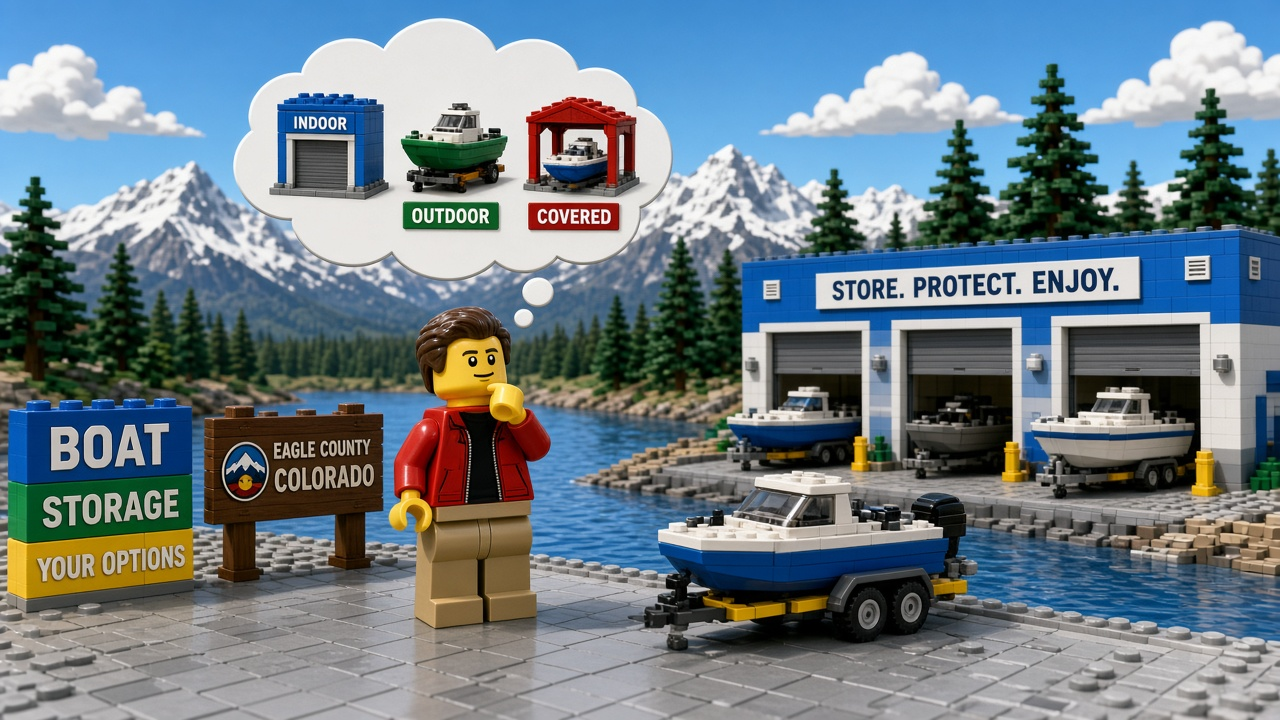
Choosing between indoor enclosed, drive-up, and outdoor parking depends on your vehicle type, budget, and protection requirements. Each option serves different needs in Colorado's mountain climate.
| Storage Type | Best For | Monthly Cost Range | Protection Level |
|---|---|---|---|
| Indoor Climate-Controlled | Classic cars, motorcycles, electronics | $200 to $389 | Maximum (temperature, humidity, dust) |
| Drive-Up with Power | Daily drivers, ATVs, snowmobiles | $265 to $405 | High (enclosed, power for battery maintainers) |
| Drive-Up Standard | Trucks, SUVs, utility trailers | $225 to $325 | Moderate (enclosed, no climate control) |
| Open Outdoor Parking | Boats, RVs, large trailers | $50 to $209 | Basic (security only, weather exposed) |
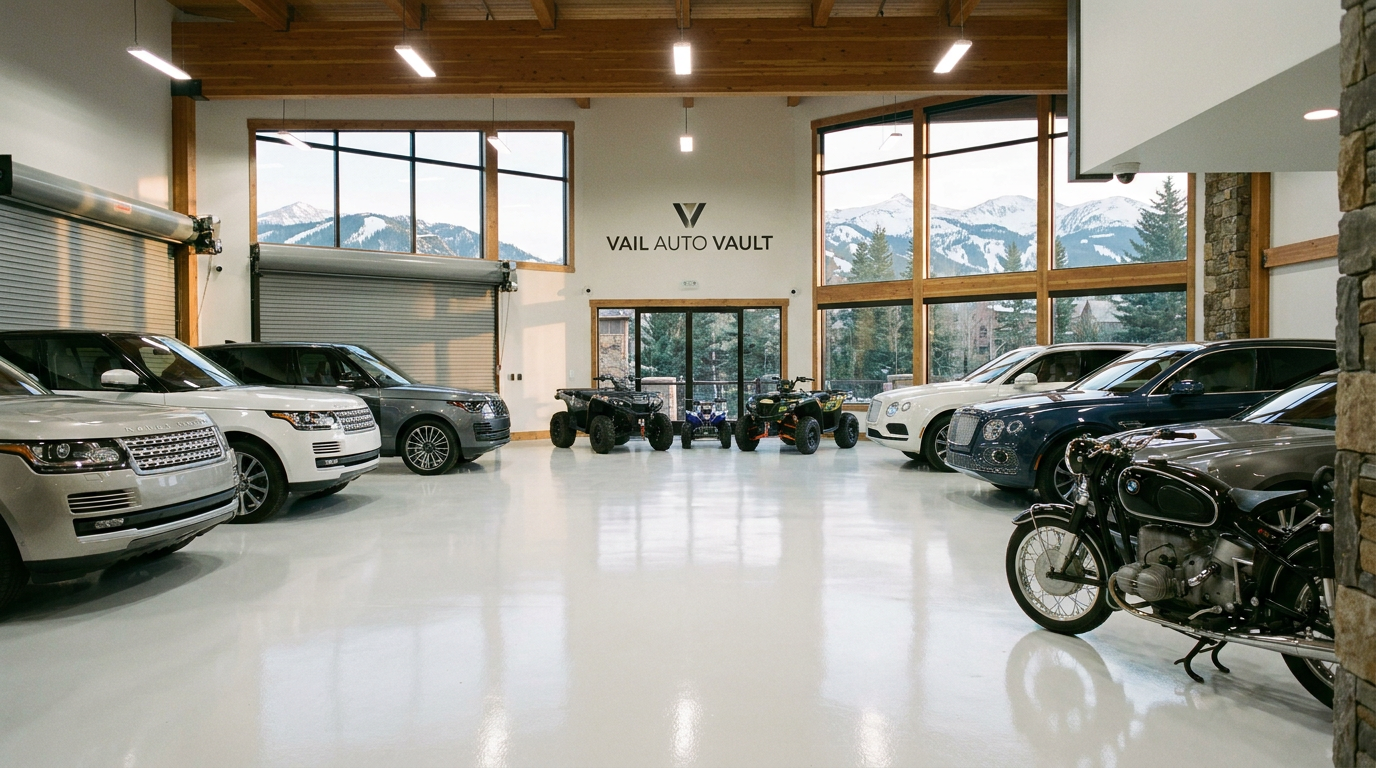
Indoor climate-controlled storage maintains temperatures between 55 and 80 degrees Fahrenheit year-round. This matters in Eagle County where winter temperatures regularly drop below zero and summer days can exceed 90 degrees. Leather interiors, rubber seals, and battery life all suffer from temperature extremes.
Drive-up units with in-unit power outlets allow you to connect battery maintainers, a critical feature for vehicles stored more than 30 days. Without a trickle charger, most car batteries lose sufficient charge to start within 4 to 8 weeks of sitting idle, according to AAA data on vehicle storage.
How Much Does It Cost to Store a 20 Foot Trailer Near Vail?
A 20-foot trailer requires a minimum 10x25 unit (250 square feet) to accommodate the trailer length plus tongue and hitch clearance. Current rates in the Gypsum and Eagle corridor range from $209 per month for open parking to $405 per month for enclosed drive-up storage with power and lighting.
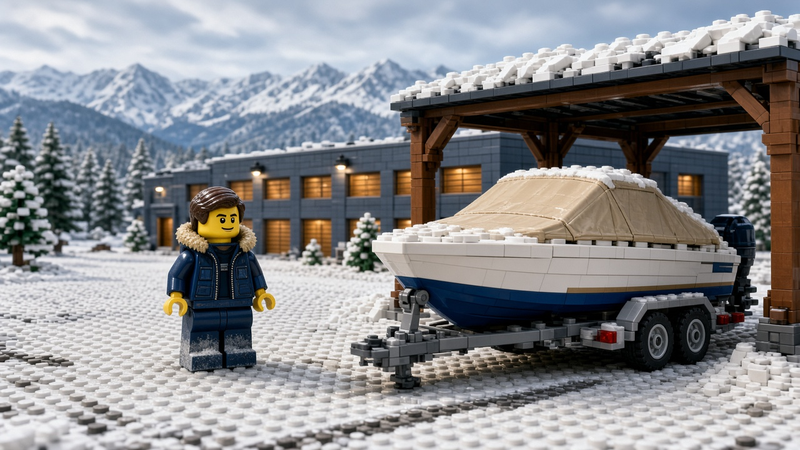
The total cost depends on three variables: enclosed versus open storage, power availability, and access frequency. Enclosed units protect against UV damage, bird droppings, and theft visibility. Open parking works for utility trailers and boats with quality covers but exposes them to Colorado's intense high-altitude sun.
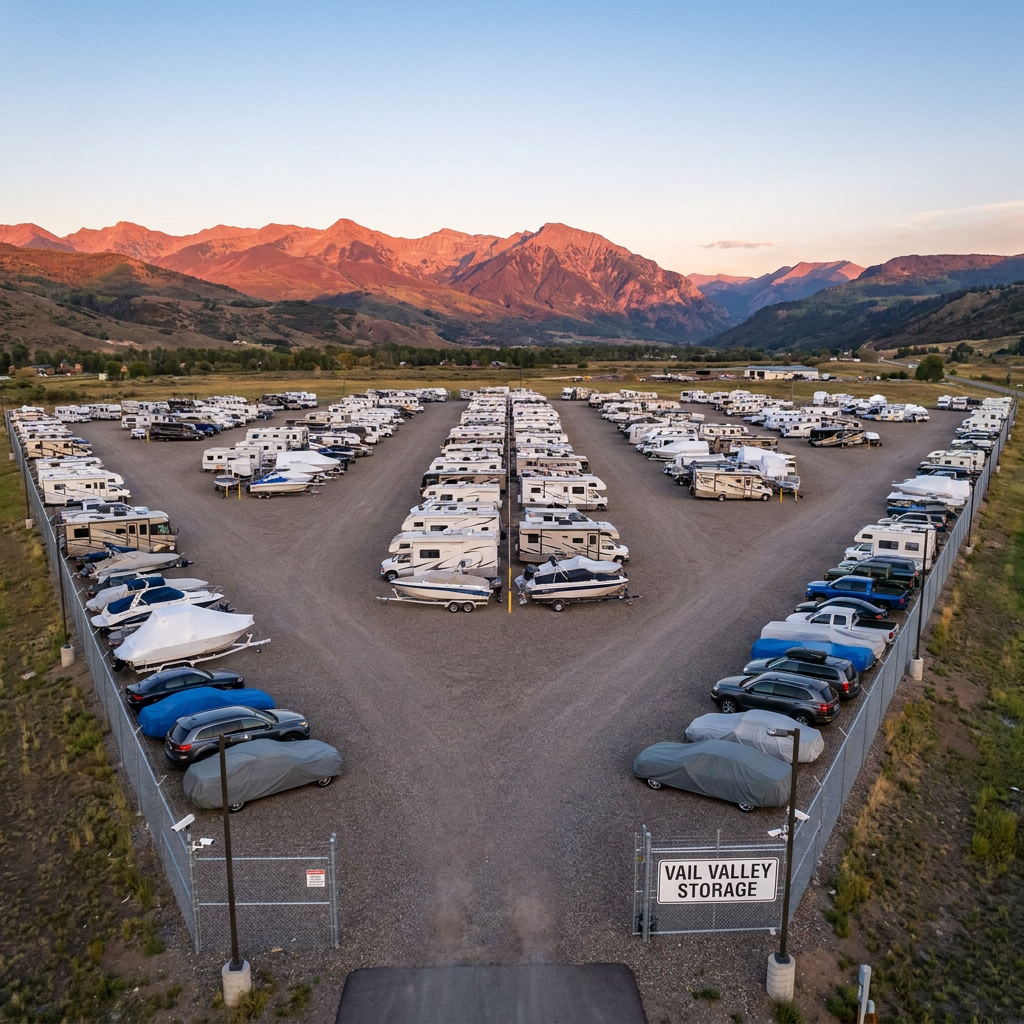
For a 20-foot enclosed trailer, expect to pay between $299 and $405 monthly for a 10x25 or 10x30 drive-up unit. Boat and RV storage options vary by facility, with some offering covered canopy parking as a middle-ground option between open and fully enclosed storage.
What Size Storage Unit Do You Need for a Vehicle?
Vehicle storage sizing follows a simple formula: measure your vehicle's length and width, then add 2 to 3 feet for door opening clearance and maneuvering space. Most standard vehicles fit specific unit sizes based on their category.
| Vehicle Type | Typical Dimensions | Minimum Unit Size | Recommended Unit Size |
|---|---|---|---|
| Compact Car (Honda Civic) | 15 ft x 6 ft | 10x15 | 10x20 |
| Midsize SUV (Toyota 4Runner) | 16 ft x 6.5 ft | 10x20 | 10x20 |
| Full-Size Truck (Ford F-150) | 18 to 20 ft x 6.5 ft | 10x20 | 10x25 or 15x20 |
| Boat with Trailer (18 ft boat) | 22 to 24 ft x 8 ft | 10x25 | 10x30 |
| ATV or Snowmobile | 7 to 10 ft x 4 ft | 10x10 | 10x15 |
| Motorcycle | 7 to 8 ft x 3 ft | 5x10 | 10x10 |
Use the storage unit size guide to match your specific vehicle dimensions. Door width matters as much as floor space; a 15x10 unit with a 15-foot wide door provides easier access than a 10x15 unit with a 10-foot door, even though both offer 150 square feet.
Is a 10x20 Storage Unit Big Enough for a Car?
Yes, a 10x20 storage unit (200 square feet) fits most cars, trucks, and SUVs with room to spare. The standard 10x20 unit measures 10 feet wide by 20 feet deep, accommodating vehicles up to 18 feet long and 7 feet wide. This includes popular models like the Toyota Camry (16 feet), Ford Explorer (17 feet), and Chevrolet Silverado crew cab (19 feet).
The 10x20 size also leaves space for additional items: tire sets, car covers, cleaning supplies, or seasonal accessories. If you need to walk around your vehicle inside the unit, a 10x20 provides approximately 2 feet of clearance on each side and 2 to 4 feet behind the vehicle.
For trucks with extended beds or vehicles towing equipment, consider a 10x25 or 10x30 unit. A 10x30 unit (300 square feet) accommodates vehicles up to 27 feet long, including most boat and trailer combinations under 24 feet total length.
Security Features That Matter for Vehicle Storage
Vehicle storage security extends beyond a simple padlock. Modern facilities use layered security systems that deter theft and provide accountability. When comparing options near Vail, evaluate these specific features.
Perimeter Security: Look for facilities with 9-foot or taller perimeter fencing, gated entry requiring access credentials, and clear sightlines without blind spots. Facilities adjacent to active businesses or airports benefit from additional ambient surveillance.
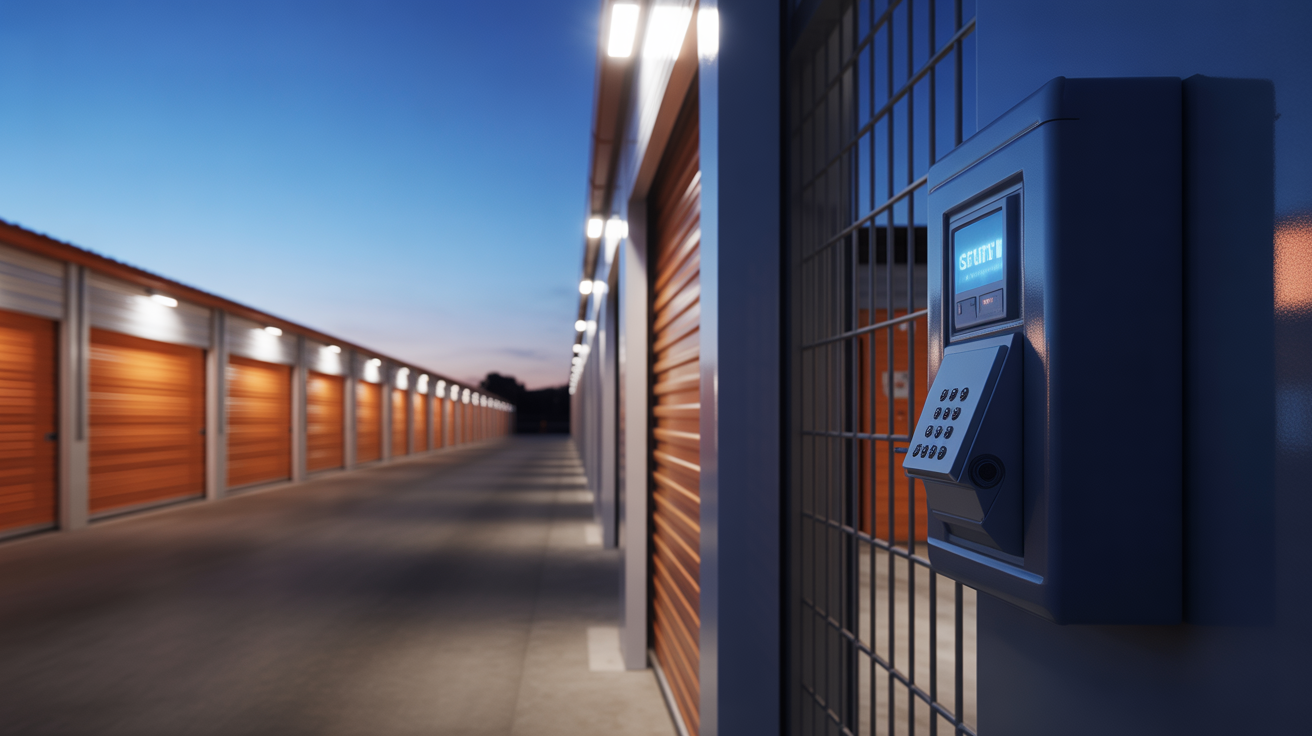
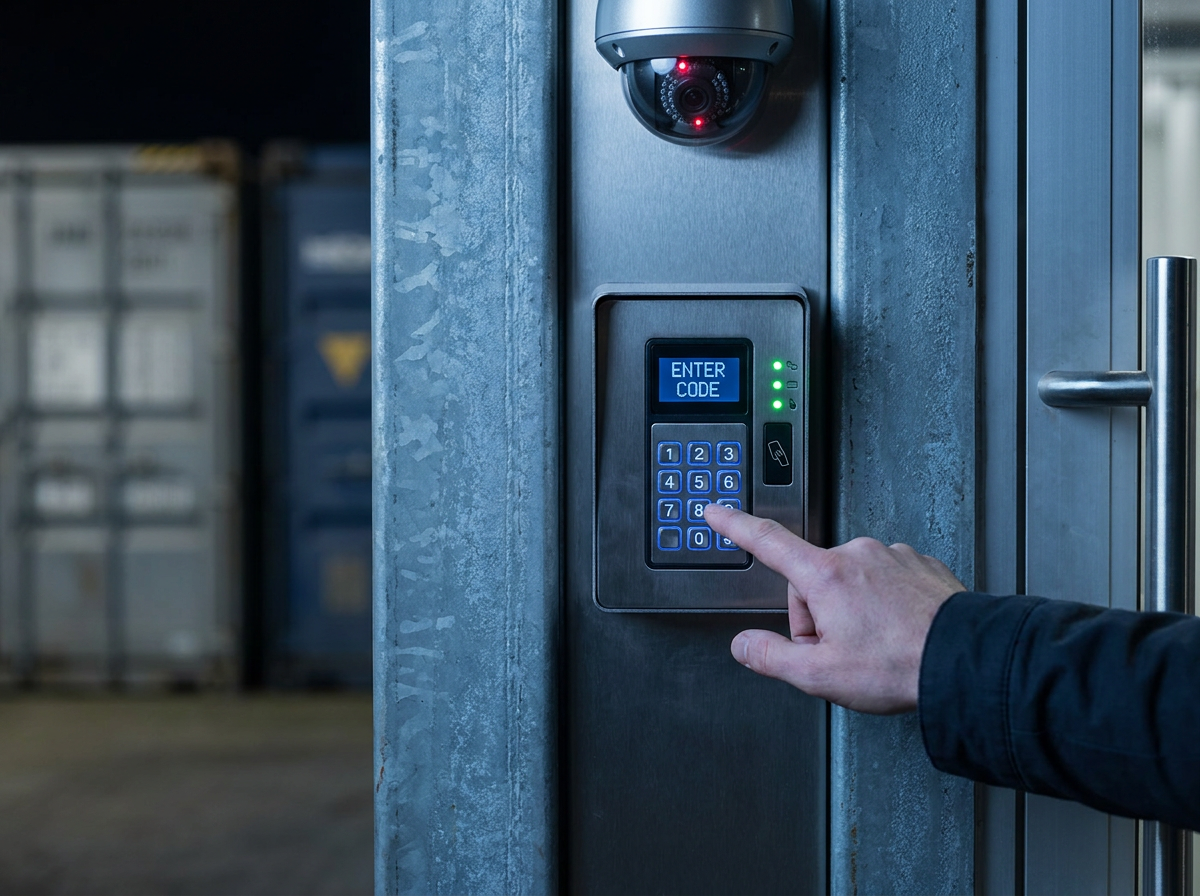
Access Control Technology: Noke smart lock technology provides smartphone-based access with complete entry logs. Unlike traditional combination locks, smart locks record every access attempt with timestamps. Digital key sharing allows authorized users to access your unit without physical key exchanges.
Surveillance Systems: 24/7 digital video surveillance with LED lighting deters opportunistic theft. Motion-detection alerts notify facility managers of after-hours activity. Ask whether footage is stored on-site or in cloud backup systems.
Unit-Level Security: Individual unit alarms, reinforced roll-up doors, and interior lighting reduce vulnerability. Drive-up units with direct vehicle access eliminate the need to transport valuables through common areas.
Why 24/7 Access Matters for Seasonal Vehicle Owners
Seasonal residents and vacation property owners need storage access outside standard business hours. A 6 AM departure for a ski trip or a late evening return from Denver requires facilities that operate around the clock without staff intervention.
True 24/7 access means gate entry and unit access at any hour, including holidays. Some facilities advertise extended hours (6 AM to 10 PM) but restrict overnight access. Verify access policies before signing a lease, especially if your travel schedule includes early morning flights from Eagle County Regional Airport.
Learn more about how 24/7 storage access works and what security features make unrestricted access safe. Smart lock systems enable round-the-clock entry while maintaining complete access logs for accountability.
Climate Control: When You Need It for Vehicle Storage
Climate-controlled storage maintains interior temperatures between 55 and 80 degrees Fahrenheit regardless of outside conditions. In Eagle County, where winter temperatures drop to negative 10 degrees and summer highs reach 90 degrees, climate control protects sensitive vehicle components.
Vehicles that benefit from climate control:
- Classic and collector cars with leather interiors
- Motorcycles with exposed rubber components
- Vehicles with advanced electronics and infotainment systems
- Cars stored longer than 6 months
- Any vehicle with aftermarket audio or security systems
Vehicles that typically do not require climate control:
- Work trucks and utility vehicles
- Boats with winterization treatment
- Enclosed utility trailers
- ATVs and snowmobiles designed for extreme temperatures
Read the complete guide on what climate-controlled storage means and when the additional cost provides measurable protection for your specific items.
Equipment Storage for Contractors and Businesses
Construction contractors, landscaping companies, and service businesses operating in the Vail Valley face unique storage challenges. Seasonal demand fluctuations require flexible storage that scales with project needs. Commercial equipment storage differs from personal vehicle storage in several ways.
Access frequency: Contractors may access equipment daily during active projects. Drive-up units with wide doors (15 feet or more) allow forklifts and equipment trailers to load and unload efficiently. Ground-level access eliminates ramps and reduces loading time.
Power requirements: Equipment with batteries, compressors, or electronics benefits from units with in-unit power outlets. Maintaining charge on power tools, generators, and diagnostic equipment prevents downtime when projects resume.
Insurance and liability: Commercial equipment often requires specific insurance coverage beyond standard tenant protection plans. Tenant protection options cover personal belongings but may have limits for commercial inventory. Verify coverage amounts and exclusions with your business insurance provider.
Explore commercial storage solutions designed for Eagle County businesses and contractors who need flexible, secure equipment storage.
Vehicle Fit Guide by Type
Matching your vehicle to the correct unit size prevents paying for unused space or discovering your vehicle does not fit after signing a lease. Use these guidelines for common vehicle categories stored near Vail.
Cars and Trucks
Standard sedans (Honda Accord, Toyota Camry) measure 15 to 16 feet long. Full-size trucks (Ford F-150, Chevrolet Silverado) range from 17 to 21 feet depending on cab and bed configuration. Crew cab trucks with 6.5-foot beds approach 20 feet total length. A 10x20 unit fits most configurations; extended cab trucks with 8-foot beds need 10x25 units.
SUVs and Crossovers
Compact crossovers (Honda CR-V, Toyota RAV4) measure 15 feet long. Midsize SUVs (Jeep Grand Cherokee, Ford Explorer) run 16 to 17 feet. Full-size SUVs (Chevrolet Suburban, Ford Expedition) reach 18 to 19 feet. The Suburban specifically requires a 10x20 minimum with a 10x25 recommended for door clearance.
Boats and Trailers
Boat storage sizing includes the trailer tongue, which adds 3 to 5 feet beyond the boat hull length. An 18-foot boat on a trailer typically measures 22 to 24 feet total. Width varies from 7 to 8.5 feet for most recreational boats. A 10x25 unit fits boats up to 20 feet; larger vessels need 10x30 or outdoor parking.
Recreational Vehicles
ATVs measure 6 to 8 feet long and 4 feet wide. Side-by-sides (Polaris RZR, Can-Am Maverick) run 10 to 12 feet long and 5 to 6 feet wide. Snowmobiles average 10 feet long and 4 feet wide. A 10x15 unit stores two ATVs or one side-by-side with gear. Multiple recreational vehicles fit in 10x20 or larger units.
Frequently Asked Questions
How much does it cost to store a 20-foot trailer near Vail?
A 20-foot trailer costs between $209 and $405 per month depending on storage type. Open outdoor parking starts at $209 monthly. Enclosed drive-up units with power and lighting range from $299 to $405 per month for 10x25 or 10x30 sizes. Add $50 to $100 monthly for climate-controlled options if available for your trailer size.
How do I determine what storage unit size I need?
Measure your vehicle's length and width, then add 2 to 3 feet for clearance. A 16-foot vehicle needs a minimum 10x20 unit (20 feet deep). For trailers, include tongue length in your measurement. Use facility size guides or visit in person to confirm dimensions before signing a lease.
Is a 10x20 storage unit big enough for a car?
Yes, a 10x20 unit fits most cars, trucks, and SUVs up to 18 feet long. This includes sedans, crossovers, midsize SUVs, and standard pickup trucks. Full-size trucks with extended beds or crew cab configurations may need 10x25 units. The 10x20 size also provides space for additional items like tire sets and car covers.
How big of a storage unit do you need for a vehicle?
Vehicle storage units range from 10x15 for compact cars to 10x30 for boats and large trailers. Most passenger vehicles fit in 10x20 units. Motorcycles need 5x10 or 10x10 units. ATVs and snowmobiles fit in 10x10 or 10x15 units. Always verify ceiling height for lifted trucks or vehicles with roof racks.
Are heated storage units worth it for vehicles in Colorado?
Heated storage protects vehicles stored longer than 6 months, classic cars with leather interiors, and any vehicle with sensitive electronics. The additional cost of $50 to $150 monthly prevents cracked leather, degraded rubber seals, and battery damage from temperature extremes. Standard enclosed units work for utility vehicles and equipment designed for outdoor use.
Can I store construction equipment in a self-storage unit?
Yes, drive-up units accommodate construction equipment including skid steers, mini excavators, and trailers. Verify door width (15 feet recommended), ceiling height, and weight limits. Units with power outlets allow battery maintenance on equipment. Commercial insurance may be required for business equipment beyond standard tenant protection limits.
What security features should I look for in vehicle storage?
Priority security features include perimeter fencing (9 feet minimum), gated entry with access credentials, 24/7 video surveillance, LED lighting, and individual unit access logs. Smart lock systems provide accountability that traditional padlocks cannot match. Motion-detection alerts and cloud-based video backup offer additional protection.
|