Vehicle Storage Options and Pricing Comparison Guide 2026 |
| VEHICLE STORAGE OPTIONS AND PRICING COMPARISON GUIDE
⏱ 15 min read ·
📄 #2,965 words
Compare vehicle storage costs from $30 to $700/month. See pricing for outdoor, covered, indoor, and climate-controlled options with size guides and tips.
|
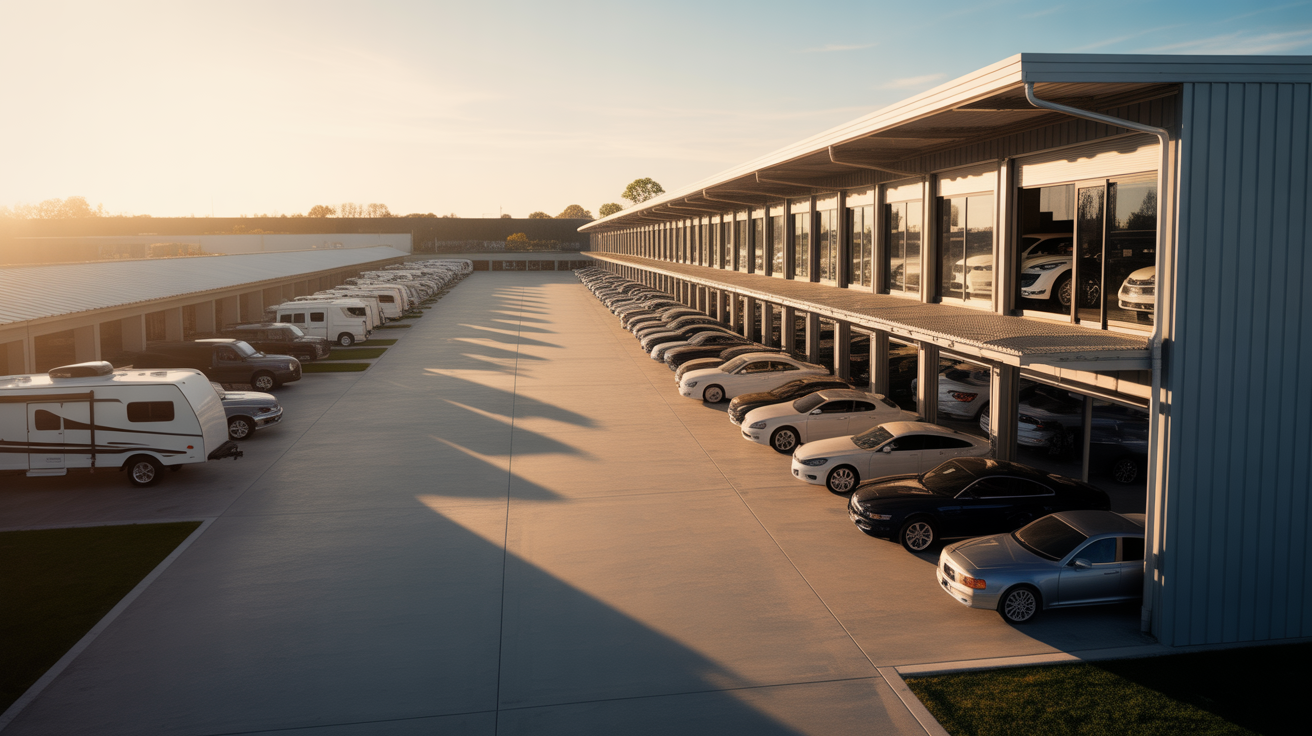
V ehicle storage costs range from $30 to $700 per month depending on storage type, location, and vehicle size. Outdoor uncovered parking starts at $30 to $100 monthly, covered storage runs $100 to $295, and indoor climate-controlled units cost $150 to $457 in most markets. Urban areas typically charge two to three times more than rural locations.
| Key Points: | |
|---|---|
| • | Outdoor storage: $30 to $105/month; best for short-term storage in dry climates |
| • | Covered storage: $100 to $295/month; provides rain and sun protection without full enclosure |
| • | Indoor storage: $150 to $457/month; offers maximum security and weather protection |
| • | Climate control adds $10 to $100/month but prevents rust, mold, and battery degradation |
| • | Long-term contracts (6+ months) typically save 10% to 20% on monthly rates |
Vehicle Storage Types Compared
Choosing the right storage type depends on your vehicle value, storage duration, and local weather conditions. Each option offers different protection levels at corresponding price points. Understanding these differences helps you avoid overpaying for features you do not need or underpaying and risking vehicle damage.
Outdoor Uncovered Storage
Outdoor uncovered storage provides a designated parking space in a fenced lot with basic security. Monthly costs range from $30 to $105, with rural southern areas offering rates as low as $16 to $70. This option works well for vehicles in regular use, motorcycles and ATVs in dry climates, or short-term storage under three months.
The primary drawbacks include full exposure to sun, rain, snow, and temperature extremes. UV radiation fades paint and damages interiors within six to twelve months of continuous exposure. Hail damage, bird droppings, and tree sap present ongoing risks. Security is minimal compared to enclosed options, making this unsuitable for classic or high-value vehicles.
Covered Storage
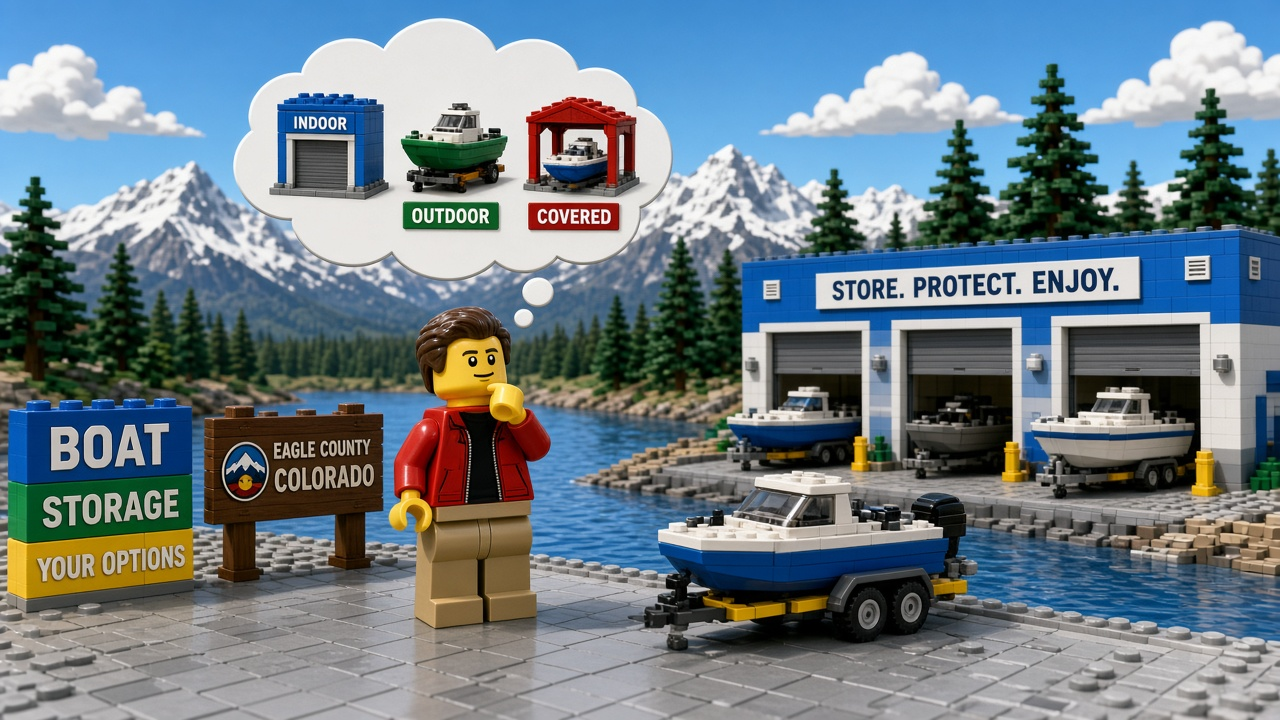
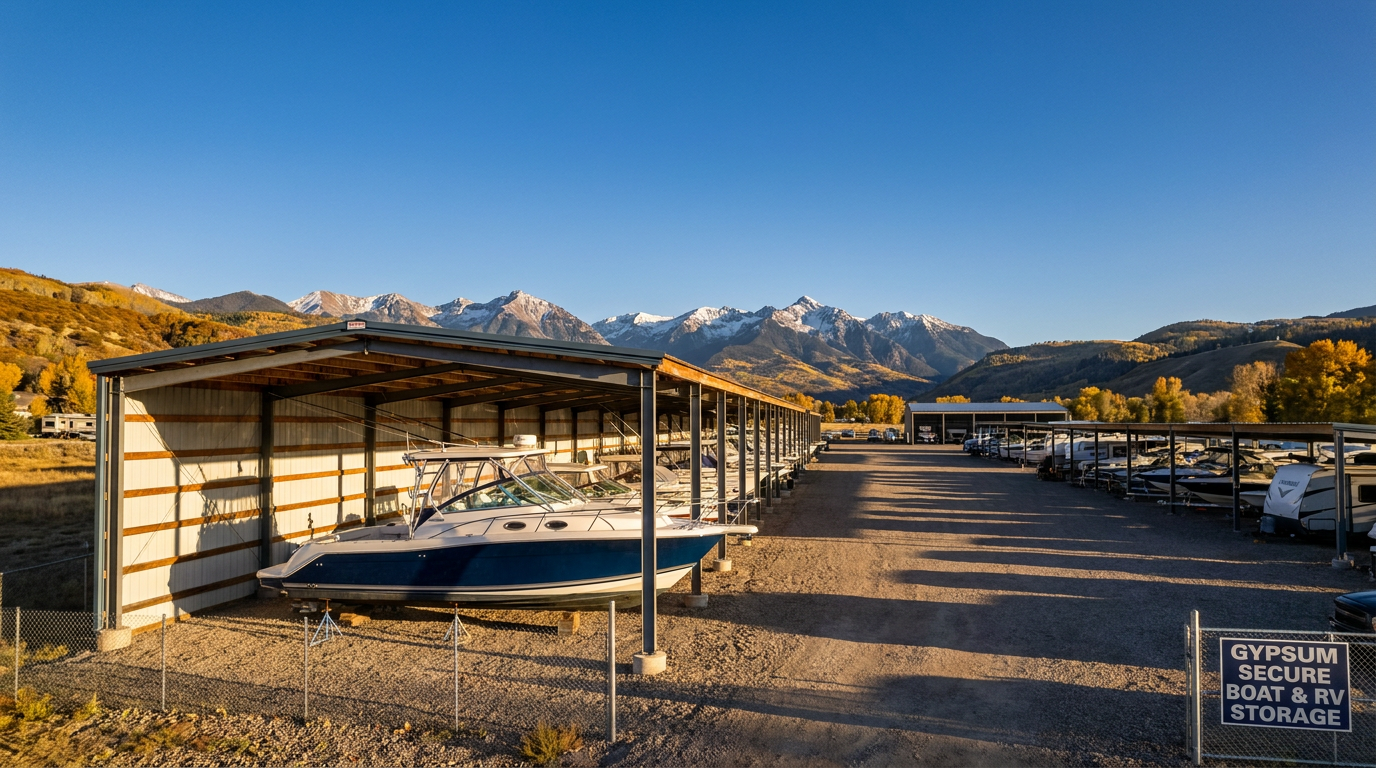
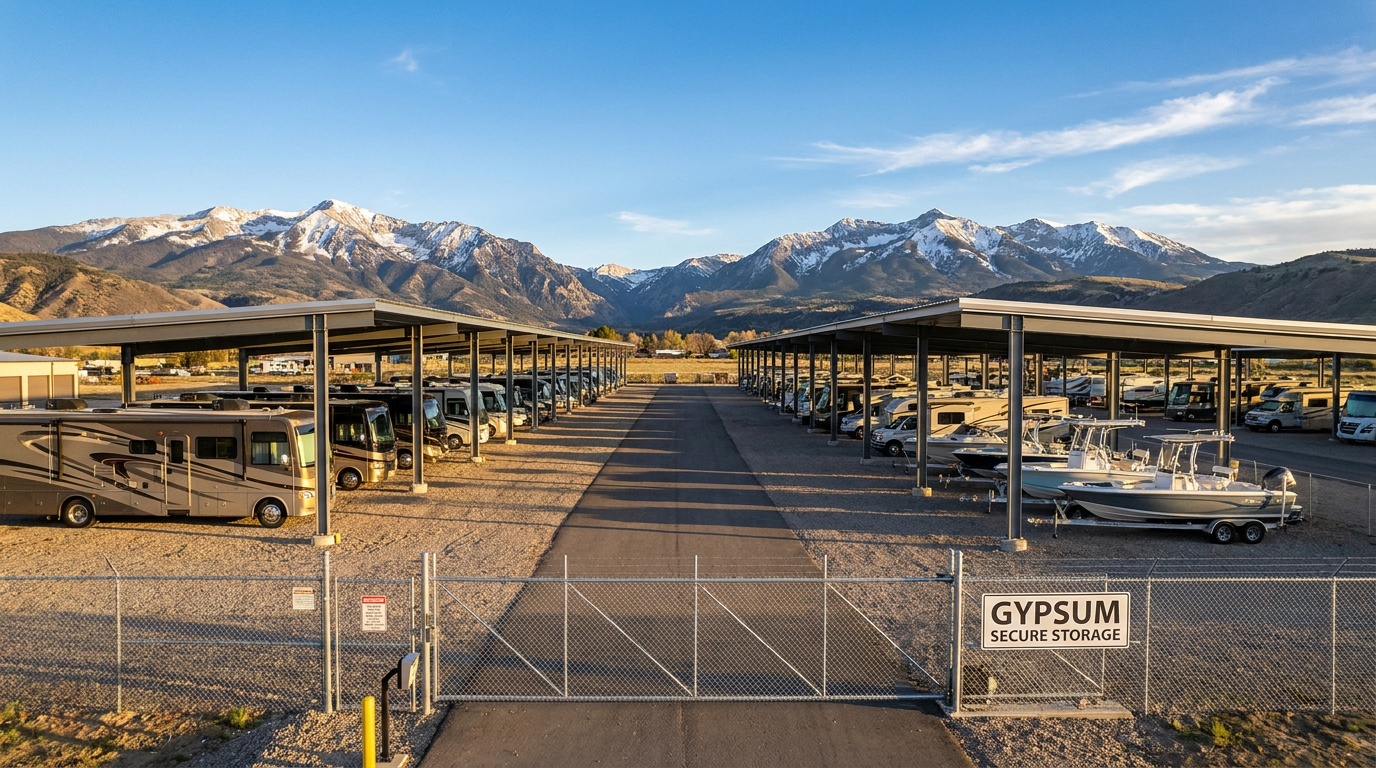
Covered storage adds a roof structure over your parking space, protecting against direct sun and precipitation. Prices run 11% to 60% higher than uncovered options, typically $100 to $295 monthly. This middle-ground solution suits boats, RVs, and daily drivers in regions with frequent rain or intense sun.
While covered storage prevents direct weather damage, it does not protect against humidity, temperature swings, or airborne debris. Vehicles remain vulnerable to dust accumulation, pest intrusion, and condensation-related issues. For storage exceeding six months, consider whether the cost difference between covered and indoor storage justifies the reduced protection.
Indoor Storage
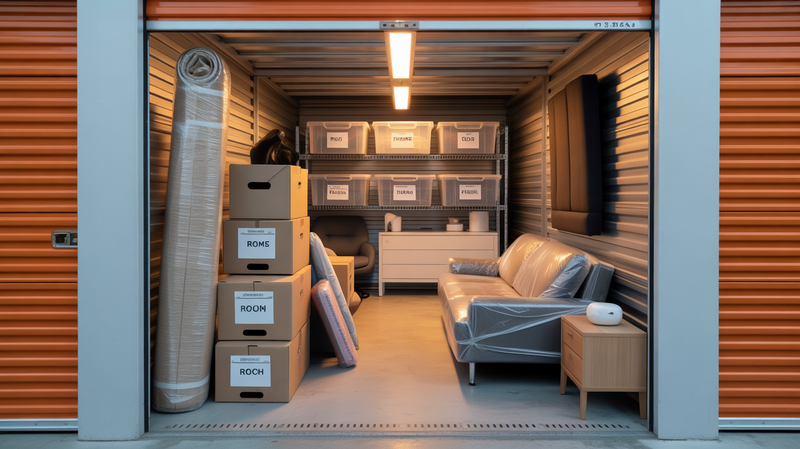
Indoor storage places your vehicle inside an enclosed building, offering superior protection from all weather conditions. Standard indoor units cost $150 to $270 monthly, while premium facilities in major metros like Miami or Los Angeles reach $450 to $700. This option provides the best security through controlled access, surveillance systems, and limited entry points.
Indoor facilities vary significantly in quality. Basic indoor storage offers shelter without climate control, while premium options include temperature regulation, humidity management, and individual unit alarms. For vehicles stored longer than six months, indoor storage prevents the paint oxidation, tire flat-spotting, and rodent damage common in outdoor settings.
Climate-Controlled Storage
Climate-controlled units maintain temperatures between 55 and 80 degrees Fahrenheit with regulated humidity levels below 50%. This environment prevents condensation on metal surfaces, protects leather and vinyl interiors, and preserves battery life. Adding climate control increases costs by $10 to $100 monthly over standard indoor rates.
Climate control becomes essential in specific situations: storing vehicles in regions where temperatures exceed 90 degrees or drop below 32 degrees, protecting classic cars with original paint and interiors, storing vehicles with leather seats or convertible tops, and keeping electric vehicles with lithium batteries that degrade in temperature extremes. For the Vail Valley area, where winter temperatures regularly drop below zero, climate-controlled storage protects against freeze damage to fluids, seals, and batteries.
Vehicle Storage Pricing by Size
Storage unit size directly impacts monthly costs. Selecting the correct size prevents paying for unused space while ensuring adequate clearance for door opening and maintenance access. Most facilities measure units in feet, with the first number indicating width and the second indicating depth.
Compact Cars and Motorcycles
Compact vehicles and motorcycles fit in 10x15 units, costing $90 to $174 monthly for indoor storage. Motorcycles can use smaller 5x10 spaces at $39 to $123 monthly, depending on climate control. These smaller units work for sedans under 180 inches long, including Honda Civics, Toyota Corollas, and similar models.
Mid-Size Vehicles and SUVs
Standard sedans, crossovers, and mid-size SUVs require 10x20 units, priced between $124 and $276 monthly. This size accommodates vehicles up to 210 inches long with room for opening doors and walking around the vehicle. Most trucks with standard beds also fit this category.
Full-Size Trucks and Large SUVs
Extended cab trucks, full-size SUVs, and vehicles with trailers need 10x25 or 10x30 units. Expect to pay $149 to $295 monthly for these larger spaces. Crew cab trucks with long beds, Chevrolet Suburbans, and similar large vehicles fall into this category.
RVs, Boats, and Oversized Vehicles
RVs, large boats, and commercial vehicles require specialized parking or extra-large units. Open parking for these vehicles starts at $209 monthly for 8x15 spaces, with larger covered or indoor options reaching $519 or more. Facilities offering RV and boat storage often provide additional services like dump stations, wash bays, and electrical hookups.
For help determining the right unit size for your specific vehicle, our storage size guide provides detailed dimensions and recommendations.
Regional Price Variations
Location dramatically affects vehicle storage costs, with urban areas charging two to three times rural rates. Understanding regional pricing helps you budget accurately and identify whether driving to a suburban facility saves enough money to justify the inconvenience.
Major Metro Areas
High-demand urban markets command premium prices due to real estate costs and limited availability. Current 2026 pricing for 10x20 indoor units in major cities:
- Miami, FL: $69 to $571 monthly
- Los Angeles, CA: $150 to $500 monthly
- New York, NY: $200 to $600 monthly
- Chicago, IL: $34 to $334 monthly
- Las Vegas, NV: $39 to $273 monthly
Mid-Size Cities
Secondary markets offer moderate pricing with better availability:
- Atlanta, GA: $18 to $130 monthly
- Houston, TX: $22 to $139 monthly
- Denver, CO: $75 to $250 monthly
- Phoenix, AZ: $50 to $200 monthly
Rural and Suburban Areas
Rural facilities typically charge $45 to $150 monthly for indoor storage, with outdoor options as low as $16 to $70. The trade-off involves longer drive times and potentially fewer amenities. However, for long-term storage where you access the vehicle infrequently, suburban facilities often provide the best value.
Mountain Resort Communities
Areas like Vail Valley present unique considerations. Seasonal demand from vacation homeowners and ski visitors creates price fluctuations, while extreme winter weather makes climate control more valuable than in temperate regions. Facilities near airports, like Vail Airport Storage, offer convenience for travelers who fly in and out regularly.
Hidden Costs and Fee Structures
Advertised rates rarely tell the complete story. Understanding the full cost structure prevents budget surprises and helps you compare facilities accurately.
Common Additional Fees
Many storage facilities add charges beyond the base monthly rate:
- Administrative fees: $15 to $50 one-time charge at move-in
- Security deposits: Equal to one month's rent, refundable at move-out
- Insurance requirements: $10 to $30 monthly if you lack personal coverage
- Lock purchases: $10 to $25 for facility-approved locks
- Late payment fees: $20 to $50 or 10% to 20% of monthly rent
- Access card fees: $5 to $25 for gate or door access devices
Some facilities waive administrative fees and security deposits as competitive advantages. When comparing options, calculate the total first-year cost including all fees rather than focusing solely on monthly rates.
Rate Increases
Most storage contracts allow rate increases with 30 to 60 days notice. Industry data shows average annual increases of 5% to 10%. Ask prospective facilities about their rate increase history and policies before signing. Some facilities offer rate-lock guarantees for 6 to 12 months.
Move-Out Procedures
Understand move-out requirements to avoid unexpected charges. Many facilities require 10 to 30 days written notice before your billing date. Failing to provide notice often results in charges for an additional month. Some facilities prorate refunds while others do not.
Saving Money on Vehicle Storage
Strategic planning reduces vehicle storage costs by 20% to 40% without sacrificing necessary protection.
Timing Your Rental
Storage demand peaks in late spring and summer when people move and travel. Facilities offer the best deals in fall and winter, particularly January through March. Signing a lease during low season often locks in better rates for the contract duration.
Long-Term Discounts
Committing to longer terms reduces monthly costs. Typical discount structures:
- 3-month prepay: 5% to 10% discount
- 6-month prepay: 10% to 15% discount
- 12-month prepay: 15% to 25% discount
Calculate whether the discount justifies reduced flexibility. If your storage needs might change, month-to-month agreements provide more options despite higher per-month costs.
Promotional Offers
New customer promotions significantly reduce initial costs. Common offers include first month free, 50% off for the first three months, and waived administrative fees. These promotions can save $100 to $300 over the first year. For current rates, availability, and any active offers, check the Vail Airport Storage website or call the facility directly.
Right-Sizing Your Unit
Measure your vehicle carefully before selecting a unit. Adding 2 to 3 feet of clearance on each side allows door opening and maintenance access. However, paying for a 10x30 when a 10x25 suffices wastes $25 to $50 monthly. Many facilities offer free unit consultations to help match vehicle dimensions to available spaces.
Location Trade-Offs
Facilities 15 to 30 minutes outside city centers often charge 20% to 40% less than downtown locations. For vehicles accessed monthly or less frequently, the drive time savings rarely justify premium urban pricing. Calculate your expected visit frequency and fuel costs to determine the true cost comparison.
Security Features Worth Paying For
Vehicle storage security varies dramatically between facilities. Understanding which features provide real protection helps you evaluate whether premium pricing is justified.
Essential Security Features
Every vehicle storage facility should provide:
- Perimeter fencing: 6-foot minimum with anti-climb features
- Gated access: Keypad, card, or smart lock entry with unique codes per renter
- Lighting: Adequate illumination in all parking and access areas
- Surveillance cameras: Coverage of entry points, driveways, and unit access areas
Premium Security Options
Higher-end facilities offer enhanced protection worth considering for valuable vehicles:
- 24/7 on-site staff: Provides immediate response to issues
- Individual unit alarms: Alerts management to unauthorized access attempts
- Smart lock technology: Tracks access times and allows remote monitoring
- Fire suppression systems: Protects against total loss from facility fires
- Battery maintainers: Electrical outlets for trickle chargers
Smart lock technology offers particular advantages for vehicle owners who travel frequently. Digital key sharing allows trusted individuals to access your vehicle without physical key exchanges, while access tracking provides records of every entry. Drive-up units with power outlets at facilities like Vail Airport Storage enable battery maintainer connections, preventing the dead batteries common after extended storage.
Preparing Your Vehicle for Storage
Proper preparation prevents the mechanical issues and cosmetic damage that storage can cause. These steps take two to four hours but save hundreds in potential repairs.
Mechanical Preparation
Complete these tasks before placing any vehicle in storage for more than 30 days:
- Fill the fuel tank: Add fuel stabilizer for storage exceeding 60 days
- Change oil and filter: Old oil contains acids that damage engine components
- Check coolant: Ensure proper freeze protection for cold-climate storage
- Inflate tires to maximum recommended pressure: Prevents flat-spotting
- Disconnect or maintain battery: Use a trickle charger or disconnect negative terminal
- Release parking brake: Use wheel chocks instead to prevent brake pad adhesion
Interior and Exterior Protection
Protect your vehicle's appearance during storage:
- Wash and wax exterior: Removes contaminants that damage paint over time
- Clean interior thoroughly: Food particles attract pests
- Place moisture absorbers inside: Prevents mold and mildew in humid conditions
- Cover with breathable car cover: For non-climate-controlled storage
- Plug exhaust and air intake: Steel wool prevents rodent entry
Documentation and Insurance
Before storing your vehicle, photograph its condition from multiple angles including close-ups of any existing damage. Verify your auto insurance covers stored vehicles and understand any mileage or use restrictions. Some policies require notification when vehicles enter long-term storage.
Alternative Storage Options
Traditional storage facilities are not the only option. Alternative approaches suit specific situations and budgets.
Portable Storage Containers
Companies like PODS and U-Pack deliver containers to your location for loading, then transport them to storage facilities. Costs range from $400 to $4,000 total depending on container size, distance, and storage duration. Monthly storage adds approximately $100 to $300. This option works well for temporary moves or situations where you need the vehicle accessible at your location before transport.
Container sizes typically range from 7 to 16 feet, limiting suitability for larger vehicles. Most containers accommodate motorcycles, compact cars, and small SUVs but cannot handle full-size trucks or RVs.
Garage Condos
Garage condos offer purchased rather than rented storage space, typically in multi-unit buildings designed for vehicle enthusiasts. Purchase prices range from $50,000 to $500,000 depending on size and location, with monthly HOA fees of $200 to $500. Over seven to ten years, ownership often costs less than equivalent warehouse rental while building equity.
This option suits collectors with multiple vehicles and long-term storage needs. The upfront investment and illiquidity make garage condos impractical for single-vehicle storage or temporary needs.
Peer-to-Peer Storage
Platforms connecting vehicle owners with individuals offering garage or driveway space have emerged in recent years. Prices typically run 20% to 40% below commercial facilities. However, security, insurance coverage, and reliability vary significantly. Thoroughly vet any peer-to-peer arrangement and ensure adequate insurance coverage.
Choosing the Right Storage for Your Vehicle Type
Different vehicles have distinct storage requirements based on their value, construction, and intended use patterns.
Daily Drivers and Commuter Vehicles
Vehicles used regularly but needing temporary storage during travel or seasonal changes require accessible locations and flexible terms. Month-to-month outdoor or covered storage at $50 to $150 monthly typically suffices. Prioritize convenient location over premium amenities.
Classic and Collector Cars
Vehicles with significant value or irreplaceable components demand climate-controlled indoor storage with premium security. Budget $200 to $500 monthly for appropriate protection. The cost of proper storage is minimal compared to the restoration expenses caused by improper conditions.
Seasonal Vehicles
Motorcycles, convertibles, and sports cars used only during certain seasons benefit from climate control to prevent the condensation and temperature cycling that causes corrosion. Storage periods of four to eight months justify the premium for climate-controlled units.
RVs and Boats
Large recreational vehicles require specialized facilities with appropriate access, turning radius, and height clearance. Covered storage protects against UV damage to fiberglass and rubber components. Indoor storage provides maximum protection but significantly increases costs. Open parking works for newer vehicles with proper covers in mild climates.
Electric Vehicles
EVs require climate-controlled storage to protect lithium battery packs from temperature extremes. Batteries stored below 32 degrees or above 95 degrees degrade faster and may suffer permanent capacity loss. Units with electrical outlets allow periodic charging to maintain optimal battery state of charge between 20% and 80%.

Frequently Asked Questions
What is the cheapest way to store an RV long-term?
Outdoor uncovered storage in rural areas offers the lowest RV storage costs at $50 to $150 monthly. However, this exposes your RV to weather damage that may cost more to repair than the storage savings. Covered storage at $150 to $295 monthly provides a better value balance for RVs stored more than six months. Consider the RV's age and condition when deciding: newer RVs with intact seals tolerate outdoor storage better than older units with potential leak points.
How do climate-controlled and standard vehicle storage units compare in cost?
Climate-controlled units cost $10 to $100 more monthly than standard indoor units of the same size. A 10x20 standard indoor unit averaging $175 monthly becomes $200 to $275 with climate control. The premium is justified for vehicles with leather interiors, classic cars with original paint, electric vehicles, and any vehicle stored where temperatures regularly exceed 90 degrees or drop below 32 degrees.
Are garage condos a better investment than monthly warehouse storage for car collectors?
Garage condos typically break even with warehouse rental costs within seven to ten years while building equity. A $300,000 garage condo with $400 monthly HOA fees costs approximately $4,800 annually in fees versus $18,000 to $42,000 annually for equivalent warehouse space. After ten years, the condo owner has an asset worth potentially $400,000 or more while the renter has paid $180,000 to $420,000 with nothing to show. Garage condos make financial sense for collectors planning to store vehicles for a decade or longer.
What size storage unit do I need for a full-size truck or boat?
Full-size trucks with crew cabs and standard beds require 10x25 units minimum, while trucks with long beds need 10x30 units. Boats depend on length: 16 to 20 foot boats fit 10x25 units, 21 to 24 foot boats need 10x30 units, and larger boats require specialized storage. Always add 2 to 3 feet to your vehicle length for door clearance and walkway access when selecting unit size.
How much does car storage cost in mountain resort areas, and are there discounts?
Mountain resort communities like Vail Valley typically charge $75 to $300 monthly for vehicle storage depending on unit type and size. Seasonal demand creates price fluctuations, with winter rates often higher due to ski season visitors. Discounts include long-term prepayment savings of 10% to 20%, new customer promotions like 50% off for three months, and off-season move-in specials. Facilities near airports offer particular value for travelers who fly in regularly.
|