Holiday Decoration Storage Solutions: Complete Organization Guide |
| HOLIDAY DECORATION STORAGE SOLUTIONS AND ORGANIZATION
⏱ 17 min read ·
📄 #3,284 words
Learn proven holiday decoration storage solutions to protect ornaments, trees, and lights. Get expert tips for organizing seasonal decor year-round.
|
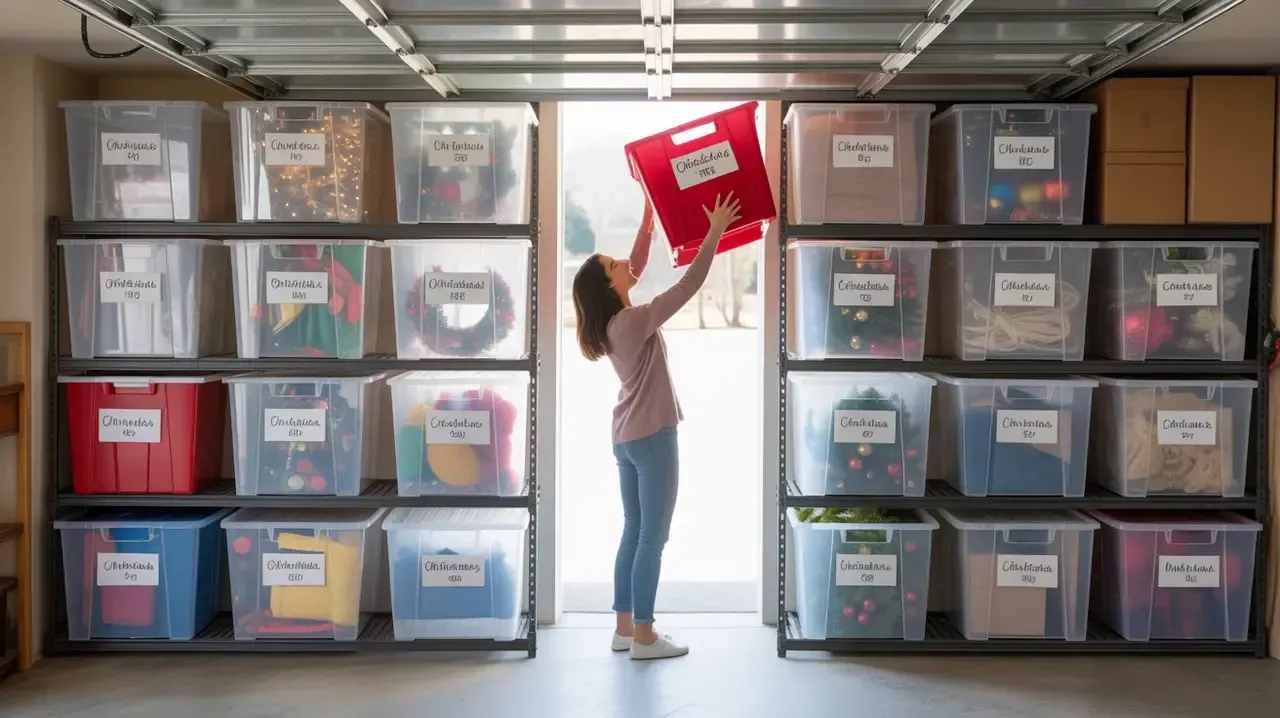
P roper holiday decoration storage requires three core elements: climate-appropriate containers, systematic organization by category, and adequate space that protects fragile items from temperature extremes. Most households need 15 to 30 cubic feet of dedicated storage space for holiday decor, with climate-controlled options essential for items stored in areas where temperatures exceed 90°F or drop below 32°F.
| Key Points: | |
|---|---|
| • | Sort decorations into 4 categories: fragile ornaments, lights and electronics, artificial trees and greenery, and soft goods like stockings and linens |
| • | Climate-controlled storage maintains 55 to 80°F, preventing warping, cracking, and electronic damage that occurs in garage storage |
| • | Specialty ornament boxes with dividers cost $15 to $35 and protect 64 to 128 ornaments per container |
| • | A 5x5 storage unit ($37 to $69 per month) holds an average household's complete holiday collection |
| • | Remove batteries from all electronic decorations before storage to prevent corrosion and leakage |
Why Holiday Decoration Storage Matters in Mountain Climates
Vail Valley residents face unique storage challenges that coastal or temperate climate dwellers never consider. Temperature swings from negative 10°F in January to 85°F in July create expansion and contraction cycles that crack glass ornaments, warp plastic figurines, and degrade adhesives on artificial greenery. Garage storage in mountain homes exposes decorations to these extremes for 11 months each year.
Humidity fluctuations compound the problem. Winter air in Colorado averages 30 to 40% relative humidity indoors, while summer monsoon season can spike humidity to 60% or higher. These swings cause wooden decorations to crack, metal pieces to corrode, and fabric items to develop musty odors or mildew spots.
The solution involves either dedicating climate-controlled indoor closet space (which most mountain homes lack) or using climate-controlled storage units that maintain consistent 55 to 80°F temperatures year-round. This single decision extends decoration lifespan from 3 to 5 years to 15 to 20 years or longer.
Step-by-Step Holiday Decoration Organization System
Effective organization starts before you purchase a single storage container. Follow this systematic approach to transform chaotic decoration boxes into an efficient retrieval system.
Step 1: Complete Inventory and Purge
Spread all holiday decorations across a large floor space, such as a garage floor or basement. Group items by holiday: Christmas, Halloween, Thanksgiving, Easter, Fourth of July, and general seasonal decor. Within each holiday group, create subcategories: fragile items, lights, artificial greenery, soft goods, and outdoor decorations.
Evaluate each item against three criteria. First, did you use it last year? Items unused for two consecutive years rarely return to rotation. Second, is it damaged beyond reasonable repair? Chipped ornaments, tangled light strings with multiple dead sections, and faded outdoor inflatables waste storage space. Third, does it match your current decorating style? Tastes evolve, and holding onto items from previous decades creates clutter without value.
Create three piles: keep, donate, and discard. Be ruthless. The average American household accumulates 2 to 3 pounds of new holiday decorations annually. Without regular purging, storage needs double every 5 to 7 years.
Step 2: Measure and Calculate Space Requirements
Before purchasing containers, measure your largest items. Artificial Christmas trees range from 2 cubic feet (4-foot tabletop trees) to 15 cubic feet (9-foot full trees). Large wreaths require 24-inch diameter containers. Outdoor inflatable decorations, when deflated and folded, typically need 2 to 4 cubic feet each.
Calculate total storage volume using this formula: count standard-size storage bins needed (18-gallon bins hold approximately 2.5 cubic feet), add specialty container space for trees and wreaths, then multiply total cubic feet by 1.25 to allow access room. Most households need 15 to 30 cubic feet total.
Use our storage size guide to match your calculated volume to the appropriate unit size. A 5x5 unit provides 200 cubic feet (accounting for stacking height), sufficient for most household collections with room for seasonal rotation.
Step 3: Select Appropriate Containers by Category
Different decoration types require different storage solutions. Using the wrong container causes damage that proper containers prevent entirely.
Fragile Ornaments
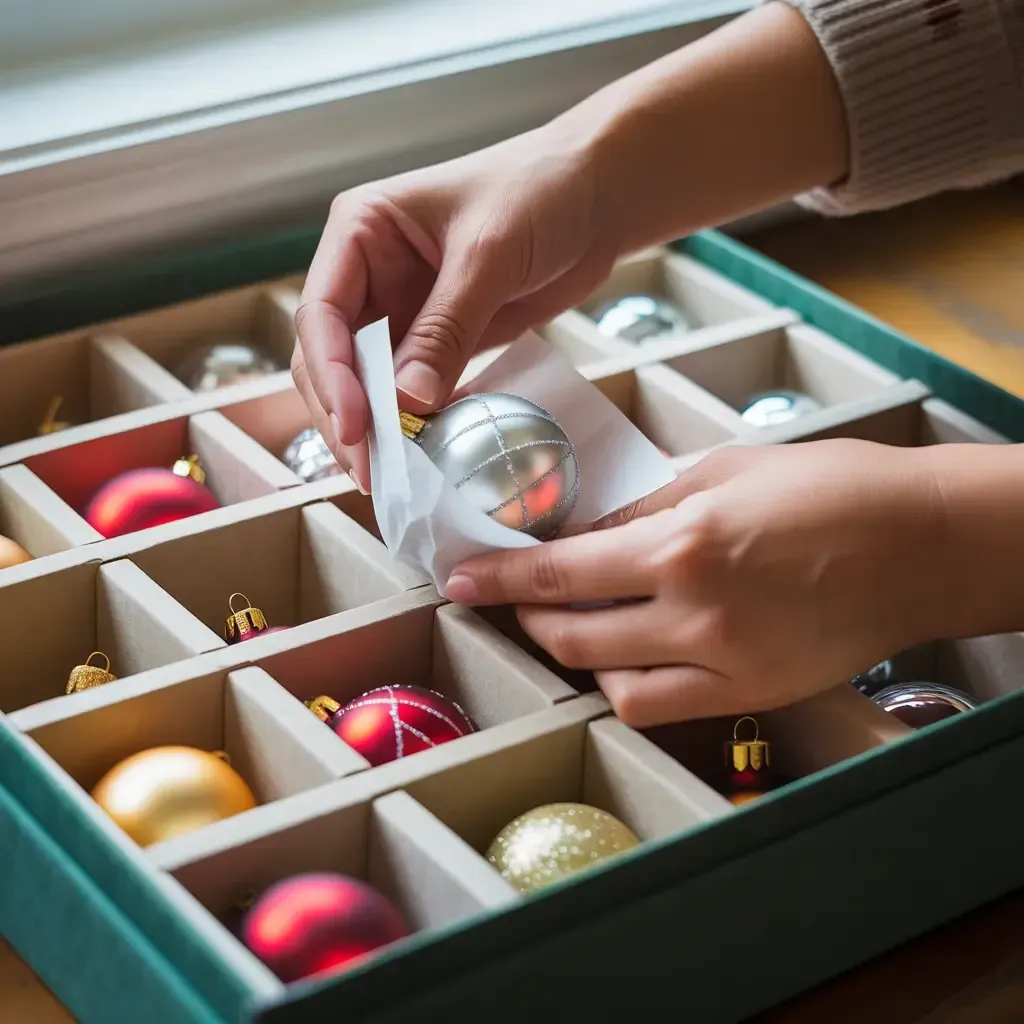
Specialty ornament storage boxes with cardboard or plastic dividers protect glass and ceramic pieces from impact damage. Standard options hold 64 ornaments in a 20x14x10-inch footprint, costing $20 to $35. Premium versions with acid-free tissue compartments run $40 to $60 but prevent tarnishing on metallic finishes.
For heirloom or irreplaceable ornaments, wrap each piece individually in acid-free tissue paper, then place in egg carton-style foam inserts. Store these containers on top of stacks, never underneath heavier items. Label containers with contents and fragility warnings on multiple sides.
String Lights and Electronics
Tangled lights waste 20 to 45 minutes per string during setup. Prevent tangles using one of three methods: cardboard wrapping (wrap each string around a 12x8-inch cardboard piece, securing ends with tape), cord reels ($8 to $15 each, hold 100-foot strings), or original packaging retention (keep manufacturer boxes for LED strings).
Critical step: remove batteries from all battery-operated decorations. Alkaline batteries leak corrosive material after 6 to 12 months of non-use, destroying electronic components. Store removed batteries separately in a labeled bag, or install fresh batteries during setup next season.
Test all light strings before storage. Mark dead strings for repair or disposal rather than discovering problems during next year's decorating rush.
Artificial Trees and Large Greenery
Artificial Christmas trees represent the largest single decoration investment, ranging from $100 for basic 6-foot models to $800 or more for premium pre-lit varieties. Proper storage protects this investment for 15 to 25 years.
Upright tree storage bags ($30 to $75) maintain branch shape better than horizontal storage. These bags feature wheels for easy transport and typically accommodate trees up to 9 feet tall when disassembled. For horizontal storage, use tree boxes with reinforced handles, placing the heaviest base section at the bottom.
Garlands require special attention. Store them following their natural curve in wide, shallow containers rather than coiling tightly. Tight coiling creates permanent kinks and crushes decorative elements. A 36-inch diameter wreath bag works well for 9-foot garlands coiled loosely.
Wreaths need flat storage in dedicated wreath containers or bags. Hanging wreaths from hooks during storage causes deformation over time. Stack wreath containers no more than two high to prevent crushing.
Soft Goods: Stockings, Tree Skirts, and Linens
Fabric decorations attract pests and absorb odors when stored improperly. Wash or dry clean all textile items before storage. Fold stockings and tree skirts with acid-free tissue between layers to prevent color transfer and creasing.
Store fabric items in breathable containers or cotton storage bags rather than sealed plastic bins. Sealed containers trap moisture, promoting mildew growth. Cedar blocks or lavender sachets deter moths without leaving chemical residue on fabrics.
Outdoor Decorations
Outdoor items face the harshest storage conditions: they're often dirty, bulky, and designed for weather exposure rather than compact storage. Clean all outdoor decorations before storage. Pressure wash plastic figures, wipe down metal frames, and ensure complete drying before containerizing.
Inflatables require complete deflation and folding along original crease lines. Store blower motors separately in climate-controlled conditions; these motors contain electronic components vulnerable to temperature extremes and moisture.
Step 4: Implement a Labeling System
Effective labeling transforms storage retrieval from a frustrating treasure hunt into a 10-minute task. Use a consistent system across all containers.
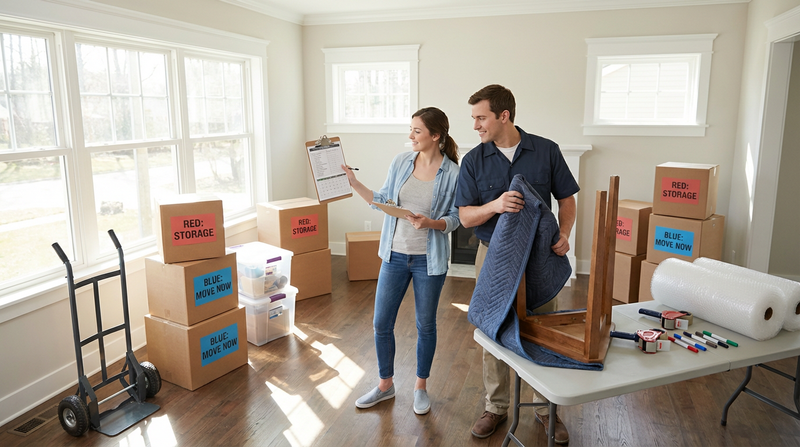
Label all four sides plus the top of each container. Include: holiday name, content category (ornaments, lights, outdoor), room destination (living room tree, mantel, front porch), and setup priority (first, second, last). Color-coded labels by holiday accelerate identification: red for Christmas, orange for Halloween, brown for Thanksgiving.
Create a master inventory list stored digitally and as a printed copy inside your primary storage location. This list should include container numbers, contents summary, and replacement value for insurance purposes. Update the list annually during post-holiday packing.
Storage Location Options Compared
Where you store holiday decorations impacts their longevity more than any other factor. Compare these common options:
| Location | Temperature Range | Best For | Avoid Storing |
|---|---|---|---|
| Climate-Controlled Storage Unit | 55 to 80°F year-round | All decoration types | Nothing; ideal for everything |
| Indoor Closet | 65 to 75°F | Fragile ornaments, electronics, fabrics | Large items due to space limits |
| Attached Garage | 20 to 100°F (varies) | Durable outdoor decorations only | Glass, electronics, candles, fabrics |
| Attic | 0 to 140°F (extreme) | Nothing valuable | All holiday decorations |
| Basement (unfinished) | 50 to 70°F | Plastic items on raised platforms | Anything moisture-sensitive |
| Standard Storage Unit | Ambient outdoor temps | Metal frames, durable plastic | Glass, electronics, wax, fabrics |
Why Climate Control Matters for Holiday Decorations
Temperature extremes damage decorations through multiple mechanisms. Glass ornaments crack when rapid temperature changes cause uneven expansion. Plastic becomes brittle below 32°F and soft above 90°F, leading to warping and breakage. Candles melt and reform into unusable shapes. Electronic components in pre-lit trees and animated figures fail when condensation forms during temperature swings.
In the Vail Valley, where winter temperatures regularly drop below zero and summer days reach the mid-80s, uncontrolled storage spaces cycle through these damaging extremes repeatedly. A single winter-to-summer cycle can crack 10 to 15% of glass ornaments stored in a garage.
Climate-controlled units at Vail Airport Storage maintain consistent temperatures between 55 and 80°F regardless of outdoor conditions. This stability eliminates thermal stress on decorations and prevents the humidity fluctuations that damage fabrics and promote corrosion.
Specialized Storage Solutions by Decoration Type
Christmas Tree Storage: Preserving Your Investment
Artificial Christmas trees require the most storage space and careful handling of any holiday decoration. A quality pre-lit tree represents a $200 to $800 investment that proper storage protects for decades.
Disassembly sequence matters. Remove ornaments first, storing them in divided containers. Next, remove tree toppers and special decorations. Then disconnect any modular light sections if your tree allows. Finally, collapse branches toward the trunk and separate tree sections.
Upright storage bags preserve branch shape better than boxes. These cylindrical bags, typically 50 to 60 inches tall and 30 inches in diameter, allow trees to stand naturally. Wheels on the base facilitate transport. Cost ranges from $35 for basic models to $100 for heavy-duty versions with reinforced handles.
For horizontal storage, use rigid tree boxes rather than soft bags. Lay the heaviest base section at the bottom, middle sections next, and the top section last. Fill gaps with tissue paper or soft fabric to prevent shifting during transport.
Never store trees in original cardboard boxes long-term. These boxes absorb moisture, attract pests, and lack the structural integrity for repeated use. Invest in dedicated tree storage containers within the first year of ownership.
Ornament Organization: Protecting Fragile Treasures
Glass and ceramic ornaments require individual protection from impact and temperature stress. Specialty ornament boxes provide the most efficient protection-to-space ratio.
Standard ornament boxes feature 64 to 128 compartments in a 20x14x10-inch footprint. Cardboard dividers work adequately for standard ornaments; upgrade to acid-free or plastic dividers for valuable pieces. Expect to pay $20 to $35 for cardboard versions, $40 to $60 for premium options.
For oversized ornaments (larger than 4 inches diameter), use adjustable-compartment boxes or wrap individually in bubble wrap within standard storage bins. Layer wrapped ornaments with tissue paper between levels, placing heaviest ornaments at the bottom.
Heirloom ornaments warrant extra protection. Wrap each piece in acid-free tissue, place in individual small boxes, then store these boxes within larger containers. Document each heirloom with photographs for insurance purposes.
Light String Management: Eliminating Tangles
Tangled Christmas lights waste an average of 30 minutes per string during holiday setup. Implement one of these proven anti-tangle methods:
Cardboard wrap method: Cut cardboard pieces to 12x8 inches. Notch opposite corners. Wrap each light string around the cardboard, securing the plug end in one notch and the socket end in the other. Store wrapped cards flat in bins. Cost: free using recycled cardboard.
Cord reel method: Purchase plastic cord reels designed for extension cords or holiday lights. These reels hold 100 to 150 feet of lights and cost $8 to $15 each. Wind lights onto reels immediately after removal from the tree while they're still warm and pliable.
Zip-top bag method: Loosely coil each string (never wrap tightly) and place in gallon-size zip-top bags. Squeeze out excess air and seal. Label each bag with string length and location used. Store bags flat in bins.
Test all strings before storage. Plug in each string and walk its length, noting any dead sections. Mark strings needing repair with colored tape. Replace strings with more than 20% dead bulbs rather than storing them.
Wreath and Garland Preservation
Wreaths and garlands lose their shape when stored improperly. Flat storage in dedicated containers maintains the original form for years.
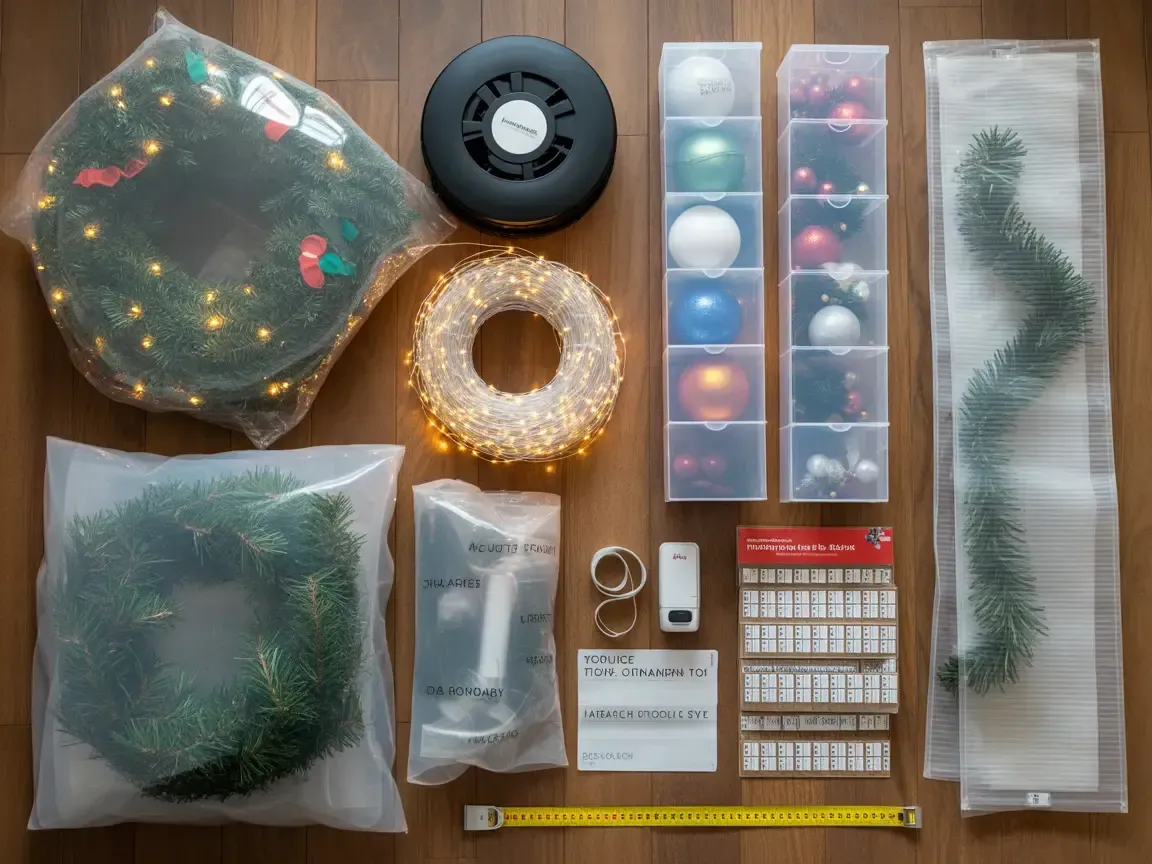
Wreath storage bags feature a circular design with handles for hanging or carrying. Sizes range from 24-inch diameter (suitable for 20-inch wreaths) to 48-inch diameter (for 36-inch statement wreaths). Prices run $15 to $40 depending on size and material quality.
Never hang wreaths during storage. Hanging creates stress points that permanently deform the frame and flatten decorative elements. Stack wreath containers no more than two high, with the heavier wreath on the bottom.
Garlands present unique challenges due to their length. Coil garlands loosely, following their natural curve, in wide shallow containers. A 36-inch diameter container accommodates a 9-foot garland comfortably. For longer garlands, use garland-specific storage bags that allow gentle S-curves rather than tight coils.
Protect delicate garland attachments (berries, pinecones, ribbon) by placing tissue paper between coil layers. This prevents crushing and color transfer.
Holiday Decoration Storage for Vacation Homeowners
Vail Valley vacation homeowners face distinct storage challenges. Decorations must survive months of unoccupied home conditions or require off-site storage solutions.
Challenges of Storing Decorations in Vacant Properties
Vacation homes often have heating setbacks during unoccupied periods, allowing interior temperatures to drop to 50 to 55°F. While this protects pipes from freezing, it creates suboptimal conditions for decoration storage. Humidity levels fluctuate without regular HVAC cycling, potentially reaching damaging levels during spring snowmelt.
Pest intrusion increases in vacant properties. Mice seek shelter in unoccupied homes, nesting in fabric decorations and chewing through cardboard storage containers. Without regular human presence, infestations go unnoticed until significant damage occurs.
Off-Site Storage Benefits for Vacation Properties
Dedicated storage units solve vacation home storage problems while freeing valuable closet space for guest use. Climate-controlled units maintain ideal conditions regardless of home occupancy status. Smart lock technology allows property managers or housekeepers to access decorations for seasonal setup without homeowner presence.
A 5x5 climate-controlled unit provides sufficient space for a complete holiday decoration collection plus additional seasonal items like patio furniture cushions or ski equipment. At $37 to $69 per month, this represents cost-effective protection for decorations worth hundreds or thousands of dollars.
Frequently Asked Questions About Holiday Decoration Storage
Where Can I Store Holiday Decorations If My Home Is Full?
Off-site storage units offer the most practical solution when home storage space is exhausted. A 5x5 climate-controlled unit (25 square feet) accommodates an average household's complete holiday decoration collection, including artificial trees up to 7.5 feet tall. Monthly costs range from $37 to $99 depending on features and location. Look for facilities offering month-to-month leases, allowing you to adjust storage needs seasonally.
How Do I Store Christmas Garlands Without Damaging Them?
Store garlands in wide, shallow containers that allow gentle curves rather than tight coils. A 36-inch diameter container works well for 9-foot garlands. Coil the garland loosely, following its natural shape, and place tissue paper between layers to protect decorative elements. Never wrap garlands tightly around cardboard tubes, as this creates permanent kinks and crushes attached ornaments.
What Are the Best Containers for Fragile Ornaments?
Specialty ornament boxes with individual compartments provide optimal protection. Look for boxes with 64 to 128 dividers in an 18 to 20-inch footprint. Cardboard dividers cost $20 to $35 per box; upgrade to acid-free or plastic dividers ($40 to $60) for valuable or antique ornaments. For oversized ornaments, wrap individually in bubble wrap and store in standard bins with tissue paper between layers.
Should I Use Off-Site Storage for Artificial Christmas Trees?
Off-site storage makes sense for artificial trees when home storage space is limited or when garage and attic conditions expose trees to temperature extremes. Climate-controlled storage prevents the branch warping, light string failure, and color fading that occurs in uncontrolled environments. A 5x10 unit accommodates trees up to 9 feet tall along with additional decoration containers, costing $39 to $123 monthly depending on climate control options.
How Can I Organize Holiday Wrapping Supplies Year-Round?
Dedicate a single container or rolling cart to wrapping supplies. Use vertical dividers for wrapping paper rolls, small bins for ribbons and bows, and a flat section for gift bags. Store tape, scissors, and tags in a small toolbox or zippered pouch within the main container. Position this container for easy access year-round, as wrapping supplies serve birthday and special occasion needs beyond holidays.
How Long Do Holiday Decorations Last in Proper Storage?
Quality decorations stored in climate-controlled conditions last 15 to 25 years or longer. Glass ornaments remain pristine indefinitely when protected from impact and temperature extremes. Artificial trees maintain their appearance for 15 to 20 years with proper storage. LED light strings last 25,000 to 50,000 hours of use (equivalent to 20+ holiday seasons) when stored correctly. Fabric items last 10 to 15 years when cleaned before storage and protected from pests.
Creating Your Holiday Decoration Storage Plan
Implement this system over a single weekend following your next holiday season. The investment of 4 to 6 hours organizing and properly storing decorations saves 2 to 3 hours every future holiday season while protecting decorations worth hundreds or thousands of dollars.
Weekend Implementation Timeline
Saturday morning (2 hours): Complete inventory and purge. Spread all decorations, sort by category, and make keep/donate/discard decisions. Measure large items and calculate total storage volume needed.
Saturday afternoon (2 hours): Purchase containers. Buy specialty ornament boxes, tree storage bags, wreath containers, and standard bins based on your inventory. Include labeling supplies: permanent markers, colored labels, and a label maker if desired.
Sunday morning (2 hours): Pack decorations using proper techniques for each category. Wrap fragile items, coil lights on cardboard, fold garlands loosely, and clean outdoor decorations before containerizing.
Sunday afternoon (1 hour): Label all containers on multiple sides. Create master inventory list. Transport containers to storage location, arranging with most-needed items accessible.
Annual Maintenance Checklist
Each year during post-holiday packing, complete these maintenance tasks:
- Test all light strings and mark those needing repair
- Remove batteries from all electronic decorations
- Clean outdoor decorations before storage
- Wash or dry clean fabric items
- Update master inventory list with additions and disposals
- Replace damaged containers or dividers
- Verify storage location maintains proper temperature
Choosing the Right Storage Unit Size for Holiday Decorations
Match your decoration collection to the appropriate unit size using these guidelines:
5x4 or 5x5 units (20 to 25 square feet): Ideal for apartment dwellers or minimalist decorators. Accommodates one artificial tree up to 6 feet, 4 to 6 standard bins, and 2 to 3 wreath containers. Sufficient for single-holiday collections.
5x10 units (50 square feet): Suits most single-family households. Holds one full-size tree (up to 9 feet), 8 to 12 standard bins, multiple wreath containers, and outdoor decoration storage. Accommodates multi-holiday collections (Christmas, Halloween, Easter).
10x10 units (100 square feet): Appropriate for extensive collectors or households decorating multiple properties. Stores multiple trees, 20+ bins, large outdoor displays, and allows workspace for organizing. Often shared between holiday decorations and other seasonal items.
Climate control adds $10 to $30 monthly to base unit costs but prevents damage that would cost far more to replace. For Vail Valley storage, climate control is essential for any items beyond durable plastic outdoor decorations.
|