How to Store Seasonal Decorations and Holiday Items |
| HOW TO STORE SEASONAL DECORATIONS AND HOLIDAY ITEMS
⏱ 11 min read ·
📄 #2,029 words
Learn expert methods for storing holiday decorations safely. Covers ornaments, lights, trees, and wreaths with specific tips for Colorado mountain climates.
|
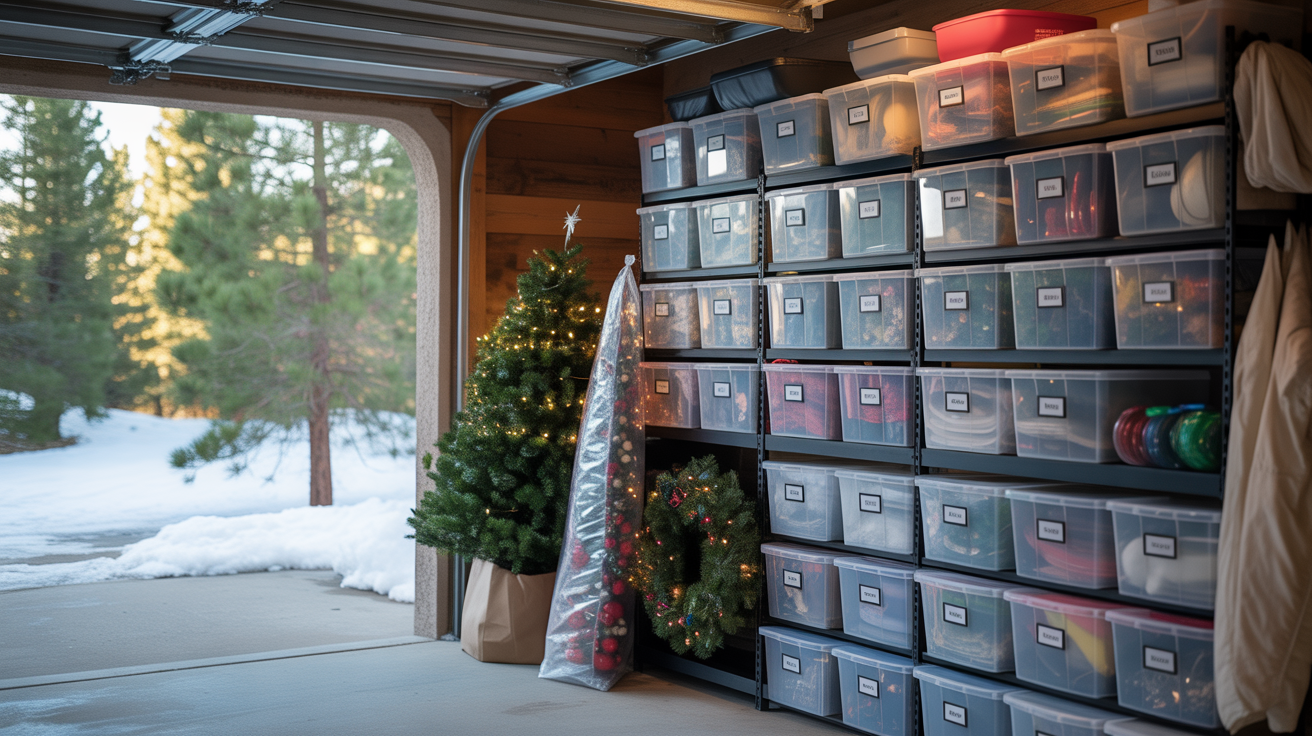
S tore seasonal decorations by sorting items into categories, wrapping fragile pieces individually in acid-free tissue or bubble wrap, coiling lights around cardboard to prevent tangles, and placing everything in labeled clear bins kept in climate-stable areas between 55 and 80 degrees Fahrenheit.
| Key Points: | |
|---|---|
| • | Sort decorations into 5 to 7 categories before packing to reduce setup time by 50% |
| • | Wrap each glass ornament in 1 to 2 layers of acid-free tissue paper; avoid newspaper due to ink transfer |
| • | Store in climate-controlled spaces maintaining 55 to 80 degrees Fahrenheit to prevent cracking and fading |
| • | Label boxes on 3 sides with specific contents such as "Tree Ornaments, Red and Gold" for quick identification |
| • | A 5x5 storage unit ($37 to $69 per month) holds decorations for a 2,000 square foot home |
Why Proper Holiday Storage Matters in Mountain Climates
Colorado's Vail Valley presents unique challenges for storing holiday decorations. Temperature swings from negative 10 degrees Fahrenheit in winter to 85 degrees in summer can crack glass ornaments, warp plastic items, and cause adhesives on decorations to fail. Humidity fluctuations between 15% and 60% throughout the year accelerate deterioration of fabric items and paper decorations.
Storing decorations in an uninsulated garage or attic exposes them to these extremes. Professional organizers report that customers who store holiday items in temperature-controlled environments experience 90% less damage compared to those using unprotected spaces. For Vail Valley residents, where seasonal homes often sit empty for months, proper storage becomes even more critical.
Step 1: Sort and Declutter Before Packing
Begin by grouping all decorations into distinct categories. This single step prevents the frustration of dumping everything out next season to find one specific item. Professional organizer Chloe from Goddess Organising recommends sorting by "order of use" rather than by holiday, which cuts setup time in half.
Recommended Sorting Categories
- Tree decorations: Ornaments, garlands, tree toppers, tree skirts
- Lights: Indoor string lights, outdoor lights, replacement bulbs
- Wreaths and door decor: Wreaths, door hangers, welcome mats
- Table and mantel items: Centerpieces, candle holders, stockings
- Outdoor decorations: Yard inflatables, pathway markers, roof displays
- Specialty items: Nativity sets, advent calendars, collectibles
As you sort, remove broken items, decorations you have not used in 3 or more years, and anything that no longer fits your style. Most households can reduce their decoration volume by 20% to 30% through honest decluttering.
Step 2: Protect Fragile Ornaments Properly
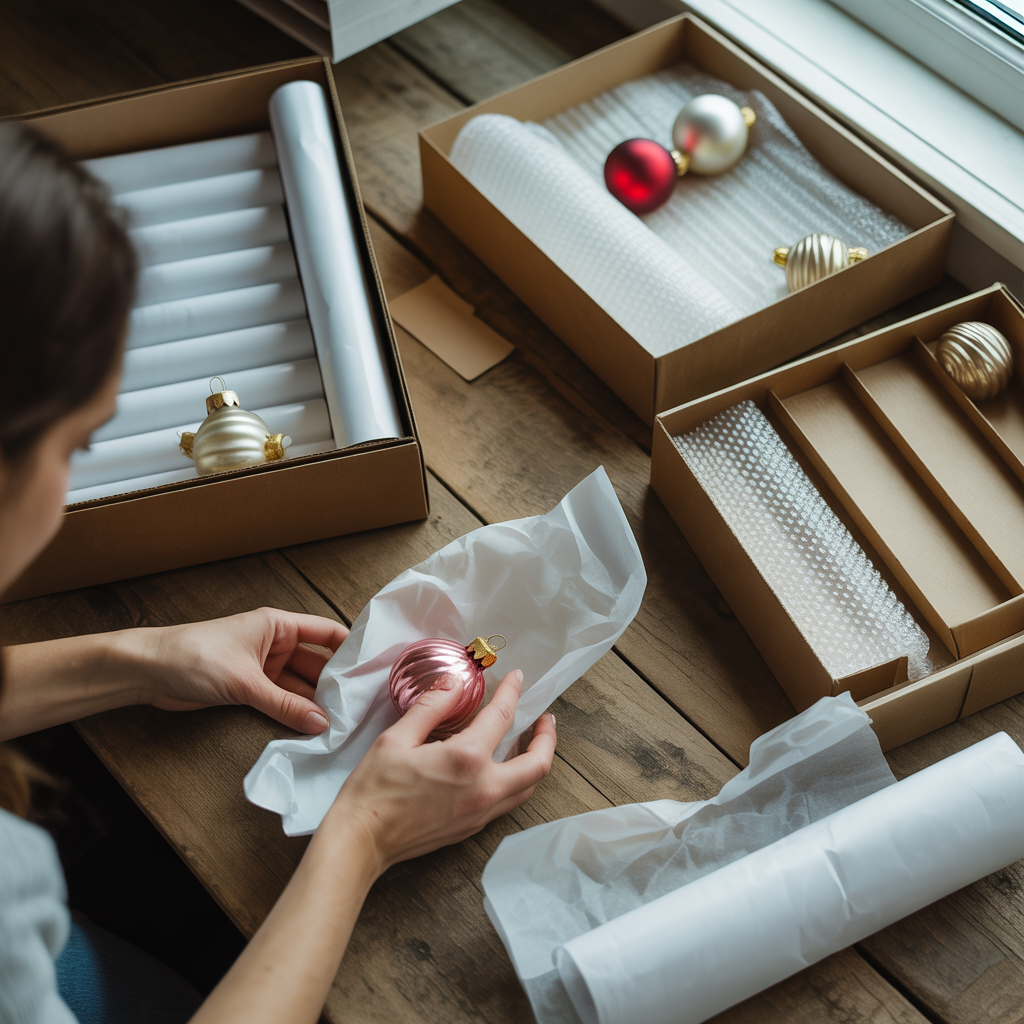
Glass and ceramic ornaments require individual wrapping to survive storage. Use acid-free tissue paper, bubble wrap, or plain paper towels, applying 1 to 2 layers around each piece. Avoid newspaper; the ink transfers to surfaces and can permanently stain light-colored ornaments.
Best Storage Solutions for Ornaments
| Container Type | Capacity | Best For | Price Range |
|---|---|---|---|
| Divided ornament boxes | 24 to 64 ornaments | Standard round ornaments | $15 to $35 |
| Stack and Carry 2-Layer | 24+ ornaments | Mixed sizes, adjustable dividers | $20 to $40 |
| Bauble bags | 12 to 36 ornaments | Delicate, heirloom pieces | $10 to $25 |
| Egg cartons (DIY) | 12 small ornaments | Budget solution, small items | Free |
Place heavier ornaments at the bottom of containers and lighter, more delicate pieces on top. Group ornaments by color or theme within each box to simplify decorating next year. For oversized or uniquely shaped ornaments, wrap individually and store in a separate padded container.
Step 3: Store Lights and Garlands Without Tangles
Tangled lights represent the most common frustration when unpacking holiday decorations. The solution takes 30 seconds per strand but saves hours of detangling. Wrap each light string around a piece of cardboard cut from shipping boxes, a dedicated light reel, or even a wire hanger.
Light Storage Methods
- Cardboard method: Cut cardboard into 12 by 8 inch rectangles, notch the corners, and wrap lights around the length
- Plastic bag method: Coil each strand loosely and place in individual gallon-size bags
- Dedicated reels: Commercial light reels hold 100 to 300 feet of lights and cost $5 to $15 each
- Coffee can method: Cut a slit in the plastic lid, feed the plug through, and wrap lights around the can
For garlands, avoid folding or crimping. Store them in wide, shallow bins that allow the garland to follow its natural curve. Layer tissue paper between garlands if stacking multiple strands. Limit wreath stacking to 2 to 3 wreaths maximum to prevent crushing.
Step 4: Properly Store Artificial Trees
Artificial Christmas trees represent a significant investment, often costing $200 to $800 for quality models. Proper storage extends their lifespan from 5 years to 15 or more years. Always remove all ornaments before disassembling the tree.
Tree Disassembly Order
- Remove ornaments and store separately
- Remove stems, picks, and floral additions
- Remove bows and ribbon last
- Compress branches gently toward the trunk
- Place in a zippered tree storage bag
Zippered tree bags contain needles and glitter that would otherwise spread throughout your storage area. These bags typically cost $20 to $50 and can hold trees up to 9 feet tall. For pre-lit trees, wrap the light cords loosely around branches before compressing to prevent wire damage.
Step 5: Handle Wreaths and Specialty Items
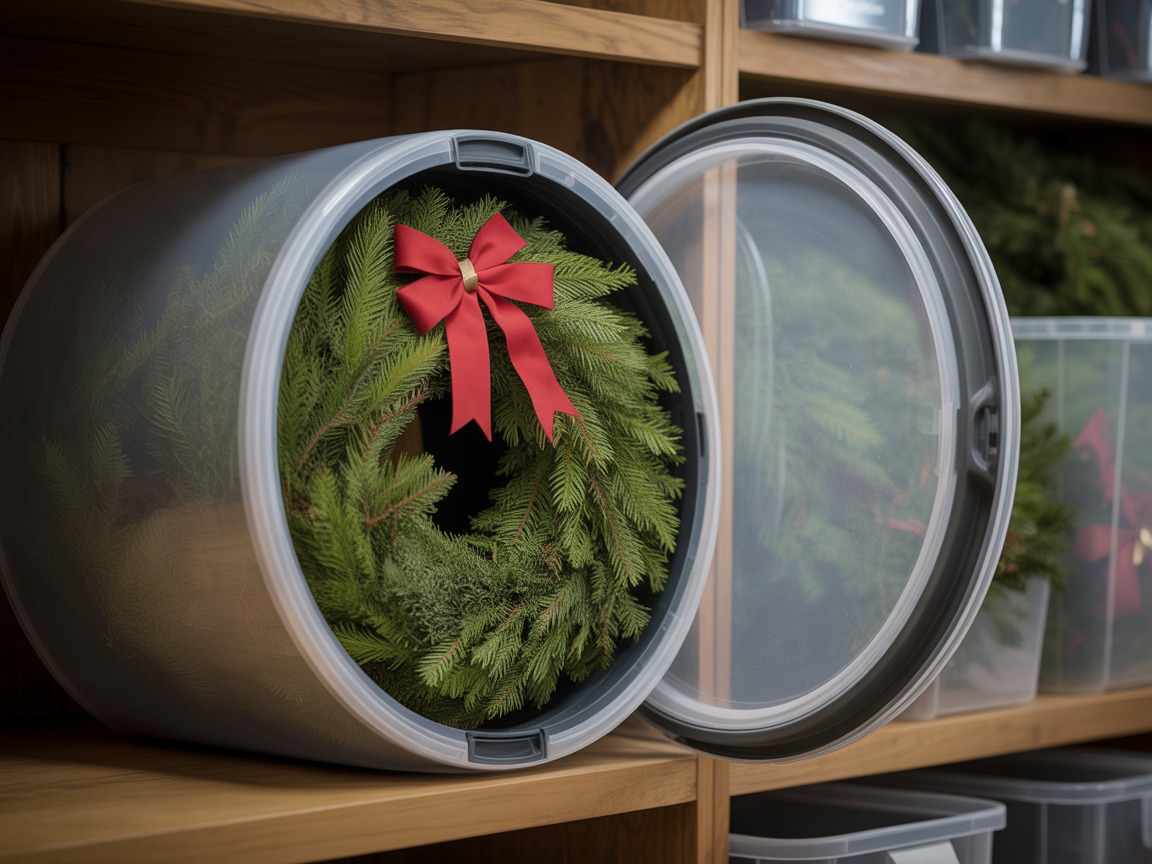
Wreaths require protection from crushing and dust. Dedicated wreath storage boxes with handles cost $15 to $30 and protect wreaths up to 30 inches in diameter. Alternatively, hang wreaths on hooks inside a storage unit or closet.
Specialty Item Storage Tips
Glittery decorations: Wrap in tissue paper or place in individual plastic bags to contain loose glitter. This prevents glitter transfer to other items and reduces cleanup when unpacking.
Battery-operated items: Remove all batteries before storage. Batteries left in devices can corrode over 11 months of storage, permanently damaging electronics. Store batteries separately in a cool, dry location.
Fabric items: Stockings, tree skirts, and fabric decorations should be cleaned before storage. Fold with acid-free tissue paper between layers to prevent permanent creases. Avoid plastic bags for fabric items; they trap moisture and promote mildew.
Nativity sets and collectibles: Wrap each piece individually in tissue paper. Store in the original packaging when available, or use divided containers with adjustable compartments.
Step 6: Choose the Right Storage Location
The storage location determines whether your decorations survive intact or deteriorate over time. Temperature stability matters more than the specific temperature range.
Storage Location Comparison
| Location | Temperature Range | Risks | Recommendation |
|---|---|---|---|
| Uninsulated attic | Negative 10 to 120 degrees F | Extreme heat, cold, pests | Avoid for delicate items |
| Unheated garage | 0 to 100 degrees F | Temperature swings, moisture | Acceptable for durable items only |
| Basement | 50 to 70 degrees F | Humidity, flooding potential | Good if dry; elevate bins |
| Climate-controlled storage | 55 to 80 degrees F | Minimal | Ideal for all decorations |
For Vail Valley residents with seasonal homes or limited closet space, climate-controlled storage units provide the stable environment decorations need. A 5x5 unit ($37 to $69 per month) typically holds holiday decorations for a 2,000 to 3,000 square foot home with room to spare.
Step 7: Label Everything Clearly
Effective labeling eliminates the frustration of searching through multiple boxes to find specific items. Label each container on at least 3 sides, including the top, so labels remain visible regardless of how boxes are stacked.
Labeling Best Practices
- Be specific: Write "Tree Ornaments, Red and Gold, Fragile" rather than just "Christmas"
- Include contents and room: "Living Room Mantel Decorations" helps with setup planning
- Note fragility: Mark boxes containing glass or delicate items clearly
- Use color coding: Assign colors to different holidays (red for Christmas, orange for Halloween)
- Create an inventory photo: Photograph contents before sealing each box and store images on your phone
Clear plastic bins offer visibility that reduces the need to open containers when searching. The slight additional cost (typically $3 to $5 more than opaque bins) pays for itself in time saved.
Storing Decorations for Multiple Seasons
Many households accumulate decorations for Halloween, Thanksgiving, Easter, Fourth of July, and other occasions. The same principles apply across all seasonal items, with a few specific considerations.
Halloween Decorations
Foam tombstones and plastic skeletons tolerate temperature fluctuations better than Christmas ornaments. However, latex masks and rubber items degrade in heat above 80 degrees. Store these in climate-controlled spaces or interior closets.
Fall Decorations
Artificial pumpkins, leaf garlands, and harvest-themed items store well in standard conditions. Real dried corn, gourds, or wheat arrangements attract pests; dispose of these rather than storing them.
Spring and Easter Items
Pastel-colored items fade more quickly in direct sunlight or high heat. Store in opaque containers or dark spaces to preserve colors.
Multi-Season Organization Strategy
Dedicate one storage zone to all seasonal decorations. Arrange boxes with the next upcoming holiday most accessible. After Christmas, place Easter items at the front; after Easter, move Fourth of July forward. This rotation system prevents digging through the entire collection multiple times per year.
Common Storage Mistakes to Avoid
Even well-intentioned storage efforts fail when these common mistakes occur:
- Overpacking boxes: Boxes exceeding 30 pounds become difficult to lift and more likely to break. Distribute weight across multiple containers.
- Using damaged boxes: Cardboard boxes from shipping lose structural integrity when reused multiple times. Replace boxes showing wear every 2 to 3 years.
- Stacking too high: Limit stacks to 3 to 4 boxes maximum. Taller stacks become unstable and crush bottom containers.
- Ignoring pest prevention: Mice and insects damage decorations, especially those with fabric or food-based elements. Use sealed plastic containers rather than cardboard in areas prone to pests.
- Forgetting access needs: Store decorations where you can reach them easily. A storage facility with 24/7 access allows retrieval whenever needed, even during unexpected early decorating sessions.
Storage Unit Size Guide for Holiday Decorations
When home storage proves insufficient, a dedicated storage unit keeps decorations organized and protected. Use this guide to estimate the right size for your needs.
| Unit Size | Capacity | Best For |
|---|---|---|
| 5x4 or 5x5 | 10 to 15 boxes plus tree | Single holiday, apartment or small home |
| 5x10 | 25 to 35 boxes plus multiple trees | Multiple holidays, medium home |
| 10x10 | 50+ boxes, yard decorations, inflatables | Large collection, extensive outdoor displays |
For detailed sizing assistance, consult a storage unit size guide that accounts for your specific inventory.
Frequently Asked Questions
How do you store seasonal signs?
Store seasonal signs flat or upright, never bent or folded. Place cardboard between stacked signs to prevent scratching. For metal signs, wrap edges in bubble wrap to protect paint. Wooden signs should be stored in low-humidity environments to prevent warping.
Where do people store all their holiday decorations?
Most households use a combination of closets (42%), garages (31%), attics (18%), and storage units (9%) according to home organization surveys. The best location depends on climate, available space, and decoration value. Climate-sensitive items require temperature-controlled spaces.
Do you take decorations down on January 5th or 6th?
Traditionally, decorations come down on January 6th (Epiphany or Twelfth Night). However, timing varies by household preference and cultural background. The key is allowing adequate time for proper packing rather than rushing the process.
How do you store fall decorations?
Store artificial fall decorations in sealed plastic bins to protect from moisture and pests. Separate fabric items like tablecloths from hard decorations. Dispose of natural elements like dried corn or real pumpkins; these attract pests and decompose in storage.
Can you store holiday decorations in the garage or attic?
Garages and attics work for durable plastic or metal decorations but damage delicate items. Glass ornaments crack in temperature extremes. Fabric items develop mildew in humid conditions. If using these spaces, limit storage to weather-resistant items and use sealed containers.
Final Storage Checklist
Before sealing your last box, verify these essential steps:
- All items sorted by category and holiday
- Fragile items individually wrapped
- Lights coiled and tangle-free
- Batteries removed from all electronics
- Boxes labeled on 3 sides with specific contents
- Inventory photos saved to phone
- Heavy boxes on bottom, light boxes on top
- Storage location maintains 55 to 80 degrees Fahrenheit
Proper storage takes 2 to 4 hours for most households but saves significant time and money by protecting your decoration investment for years to come.
|