Storage Unit Lease Agreement Terms to Understand Before Signing |
| STORAGE UNIT LEASE AGREEMENT TERMS YOU NEED TO UNDERSTAND BEFORE SIGNING
⏱ 13 min read ·
📄 #2,598 words
Learn the 12 critical storage unit lease terms you must understand before signing. Covers rent increases, lien rights, insurance, and termination clauses.
|

A storage unit lease agreement is a legally binding contract that defines your payment obligations, access rights, liability limits, and the facility's lien rights over your belongings. Before signing, you must understand 12 critical terms: rental period structure, rent increase provisions, late fee schedules, lien law disclosures, insurance requirements, prohibited items lists, access hour restrictions, termination procedures, liability waivers, lock requirements, default remedies, and move-out protocols.
| Key Points: | |
|---|---|
| • | Most facilities can raise rent with just 30 days written notice under month-to-month agreements |
| • | Colorado self-storage lien laws allow facilities to auction your belongings after 60 days of non-payment |
| • | Liability waivers typically limit facility responsibility to $0 for theft, water damage, or pest infestation |
| • | Late fees commonly range from $10 to $25 or 10% to 20% of monthly rent, whichever is greater |
| • | Tenant protection plans cost $8 to $30 monthly and cover $2,000 to $10,000 in stored property value |
Month-to-Month vs. Long-Term Lease Structures
Approximately 85% of self-storage facilities in the United States offer month-to-month rental agreements, according to the Self Storage Association industry data compiled by SpareFoot. This flexibility benefits renters who cannot predict their storage duration, but it also means the facility can modify terms with minimal notice. Month-to-month agreements automatically renew on your billing date unless you provide written termination notice.
Long-term leases, typically 6 to 12 months, may offer 5% to 15% discounts on monthly rates. However, early termination often triggers penalties equal to 1 to 3 months of rent. Before committing to a long-term agreement, calculate whether the discount savings exceed potential early termination costs based on your storage timeline certainty.
| Lease Type | Notice Required | Typical Discount | Early Termination Fee |
|---|---|---|---|
| Month-to-Month | 7 to 30 days | None | None |
| 6-Month Contract | 30 days before end | 5% to 10% | 1 to 2 months rent |
| 12-Month Contract | 30 to 60 days before end | 10% to 15% | 2 to 3 months rent |
At Vail Airport Storage, we offer month-to-month rentals with no deposit required, giving you maximum flexibility without financial penalties for changing circumstances. This structure works particularly well for seasonal residents, military families facing deployment, and contractors with variable project timelines.
Rent Increase Clauses and Your Rights
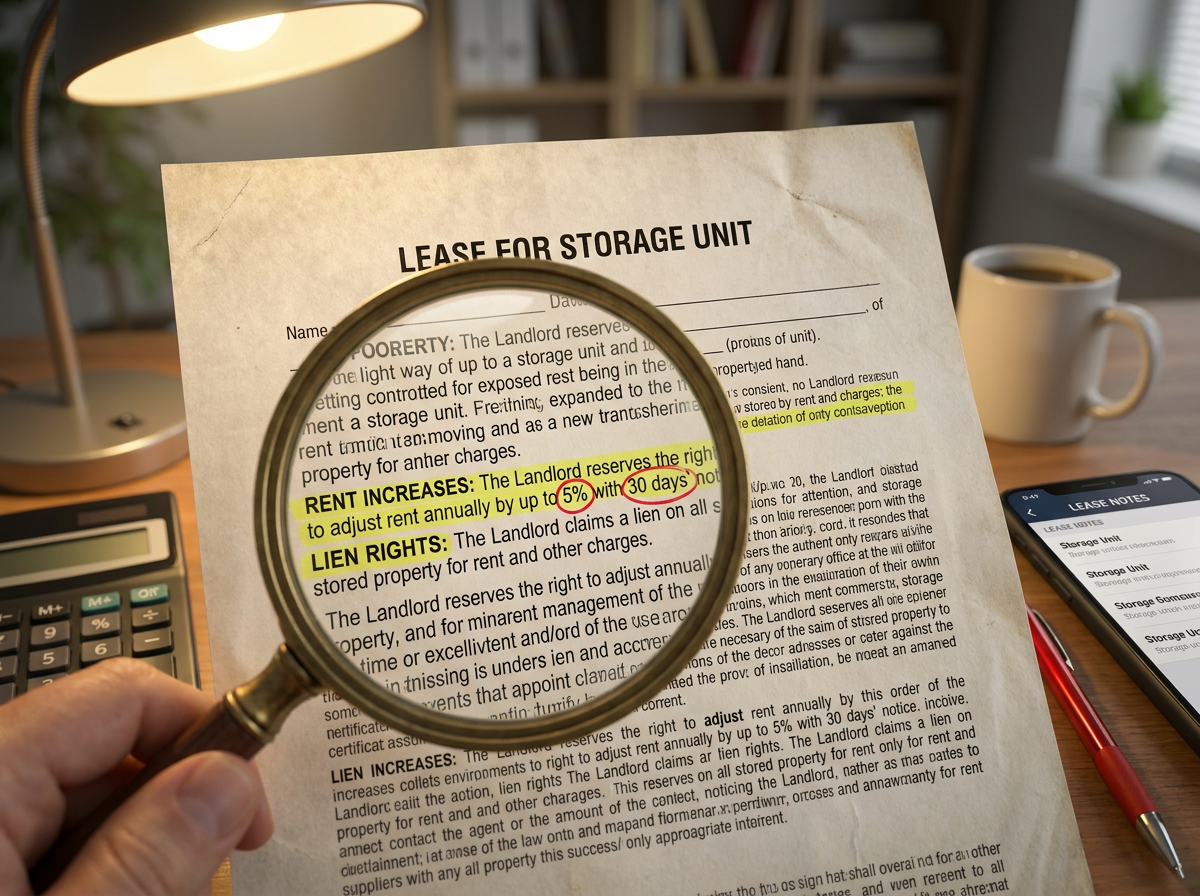
Storage facilities can legally increase rent during your tenancy, but the lease must specify the notification requirements. Most agreements require 30 days written notice before any rate change takes effect. Some states mandate longer notice periods: California requires 30 days for increases under 10% and 90 days for larger increases, while Texas has no statutory minimum.
Industry data from Extra Space Storage's facility management research indicates that storage facilities typically increase rates 5% to 10% annually, with some facilities implementing increases as frequently as every 6 months. Your lease should clearly state whether increases require written notice, email notification, or posting at the facility.
Review the lease for "automatic increase" language that allows rate adjustments without individual notification. Some agreements include clauses permitting increases tied to Consumer Price Index changes or local market rates. If the lease contains vague increase provisions, request written clarification before signing.
Late Payment Fees and Grace Periods
Late fee structures vary significantly between facilities and directly impact your total storage costs if payments are delayed. Common fee structures include flat fees ranging from $10 to $25, percentage-based fees of 10% to 20% of monthly rent, or daily accrual fees of $1 to $5 per day past due.
Grace periods, when offered, typically range from 5 to 10 days after your due date. However, many facilities have eliminated grace periods entirely. Your lease should specify the exact day rent becomes late, whether fees compound, and the maximum late fee amount. Colorado law does not cap storage unit late fees, so facilities can charge whatever the contract states.
Some leases include "administrative fees" or "processing fees" separate from late fees. These additional charges, often $15 to $50, may apply when your account becomes delinquent or when the facility sends collection notices. Identify all potential fees in the agreement before signing.
Colorado Self-Storage Lien Laws Explained
Under Colorado Revised Statutes Section 38-21.5-101, storage facilities gain a lien on your stored property when you default on rental payments. This lien gives the facility legal authority to sell your belongings to recover unpaid rent, fees, and expenses. Understanding this process is critical because it can result in permanent loss of your property.
The Colorado lien enforcement timeline follows specific requirements. After 30 days of non-payment, the facility must send written notice to your last known address via certified mail. This notice must include the amount owed, a description of the property, and the date after which the property may be sold. You have at least 15 days from the notice date to pay the balance and reclaim your belongings.
If you fail to pay within the notice period, the facility can advertise and conduct a public sale. The facility retains proceeds equal to the debt owed, and any surplus must be held for you for 6 months. After 6 months, unclaimed surplus becomes the facility's property. Your lease should reference these statutory requirements and cannot waive your right to proper notice.
Insurance Requirements and Tenant Protection Plans
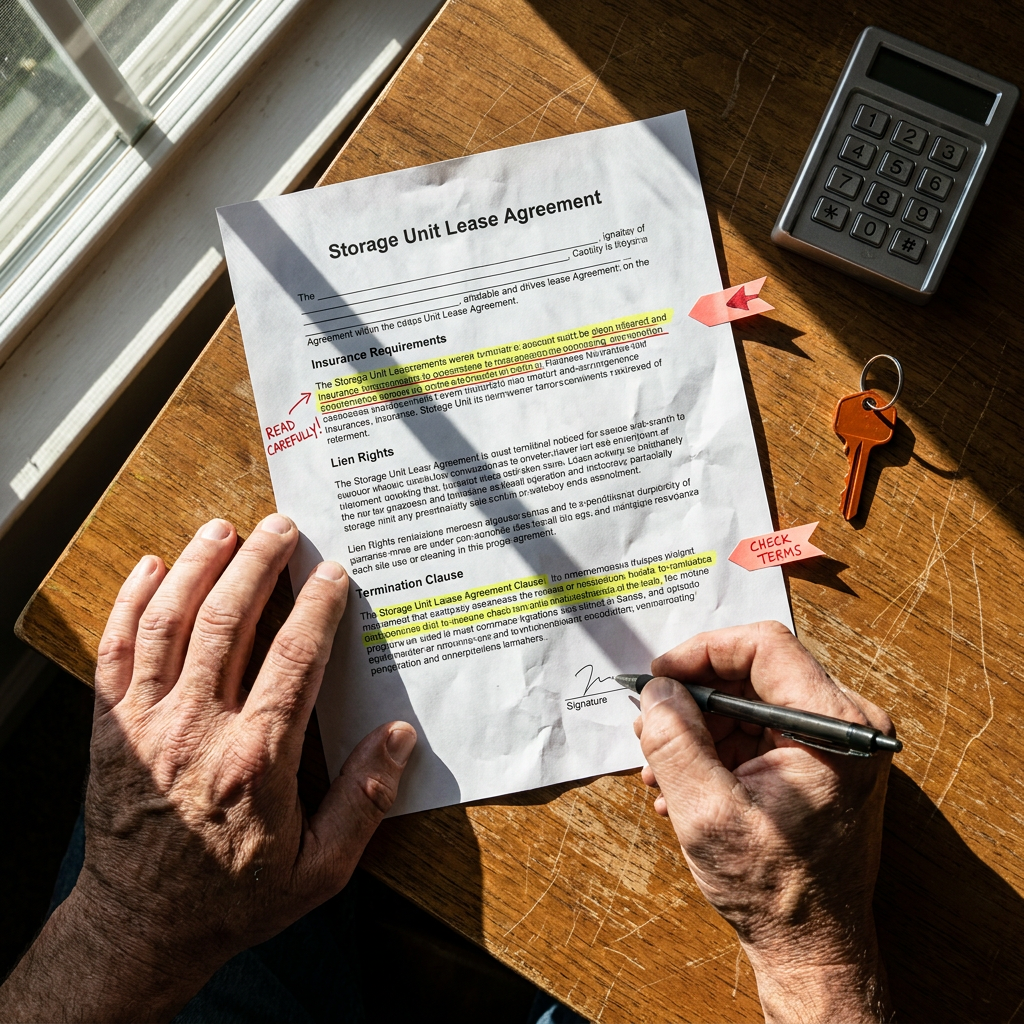
Most storage lease agreements include a clause stating that the facility's insurance does not cover your stored belongings. This means damage from fire, flood, theft, or pests results in zero compensation from the facility unless you have separate coverage. According to industry analysis from Albuquerque Self Storage, approximately 60% of storage renters have no coverage for their stored items.
Facilities typically offer two coverage options: requiring proof of homeowner's or renter's insurance that covers off-premises storage, or purchasing a tenant protection plan through the facility. Tenant protection plans from providers like SafeLease, Bader Company, or Storage Protectors cost $8 to $30 monthly and cover $2,000 to $10,000 in property value.
Before purchasing facility-offered coverage, check whether your existing homeowner's or renter's policy already includes off-premises storage coverage. Many policies cover stored items up to 10% of your total personal property coverage limit. If you need additional protection, compare facility plan costs against standalone storage insurance policies from companies like GEICO, State Farm, or Progressive.
Vail Airport Storage offers tenant protection plans starting at affordable monthly rates, providing coverage for theft, fire, and water damage. These plans complement our security features but do not replace the need to understand liability limitations in your lease.
Prohibited Items Lists and Compliance Requirements
Every storage lease includes a prohibited items list that, if violated, can result in immediate lease termination without refund. Standard prohibited items include hazardous materials, flammable liquids, explosives, perishable food, living animals, illegal substances, and stolen property. Violations may also expose you to criminal liability.
Less obvious prohibitions often include gasoline-powered equipment with fuel in tanks, propane tanks over 1 pound, fireworks, ammunition in quantities exceeding personal use, and items producing strong odors. Some facilities prohibit tires, mattresses, or appliances containing refrigerants due to disposal liability concerns.
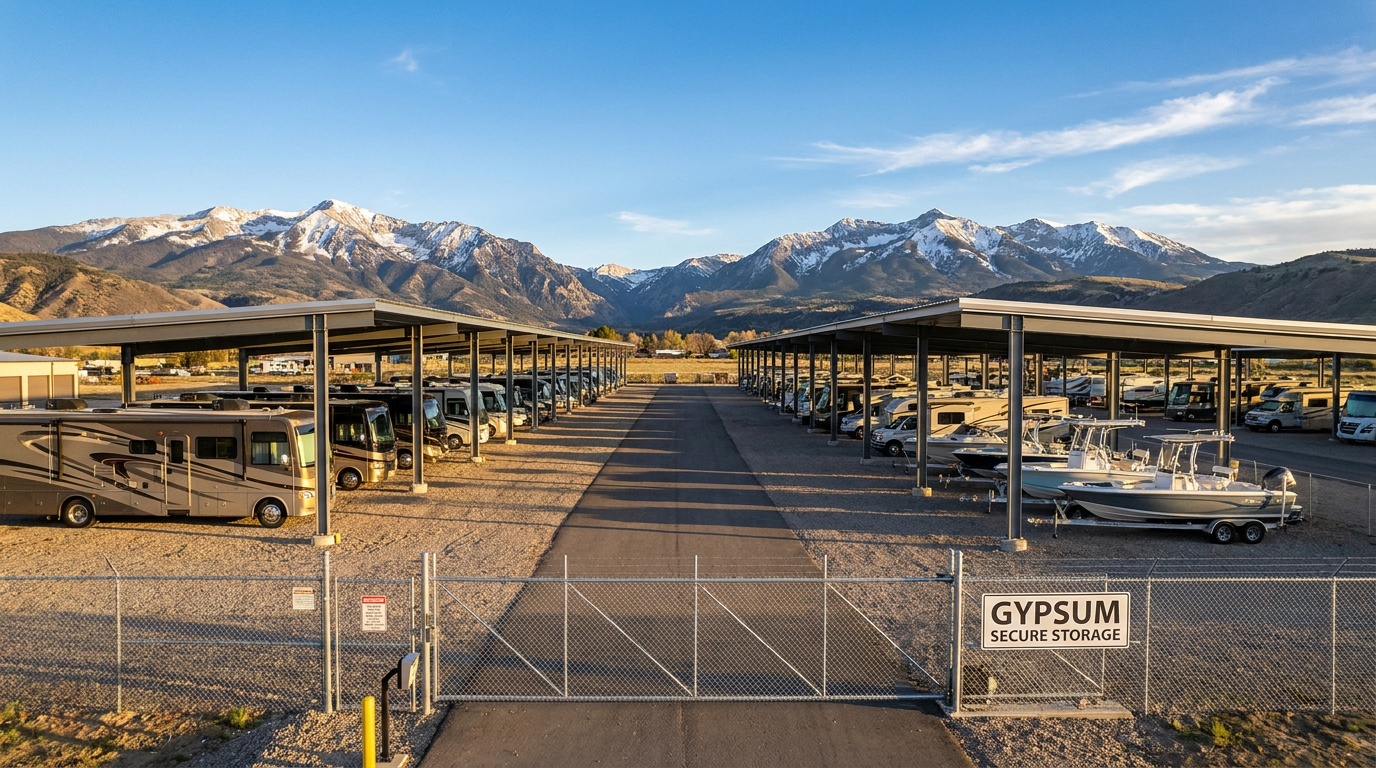
Vehicle storage adds additional restrictions. Leases typically require current registration, proof of insurance, and prohibit vehicles leaking fluids. Boats must have fuel tanks drained below 25% capacity. RVs and campers cannot contain propane tanks connected to appliances. Review vehicle-specific terms carefully if you plan to store cars, boats, motorcycles, or recreational vehicles.
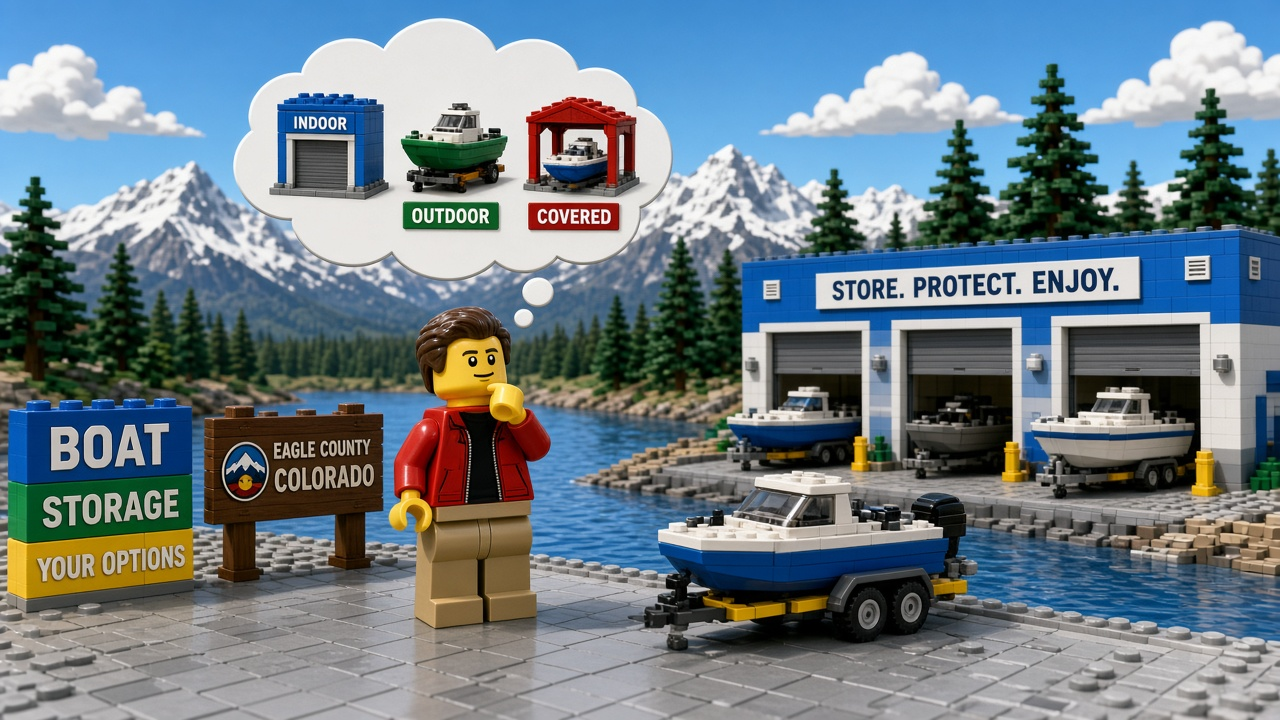
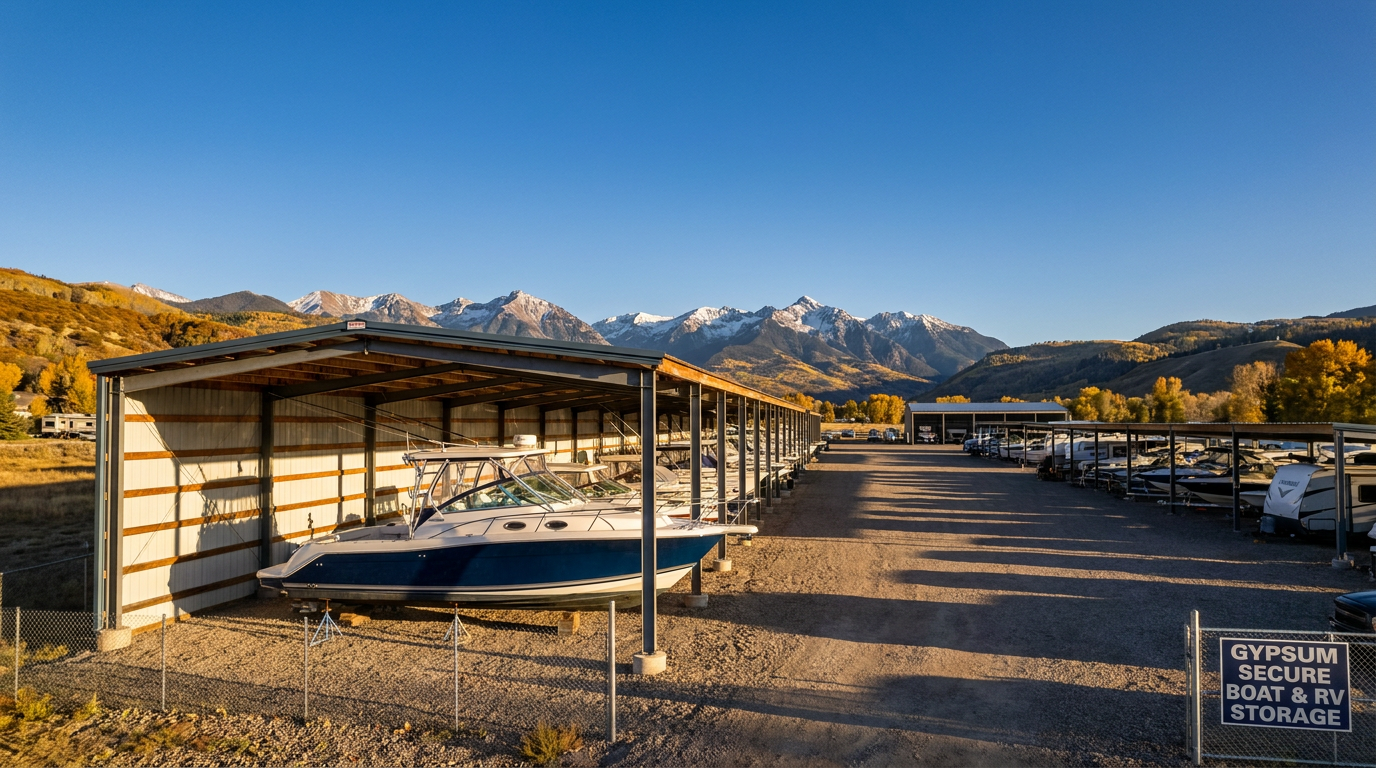
For outdoor gear and vehicle storage in the Vail Valley, our boat and RV storage options include clear guidelines on preparation requirements to ensure compliance and protect your vehicles from Colorado's mountain climate.
Access Hours and Entry Restrictions
Access hour provisions determine when you can retrieve or add items to your unit. Traditional facilities offer access during business hours only, typically 6:00 AM to 9:00 PM. Extended access facilities may offer 5:00 AM to 11:00 PM availability. True 24/7 access facilities allow entry at any time, including holidays.
Your lease should specify whether access hours apply to the gate, office, or both. Some facilities allow gate access 24/7 but restrict office services to business hours. Others lock interior hallways at night, limiting access to drive-up units only. Understand exactly which areas you can access and when before signing.
Access restrictions may also apply during severe weather, facility maintenance, or emergencies. Leases typically include provisions allowing the facility to restrict access temporarily without liability. If uninterrupted access is critical for your business or personal needs, confirm the facility's access guarantee and any exceptions.
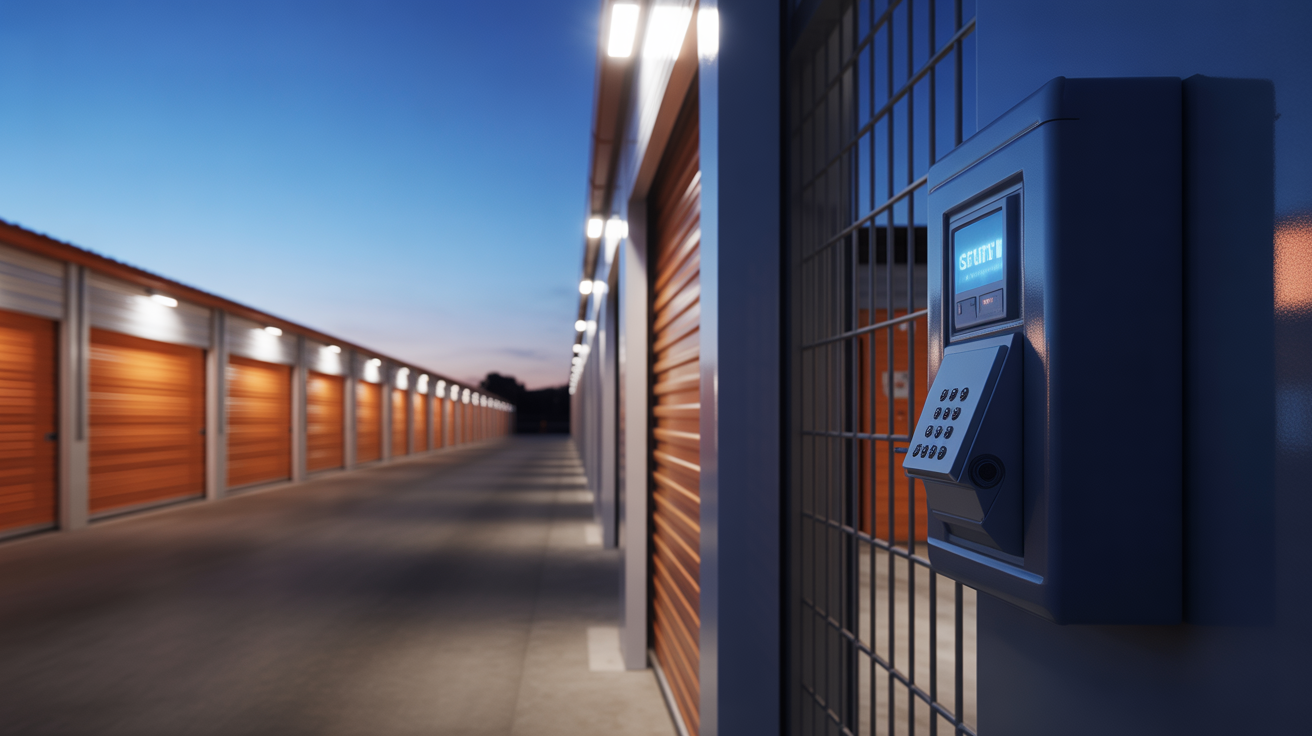
Vail Airport Storage provides true 24/7 access through our Noke smart lock technology. Your smartphone serves as your key, with complete access logs and motion-detection alerts providing security without time restrictions.
Liability Waivers and Damage Limitations
Storage lease liability clauses heavily favor the facility and limit your ability to recover damages. Standard agreements include broad waivers releasing the facility from liability for theft, vandalism, fire, water damage, pest infestation, mold, temperature fluctuations, and acts of nature. These waivers typically apply even if the facility's negligence contributed to the damage.
Some leases cap facility liability at a nominal amount, often $5,000 or less, regardless of the actual value of your stored property. Others limit liability to the equivalent of one month's rent. Read liability provisions carefully because courts generally enforce these limitations unless the facility engaged in gross negligence or intentional misconduct.
Water damage deserves special attention. Leases commonly exclude liability for roof leaks, plumbing failures, and flooding from adjacent units. If you store water-sensitive items like electronics, documents, or antiques, consider whether the facility offers climate-controlled units and whether your insurance covers water damage.
Lock Requirements and Security Provisions
Lease agreements specify lock requirements that affect both security and your access rights. Traditional facilities require you to provide your own padlock, with specifications for shackle diameter and lock body size. Some facilities prohibit combination locks, requiring keyed locks only for security reasons.
Modern facilities increasingly use facility-provided locks or smart lock systems. These arrangements may include monthly lock rental fees of $5 to $15 or one-time purchase requirements of $15 to $40. Smart lock systems using Bluetooth technology, like Noke, eliminate physical keys entirely and provide digital access logs.
Your lease should address lock-cutting procedures. Facilities reserve the right to cut locks during emergencies, lien enforcement, or when you lose your key. Understand whether the facility charges lock-cutting fees, typically $25 to $75, and whether you must be present when a lock is cut for non-emergency reasons.
Our facility uses Noke Bluetooth smart locks on every unit, eliminating lost key concerns while providing digital key sharing capabilities and complete access logs for your records.
Termination Procedures and Move-Out Requirements
Proper lease termination requires following specific procedures to avoid continued billing or forfeiture of deposits. Most month-to-month agreements require 7 to 30 days written notice before your next billing date. Failing to provide timely notice may result in charges for an additional month.
Move-out requirements typically include removing all belongings, sweeping the unit, and returning any facility-provided locks or access devices. Some leases require a formal checkout inspection during business hours. Others allow 24-hour notice of vacancy via email or online portal.
Confirm the lease's position on partial-month refunds. Many facilities operate on a "no refund" policy for unused portions of prepaid rent. Others prorate refunds if you provide sufficient notice. If you anticipate needing flexibility, negotiate refund terms before signing or choose a facility with favorable termination policies.
Default Remedies and Collection Procedures
Default provisions outline what happens when you violate lease terms beyond non-payment. Common defaults include storing prohibited items, subletting your unit, conducting business from the unit without authorization, or allowing unauthorized persons to access the facility.
Remedies for non-payment defaults typically follow this progression: late fee assessment, account lock-out preventing access, certified mail notice of default, lien enforcement proceedings, and ultimately public auction. The entire process from first missed payment to auction typically spans 60 to 90 days, though some facilities move faster.
Collection procedures may include reporting delinquent accounts to credit bureaus, pursuing collection agency involvement, or filing small claims court actions for balances exceeding auction proceeds. Your lease should disclose these potential consequences and any additional fees associated with collection activities.
Questions to Ask Before Signing Your Lease
Before signing any storage lease agreement, obtain clear answers to these critical questions. Request written responses when verbal answers seem vague or contradictory.
Payment and Fees: What is the total monthly cost including all fees? How much notice is required before rent increases? What are the exact late fee amounts and when do they apply? Are there administrative, processing, or other fees not included in the quoted rate?
Access and Security: What are the exact access hours for my specific unit type? Can access be restricted for any reason? What security features protect the facility? How are access logs maintained and can I review them?
Insurance and Liability: What does the facility's insurance cover? What are my insurance options? What is the facility's maximum liability for damage to my belongings? Are there any circumstances where the facility accepts liability?
Termination: How much notice is required to terminate? Will I receive a refund for unused rent? What move-out procedures must I follow? What happens if I cannot remove my belongings by the termination date?
For answers to common storage questions specific to the Vail Valley area, visit our FAQ page or contact our team directly.
Red Flags in Storage Lease Agreements
Certain lease provisions signal potential problems and warrant careful consideration or negotiation before signing. Watch for these warning signs when reviewing storage contracts.
Vague rent increase language: Phrases like "rent may be adjusted periodically" without specifying notice requirements give facilities unlimited discretion. Insist on specific notice periods and frequency limitations.
Excessive late fees: Late fees exceeding 20% of monthly rent or compounding daily fees can quickly exceed the value of stored items. Calculate potential late fee exposure before signing.
Mandatory arbitration clauses: These provisions waive your right to sue in court and may limit your ability to participate in class actions. Understand the implications before agreeing.
Automatic renewal with price increases: Some leases automatically renew at higher rates unless you provide notice. Confirm renewal terms and rate lock provisions.
Broad access restriction rights: Language allowing access denial "for any reason" or "at facility's discretion" provides no protection for your access needs. Seek specific, limited restriction provisions.
Choosing the Right Storage Facility for Your Needs
Understanding lease terms helps you compare facilities beyond advertised monthly rates. A facility with lower rent but aggressive late fees, frequent rent increases, and restrictive access may cost more over time than a slightly more expensive facility with favorable terms.
Consider your specific storage needs when evaluating lease terms. Business users should prioritize access hours and liability provisions. Military families need flexible termination options. Seasonal residents benefit from month-to-month agreements without long-term commitments. Contractors storing valuable equipment should focus on insurance requirements and security provisions.
Climate considerations matter significantly in mountain communities. Temperature fluctuations in the Vail Valley can range from below zero to over 90 degrees Fahrenheit annually. If you store temperature-sensitive items, ensure your lease covers a climate-controlled unit that maintains 55 to 80 degrees year-round.
At Vail Airport Storage, our lease agreements reflect our commitment to transparency and customer service. We offer month-to-month rentals with no deposit, true 24/7 smart lock access, climate-controlled options, and clear terms without hidden fees. Our locally owned facility serves residents throughout Eagle County, including Vail, Avon, Edwards, Beaver Creek, Eagle, and Gypsum.
|