RV and Boat Storage Near Gypsum: What to Check Before You Park |
| RV AND BOAT STORAGE NEAR GYPSUM: WHAT TO CHECK BEFORE YOU PARK
⏱ 19 min read ·
📄 #3,635 words
Looking for boat storage in Gypsum, CO? Compare open parking from $190 and covered canopy from $250, plus security, access, and prep tips before you store your RV or boat.
|
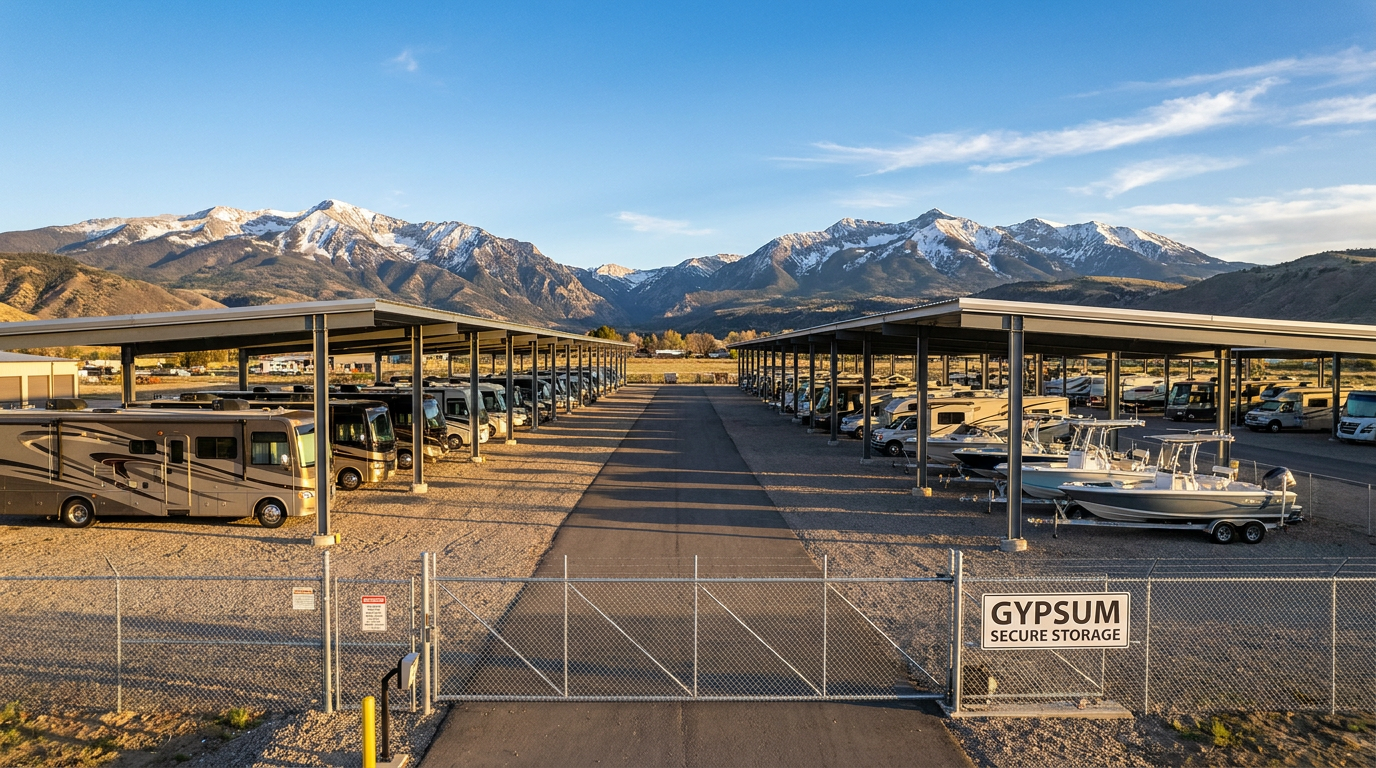
B efore parking your RV or boat at a storage facility near Gypsum, Colorado, verify security features, access hours, space dimensions, surface conditions, and pricing structure. The best facilities in Eagle County offer 24/7 gated access, paved or gravel surfaces, adequate clearance for vehicles up to 35 feet, and monthly rates between $190 and $390 depending on covered versus open parking.
| Key Points: | |
|---|---|
| • | Security essentials: Look for perimeter fencing (minimum 6 feet), gated entry, video surveillance, and individual unit locks |
| • | Space requirements: Standard RV spots measure 10x25 to 15x40 feet; boats need 8x15 to 12x30 feet depending on trailer length |
| • | Gypsum area pricing: Open parking runs $190 to $209/month; covered canopy storage costs $250 to $390/month |
| • | Access matters: Facilities with smartphone-based entry systems eliminate lockout risks and provide complete access logs |
| • | Mountain climate consideration: Gypsum temperatures range from -10°F to 95°F annually, making covered storage essential for long-term protection |
Why Gypsum Is a Prime Location for RV and Boat Storage
Gypsum sits at the geographic center of Eagle County, positioned along Interstate 70 between Vail and Glenwood Springs. This location provides convenient access for residents throughout the Vail Valley, including Avon, Edwards, Beaver Creek, Eagle, and Wolcott. The town's proximity to Eagle County Regional Airport (EGE) makes it particularly attractive for seasonal residents who fly in and need immediate access to stored recreational vehicles.
The region supports a thriving outdoor recreation economy. According to the RV Industry Association, recreational vehicle ownership increased 62% between 2001 and 2021, with mountain communities seeing even higher growth rates. Eagle County's access to whitewater rafting on the Colorado River, fishing at Sylvan Lake State Park, and boating at Green Mountain Reservoir drives consistent demand for secure boat storage.
Gypsum's elevation of 6,275 feet creates unique storage challenges. Winter temperatures regularly drop below zero, while summer highs exceed 90°F. This 100-degree annual temperature swing makes facility selection critical for protecting fiberglass hulls, rubber seals, and electronic components.
Security Features Every RV and Boat Owner Should Verify
Security represents the primary concern for recreational vehicle owners. A 2023 National Insurance Crime Bureau report documented 7,458 RV thefts nationwide, with an average loss of $42,000 per incident. Boats face similar risks, with the U.S. Coast Guard reporting over 4,200 vessel thefts annually.
Perimeter Security Standards
Quality facilities maintain perimeter fencing of at least 6 feet in height. The best operations in Gypsum use 9-foot fencing with anti-climb features. Look for facilities with single-point entry and exit, which prevents unauthorized vehicle access and creates a documented trail of all arrivals and departures.
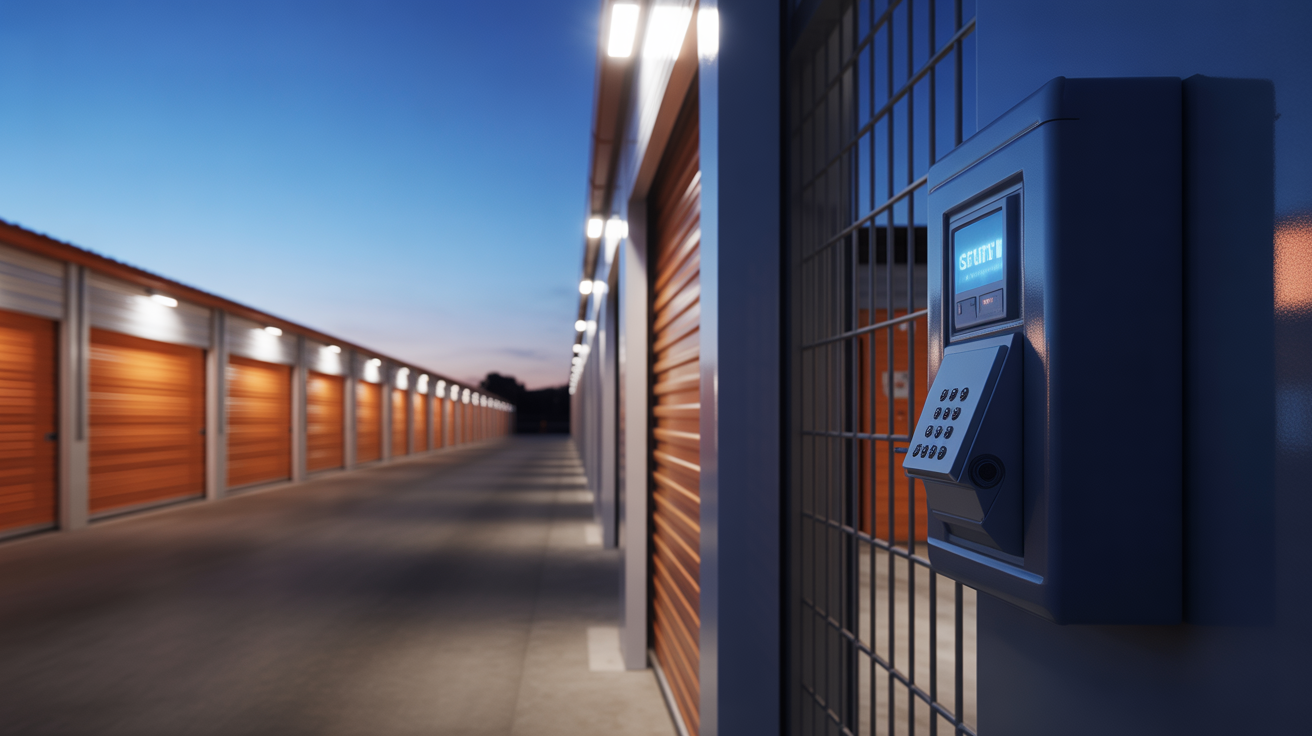
Gate systems vary significantly in security level. Basic facilities use shared combination codes that rarely change. Advanced facilities employ individual access credentials through smartphone apps or key fobs. Noke smart lock technology provides Bluetooth-enabled entry that generates complete access logs and allows digital key sharing with family members or service technicians.
Surveillance and Monitoring
Video surveillance quality matters more than camera quantity. Verify that cameras record in high definition (1080p minimum) and store footage for at least 30 days. Motion-detection alerts notify facility managers of after-hours activity, enabling rapid response to potential security breaches.
LED lighting throughout the facility deters criminal activity and improves camera footage quality. Well-lit aisles also reduce the risk of accidental damage when maneuvering large vehicles in low-light conditions.
| Security Feature | Basic Facility | Premium Facility |
|---|---|---|
| Perimeter Fencing | 6-foot chain link | 9-foot with anti-climb |
| Gate Access | Shared keypad code | Individual smartphone access |
| Video Surveillance | Standard definition, 7-day storage | HD 1080p, 30+ day storage |
| Lighting | Partial coverage | Full LED with motion sensors |
| Access Logs | None or manual | Automatic digital records |
Understanding Space Requirements for Different Vehicle Types
Selecting the correct space size prevents damage from tight maneuvering and ensures adequate clearance for maintenance access. Undersized spaces force awkward parking angles that stress trailer hitches and make winterization tasks difficult.
RV Size Categories and Space Needs
Class A motorhomes, the largest RV category, range from 26 to 45 feet in length. These vehicles require parking spaces of at least 12x35 feet, with 15x40 feet preferred for comfortable access. Class B campervans fit in standard 10x20 spaces, while Class C motorhomes need 10x25 to 12x30 feet depending on the specific model.
Travel trailers and fifth wheels add tongue length to overall dimensions. A 28-foot travel trailer with a 4-foot tongue requires a minimum 35-foot space. Fifth wheels with extended pin boxes may need 40-foot spaces for models advertised as 35 feet.
Boat and Trailer Dimensions
Boat storage calculations must include trailer length. A 20-foot boat typically sits on a 24-foot trailer, requiring a 10x30 space minimum. Pontoon boats need wider spaces due to their beam, with 12-foot-wide spots recommended for vessels over 22 feet.
Height clearance becomes critical for covered storage. Fishing boats with T-tops or center console towers may exceed 10 feet in total height. Sailboats with masts require specialized facilities or mast-down storage. Verify clearance specifications before signing any storage agreement.
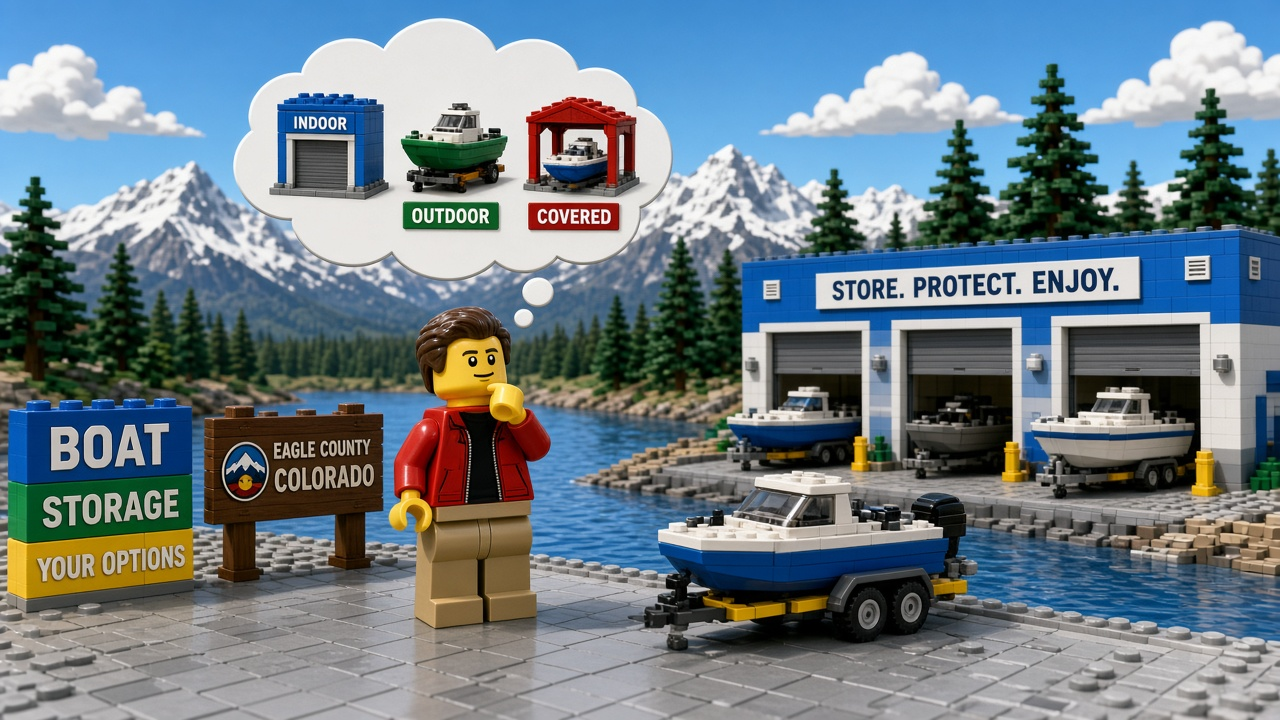
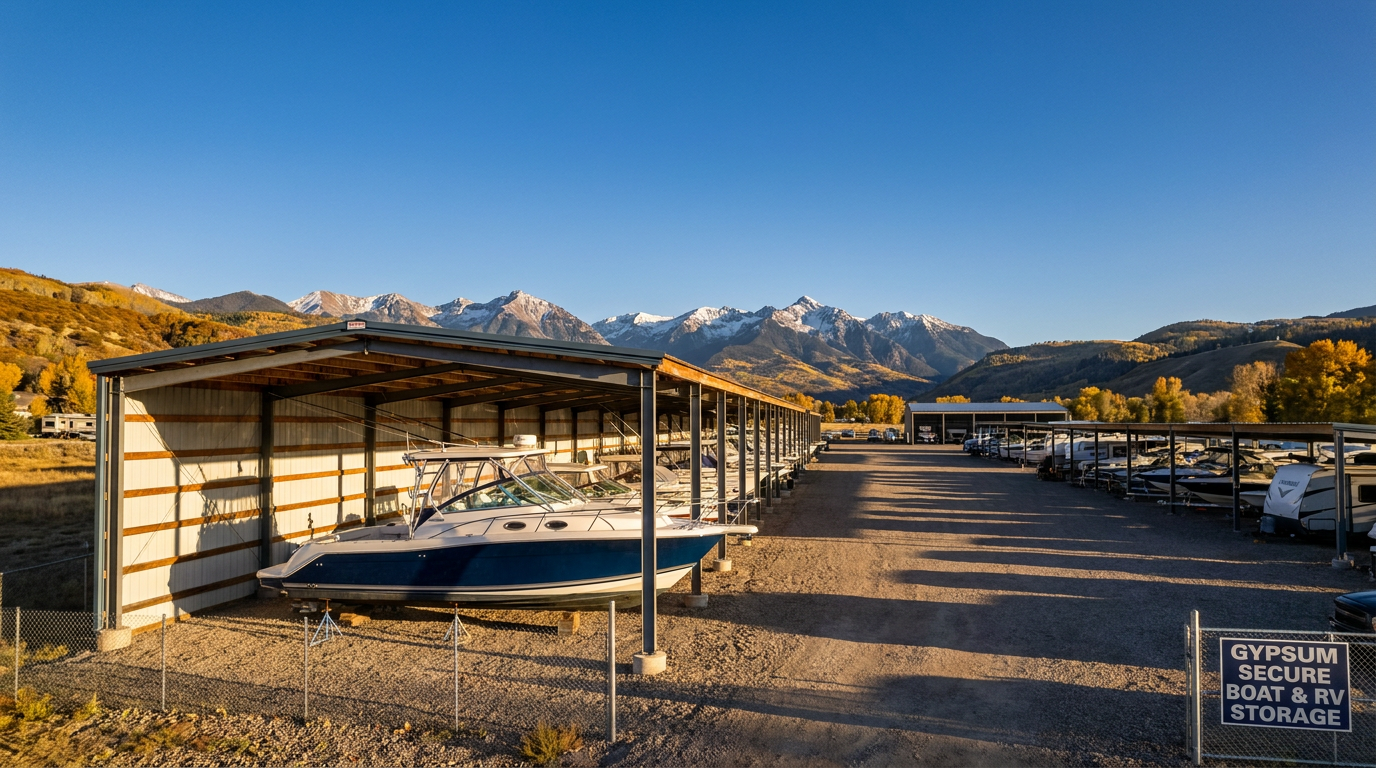
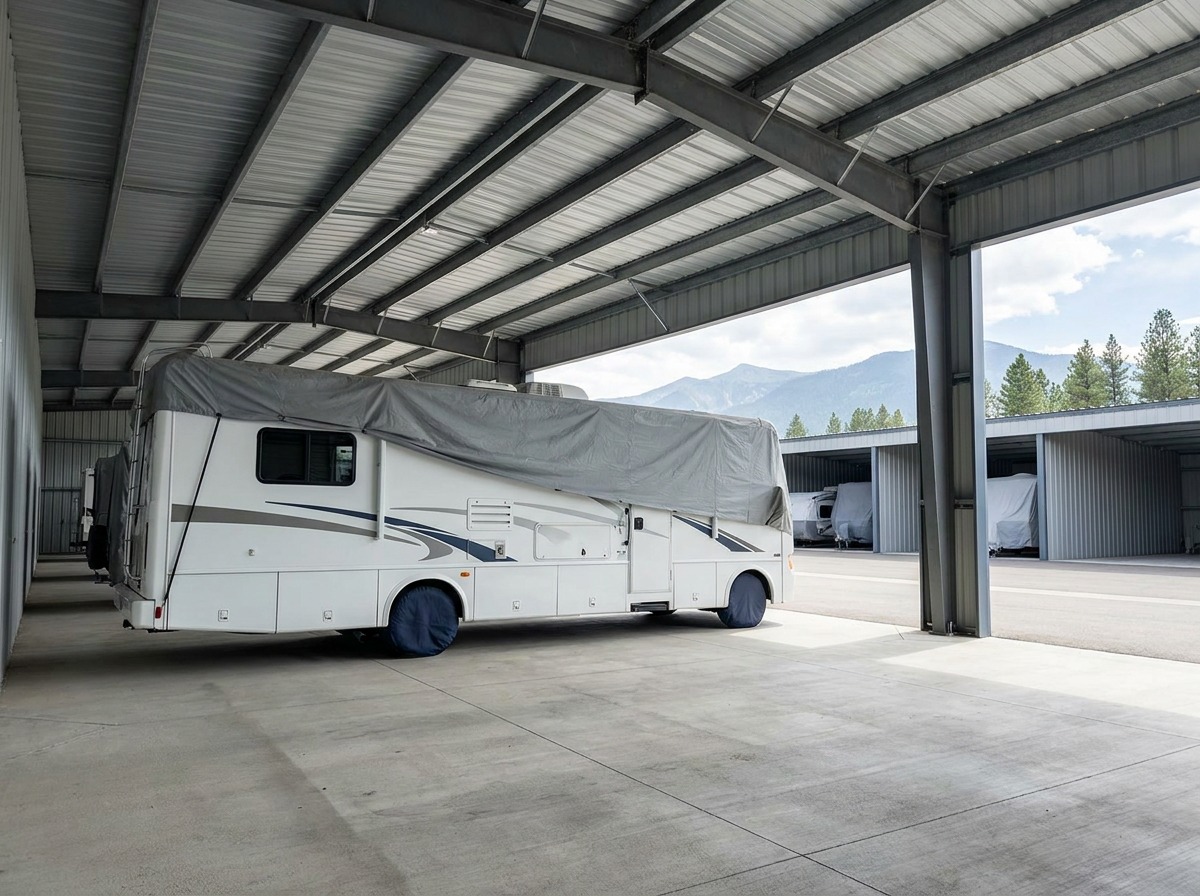
The vehicle storage options near Gypsum include open parking spaces measuring 8x15 feet for smaller boats and trailers, with larger 10x25 and 10x30 drive-up units available for full-size RVs requiring enclosed protection.
Covered vs. Open Storage: Making the Right Choice for Mountain Climates
The decision between covered and open storage significantly impacts both cost and vehicle longevity. According to industry research from The Storage Advantage, covered storage extends the lifespan of exterior finishes by 3 to 5 years compared to open-air alternatives.
Benefits of Covered Canopy Storage
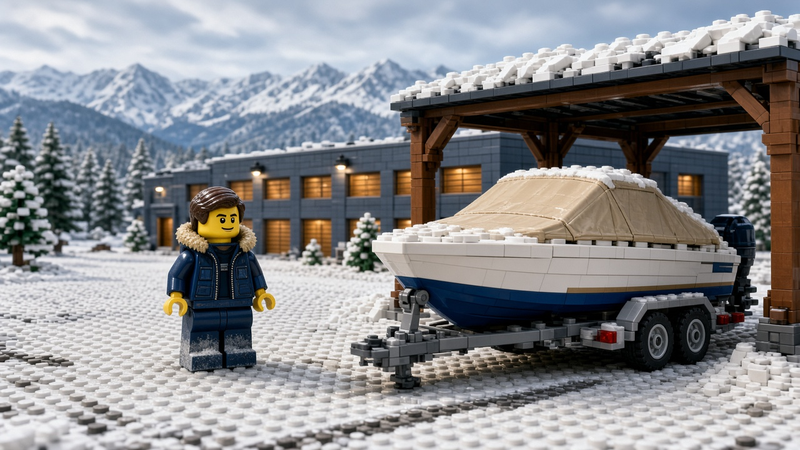
Covered storage protects against UV degradation, which causes fiberglass gelcoat to oxidize and fade. Colorado's high-altitude sun delivers 25% more UV radiation than sea-level locations, accelerating this damage. Rubber seals around windows, doors, and slide-outs deteriorate faster under direct sun exposure, leading to water intrusion and costly repairs.
Snow and ice accumulation creates weight stress on RV roofs and boat covers. A single heavy snowfall can deposit 20 to 40 pounds per square foot on horizontal surfaces. Covered storage eliminates this load entirely while preventing ice dam formation that damages seals and trim.
Hail represents a significant risk in Eagle County. The National Weather Service records an average of 8 to 12 hail events annually along the I-70 corridor. Covered storage provides complete protection against hail damage that can total recreational vehicles in a single storm.
When Open Parking Makes Sense
Open parking suits vehicles used frequently throughout the season. Owners who access their RV or boat weekly during summer months may prefer the lower cost and easier maneuverability of open spaces. Vehicles with high-quality covers and regular maintenance schedules can tolerate short-term open storage without significant degradation.
Budget constraints also factor into the decision. Open parking at $190 to $209 per month saves $40 to $200 compared to covered options. For a $15,000 boat used only 3 to 4 months annually, the savings may outweigh the incremental wear.
Access Hours and Convenience Features
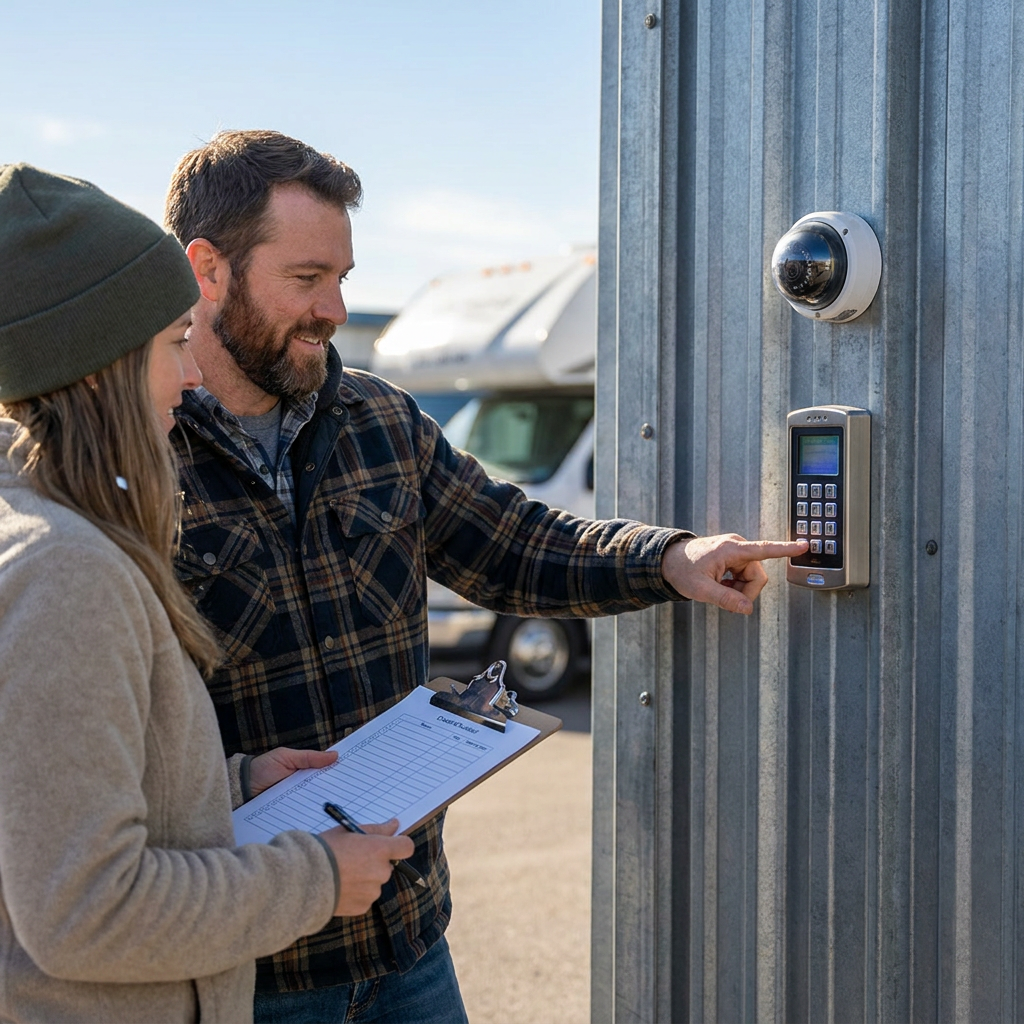
Access policies vary dramatically between facilities. Some operations restrict entry to business hours (8 AM to 6 PM), while others provide true 24/7 access. For active users planning early-morning fishing trips or late-evening returns from camping, unrestricted access becomes essential.
Evaluating Access Systems
Traditional keypad systems require memorizing codes and physically entering them at the gate. Smartphone-based systems allow one-tap entry from inside your tow vehicle, eliminating the need to exit in rain, snow, or darkness. Learn more about how 24/7 storage access works and the security features that make it safe.
Digital key sharing solves the challenge of multiple users. Families with teenagers who drive the boat or couples who alternate RV trips can share access credentials without duplicating physical keys. This feature also simplifies granting temporary access to detailing services or mechanics.
Maneuvering Space and Aisle Width
Wide aisles reduce the stress of parking large vehicles. Quality facilities maintain aisle widths of at least 30 feet for RV areas and 25 feet for boat storage. Narrow aisles below these thresholds create difficult turning angles and increase the risk of mirror strikes or trailer scrapes.
Pull-through spaces eliminate the need for backing, which many RV owners find challenging. These premium spots command higher prices but provide significant convenience value for less experienced drivers or those with limited visibility from their tow vehicle.
Surface Conditions and Drainage
The parking surface directly impacts tire health and vehicle stability. Poorly maintained surfaces lead to flat spots, sidewall damage, and even structural stress on trailer frames.
Paved vs. Gravel Surfaces
Asphalt or concrete surfaces provide the most stable foundation. These materials distribute weight evenly, prevent tire sinking, and eliminate mud concerns during spring snowmelt. Paved surfaces also simplify cleaning and reduce dust accumulation on stored vehicles.
Gravel surfaces work adequately for short-term storage but present challenges during extended parking. Tires can sink into gravel over months of static weight, creating flat spots and requiring repositioning. Quality gravel installations use compacted base layers with proper drainage grading to minimize these issues.
Drainage and Flood Risk
Gypsum's location along the Eagle River creates localized flood risks during spring runoff. Verify that any storage facility sits above the 100-year floodplain and maintains proper drainage infrastructure. Facilities with engineered drainage systems prevent water pooling that leads to rust, mold, and electrical damage.
Inspect the facility after a heavy rain if possible. Standing water, eroded gravel, or mud accumulation indicate inadequate drainage that will worsen over time.
Pricing Structures and Hidden Costs
Storage pricing in the Gypsum area follows regional market patterns, with significant variation based on coverage type, security level, and included amenities. Understanding the full cost structure prevents budget surprises.
Standard Pricing Ranges
Boat storage in Gypsum, CO ranges from $190 to $209 per month for open parking depending on size and facility. Covered canopy storage runs $250 to $390 monthly, with premium enclosed drive-up units with power starting at $299 for full weather protection.
Annual payment discounts typically reduce costs by 5% to 15%. A facility charging $300 monthly may offer an annual rate of $3,060 (15% savings), representing $540 in annual savings for committed long-term users.
| Storage Type | Monthly Range | Best For |
|---|---|---|
| Open Parking (8x15) | $209 | Small boats, jet skis, utility trailers |
| Open Parking (10x20) | $190 | Mid-size RVs, pontoon boats |
| Covered Canopy | $250 to $390 | Year-round storage, hail protection |
| Enclosed Drive-Up (10x30) | $299 | Full protection, power access |
| Climate-Controlled (10x15 to 10x20) | $127 to $199 | Classic vehicles, high-value boats |
Common Additional Fees
Security deposits range from $50 to one month's rent at traditional facilities. Some modern operations, including locally-owned facilities in Gypsum, have eliminated deposit requirements entirely, reducing upfront costs by $150 to $400.
Administrative fees for setup, key cards, or gate remotes add $25 to $75 at many facilities. Insurance requirements may mandate coverage of $2,000 to $10,000, either through your existing policy or a facility-provided tenant protection plan costing $10 to $30 monthly.
Late payment penalties typically run 5% to 10% of monthly rent after a 5 to 10 day grace period. Facilities with automatic payment options help avoid these charges while ensuring continuous access.
Preparing Your RV or Boat for Storage
Proper preparation before storage prevents costly damage and ensures your vehicle is ready for immediate use when the season returns. According to our Gypsum boat storage guide, following a systematic preparation process reduces storage-related repair costs by up to 60%.
RV Winterization Checklist
Drain all water systems including fresh water tanks, water heater, and plumbing lines. Add RV antifreeze rated to -50°F through the entire water system. In Gypsum's climate, frozen pipes represent the most common and expensive storage damage, with repairs averaging $800 to $2,500.
Remove all food items to prevent pest attraction. Clean refrigerator and freezer compartments, leaving doors slightly ajar to prevent mold growth. Place moisture absorbers throughout the interior to combat humidity buildup during temperature fluctuations.
Disconnect and remove batteries, storing them in a temperature-stable location. Batteries left connected discharge over time and may freeze in extreme cold, causing permanent damage. A quality battery maintainer costs $30 to $75 and extends battery life by 2 to 3 years.
Boat Storage Preparation
Flush the engine with fresh water to remove salt, sand, and debris. For outboard motors, run the engine with the lower unit in a bucket of fresh water for 10 to 15 minutes. Apply fogging oil to cylinders and add fuel stabilizer to prevent ethanol-related fuel system damage.
Remove the drain plug and tilt the motor down to ensure complete water drainage. Even small amounts of trapped water can freeze and crack engine blocks or lower units, resulting in repairs exceeding $3,000.
Clean the hull thoroughly and apply a quality wax to protect the gelcoat during storage. Cover the boat with a breathable cover that allows moisture escape while blocking UV rays and debris. Avoid plastic tarps that trap moisture and promote mold growth.
For detailed guidance on storing outdoor recreation equipment, review our complete guide on how to store camping and outdoor gear between seasons.
Insurance and Liability Considerations
Storage facility liability typically covers only the facility's negligence, not damage to your vehicle from weather, theft, or vandalism. Understanding insurance requirements protects your investment.
Existing Policy Coverage
Contact your RV or boat insurance provider to verify storage coverage. Many policies provide comprehensive coverage while in storage, but some require notification of the storage location or have limitations on coverage duration. Policies may exclude certain perils like flood or earthquake unless specifically added.
Liability limits matter for high-value vehicles. A $50,000 RV requires at least $50,000 in comprehensive coverage, with higher limits recommended to account for replacement cost versus actual cash value depreciation.
Facility-Provided Protection
Many facilities offer tenant protection plans through providers like SafeLease or Bader Company. These plans typically cost $10 to $30 monthly and provide $2,000 to $10,000 in coverage for theft, fire, and certain weather events. Review exclusions carefully, as flood and earthquake coverage often requires separate riders.
Document your vehicle's condition before storage with dated photographs. Capture the odometer reading, fuel level, and any existing damage. This documentation proves invaluable for insurance claims and disputes over storage-related damage.
Location Convenience and Accessibility
Storage location affects both convenience and security. Facilities near major roads provide easy access but may experience higher traffic and noise. Remote locations offer privacy but complicate quick trips to check on your vehicle.
Proximity to Your Home and Recreation Areas
Calculate drive time from your home to the storage facility. A facility 30 minutes away adds an hour of travel to every use, potentially discouraging spontaneous trips. For active users, proximity often justifies higher monthly costs at closer locations.
Consider proximity to your typical recreation destinations. Storing a boat near Green Mountain Reservoir access points or an RV near preferred camping areas reduces towing distance and fuel costs. The Gypsum area provides central access to recreation throughout Eagle County and the I-70 corridor.
Airport Proximity for Seasonal Residents
Seasonal residents and vacation property owners benefit from storage near Eagle County Regional Airport. Facilities adjacent to EGE allow quick vehicle retrieval upon arrival, maximizing vacation time. Learn more about airport self storage options designed for travelers flying through the Vail Valley.
Contract Terms and Flexibility
Storage contracts vary from month-to-month agreements to annual commitments. Understanding terms before signing prevents unexpected costs and access restrictions.
Month-to-Month vs. Annual Contracts
Month-to-month agreements provide maximum flexibility for owners with uncertain schedules. These contracts typically allow 30-day cancellation notice without penalty. The tradeoff is higher monthly rates, typically 10% to 20% above annual contract pricing.
Annual contracts lock in rates and often include discounts, but early termination may trigger penalties equal to 1 to 3 months' rent. Evaluate your usage patterns honestly before committing to long-term agreements.
Rate Increase Policies
Ask about rate increase frequency and caps. Some facilities raise rates annually by 3% to 8%, while others guarantee rates for the contract duration. Month-to-month tenants face the highest rate increase risk, sometimes seeing 10% to 15% jumps with minimal notice.
Review the facility's history of rate changes if possible. Online reviews often mention unexpected increases that indicate aggressive pricing practices.
Questions to Ask Before Signing a Storage Agreement
Arriving prepared with specific questions helps evaluate facilities efficiently and avoid common pitfalls. Use this checklist during facility tours.
Security and Access Questions
- What are the exact access hours, and are there any holiday restrictions?
- How does the gate access system work, and can I share access with family members?
- How long is surveillance footage retained, and what is the camera resolution?
- What is the fence height and construction material?
- Has the facility experienced any thefts or break-ins in the past 3 years?
Space and Facility Questions
- What are the exact dimensions of available spaces, including height clearance?
- What is the aisle width in the area where my vehicle would be parked?
- Is the surface paved, gravel, or dirt, and how is drainage managed?
- Are pull-through spaces available for my vehicle size?
- Is electrical power available for battery maintenance or pre-trip charging?
Financial and Contract Questions
- What is the total monthly cost including all fees and required insurance?
- Is a security deposit required, and what are the refund conditions?
- What is the cancellation policy and required notice period?
- How often do rates increase, and what is the typical percentage?
- Are there discounts for annual payment or multiple vehicles?
For answers to common storage questions, visit our comprehensive storage unit FAQ page.
Comparing Storage Options in the Gypsum Area
The Gypsum and Eagle area offers several storage facility options with varying features and price points. Evaluating multiple facilities ensures you find the best match for your specific needs.
Facility Evaluation Framework
Create a comparison matrix scoring each facility on security (25%), access convenience (20%), space suitability (20%), price value (20%), and contract flexibility (15%). This weighted approach prevents over-emphasizing any single factor while ensuring comprehensive evaluation.
Visit facilities in person whenever possible. Online photos may not reveal drainage issues, tight turning areas, or security gaps visible during physical inspection. Request a tour of the specific space you would rent, not just the facility's best areas.
Red Flags to Avoid
Damaged fencing, broken gate mechanisms, or non-functional cameras indicate deferred maintenance that may affect your vehicle's security. Overgrown vegetation near perimeter fencing provides concealment for intruders and suggests inadequate property management.
Facilities unwilling to provide written documentation of security features, insurance requirements, or contract terms may be hiding unfavorable conditions. Professional operations provide clear, written agreements covering all aspects of the storage relationship.
Extremely low prices often indicate compromised security, poor surface conditions, or hidden fees that eliminate apparent savings. Compare total annual costs including all fees rather than advertised monthly rates.
Seasonal Timing and Availability
Storage demand in Eagle County follows predictable seasonal patterns. Understanding these cycles helps secure preferred spaces and potentially negotiate better rates.
Peak Demand Periods
RV storage demand peaks in October and November as owners winterize vehicles before ski season. Boat storage demand surges in September and October following the end of summer recreation season. Facilities often reach capacity during these periods, with waitlists forming at popular locations.
Reserving space 4 to 6 weeks before your planned storage date ensures availability. Some facilities offer reservation deposits that hold specific spaces without full monthly payment until move-in.
Off-Peak Opportunities
Late winter and early spring represent the lowest demand period for recreational vehicle storage. Facilities may offer promotional rates or waive administrative fees to fill vacant spaces during February through April. Negotiating annual contracts during these periods often yields better terms than peak-season agreements.
Long-Term Storage Maintenance Requirements
Extended storage periods require periodic maintenance to prevent mechanical issues and preserve vehicle condition. According to our RV and boat storage guide, vehicles stored more than 6 months benefit from monthly inspections and quarterly maintenance tasks.
Monthly Inspection Tasks
Check tire pressure monthly, as tires lose 1 to 2 PSI per month even when stationary. Under-inflated tires develop flat spots and sidewall damage. Consider tire covers to block UV exposure that accelerates rubber degradation.
Inspect for pest intrusion, particularly during fall and winter when rodents seek shelter. Mouse droppings, chewed wiring, or nesting materials indicate infestation requiring immediate treatment. Facilities with paved surfaces and regular pest control programs experience fewer rodent issues.
Verify battery charge levels if batteries remain connected. Solar trickle chargers maintain charge without requiring electrical hookups, providing a practical solution for open parking spaces.
Quarterly Maintenance Tasks
Run the engine for 15 to 20 minutes quarterly to circulate fluids and prevent seal dry-out. For boats, this requires either a flush attachment or moving the vessel to water. Some storage facilities offer on-site engine running services for an additional fee.
Operate all slide-outs, leveling jacks, and awnings to prevent seal adhesion and mechanical binding. Lubricate moving parts according to manufacturer specifications. These tasks take 30 to 60 minutes but prevent expensive repairs from storage-related deterioration.
Making Your Final Decision
Selecting RV or boat storage near Gypsum requires balancing security, convenience, protection level, and budget. The best choice depends on your specific vehicle, usage patterns, and storage duration.
For high-value vehicles stored year-round, prioritize covered storage with premium security features. The additional $100 to $200 monthly cost provides protection worth thousands in prevented damage and theft deterrence. Facilities offering smartphone access, individual unit locks, and comprehensive surveillance justify premium pricing through genuine security advantages.
Active users accessing vehicles weekly or more frequently should prioritize convenient location and easy access over maximum protection. Month-to-month contracts provide flexibility for changing usage patterns without long-term financial commitment.
Whatever your requirements, verify all features in person before signing any agreement. The 30 to 60 minutes invested in thorough facility evaluation prevents months of frustration with inadequate storage conditions.
|