Student Storage Solutions for College Breaks: Complete Guide |
| STUDENT STORAGE SOLUTIONS FOR COLLEGE BREAKS
⏱ 9 min read ·
📄 #1,678 words
Plan storage for college breaks. Compare sizes, packing, access and transport, then check current local rates and availability.
|
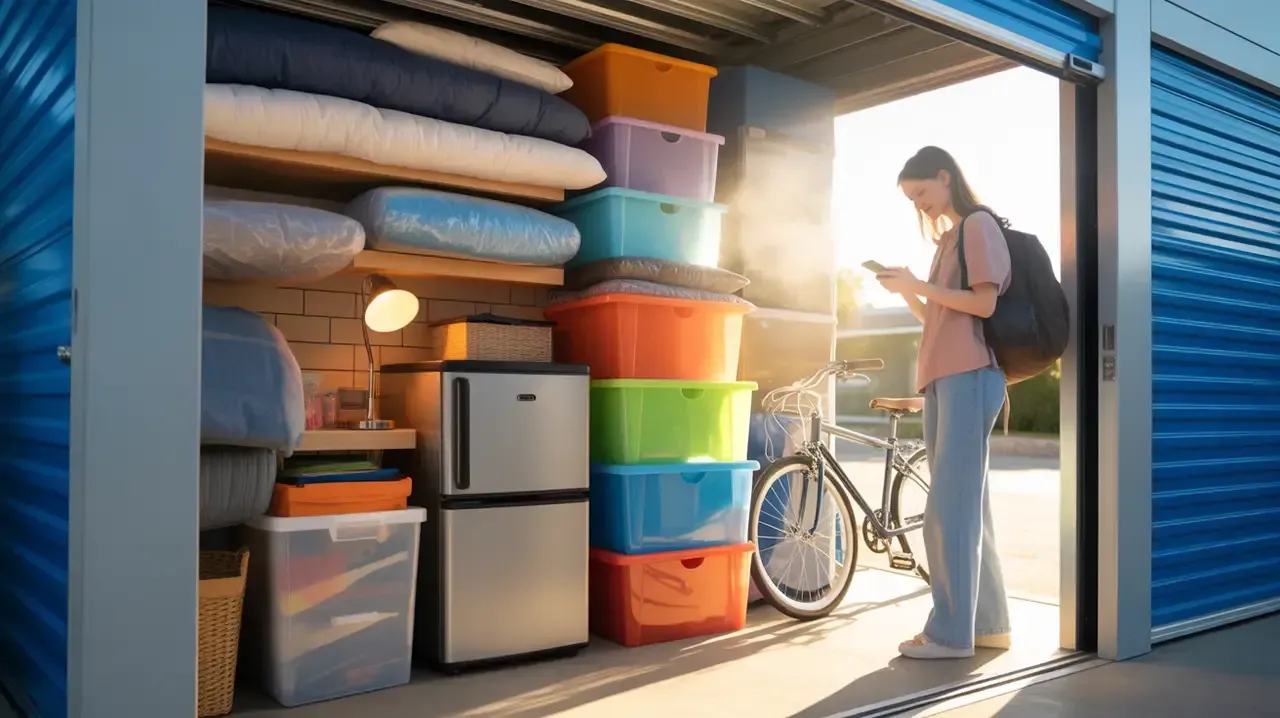
Start student storage planning with a list of boxes, furniture and equipment, then compare exact unit dimensions. A 5x5 or 5x10 may be a useful starting comparison, but fit and price depend on your belongings and the available listing. Begin checking options before your move-out date.
| Key points | |
|---|---|
| Measure your belongings and compare exact unit and door dimensions. | |
| Check the unit’s climate features and your items’ care instructions. | |
| Confirm current availability before relying on a space. | |
| Agree on payments and authorized access if sharing with a roommate. | |
| Review the rental term and full cost before booking. |
What Size Storage Unit Do Students Need?
Most college students overestimate their storage needs. A standard dorm room contains approximately 150 to 200 cubic feet of belongings, fitting comfortably in a 5x5 climate-controlled unit. Students moving from off-campus apartments typically need a 5x10 space to accommodate furniture, bedding, and personal items.
Use this sizing guide based on your living situation:
| Inventory | Starting size comparison | Before renting |
|---|---|---|
| Boxes and small dorm items | 5x5 | Measure boxes and bulky items |
| Dorm furniture and appliances | 5x5 or 5x10 | Check layout, door width and access space |
| Apartment or shared inventory | 5x10 or larger | Create a combined inventory and compare dimensions |
For help determining exact dimensions, consult a storage unit size guide that includes visual comparisons and capacity estimates.
Climate Control vs. Standard Units: Which Do Students Need?
Climate-controlled storage can reduce outdoor temperature exposure for sensitive belongings. Ask about actual temperature and humidity features, and follow the care instructions for electronics, furniture, instruments and documents.
Standard drive-up units work well for durable items like plastic bins, sports equipment, and clothing stored in sealed containers. However, in mountain regions where summer temperatures fluctuate dramatically between day and night, climate-controlled storage prevents condensation damage that ruins electronics and warps wood.
Items Requiring Climate Control
- Electronics: Laptops, gaming consoles, TVs, and speakers suffer circuit damage from humidity above 60%
- Wooden furniture: Desks, bed frames, and bookshelves warp or crack with temperature swings exceeding 30 degrees
- Textbooks and documents: Paper absorbs moisture, causing mold growth within 48 to 72 hours of exposure
- Musical instruments: Guitars, violins, and keyboards require stable humidity between 40% and 60%
- Leather goods: Shoes, bags, and jackets crack or develop mildew without temperature regulation
How Much Does Student Storage Cost?
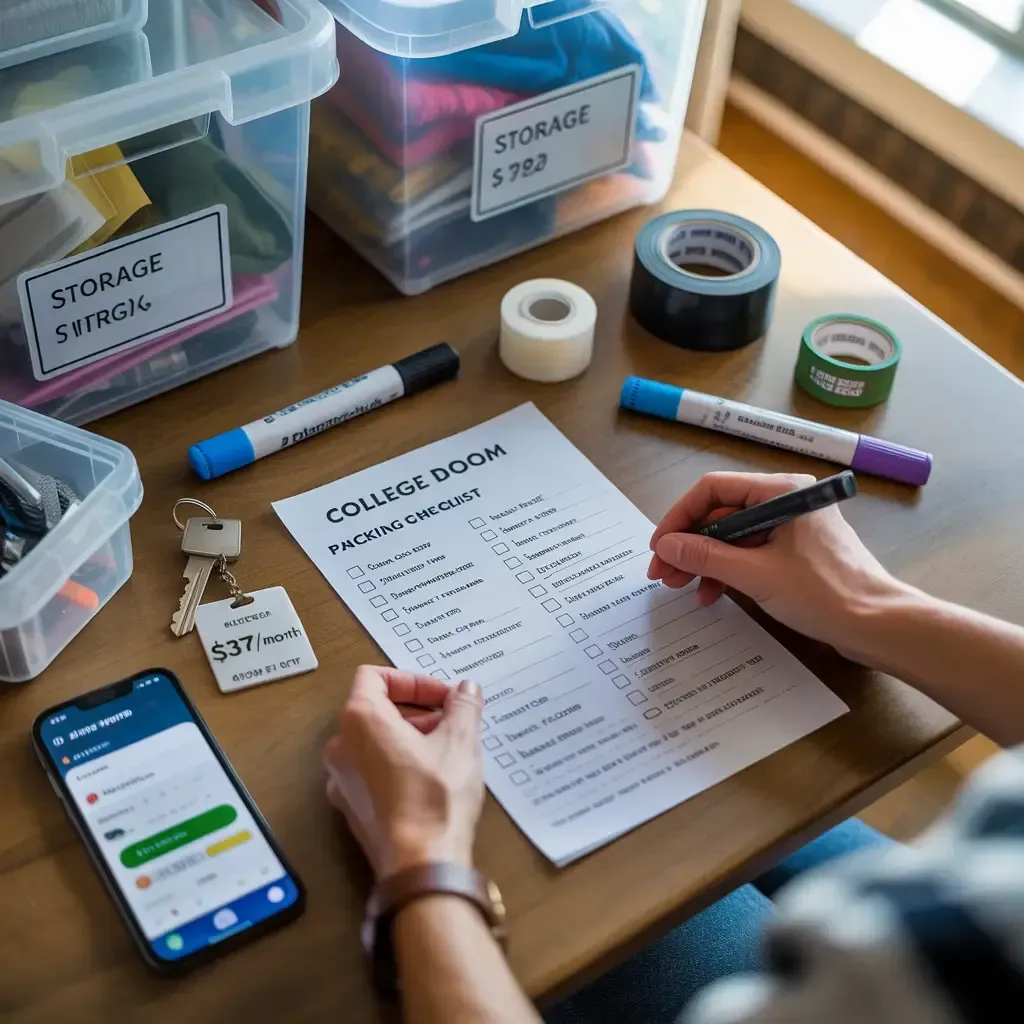
Build a summer-storage budget from the current rental quote, the number of months you expect to stay, coverage requirements, transport and any other charges. Compare the total expected cost, including what happens when an introductory offer ends.
If an offer is advertised, confirm the eligibility requirements and the full price after it ends. Questions to ask include:
- Does a move-in offer apply to this specific unit and rental date?
- When does the standard rate begin?
- Are there setup, administration or other one-time charges?
- Is a deposit required, and what are its terms?
Cost-Splitting Strategies for Roommates
Students sharing a 10x10 unit between two or three people pay $19 to $38 each per month. Smart lock technology enables digital key sharing, allowing each roommate independent access without physical key exchanges. This feature proves especially valuable when students return to campus at different times.
A 10x10 climate-controlled unit at $75 monthly split three ways costs just $25 per person, less than half the price of individual 5x5 units. Coordinate with roommates by mid-March to secure shared storage before peak demand.
When Should Students Book Storage?
Book storage units four to six weeks before your move-out date. For spring semester endings in late April or early May, reserve by mid-March. Facilities near college towns report 60% to 80% occupancy increases during the final two weeks of each semester.
Optimal Booking Timeline
- Six weeks before move-out: Research facilities and compare prices online
- Four weeks before: Reserve your unit with a deposit or first month payment
- Two weeks before: Gather packing supplies and create an inventory list
- One week before: Begin packing non-essential items
- Move-out day: Transport items to storage during morning hours to avoid afternoon heat
Students attending schools near ski resorts or seasonal destinations face additional competition from vacation homeowners also seeking summer storage. Early booking becomes even more critical in these markets.
Three Types of Student Storage Solutions
Self-Storage Units Near Campus
Traditional self-storage facilities offer the most affordable option at $37 to $150 monthly. Students transport their belongings using personal vehicles or rental trucks. This approach works best for students with cars and flexible schedules.
Advantages include 24/7 access, no appointment requirements, and the ability to retrieve items anytime during the storage period. Facilities with airport-adjacent locations provide particular convenience for students flying home, allowing quick stops before departure.
Full-Service Pickup and Delivery
Companies specializing in student storage offer door-to-door service starting around $5 per item monthly. Staff arrive at your dorm or apartment, pack your belongings into provided boxes, transport everything to climate-controlled facilities, and deliver items back when you return.
This option costs 20% to 40% more than self-storage but eliminates transportation logistics entirely. Students without vehicles or those flying internationally for summer find this service worth the premium.
Portable Storage Containers
Mobile container companies deliver a small unit to your location, allow you to pack at your own pace over several days, then transport the sealed container to a secure facility. Pricing typically runs $100 to $200 per month including delivery.
This hybrid approach suits students with larger quantities of belongings or those sharing storage with multiple roommates. The container remains sealed until your return, providing additional security.
Essential Packing Tips for Student Storage
Proper packing prevents damage and maximizes your storage space efficiency. Follow these guidelines to protect your belongings during summer breaks:
Packing Materials Checklist
- Uniform-sized boxes: Medium boxes (18x18x16 inches) stack efficiently and remain liftable when full
- Vacuum storage bags: Compress bedding and clothing by 75%, saving significant space
- Plastic bins with lids: Protect contents from dust and minor moisture; stack higher than cardboard
- Furniture covers: Prevent scratches and dust accumulation on upholstered items
- Silica gel packets: Place inside electronics boxes to absorb residual humidity
Organization Strategies
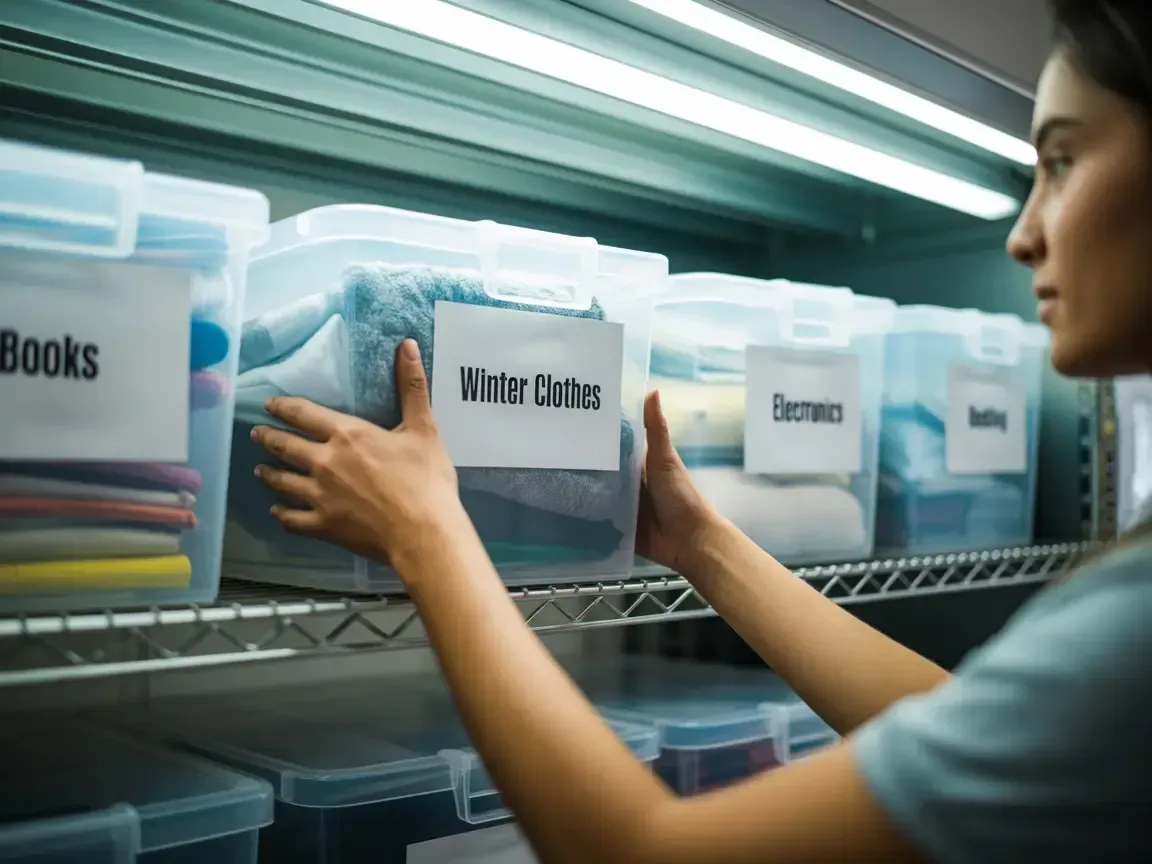
Label every box on at least two sides with contents and your name. Create a numbered inventory list matching each box, photographing contents before sealing. This documentation proves invaluable if you need specific items before retrieving everything.
Place frequently needed items near the unit entrance. Stack heavier boxes on the bottom, lighter ones on top. Leave a narrow aisle through the center of larger units to access items stored in the back without unpacking everything.
Security Features That Matter for Students
Student belongings represent significant investments, from $1,500 laptops to $800 textbook collections. Evaluate these security features when selecting a storage facility:
- Individual unit alarms: Alert staff immediately when unauthorized access occurs
- 24/7 video surveillance: Cameras covering all hallways and access points deter theft
- Gated access with unique codes: Restricts facility entry to current renters only
- Smart lock technology: Provides access logs showing exactly when your unit was opened
- Well-lit premises: Discourages criminal activity and improves personal safety during visits
Digital access tracking proves particularly useful for shared units. When multiple roommates have access, the log shows who visited and when, resolving any disputes about missing items.
Is Climate-Controlled Storage Necessary for Summer Breaks?
Climate control becomes essential when storing items for more than 30 days in regions with high humidity or extreme temperature variations. Summer storage typically spans 10 to 14 weeks, well beyond the threshold where uncontrolled conditions cause damage.
Consider your geographic location carefully. Mountain regions experience dramatic temperature swings, sometimes 40 degrees between afternoon highs and overnight lows. These fluctuations cause condensation inside storage units, damaging electronics and promoting mold growth on fabric items.
The additional $15 to $40 monthly cost for climate control protects belongings worth thousands of dollars. Students storing items valued over $500 should consider climate control a necessary expense rather than an optional upgrade.
Questions Students Ask About Break Storage
How Much Does Student Summer Storage Cost Near My University?
Expect to pay $40 to $130 monthly for student-sized units (5x5 to 5x10) near most universities. Prices vary by proximity to campus, with facilities within two miles charging 15% to 25% premiums. Facilities 10 to 15 minutes from campus often offer better rates with similar convenience.
Are There Free Pickup Services for College Student Storage?
Some full-service storage companies include pickup in their base pricing, though this cost is built into higher monthly rates. True free pickup is rare; most services charge $50 to $150 for collection. Self-transport to a storage facility remains the most economical approach.
What Size Storage Unit Do I Need for Dorm Room Contents?
A 5x5 unit (25 square feet) accommodates a typical dorm room including bedding, clothing, small electronics, and 10 to 15 medium boxes. Add a mini fridge, TV, or small furniture pieces, and you will need a 5x7 or 5x8 unit. Measure your largest items before booking to ensure proper fit.
When Should I Book Storage for End-of-Semester Move-Out?
Reserve your unit four to six weeks before move-out day. For May graduations, book by late March. For December breaks, reserve by early November. Waiting until the final week of classes often means settling for larger, more expensive units or facilities farther from campus.
Making the Final Decision
Choose your student storage solution based on three primary factors: budget, convenience, and the value of items being stored. Students with vehicles and flexible schedules save money with traditional self-storage. Those without transportation or storing high-value electronics benefit from full-service options despite higher costs.
Regardless of which option you select, book early, choose climate control for sensitive items, and pack strategically to maximize your space. A well-organized storage unit makes the return-to-campus transition significantly smoother.
|