How to Store Business Inventory and Documents | Vail Guide |
| HOW TO STORE BUSINESS INVENTORY AND DOCUMENTS
⏱ 9 min read ·
📄 #1,655 words
Learn how to store business inventory and documents safely. Get expert tips on climate control, organization systems, and security for Vail Valley businesses.
|
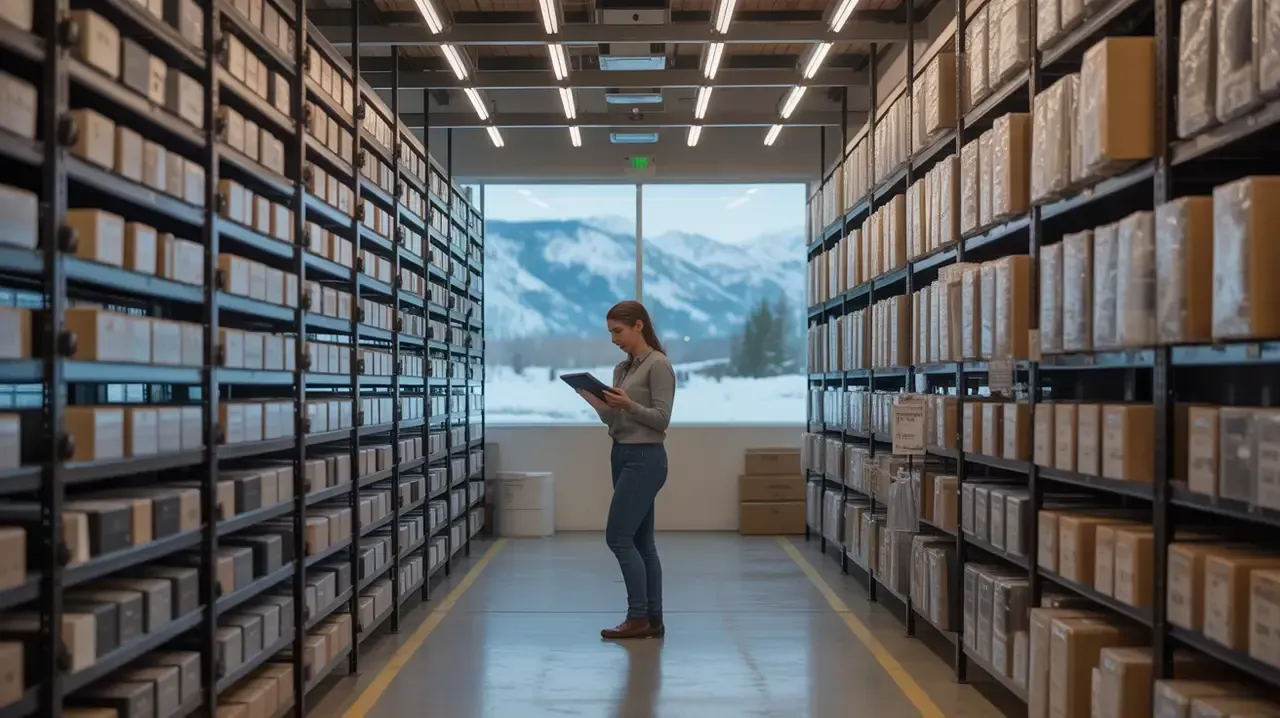
S tore business inventory in climate-controlled units between 55 and 80 degrees Fahrenheit, and keep documents in sealed plastic bins elevated at least 4 inches off the floor. For Vail Valley businesses, climate control is essential due to temperature swings from negative 10 to 95 degrees throughout the year.
| Key Points: | |
|---|---|
| • | Climate-controlled units cost $24 to $145 per month depending on size, protecting inventory from mountain weather extremes |
| • | Documents require sealed containers, vertical filing systems, and humidity levels below 50% to prevent degradation |
| • | Implement a check-in and check-out system to track document access and maintain compliance records |
| • | Business storage typically requires 5x10 to 10x20 units, costing $70 to $145 monthly for climate-controlled options |
| • | Smart lock technology enables digital key sharing with employees while tracking all access times |
What is the Best Way to Store Business Files?
The best way to store business files combines physical organization with environmental protection. Start by sorting documents into three categories: active files accessed weekly, reference files accessed monthly, and archive files accessed yearly or less. This categorization determines storage location and accessibility needs.
Use a filing cabinet or shelf bin organizer with clear labeling on every container. Label each bin with contents, date range, and retention period. For legal documents, tax records, and contracts, use fireproof filing cabinets or sealed plastic bins rated for document storage.
Store files vertically rather than stacking horizontally. Vertical storage prevents crushing, allows easier access, and reduces paper degradation. Group related documents together: all 2024 tax documents in one section, all vendor contracts in another, all employee records in a third.
Document Retention Requirements
Colorado businesses must retain tax records for 7 years, employee records for 4 years after termination, and corporate documents permanently. Create a retention schedule and mark each container with its destruction date. This prevents unnecessary storage costs while maintaining legal compliance.
Consider scanning critical documents and storing digital backups. However, original signed contracts, notarized documents, and certain legal papers require physical retention. A hybrid approach works best for most Vail Valley businesses.

How to Keep Inventory for a Small Business
Small business inventory storage requires systematic organization and proper environmental conditions. Start with an inventory management system, whether a spreadsheet, barcode app, or cloud platform like Sortly or Zoho Inventory. Track every item entering and leaving storage with quantities, dates, and locations.
Pack inventory properly before storage. Use original packaging when available, or wrap items in acid-free paper and place in sturdy boxes. Label every box on multiple sides with contents, quantity, SKU numbers, and storage date. Create a master inventory list with box locations mapped to your storage unit layout.
Storage Unit Organization for Inventory
Install shelving to maximize vertical space and improve accessibility. Metal shelving rated for 200 pounds per shelf works well for most business inventory. Leave a center aisle of at least 36 inches for easy navigation and loading.
Place frequently accessed items near the unit entrance at waist height. Store seasonal inventory toward the back. Keep a clear path to all sections, avoiding the temptation to stack boxes floor to ceiling without access routes.
For businesses with multiple product lines, create zones within your unit. Zone A near the door holds fast-moving items. Zone B in the middle contains moderate-turnover products. Zone C at the back stores seasonal or slow-moving inventory. This system reduces retrieval time from 15 minutes to under 5 minutes per visit.
How to Organize Paperwork for a Small Business
Organize business paperwork using a consistent filing system across all locations. The most effective approach uses broad categories with specific subcategories: Financial (taxes, banking, invoices), Legal (contracts, permits, licenses), Operations (vendor agreements, procedures), and Personnel (employee files, payroll records).
Color-code folders by category for quick visual identification. Use red for financial, blue for legal, green for operations, and yellow for personnel. Within each category, arrange files alphabetically or chronologically depending on how you access them.
Creating a Check-In and Check-Out System
Develop a library-style system for document retrieval. When someone removes a file, they sign it out with their name, date, and expected return date. This prevents lost documents and creates an audit trail for sensitive records.
For storage units, maintain a master log at your office listing all stored documents by box number. Update this log whenever adding or removing files. Digital photos of box contents provide backup documentation and speed up retrieval.
Where Should Company Files Be Stored?
Company files should be stored in secure, climate-controlled environments that balance accessibility with protection. For Vail Valley businesses, this typically means a combination of on-site filing for active documents and off-site storage for archives and overflow inventory.
Climate-controlled storage units maintain temperatures between 55 and 80 degrees Fahrenheit year-round, protecting paper documents from the temperature extremes common in mountain communities. Units starting at 5x5 feet for $32 per month accommodate 10 to 15 standard file boxes, suitable for small business document archives.
Security Considerations for Business Storage
Business files require higher security than personal storage. Look for facilities offering individual unit alarms, 24-hour video surveillance, and controlled access. Smart lock technology allows you to share digital keys with authorized employees while tracking exactly when each person accessed the unit.
For sensitive documents containing customer data, employee information, or financial records, choose units with additional security features. Facilities near Eagle County Airport offer convenient access for businesses throughout the Vail Valley while maintaining professional-grade security systems.
Choosing the Right Storage Unit Size for Business Use
Business storage needs vary significantly based on industry and inventory type. Use this guide to estimate your requirements:
| Unit Size | Capacity | Best For | Monthly Cost |
|---|---|---|---|
| 5x5 | 10 to 15 file boxes | Document archives only | $32 |
| 5x10 | Small office contents | Documents plus small inventory | $125 |
| 10x10 | 2 to 3 room office | Medium inventory, equipment | $70 |
| 10x15 | Large inventory stock | Retail overflow, seasonal goods | $95 |
| 10x20 | Full warehouse section | Large inventory, equipment | $145 |
For detailed measurements and capacity estimates, consult a storage unit size guide before committing to a rental. Overestimating by one size up typically costs $15 to $30 extra monthly but provides valuable flexibility for business growth.
Climate Control Requirements for Business Storage
Climate control is not optional for most business storage in mountain communities. Paper documents degrade rapidly when exposed to humidity above 50% or temperatures outside the 55 to 80 degree range. Inventory containing electronics, leather, wood, or fabric requires similar protection.
Items Requiring Climate-Controlled Storage
These business items demand climate control for storage periods exceeding 30 days:
- Paper documents: Contracts, tax records, employee files, permits
- Electronics: Computers, servers, point-of-sale equipment, displays
- Leather goods: Furniture, accessories, apparel inventory
- Wood products: Furniture, fixtures, display cases
- Fabric inventory: Clothing, upholstery, linens
- Pharmaceuticals: Any temperature-sensitive products
- Wine and specialty foods: Temperature fluctuation causes spoilage
Standard drive-up units work well for durable goods like metal shelving, outdoor equipment, and sealed construction materials. The cost savings of $30 to $100 monthly makes sense for items unaffected by temperature swings.
Drive-Up Access for Inventory Management
Businesses moving inventory frequently benefit from drive-up storage units. These ground-level units allow you to back a vehicle directly to the door, reducing loading time by 60% compared to interior units requiring carts and elevators.
Drive-up units with power outlets enable on-site inventory processing. Use the outlet for barcode scanners, laptops, or lighting during evening access. Units with built-in lighting further improve visibility for accurate inventory counts.
For businesses receiving regular shipments, drive-up access simplifies the receiving process. Delivery drivers can unload directly into your storage unit during business hours while you continue operations at your primary location.
Multi-Location Inventory Management
Businesses with inventory across multiple locations need centralized tracking systems. Cloud-based inventory software syncs quantities across your retail location, storage unit, and any additional warehouses in real time.
Assign unique location codes to each storage area. Your main store might be LOC-001, your primary storage unit LOC-002, and overflow storage LOC-003. Every item in your system carries its current location code, enabling instant lookup when fulfilling orders.
Inventory Tracking Best Practices
Conduct physical inventory counts monthly for high-value items and quarterly for stable inventory. Compare counts against your digital records to identify shrinkage, miscounts, or theft. Discrepancies exceeding 2% warrant investigation.
Use the first-in, first-out (FIFO) method for perishable or date-sensitive inventory. Place newer stock behind older stock to ensure proper rotation. Label all inventory with receipt dates to simplify FIFO compliance.

Cost-Effective Business Storage Strategies
Reduce business storage costs through strategic planning. Month-to-month leases provide flexibility to downsize during slow seasons.
Calculate your true storage cost by dividing monthly rent by the number of items stored. If you pay $87 monthly to store 500 units of inventory, your per-unit storage cost is 17 cents. Compare this against the cost of larger retail or office space to validate your storage strategy.
Avoid facilities charging administrative fees or security deposits, which add $25 to $100 to your initial costs. Look for transparent pricing with no hidden charges.
Security and Access for Business Storage
Business storage requires 24/7 access for inventory emergencies and document retrieval outside normal hours. Smart lock technology provides this access while maintaining security through digital access logs.
Share digital keys with employees who need storage access. Each person receives a unique code, creating an audit trail of who accessed the unit and when. Revoke access instantly when employees leave, eliminating the security risk of unreturned physical keys.
For businesses storing high-value inventory, consider additional insurance beyond the facility's basic coverage. Commercial storage insurance typically costs $15 to $50 monthly and covers theft, fire, and water damage up to your policy limits.
|