Self Storage vs Moving Containers: Complete Comparison Guide |
| SELF STORAGE VS MOVING CONTAINER COMPARISON GUIDE
⏱ 12 min read ·
📄 #2,262 words
Compare self storage units and moving containers by cost, convenience, and best uses. Find which option saves money for your specific situation in 2026.
|
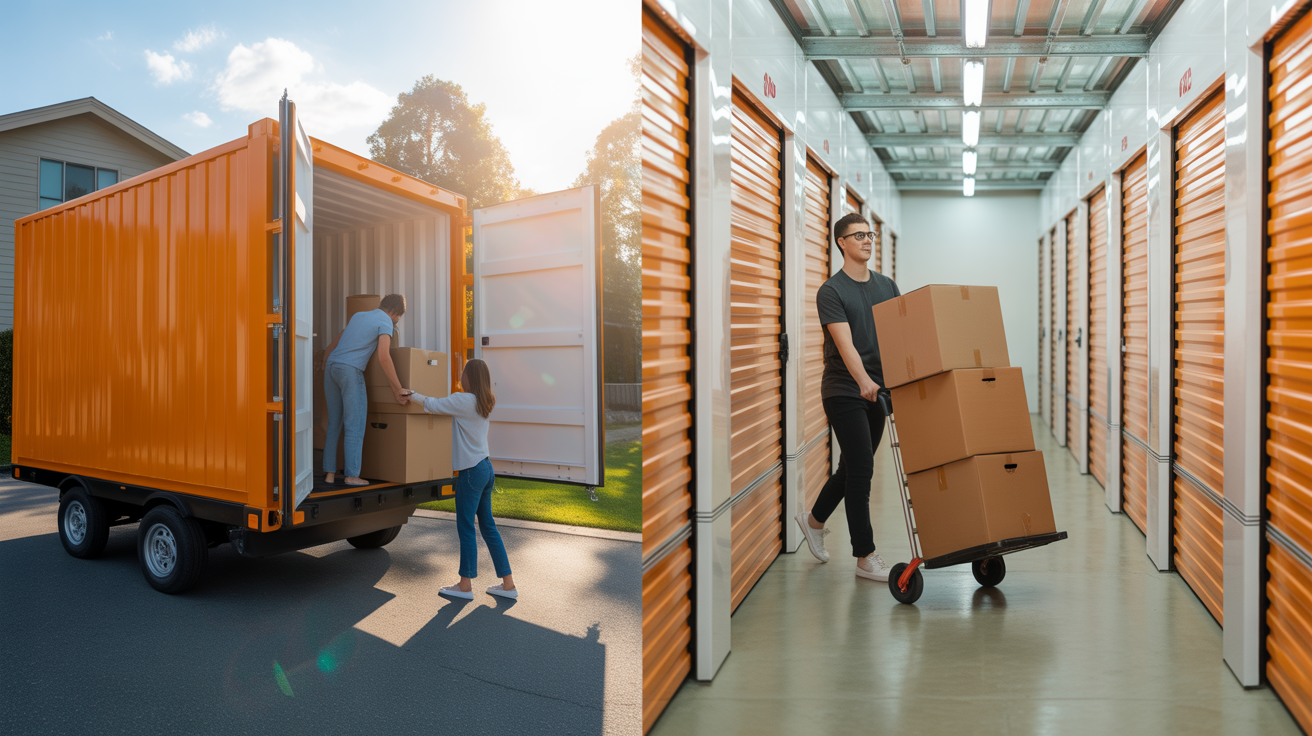
S elf storage units cost $39 to $276 per month and work best for long-term storage with frequent access, while moving containers run $150 to $500 monthly and excel during relocations when you need transport included. Your choice depends on whether you need stationary storage or portable convenience.
| Key Points: | |
|---|---|
| • | Self storage averages $120 per month for a 10x10 unit; moving containers cost $200 to $500 more due to delivery and transport fees |
| • | Moving containers include 30 days of storage, but 48 to 55 percent of users report unexpected fees for extended storage or labor |
| • | Climate-controlled self storage protects temperature-sensitive items; most moving containers lack climate control options |
| • | Self storage offers 24/7 access; moving containers limit access once transported to a facility |
| • | Choose containers for moves under 60 days; choose self storage for needs exceeding 3 months |
Cost Comparison: Self Storage vs Moving Containers
Understanding the true cost difference requires looking beyond monthly rates. Self storage facilities charge straightforward monthly fees without delivery or pickup costs. Moving container companies bundle transport into their pricing, which increases the base rate significantly.
Self Storage Unit Pricing
Traditional self storage units range from $39 per month for a 5x10 drive-up unit to $276 per month for a 10x20 climate-controlled storage unit. Most facilities charge no delivery fees since you transport items yourself. Administrative fees and security deposits vary by facility.
Long-term storage costs remain predictable with self storage. A 10x10 climate-controlled unit at $75 per month totals $900 annually, a predictable cost compared with transport-inclusive alternatives.
Moving Container Pricing
Moving containers from companies like PODS, U-Pack, and 1-800-PACK-RAT typically cost $150 to $350 per month for storage alone. Add delivery fees of $50 to $150 each way, and your first month easily exceeds $400. Long-distance transport adds $1,000 to $5,000 depending on distance.
Hidden fees catch many customers off guard. Industry data shows 48 to 55 percent of moving container users encounter unexpected charges for extended storage time, labor assistance, or container repositioning. Most companies require a 30-day minimum rental regardless of actual use time.
Cost Comparison Table
| Cost Factor | Self Storage | Moving Container |
|---|---|---|
| Monthly Rate (10x10 equivalent) | $57 to $150 | $150 to $350 |
| Delivery Fee | $0 (you transport) | $50 to $150 each way |
| Minimum Commitment | Month-to-month | 30 days typical |
| 6-Month Total Cost | $342 to $900 | $1,100 to $2,400 |
| 12-Month Total Cost | $684 to $1,800 | $2,000 to $4,500 |
Convenience and Access Differences
How you access your stored items differs dramatically between these options. This factor often matters more than cost for people who need regular access to their belongings.
Self Storage Access
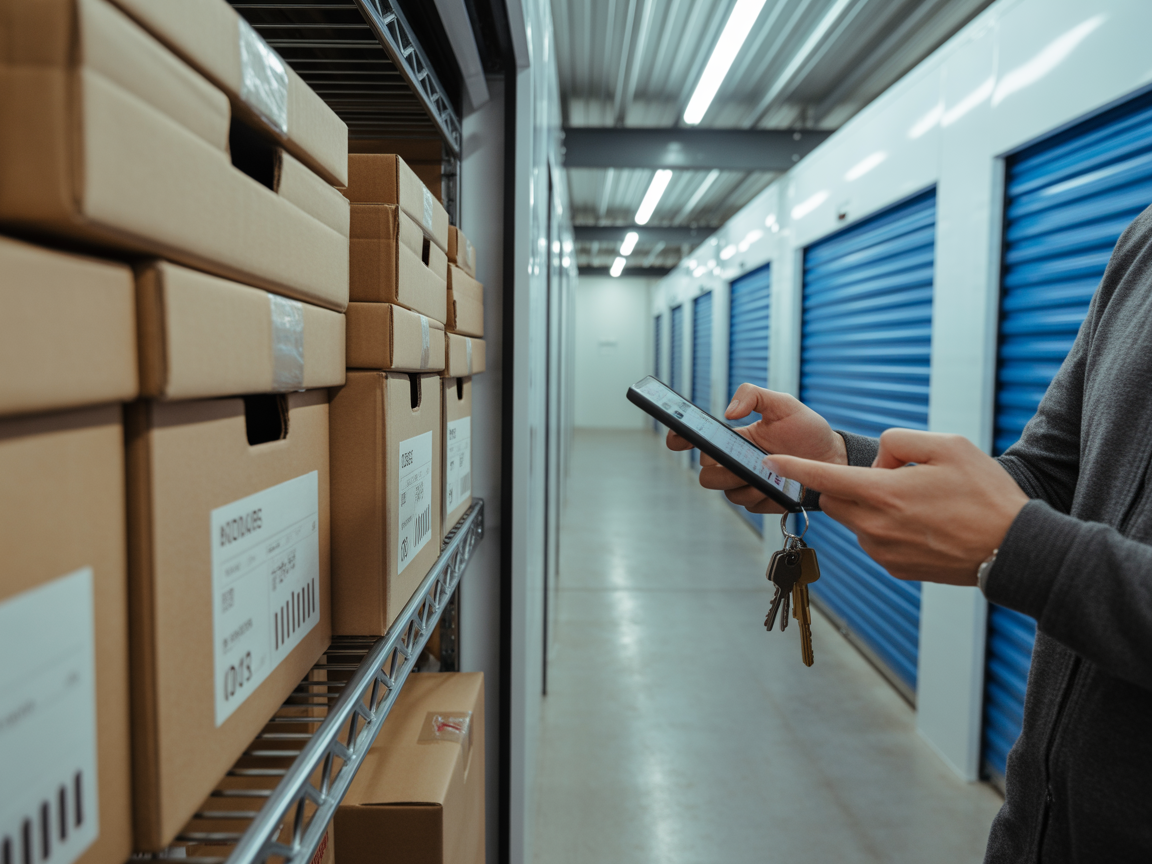
Self storage facilities provide consistent access to your unit. Most modern facilities offer 24/7 access through smart lock technology, allowing you to visit your unit whenever needed. Drive-up units let you pull your vehicle directly to the door for easy loading and unloading.
You control the organization of your unit completely. Need that camping gear from the back corner? Visit anytime and rearrange as needed. This flexibility proves invaluable during home renovations, seasonal transitions, or business inventory management.
Moving Container Access
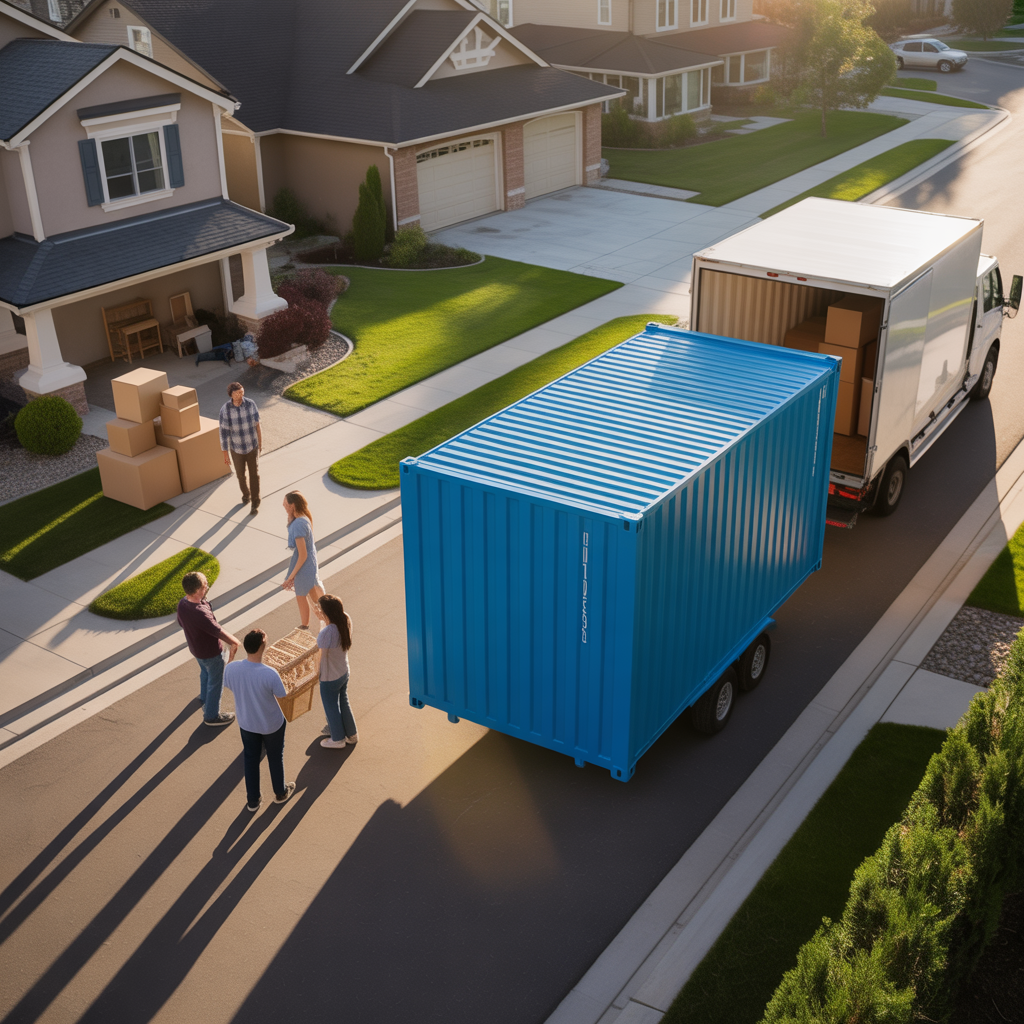
Moving containers offer convenience during the packing phase. The company delivers the container to your driveway, giving you days or weeks to load at your own pace. This eliminates the time pressure of traditional truck rentals that charge by the day.
However, access becomes limited once the container leaves your property. If stored at a company facility, you typically need to schedule appointments to access your belongings. Some companies charge fees for each access visit. Industry data shows 20 to 40 percent of container moves experience logistical delays affecting access timing.
Size Options: Finding the Right Fit
Container and storage unit sizes serve different purposes. Understanding standard dimensions helps you choose the right option for your specific needs.
Moving Container Dimensions
PODS offers three standard sizes: 8-foot (equivalent to a large closet), 12-foot (holds 2 to 3 rooms), and 16-foot (holds 3 to 4 rooms). Most competitors offer similar sizing with slight variations. The limited size options mean you might pay for more space than needed or require multiple containers.
Container heights typically max out at 7 to 8 feet, restricting tall item storage. Width constraints also limit what furniture pieces fit through the doors. Measure your largest items before committing to a container size.
Self Storage Unit Sizes
Self storage facilities offer far more size variety. A comprehensive storage size guide shows options ranging from 5x4 closet-sized units to 15x20 spaces that hold an entire house worth of belongings. This granularity lets you match your unit size precisely to your needs.
Common self storage sizes include:
- 5x5 (25 sq ft): Small furniture, boxes, seasonal items; holds a small closet worth of items
- 5x10 (50 sq ft): One bedroom apartment contents; fits a mattress set, dresser, and boxes
- 10x10 (100 sq ft): Two bedroom apartment or small office; most popular size
- 10x15 (150 sq ft): Three bedroom house contents; fits appliances and furniture
- 10x20 (200 sq ft): Four bedroom house; accommodates vehicles in some facilities
- 10x30 (300 sq ft): Large home contents; commercial inventory storage
Climate Control: Protecting Sensitive Items
Temperature and humidity control separates self storage from moving containers in one critical area. This distinction matters significantly in mountain climates where temperatures swing from below freezing to above 90 degrees Fahrenheit.
Self Storage Climate Control
Climate-controlled self storage units maintain temperatures between 55 and 80 degrees Fahrenheit year-round. Humidity levels stay between 30 and 50 percent, preventing moisture damage. These conditions protect:
- Electronics: Computers, TVs, and audio equipment resist condensation damage
- Wooden furniture: Prevents warping, cracking, and finish deterioration
- Documents and photographs: Paper stays crisp without yellowing or mold growth
- Leather goods: Maintains suppleness and prevents cracking
- Musical instruments: Wood and strings stay stable without humidity swings
- Wine collections: Proper temperature prevents cork degradation
- Ski equipment: Protects bindings, bases, and boot materials during off-season storage
Climate-controlled units cost 20 to 50 percent more than standard units, but the protection proves worthwhile for valuable or sensitive items stored longer than 3 months.
Moving Container Climate Limitations
Most moving containers lack climate control entirely. Metal containers absorb heat, creating interior temperatures that can exceed 120 degrees Fahrenheit in summer sun. Winter storage in unheated containers exposes items to freezing temperatures.
Some container companies offer climate-controlled warehouse storage once containers arrive at their facilities. However, this service adds $50 to $100 per month to your costs and eliminates the at-home convenience that makes containers attractive.
Security Comparison
Both storage options provide security, but through different mechanisms. Your comfort level with each approach depends on personal preferences and item values.
Self Storage Security Features
Modern self storage facilities employ multiple security layers:
- Perimeter fencing: Controlled access points limit facility entry
- Individual unit locks: You provide your own lock, ensuring only you have the key
- Smart lock technology: Digital access tracking shows who entered and when
- 24/7 video surveillance: Cameras monitor common areas and unit corridors
- Well-lit facilities: Adequate lighting deters criminal activity
- On-site management: Staff presence during business hours
Digital key sharing allows you to grant temporary access to family members or movers without surrendering your primary access credentials. Access logs provide accountability for who visited your unit and when.
Moving Container Security
Container security depends heavily on location. While at your home, you control access completely. Once transported to a company facility, security transfers to the container company's systems.
Most container storage facilities offer gated access and video monitoring comparable to self storage. However, you cannot verify security measures personally since access requires appointments. Some homeowner associations restrict container placement in driveways, forcing facility storage sooner than planned.
Best Use Cases for Each Option
Choosing between self storage and moving containers becomes clearer when you match your specific situation to each option's strengths.
When Self Storage Makes Sense
Long-term storage needs: Any storage requirement exceeding 3 months favors self storage economics. The monthly cost advantage compounds over time, potentially saving hundreds or thousands of dollars annually.
Frequent access requirements: Home renovation projects, seasonal business inventory, or ongoing decluttering projects benefit from unlimited access. Retrieve items when needed without scheduling or fees.
Climate-sensitive items: Artwork, antiques, electronics, documents, and wooden furniture require temperature and humidity control unavailable in standard containers.
Flexible sizing needs: Start with a larger unit during a move, then downsize as you unpack. Self storage month-to-month leases allow this flexibility without penalty.
Local storage without relocation: Storing items while staying in the same area eliminates the transport benefits containers provide.
When Moving Containers Make Sense
Active relocation: Moving across town or across the country benefits from container transport services. Pack once, and your belongings travel with the container.
Extended packing time needs: Container delivery to your driveway provides days or weeks to pack methodically. This eliminates the rushed loading associated with rental truck deadlines.
Short-term transitional storage: Gaps between selling and buying homes, temporary work assignments, or brief renovation projects lasting 30 to 60 days suit container timing.
Limited transportation options: If you lack a vehicle capable of transporting items to a storage facility, container delivery solves the logistics challenge.
Are Moving Pods Cheaper Than Storage Units for Short-Term Needs?
For storage lasting less than 30 days during an active move, containers can cost less than renting a truck plus a storage unit separately. The break-even point typically falls around 45 to 60 days. Beyond that timeframe, self storage pulls ahead financially.
Calculate your specific scenario by adding self storage monthly rent plus truck rental costs, then compare to container quotes. Include delivery fees, mileage charges, and fuel costs for accurate comparison. Request itemized quotes from container companies to avoid surprise fees.
What Are the Best Moving Container Companies in 2026?
PODS leads the industry in reliability and availability, operating in all 50 states with consistent service quality. Book 2 to 4 weeks ahead during peak moving season (May through September) to ensure availability.
U-Pack offers competitive pricing for long-distance moves, charging only for the space you use within their trailers. This approach saves money if your belongings fill less than a full container.
1-800-PACK-RAT provides strong regional coverage and competitive rates, though availability varies by location. Their containers measure slightly larger than PODS equivalents.
Zippy Shell offers smaller container options suitable for apartment moves or partial household storage. Their pricing often undercuts larger competitors for small-scale needs.
Can You Use Moving Containers for Long-Term Storage?
Technically yes, but economics argue against it. Container companies charge premium monthly rates designed for short-term use. After 3 to 6 months, cumulative costs typically exceed what you would pay for self storage plus initial transport.
Container storage also lacks the access flexibility of self storage. Retrieving a single item requires scheduling, potentially paying access fees, and working around company availability. Self storage lets you grab that forgotten item at 2 AM if needed.
If you anticipate storage needs exceeding 6 months, rent a self storage unit and hire movers for transport. This approach costs less than container rental while providing superior access and climate control options.
Storage Units vs PODS: Which Protects Climate-Sensitive Items Better?
Self storage wins decisively for climate-sensitive items. Climate-controlled units maintain consistent 55 to 80 degree temperatures regardless of outside conditions. Mountain environments like the Vail Valley experience temperature swings from negative 10 to 95 degrees Fahrenheit annually, making climate control essential for:
- Ski and snowboard equipment with temperature-sensitive bindings
- Wine collections requiring stable 55 degree storage
- Artwork and antiques vulnerable to humidity fluctuations
- Electronics with condensation-sensitive components
- Leather furniture and clothing
- Wooden musical instruments
PODS and similar containers offer no climate control during transport or driveway storage. Facility storage may include climate options, but this adds cost and eliminates the at-home convenience advantage.
Making Your Decision: A Practical Framework
Use this decision framework to determine which option fits your situation:
Choose self storage if:
- Storage duration exceeds 60 days
- You need access more than once monthly
- Items require climate control
- You have transportation for initial loading
- Budget optimization matters more than convenience
Choose moving containers if:
- You are actively relocating to a new address
- Storage duration stays under 60 days
- You need extended packing time at home
- Items tolerate temperature fluctuations
- Convenience matters more than cost
Consider a hybrid approach if:
- You are moving but need long-term storage for some items
- Climate-sensitive items need protection while bulk items can use containers
- Your timeline includes both immediate transport and extended storage needs
Local Storage Solutions in the Vail Valley
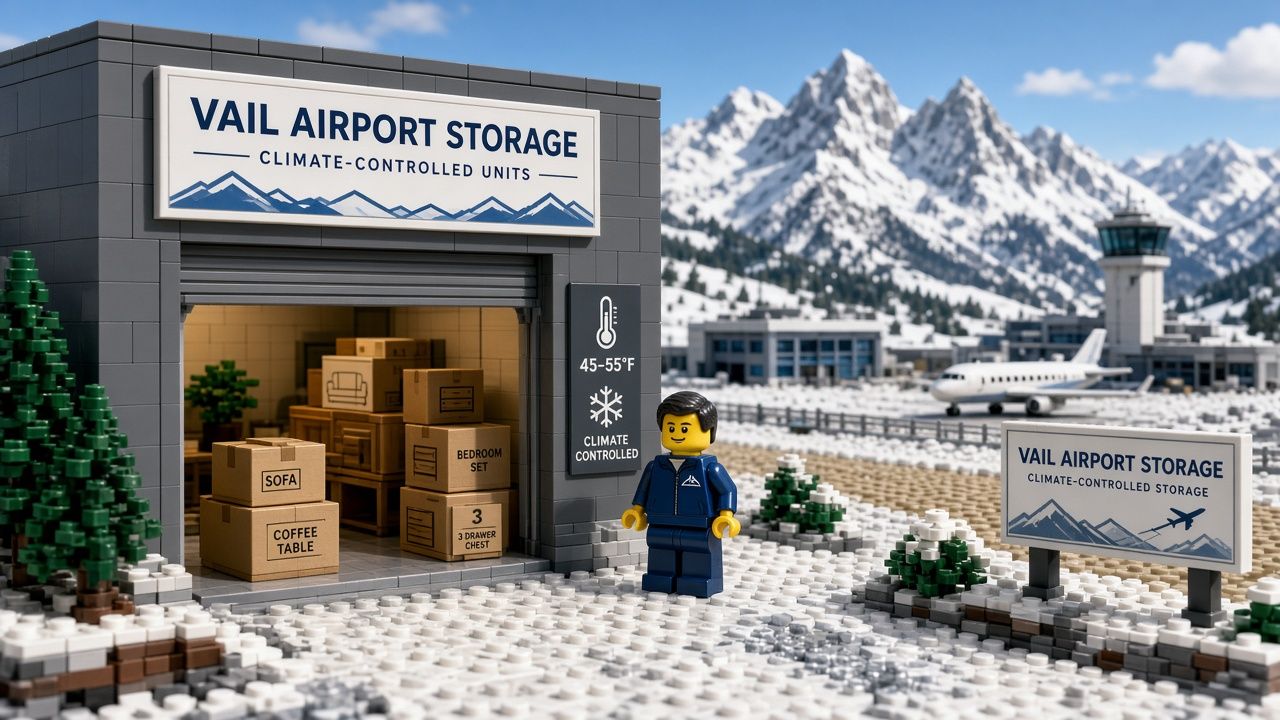
For Vail Valley residents, seasonal visitors, and travelers using Eagle County Regional Airport, local self storage offers distinct advantages over container services. Proximity to the airport provides convenient storage for travelers storing vehicles, recreational equipment, or vacation home furnishings between visits.
Climate-controlled storage proves especially valuable in mountain environments where winter temperatures drop below zero and summer heat can damage sensitive items. Smart lock technology enables digital key sharing with property managers, family members, or service providers without physical key exchanges.
Month-to-month leases accommodate the variable schedules of seasonal residents and vacation homeowners who may need storage for unpredictable durations. No administrative fees or security deposits reduce the financial barrier to getting started.
|