How to Choose the Right Storage Unit Size for Your Needs |
| HOW TO CHOOSE THE RIGHT STORAGE UNIT SIZE FOR YOUR NEEDS
⏱ 15 min read ·
📄 #2,836 words
Find the right Vail Valley storage unit size. Compare 5x5 through 10x30 options, see what fits, and check live rates before reserving.
|
S elect your storage unit size by measuring your largest items, counting your boxes, and matching to standard dimensions: 5x5 units hold closet contents and 10-25 boxes, 10x10 units fit one to two bedrooms with furniture, and 10x20 units accommodate a full three to four bedroom home or vehicle. Add 20-30% extra space for access aisles.

| Key Points: | |
|---|---|
| • | A 5x10 unit (50 sq ft) fits a one-bedroom apartment; current rates vary by features, availability, and promotions |
| • | A 10x10 unit holds 50-100 boxes plus furniture from two bedrooms; most popular for home moves |
| • | Climate-controlled units maintain 55-80°F, essential for electronics, documents, and ski equipment in mountain climates |
| • | Always add 20-30% extra space beyond your calculated needs for access aisles and future additions |
| • | Measure your largest item first; standard unit doors are 8-10 feet tall and 4-10 feet wide |
Storage Unit Size Chart: Complete Comparison
Standard storage units range from 25 to 300 square feet, with ceiling heights averaging 8-10 feet. Each size serves specific storage scenarios, from seasonal decluttering to full household relocations. Understanding these dimensions helps you avoid paying for unused space or cramming belongings into an undersized unit.
| Unit Size | Square Feet | Equivalent Space | What Fits | Best For |
|---|---|---|---|---|
| 5x5 | 25 | Small closet | 10-25 boxes, small furniture, seasonal decor | Students, decluttering, business files |
| 5x10 | 50 | Walk-in closet | 25-50 boxes, mattress set, dresser, small appliances | One-bedroom apartment, seasonal gear |
| 10x10 | 100 | Half garage | 50-100 boxes, king bed, living room set, washer/dryer | Two-bedroom home, remodeling projects |
| 10x15 | 150 | Large garage | Dining set, couch, refrigerator, 75-125 boxes | Two to three bedroom apartment contents |
| 10x20 | 200 | Standard garage | Three to four bedrooms, piano, compact car | Full house, business inventory, vehicle storage |
| 10x30 | 300 | Two-car garage | 180-300 boxes, large home contents, bulky equipment | Major renovations, commercial inventory |
At Vail Airport Storage, we offer a range of climate-controlled, drive-up, and vehicle storage options for different needs. Check the live unit list for current rates, availability, and any approved promotions before choosing a unit.
Step-by-Step Process to Calculate Your Storage Needs
Choosing the right size requires systematic planning rather than guesswork. Follow these five steps to determine your exact requirements and avoid the common mistake of underestimating space needs.
Step 1: Create a Complete Inventory
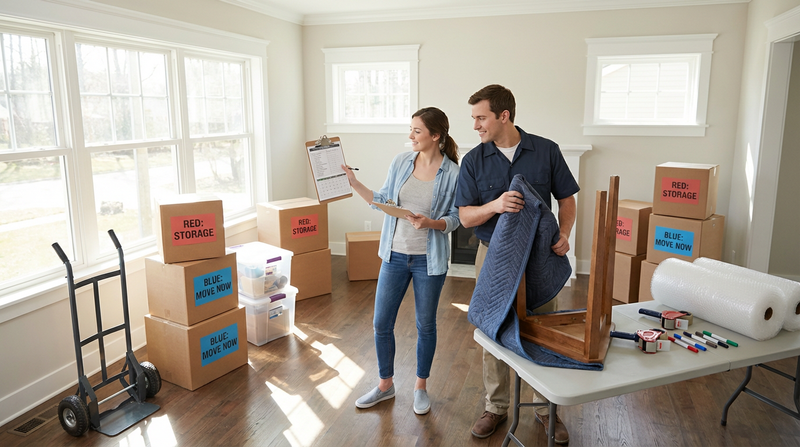
Walk through each room and list every item you plan to store. Categorize by size: small items like clothing and books, medium items like chairs and lamps, and large items like sofas and appliances. This inventory becomes your planning foundation and helps prevent forgotten items from disrupting your size calculation.
Use a simple spreadsheet or notes app to track quantities. Count the number of boxes you will need by estimating 3-5 small boxes per dresser drawer, 1-2 boxes per bookshelf, and 2-4 boxes per closet. A typical bedroom generates 15-25 boxes when fully packed.
Step 2: Measure Your Largest Items
Your biggest pieces determine minimum unit requirements. Measure length, width, and height of sofas, mattresses, dining tables, and appliances. A standard queen mattress measures 60 x 80 inches; a three-seat sofa typically spans 84-96 inches long. These dimensions must fit through the unit door and inside the space.
Standard unit doors range from 4 feet wide on small units to 10 feet wide on drive-up units. Ceiling heights average 8-10 feet, allowing vertical stacking of most furniture and boxes.
Step 3: Calculate Total Volume
Multiply your estimated box count by average box dimensions. A medium moving box measures approximately 18 x 18 x 16 inches, or 3 cubic feet. Fifty medium boxes require 150 cubic feet of space. Add furniture volume by estimating cubic feet for each piece: a sofa occupies roughly 40-60 cubic feet, a dresser 20-30 cubic feet.
A 10x10 unit with 8-foot ceilings provides 800 cubic feet of total space. However, practical capacity drops to 500-600 cubic feet after accounting for access aisles and stacking limitations.
Step 4: Add Buffer Space
Always add 20-30% extra space beyond your calculated needs. This buffer accommodates access aisles, prevents damage from overpacking, and allows room for items you may add later. If your calculation suggests 400 cubic feet, target a unit providing 500-520 cubic feet of usable space.
Skipping this step leads to the most common storage mistake: renting a unit too small, then needing to upgrade or rent a second unit at higher total cost.
Step 5: Match to Available Sizes
Compare your requirements against standard unit dimensions. If your needs fall between sizes, choose the larger option. The cost difference between a 5x10 and 10x10 unit typically runs $20-50 per month, while the convenience of adequate space proves invaluable during loading and retrieval.
What Size Storage Unit for Specific Situations
Different life circumstances require different storage solutions. These common scenarios help you match your situation to the appropriate unit size without extensive calculations.
One-Bedroom Apartment Storage
A one-bedroom apartment typically fits in a 5x10 unit (50 square feet). This size accommodates a mattress set, small dresser, nightstand, 25-50 boxes, and several small furniture pieces. If you own a large sectional sofa or extensive wardrobe, consider upgrading to a 10x10 unit.
Both climate-controlled and drive-up 5x10 options may be available depending on current inventory. Climate control protects furniture finishes and helps prevent moisture damage in Colorado's variable mountain weather, while drive-up access is useful for frequent loading.
Two to Three Bedroom Home
A 10x10 to 10x15 unit handles contents from a two to three bedroom home. The 10x10 size (100 square feet) fits a living room set, bedroom furniture, and 50-100 boxes. Larger homes with dining room furniture, multiple bedroom sets, or extensive collections require 10x15 (150 square feet).
At Vail Airport Storage, climate-controlled units are available in popular household sizes. Review the live availability page for the current 10x10 and 10x15 rates before reserving.
Full House or Major Renovation
Storing an entire three to four bedroom home requires a 10x20 or 10x30 unit . The 10x20 size (200 square feet) fits most full household contents including appliances. Larger homes with extensive furniture, workshop equipment, or accumulated belongings need 10x30 (300 square feet).
These sizes also accommodate vehicles: a 10x20 unit fits most sedans and small SUVs, while 10x30 units handle larger vehicles alongside household goods.
Seasonal and Recreational Equipment
Vail Valley residents often need storage for ski equipment, mountain bikes, kayaks, and seasonal gear. A 5x5 to 5x10 unit typically suffices for recreational equipment storage. Skis, boots, poles, and associated gear for a family of four fit comfortably in a 5x5 climate-controlled unit.
Climate control proves essential for ski equipment storage. Temperature fluctuations damage boot liners, warp ski bases, and degrade binding components. Our climate-controlled units maintain consistent temperatures between 55-80°F year-round, protecting your investment in quality gear.
Business and Commercial Storage
Small business inventory, documents, and equipment typically require 10x10 to 10x30 units . A 10x10 unit holds approximately 2,400 pounds of boxed inventory. Retail businesses with seasonal stock rotations benefit from 10x20 or larger units with drive-up access for easy loading.
Our drive-up units with power and lights can suit businesses needing convenient access for inventory management, equipment storage, or maintenance staging. Current rates depend on unit size, features, and live availability.
Climate Control vs. Standard Units: When Each Makes Sense
Climate-controlled units maintain temperatures between 55-80°F and regulate humidity levels. Standard units experience temperature swings matching outdoor conditions. In Gypsum, Colorado, temperatures range from below 0°F in winter to above 90°F in summer, making climate control a critical consideration.
Items Requiring Climate Control
Choose climate-controlled storage for:
- Electronics: Computers, televisions, audio equipment, and gaming systems. Temperature fluctuations cause condensation that damages circuits.
- Wooden furniture: Antiques, pianos, and quality wood pieces. Humidity changes cause warping, cracking, and finish damage.
- Documents and photographs: Paper degrades in humidity; photos stick together and fade in heat.
- Leather and fabric: Couches, clothing, and leather goods develop mold and mildew in humid conditions.
- Wine and collectibles: Temperature stability preserves value and condition.
- Ski and outdoor equipment: Boots, bindings, and technical fabrics require stable conditions.
Items Suitable for Standard Units
Standard drive-up units work well for:
- Metal furniture: Patio sets, filing cabinets, and metal shelving resist temperature changes.
- Plastic containers: Holiday decorations in sealed bins, plastic toys, and outdoor equipment.
- Vehicles: Cars, motorcycles, and ATVs (though climate control extends tire and rubber component life).
- Tools and hardware: Hand tools, power tools, and construction equipment.
- Lawn and garden equipment: Mowers, trimmers, and garden tools.
Cost Comparison
Climate-controlled units often cost more than standard units of the same size, but the right choice depends on what you are storing. For items worth thousands of dollars, climate control can provide significant protection value against temperature swings and moisture.
Drive-Up vs. Indoor Units: Access Considerations
Unit access type affects convenience, loading time, and suitability for different storage scenarios. Understanding these differences helps you choose the configuration that matches your usage patterns.
Drive-Up Unit Advantages
Drive-up units allow you to park directly in front of your unit door, eliminating hallway navigation and elevator use. This configuration suits:
- Heavy or bulky items: Appliances, furniture, and equipment load directly from vehicle to unit.
- Frequent access: Business inventory, seasonal equipment rotation, and items you retrieve regularly.
- Vehicle storage: Cars, motorcycles, boats, and recreational vehicles.
- Large volume moves: Faster loading and unloading for full household contents.
Our drive-up units include ground-floor access with wide doors. Units with power and lights (10x20 through 10x30 sizes) provide workspace lighting and outlet access for equipment charging or maintenance tasks.
Indoor Unit Advantages
Indoor units sit within climate-controlled buildings, accessed through hallways and sometimes elevators. Benefits include:
- Weather protection: No exposure to rain, snow, or wind during loading.
- Enhanced security: Multiple access points and interior monitoring.
- Climate consistency: All indoor units maintain stable temperatures.
- Cleaner environment: Less dust and debris than outdoor-access units.
Indoor units work best for sensitive items, infrequent access storage, and situations where climate control matters more than loading convenience.
Packing and Organization Tips to Maximize Your Space
Proper packing techniques can effectively increase your unit's capacity by 20-30%. These strategies help you fit more items safely while maintaining access to frequently needed belongings.
Maximize Vertical Space
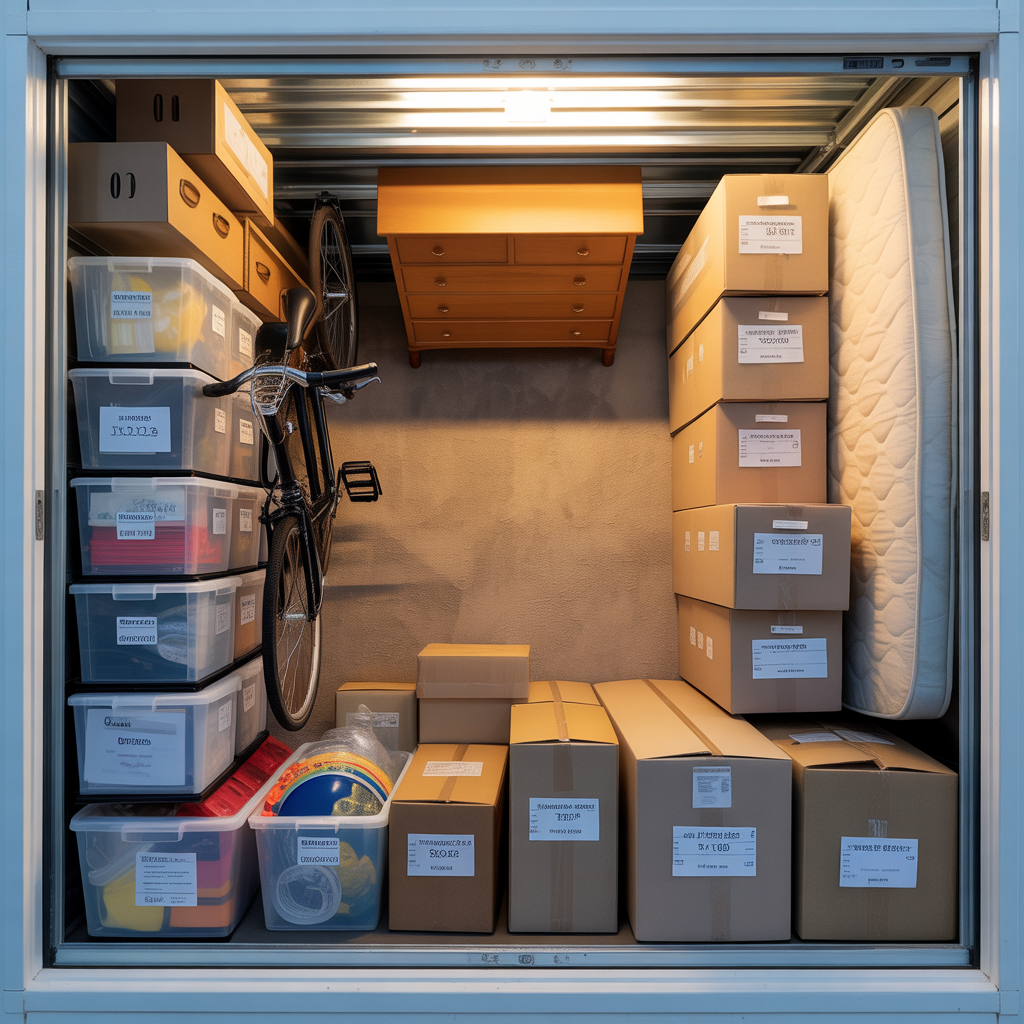
Stack uniform boxes to ceiling height, placing heavier boxes on bottom and lighter boxes on top. Disassemble furniture when possible: remove table legs, take bed frames apart, and separate sectional sofa pieces. Standing mattresses vertically against walls saves floor space.
Use the inside of large items for storage. Fill dresser drawers with clothing or linens. Place small boxes inside appliances like washers and dryers. Store items inside empty luggage.
Create Access Aisles
Leave a 2-3 foot walkway from the door to the back of your unit. Place items you need to access frequently near the front and sides of this aisle. Store seasonal items and long-term storage pieces toward the back.
Create a simple map of your unit layout and keep it with your rental documents. This reference saves time when you need to locate specific items months later.
Protect Your Belongings
Wrap furniture in moving blankets or plastic wrap to prevent scratches and dust accumulation. Elevate items off the floor using pallets or 2x4 boards, protecting against potential moisture. Label all boxes on multiple sides with contents and room designation.
Never store items directly against exterior walls in non-climate-controlled units. Leave a small gap to allow air circulation and prevent condensation damage.
Smart Box Selection
Use uniform box sizes when possible. Medium boxes (18 x 18 x 16 inches) stack efficiently and remain manageable weight when filled. Reserve large boxes for lightweight items like bedding and pillows. Use small boxes for heavy items like books and dishes.
Invest in quality boxes rather than used grocery store boxes. Moving boxes feature reinforced corners and consistent dimensions that stack securely to ceiling height.
Multiple Small Units vs. One Large Unit
Some storage situations benefit from renting multiple smaller units rather than one large space. This comparison helps you evaluate which approach suits your needs.
| Factor | Multiple Small Units | One Large Unit |
|---|---|---|
| Organization | Easier categorization; separate seasonal, business, and personal items | Requires internal organization; harder to locate specific items |
| Cost | Higher per square foot; two 5x10 units cost more than one 10x10 | Better value per square foot for total volume |
| Access | Immediate access to any category without moving other items | May require moving items to reach back of unit |
| Flexibility | Can downsize by releasing one unit as needs change | Must reorganize or move to downsize |
| Best For | Businesses with inventory categories; households with seasonal rotation | Full household moves; long-term storage with infrequent access |
Special Storage Considerations for Vail Valley
Living in or visiting the Vail Valley creates unique storage requirements. Mountain climate, seasonal population shifts, and outdoor lifestyle factors influence both size selection and feature priorities.
Vacation Home Storage
Second homeowners in Vail Valley often need storage for items that remain in Colorado year-round: ski equipment, winter clothing, outdoor furniture, and recreational gear. A 5x10 climate-controlled unit typically handles seasonal rotation items for a vacation property.
Our airport-adjacent location in Gypsum provides convenient access when flying into Eagle County Regional Airport. Smart lock technology enables 24/7 access, and digital key sharing allows property managers or family members to retrieve items without coordinating schedules.
Seasonal Worker Storage
Seasonal employees in hospitality, ski instruction, and outdoor recreation often need storage between seasons or during housing transitions. A 5x5 unit can hold personal belongings, clothing, and equipment during off-season periods when housing arrangements change.
Outdoor Equipment Protection
Mountain bikes, kayaks, paddleboards, and camping gear require protection from temperature extremes. Climate-controlled storage prevents rubber degradation, plastic warping, and fabric damage that occurs in unregulated environments. A 5x10 unit accommodates most recreational equipment collections.
Vehicle and RV Storage
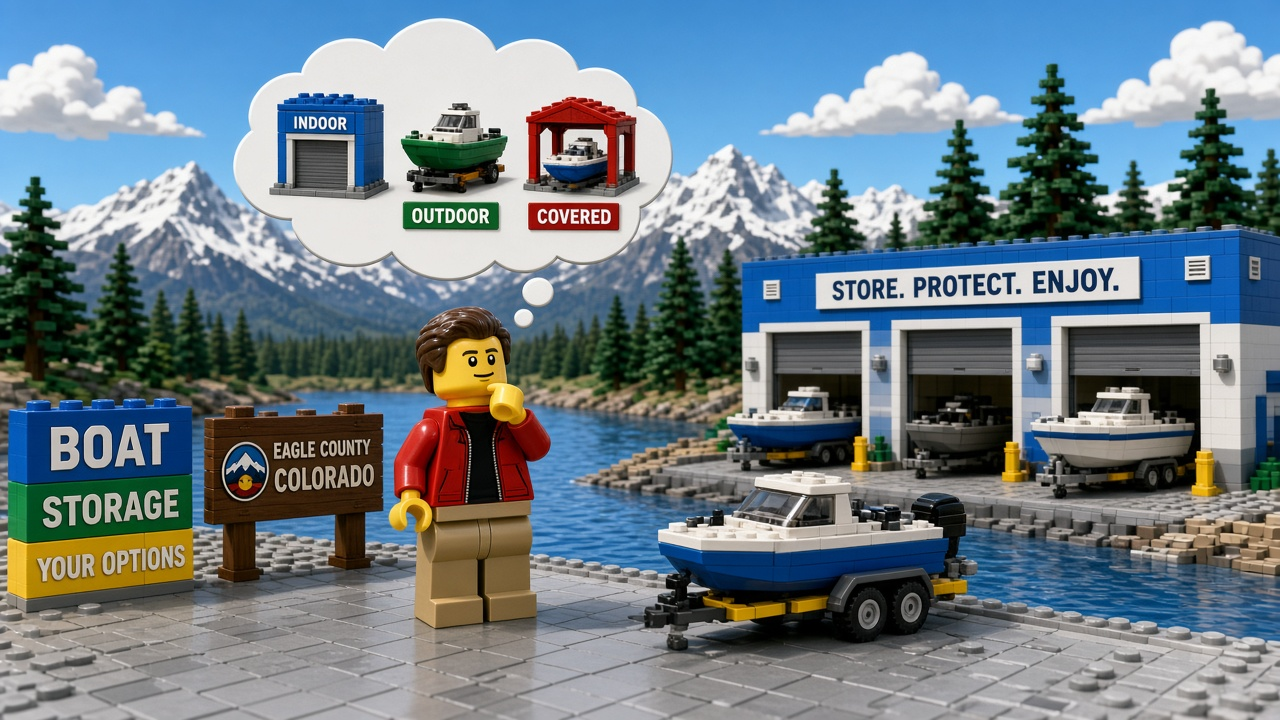
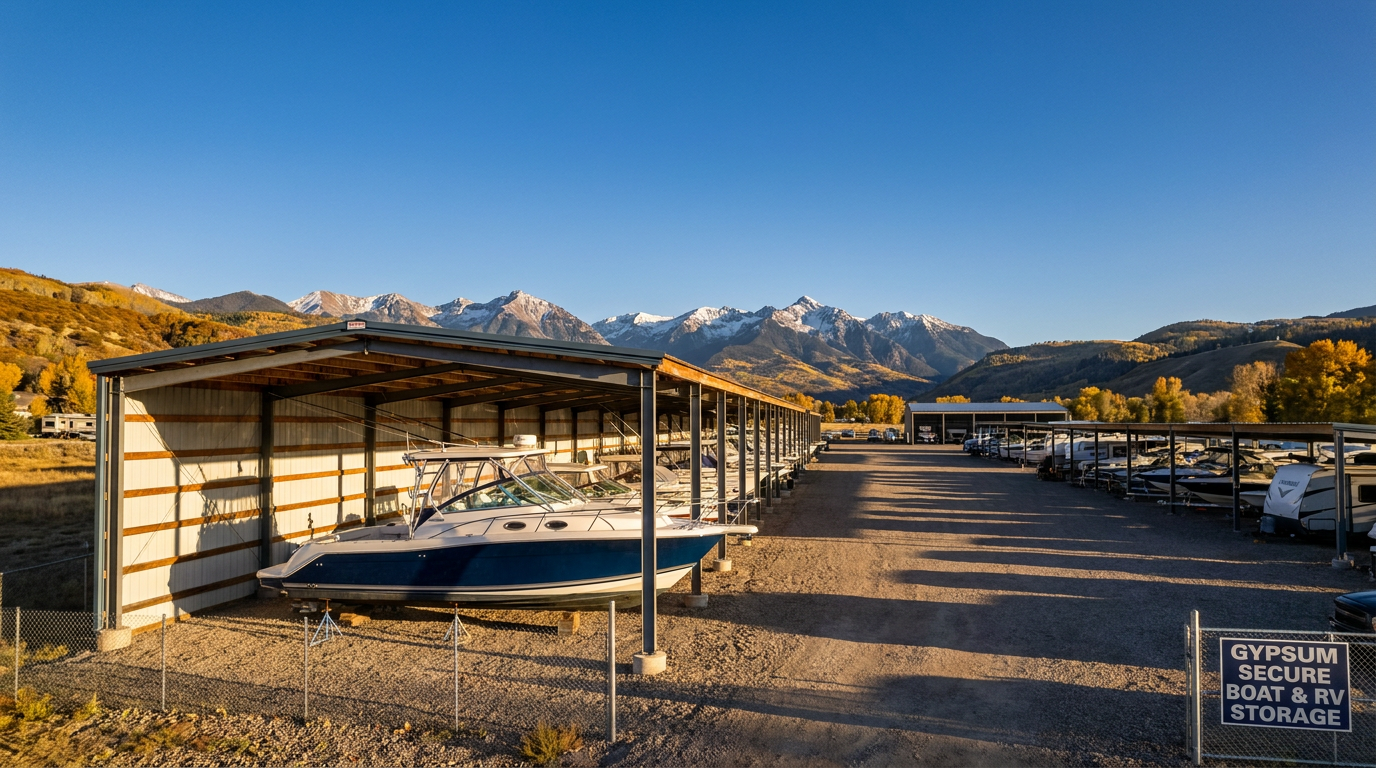
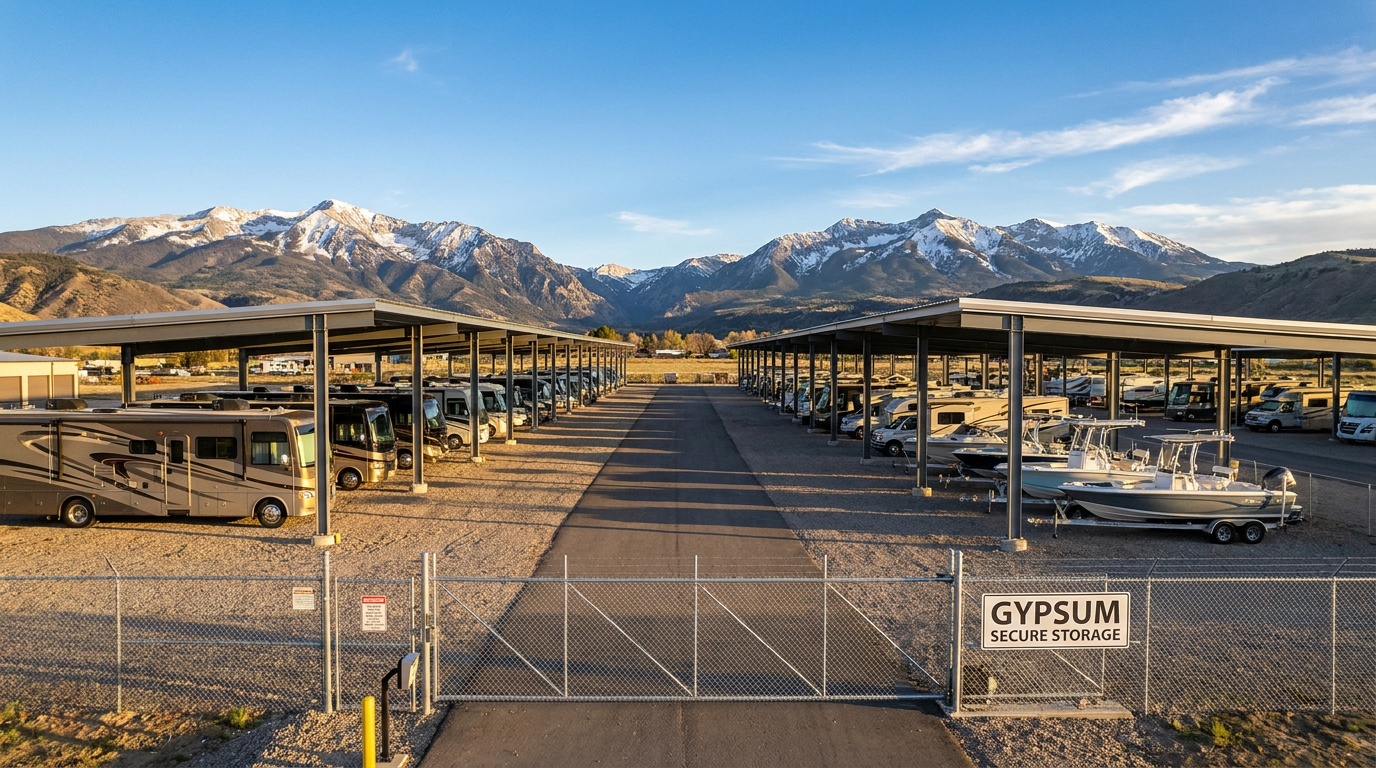
Open parking spaces can accommodate boats, RVs, and trailers when available. Paved parking surfaces help prevent tire damage, and the secure facility provides peace of mind during extended storage periods. Larger drive-up units may offer enclosed vehicle storage for cars, motorcycles, and ATVs.
Frequently Asked Questions
What size storage unit do I need for a one-bedroom apartment?
A 5x10 unit (50 square feet) fits most one-bedroom apartment contents including a mattress set, dresser, small sofa, and 25-50 boxes. If you have a large sectional sofa, extensive wardrobe, or multiple pieces of furniture, upgrade to a 10x10 unit for comfortable fit and access space.
How many boxes fit in a 10x10 storage unit?
A 10x10 unit holds 50-100 medium moving boxes when stacked efficiently, depending on furniture and other items stored. With furniture included, expect to fit 50-75 boxes alongside a bedroom set, living room furniture, and appliances. Without furniture, you can store up to 100 boxes stacked to ceiling height.
Do I need climate-controlled storage?
Choose climate control if storing electronics, wooden furniture, documents, photographs, leather goods, wine, or any temperature-sensitive items for more than 30 days. In Vail Valley, where temperatures range from below 0°F to above 90°F, climate control proves essential for protecting valuable belongings from extreme temperature swings and humidity fluctuations.
Can I store a car in a storage unit?
Yes. A 10x20 unit fits most sedans and small SUVs. Larger vehicles require 10x30 units or dedicated vehicle parking spaces. Measure your vehicle length and width before selecting a unit, and confirm door dimensions accommodate your vehicle height. Our drive-up units with power outlets allow battery tender connections for long-term vehicle storage.
How much does a 10x20 storage unit cost?
At Vail Airport Storage, 10x20 rates vary by access type, climate control, power, lights, and current availability. National averages often range from $150-300/month depending on location and features, but check the live unit list for current local pricing before reserving.
Should I choose a slightly larger unit than I think I need?
Yes. Storage professionals recommend adding 20-30% buffer space beyond calculated requirements. This extra room allows access aisles for retrieving items, prevents damage from overpacking, and accommodates items you may add later. The monthly cost difference between adjacent sizes is often worthwhile for convenience and flexibility.
Making Your Final Decision
Selecting the right storage unit size balances current needs, future flexibility, and budget considerations. Start with a thorough inventory, measure your largest items, calculate total volume, and add buffer space. When uncertain between two sizes, choose the larger option to avoid the hassle and cost of upgrading later.
Consider access patterns when choosing between drive-up and indoor units. Frequent access favors drive-up convenience, while long-term storage of sensitive items benefits from indoor climate control. For Vail Valley residents and visitors, climate-controlled storage protects belongings from mountain weather extremes that damage electronics, furniture, and recreational equipment.
At Vail Airport Storage, our team helps match your specific situation to the right unit size and features. With no administrative fees or security deposits, smart lock technology for 24/7 access, and current promotions offering 50% off for three months, we make storage straightforward and affordable.
|