Business Storage vs Home Storage Units: Complete 2026 Guide |
| BUSINESS STORAGE VS HOME STORAGE UNIT COMPARISON
⏱ 14 min read ·
📄 #2,752 words
Compare business storage and home storage units: costs, access needs, tax benefits, and security features. Find which option fits your Vail Valley needs.
|
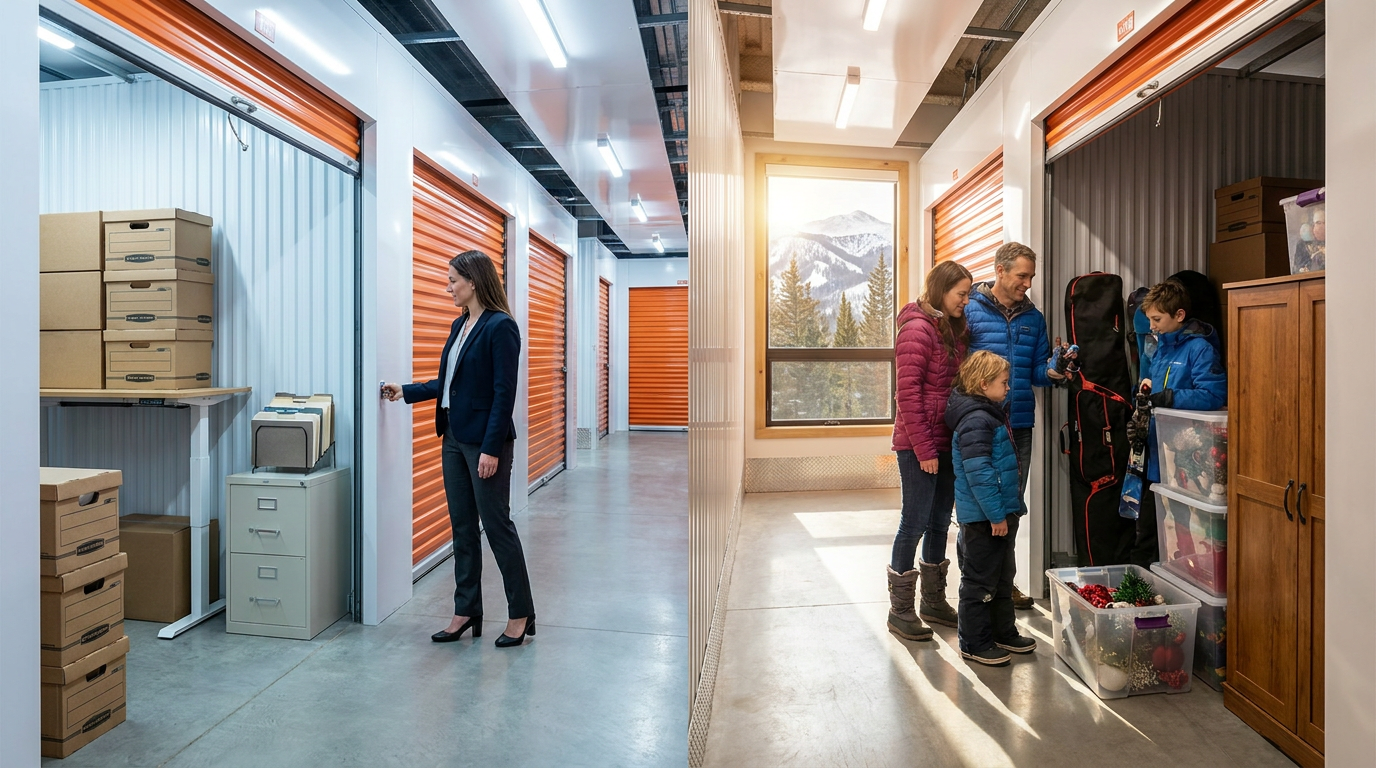
B usiness storage units offer commercial-grade features like frequent access, larger sizes, and tax-deductible expenses, while home storage units provide cost-effective solutions for personal belongings at $37 to $150 per month. The right choice depends on how often you need access, what you are storing, and whether you need documentation for business expenses.
| Key Points: | |
|---|---|
| • | Business storage costs 15 to 30 percent more than personal storage but offers tax deduction potential under IRS Publication 535 |
| • | Climate-controlled units maintain 55 to 80 degrees Fahrenheit, essential for inventory, documents, and electronics |
| • | Small businesses with inventory turnover need drive-up access; occasional storage users can choose indoor units |
| • | Commercial storage requires separate insurance coverage, while personal items may fall under renters or homeowners policies |
| • | 24/7 access with smart lock technology eliminates scheduling conflicts for business operations |
Understanding the Core Differences Between Business and Home Storage
According to the Self Storage Association's 2025 industry report, 31 percent of storage unit renters use their space for business purposes. This represents a significant shift from a decade ago when commercial use accounted for only 18 percent of rentals. The distinction between business and home storage goes beyond simple labeling.
Business storage units are designed for commercial operations. They typically feature wider doors for pallet jacks, reinforced flooring for heavy equipment, and electrical outlets for charging tools. Home storage units prioritize cost efficiency and basic protection for furniture, seasonal items, and personal belongings.
The Self Storage Economics Report from Cushman and Wakefield notes that businesses rent units 2.3 times longer than residential customers on average. This longer commitment often translates to better lease terms and pricing flexibility for commercial renters.
Complete Comparison: Business Storage vs Home Storage Features
The following comparison table breaks down the essential differences between business and home storage options. Data compiled from industry sources including Extra Space Storage, Public Storage, and regional facility operators shows consistent patterns across the United States.
| Feature | Business Storage | Home Storage |
|---|---|---|
| Primary Use | Inventory, equipment, documents, tools | Furniture, seasonal items, personal goods |
| Typical Size Range | 10x15 to 10x30 (150 to 300 sq ft) | 5x5 to 10x10 (25 to 100 sq ft) |
| Access Frequency | Daily to weekly | Monthly to quarterly |
| Monthly Cost Range | $90 to $520 depending on size | $37 to $150 depending on size |
| Tax Deductibility | Yes, under IRS business expense rules | No, personal expense |
| Insurance Requirements | Commercial policy or business rider required | Renters or homeowners policy may cover |
| Climate Control Need | Often essential for inventory protection | Recommended for sensitive items |
| Lease Terms | Month-to-month or annual with flexibility | Standard month-to-month |
Cost Analysis: What You Will Actually Pay in 2026
Storage costs vary significantly by region, with mountain communities like the Vail Valley typically running 20 to 35 percent higher than national averages due to limited real estate and seasonal demand fluctuations. According to SpareFoot's 2026 pricing index, the national average for a 10x10 unit is $129 per month, while Colorado mountain towns average $156.
Business storage typically commands premium pricing due to enhanced features. A 10x20 drive-up unit with power and lights costs approximately $124 per month, while the same size climate-controlled unit runs $276 monthly. The price difference reflects the added infrastructure for temperature regulation.
Cost Breakdown by Business Type
Retail businesses storing seasonal inventory typically need 100 to 200 square feet, translating to $87 to $174 monthly for climate-controlled space. Contractors and tradespeople often require drive-up access for equipment loading, with 10x15 to 10x25 units ranging from $90 to $149 per month.
Home-based businesses and e-commerce sellers represent a growing segment. According to Shopify's 2025 merchant survey, 43 percent of small e-commerce businesses use external storage for inventory. These operations typically start with 5x10 units at $39 to $123 monthly, scaling up as inventory grows.
Can You Use a Home Storage Unit for Business Inventory?
Yes, you can use a standard storage unit for business purposes at most facilities, but several considerations apply. The Self Storage Association confirms that 89 percent of facilities allow commercial use in residential-style units, though some require notification for insurance purposes.
The key limitations involve access patterns and insurance coverage. If you visit your unit more than twice weekly, drive-up access becomes essential for efficiency. Standard indoor units work well for archived documents or seasonal inventory accessed monthly.
Insurance represents the critical distinction. State Farm and Progressive both confirm that standard renters policies exclude business inventory. You will need either a commercial storage policy or a business personal property rider, typically adding $15 to $50 monthly depending on coverage limits.
Tax Implications: Writing Off Your Storage Unit
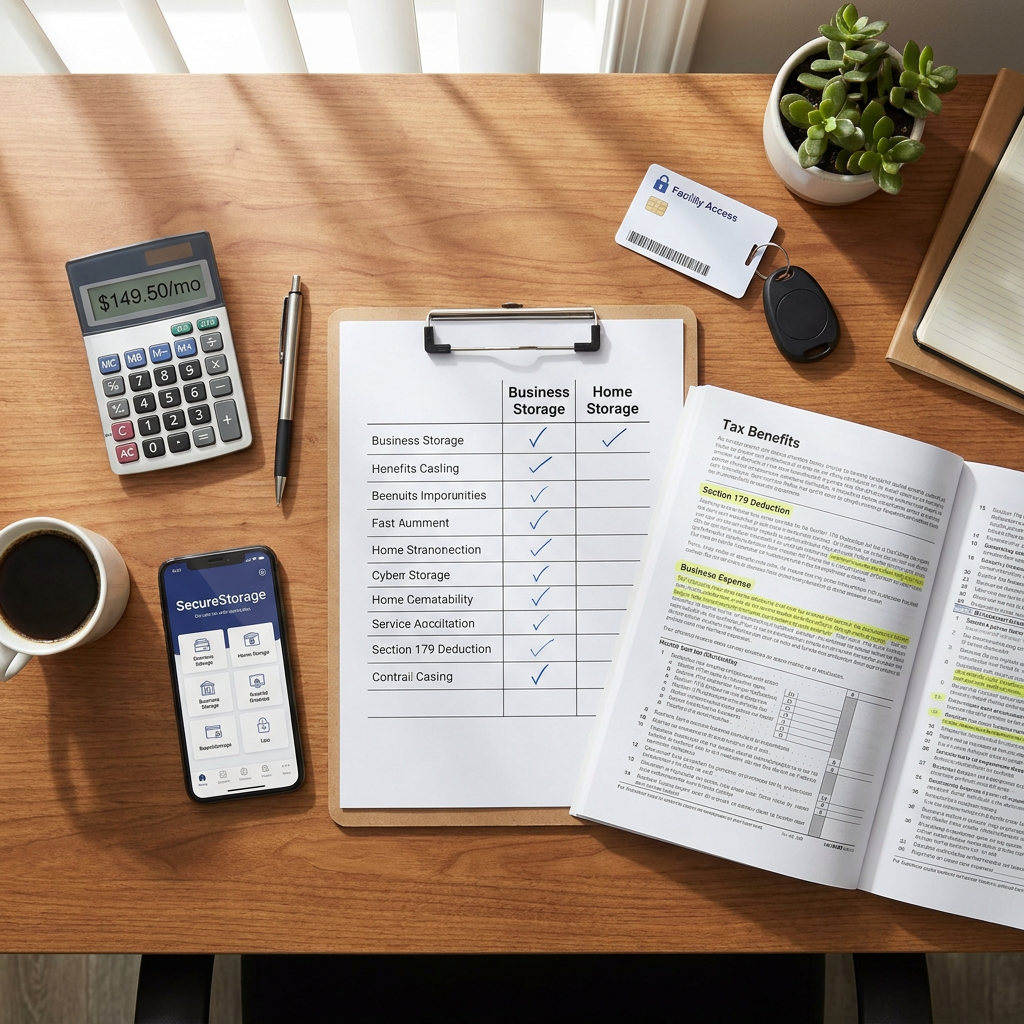
According to IRS Publication 535, storage unit expenses qualify as deductible business expenses when used exclusively for business purposes. The deduction applies to rent, insurance premiums, and any supplies used to organize the space.
Requirements for Tax Deduction
The IRS requires that the storage space be used "regularly and exclusively" for business. Mixed-use scenarios, where you store both personal items and business inventory, require allocation based on percentage of space used for each purpose.
Documentation matters significantly. Keep copies of your lease agreement, monthly payment records, and photographs showing business use. The Small Business Administration recommends maintaining an inventory log showing what business items are stored and when they are accessed.
For Vail Valley businesses, the deduction can offset $1,044 to $6,228 annually depending on unit size, representing meaningful tax savings for small operations. Consult with a qualified tax professional like those at H&R Block or local CPAs for specific guidance on your situation.
Climate Control: When It Becomes Non-Negotiable
Climate-controlled storage maintains temperatures between 55 and 80 degrees Fahrenheit with humidity levels below 55 percent. In mountain environments where temperatures can swing from negative 10 to 95 degrees Fahrenheit seasonally, this protection prevents significant damage.
Items Requiring Climate Control
The National Archives and Records Administration specifies that paper documents require consistent temperatures below 75 degrees and humidity under 50 percent for long-term preservation. Business records stored without climate control in variable environments degrade within 3 to 5 years.
Electronics face particular vulnerability. Apple, Dell, and HP all specify storage temperatures between 50 and 95 degrees Fahrenheit for their products. Exposure to freezing temperatures can crack LCD screens and damage battery cells permanently.
Wood furniture, leather goods, wine collections, and pharmaceutical products all require temperature-regulated storage to maintain integrity. The additional $20 to $60 monthly cost for climate control represents insurance against potentially thousands in damaged inventory.
Security Features: Business vs Personal Priorities
Business storage demands higher security standards due to the value and liability associated with commercial inventory. According to the Security Industry Association, facilities serving business customers invest 40 percent more in security infrastructure than residential-focused operations.
Essential Security Features for Business Storage
Smart lock technology has transformed commercial storage security. Digital access systems like Nokē Smart Entry provide audit trails showing exactly when units were accessed and by whom. This documentation proves invaluable for insurance claims and inventory management.
24/7 access represents a critical feature for businesses with irregular schedules or emergency inventory needs. Facilities with gated entry, individual unit alarms, and on-site management provide the security infrastructure commercial renters require.
Video surveillance standards have evolved significantly. The Electronic Security Association recommends minimum 1080p resolution cameras with 30-day footage retention for commercial facilities. Ask prospective facilities about their camera coverage and retention policies before signing.
Access Patterns: Matching Your Unit to Your Needs
Access frequency determines whether you need drive-up convenience or can use more affordable indoor units. A 2025 survey by StorageCafe found that business renters access their units an average of 8.3 times monthly, compared to 1.7 times for residential users.
Drive-Up Access Benefits
Drive-up units allow you to pull a vehicle directly to your unit door. This configuration saves significant time when loading or unloading inventory, equipment, or supplies. For businesses moving product regularly, the time savings justify the typical 10 to 15 percent price premium.
Ground-level access eliminates elevator waits and hallway navigation. A contractor loading tools into a truck can complete the process in 5 minutes with drive-up access versus 15 to 20 minutes with an interior unit.
When Indoor Units Make Sense
Indoor climate-controlled units work well for businesses storing documents, archived materials, or seasonal inventory accessed infrequently. The protected environment and typically lower foot traffic provide additional security for valuable items.
E-commerce businesses shipping directly from home may only visit storage monthly to replenish inventory. In these cases, the cost savings of indoor units outweigh the convenience of drive-up access.
Size Guide: Matching Square Footage to Storage Needs
Choosing the right size prevents paying for unused space while ensuring adequate room for organization and access. The storage size guide provides detailed capacity information, but general guidelines help with initial planning.
| Unit Size | Square Feet | Business Use Case | Home Use Case |
|---|---|---|---|
| 5x5 | 25 | Document storage, small inventory | Boxes, small furniture pieces |
| 5x10 | 50 | E-commerce inventory, tools | One bedroom apartment contents |
| 10x10 | 100 | Retail overflow, equipment | Two bedroom apartment contents |
| 10x15 | 150 | Contractor tools, seasonal stock | Three bedroom house contents |
| 10x20 | 200 | Large inventory, vehicles | Four bedroom house contents |
| 10x30 | 300 | Warehouse alternative, fleet storage | Large home with vehicles |
Insurance Considerations: Protecting Your Investment
Insurance requirements differ substantially between business and personal storage. The Insurance Information Institute reports that 67 percent of storage unit renters lack adequate coverage, leaving them vulnerable to significant losses.
Personal Storage Insurance Options
Most renters and homeowners insurance policies extend coverage to items in storage, typically up to 10 percent of your personal property limit. A policy with $50,000 in personal property coverage would protect up to $5,000 in stored items.
Verify your coverage with your insurance provider before assuming protection exists. Some policies exclude off-premises storage entirely, while others require notification or additional premium payments.
Business Storage Insurance Requirements
Commercial inventory stored off-site typically falls outside standard business insurance policies. You will need either a commercial storage rider on your existing policy or a separate storage insurance policy.
Companies like Safestor and Bader Company specialize in storage unit insurance, offering policies starting at $10 monthly for $5,000 in coverage. Higher-value inventory may require customized policies with detailed inventory documentation.
What Types of Businesses Use Storage Units Most?
Research from IBISWorld identifies specific industries that rely heavily on self-storage solutions. Understanding these use cases helps determine whether your business fits the storage unit model or requires dedicated warehouse space.
Top Business Categories Using Self-Storage
E-commerce and Online Retail: Amazon third-party sellers and Etsy merchants frequently use storage units for inventory management. The flexibility of month-to-month leases aligns with variable inventory levels.
Contractors and Tradespeople: Electricians, plumbers, and general contractors store tools, materials, and equipment. Drive-up access with power outlets enables battery charging and basic equipment maintenance.
Real Estate Professionals: Staging companies, property managers, and real estate agents store furniture, signage, and marketing materials. Climate control protects valuable staging inventory.
Event and Catering Companies: Tables, chairs, linens, and equipment require substantial storage between events. Seasonal businesses benefit from the ability to scale storage as needed.
Medical and Legal Practices: Document retention requirements create ongoing storage needs. Climate-controlled units protect sensitive records for the 7 to 10 year retention periods required by regulations.
Storage Unit vs Warehouse: When to Upgrade
Self-storage works well for businesses with inventory valued under $100,000 and access needs of 2 to 3 times weekly or less. Beyond these thresholds, dedicated warehouse space often provides better value.
Signs You Have Outgrown Self-Storage
Daily access requirements signal the need for warehouse space. The time spent traveling to and from a storage facility adds up quickly when visiting daily. A dedicated warehouse eliminates this inefficiency.
Inventory exceeding 500 square feet typically costs less in warehouse space. At the 10x30 unit size and above, commercial warehouse rates in most markets become competitive with premium self-storage pricing.
Customer pickup or delivery operations require dedicated space. Self-storage facilities prohibit customer traffic and commercial vehicle loading in most cases, making them unsuitable for distribution operations.
What Should You Never Store in a Business Storage Unit?
Facility policies and common sense dictate certain items that should never enter a storage unit. Violations can result in lease termination, fines, or legal liability.
Prohibited Items at Most Facilities
Hazardous Materials: Gasoline, propane, chemicals, and flammable liquids are universally prohibited. This includes cleaning supplies in large quantities and automotive fluids.
Perishable Goods: Food products, plants, and anything that can rot or attract pests cannot be stored. This applies even to sealed, shelf-stable products at most facilities.
Living Things: Animals and plants are prohibited without exception. This seems obvious but violations occur regularly according to facility operators.
Illegal Items: Stolen goods, controlled substances, and unlicensed firearms cannot be stored. Facilities cooperate with law enforcement and may inspect units with cause.
Making Your Decision: Business vs Home Storage Checklist
Use this framework to determine which storage type fits your situation. Answer each question honestly to guide your selection.
Choose Business Storage If:
|
Choose Home Storage If:
|

Frequently Asked Questions
Can I write off my storage unit as a business expense?
Yes, if the unit is used exclusively for business purposes. According to IRS Publication 535, storage rental qualifies as a deductible business expense. Keep documentation including lease agreements, payment records, and photographs showing business use. Mixed-use scenarios require allocation based on the percentage dedicated to business versus personal items.
What are the 4 types of storage?
The four primary storage types are: standard drive-up units with direct vehicle access, climate-controlled indoor units maintaining 55 to 80 degree temperatures, portable storage containers delivered to your location, and full-service storage where companies handle pickup and delivery. Each serves different needs based on access frequency, item sensitivity, and convenience requirements.
What is the average cost of a 10x20 storage unit?
The national average for a 10x20 storage unit is $179 per month according to SpareFoot's 2026 data. Climate-controlled 10x20 units average $236 to $276 monthly, while drive-up units with power and lights run approximately $124 to $236. Mountain resort areas typically run 20 to 35 percent above national averages.
Can I use a storage unit for my business?
Yes, 89 percent of storage facilities allow commercial use in standard units. Notify your facility to ensure proper insurance coverage applies. You will likely need commercial storage insurance since personal policies exclude business inventory. Some facilities offer dedicated commercial storage programs with features like package receiving and business hour access.
How big is a 10x15 storage unit?
A 10x15 storage unit provides 150 square feet of floor space, equivalent to a large bedroom. With standard 8-foot ceilings, total volume reaches 1,200 cubic feet. This size accommodates the contents of a three-bedroom house, a small business inventory of 50 to 100 boxes plus equipment, or seasonal retail stock for a boutique operation.
Is climate-controlled storage worth it for business use?
Climate control is worth the 20 to 40 percent premium when storing documents, electronics, wood products, leather goods, or temperature-sensitive inventory. The National Archives recommends temperatures below 75 degrees and humidity under 50 percent for paper preservation. In mountain climates with extreme temperature swings, climate control prevents thousands in potential inventory damage.
Vail Valley Storage Solutions for Business and Personal Needs
Local businesses and residents in the Vail Valley face unique storage challenges. Extreme temperature variations, seasonal population fluctuations, and limited commercial real estate make flexible storage solutions essential.
The airport-adjacent location near Eagle County Regional Airport provides convenient access for both permanent residents and seasonal visitors. Smart lock technology enables digital key sharing, allowing business owners to grant employee access without physical key exchanges.
Current promotions offer 3 months at 50 percent off on most unit sizes, reducing the barrier to entry for businesses testing storage solutions. With no administrative fees or security deposits, the total cost of entry remains predictable and manageable.
|