What Size Storage Unit Do I Need for a 2-Bedroom Apartment?
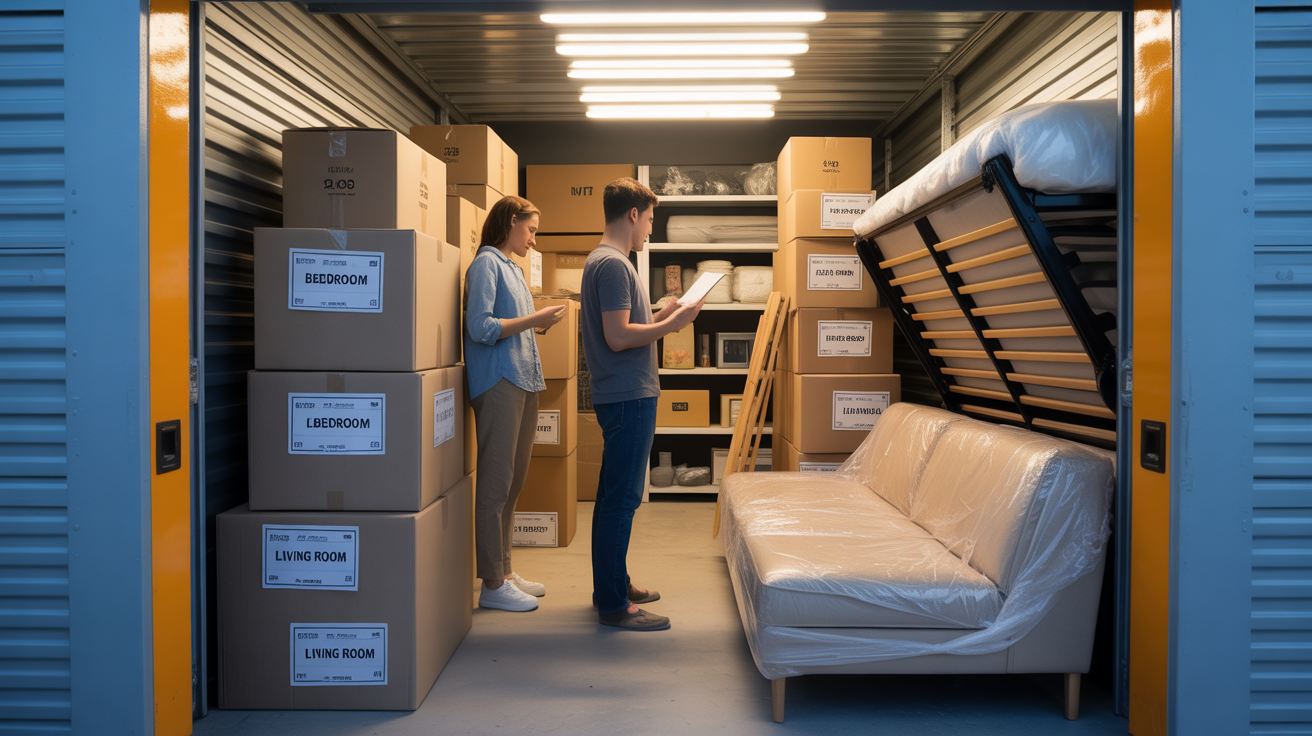
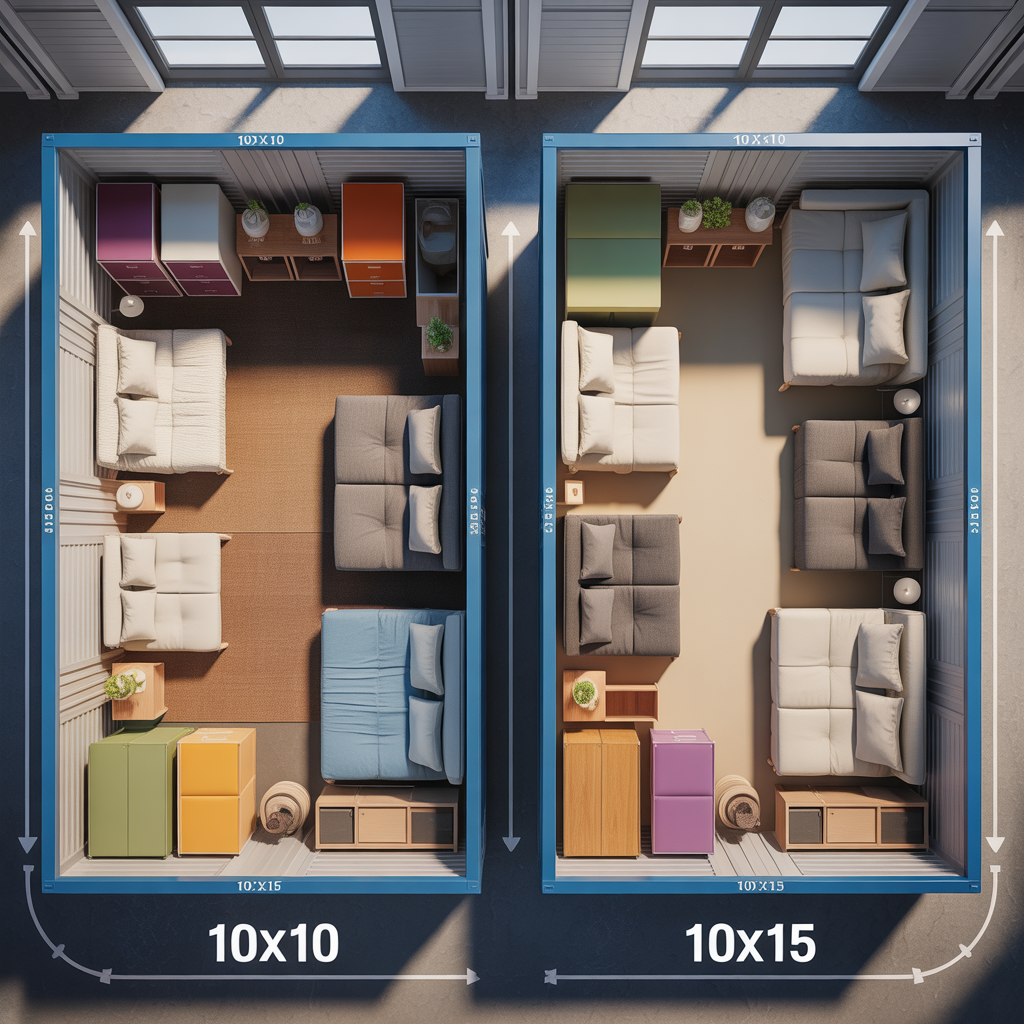
A 2-bedroom apartment typically requires a 10x10 storage unit (100 square feet) for most furniture and boxes, or a 10x15 unit (150 square feet) if you have bulky items like a sectional sofa, large appliances, or extensive belongings. The 10x10 holds approximately 3 rooms of furniture, while the 10x15 accommodates 4 rooms comfortably with walking space.
Key Points:
|
Storage Unit Size Comparison for 2-Bedroom Apartments
According to the Self Storage Association's 2025 industry report, 67% of customers storing apartment contents choose units between 10x10 and 10x15. The right choice depends on your specific furniture inventory, how long you plan to store, and whether you need regular access to items.
| Unit Size | Square Feet | Best For | Monthly Cost Range |
|---|---|---|---|
| 10x10 | 100 sq ft | Standard 2BR with minimal extras | $70-$120 |
| 10x12 | 120 sq ft | 2BR with home office furniture | $82 |
| 10x15 | 150 sq ft | 2BR with appliances, seasonal gear | $125-$320 |
| 10x17 | 170 sq ft | Large 2BR with extensive belongings | $219 |
| 10x20 | 200 sq ft | 2BR plus vehicle or extensive outdoor gear | $195-$380 |
The National Apartment Association reports that average 2-bedroom apartments range from 850-1,100 square feet. Your storage needs correlate directly with your living space: a 900 sq ft apartment typically requires 100 sq ft of storage, while a 1,100 sq ft apartment may need 120-150 sq ft.
What Fits in a 10x10 Storage Unit?
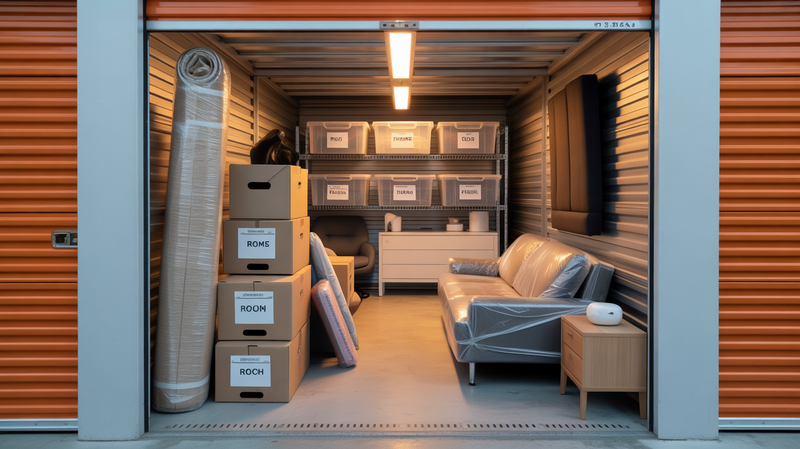
A 10x10 unit provides 100 square feet of floor space with 8-foot ceilings, creating approximately 800 cubic feet of storage volume. According to Public Storage's 2025 capacity guidelines, this size accommodates the contents of a standard 2-bedroom apartment when items are properly organized and stacked.
A typical 10x10 unit holds:
- Living room: Sofa, loveseat, coffee table, 2 end tables, entertainment center, 40-55 inch TV
- Bedroom 1: Queen bed frame, mattress, dresser, nightstand, small desk
- Bedroom 2: Full or twin bed, dresser, bookshelf
- Dining: Table with 4 chairs
- Boxes: 15-25 medium moving boxes (18x18x16 inches)
The limiting factor is typically bulky items. If you own a sectional sofa larger than 10 feet, a king bed, or multiple large appliances, consider upgrading to a 10x15. Research from SpareFoot indicates that 34% of renters who initially chose 10x10 units later upgraded due to underestimating their inventory.
What Fits in a 10x15 Storage Unit?
The 10x15 unit offers 150 square feet and 1,200 cubic feet of volume. This size provides the same furniture capacity as the 10x10 plus room for large appliances, seasonal items, and a 3-foot aisle for access. CubeSmart's storage research shows this is the most popular size for 2-bedroom apartment storage, chosen by 41% of customers.
A 10x15 unit accommodates everything in a 10x10 plus:
- Major appliances: Refrigerator, washer, dryer, dishwasher
- Oversized furniture: Sectional sofas, king beds, armoires
- Outdoor equipment: Bicycles, skis, snowboards, camping gear
- Additional boxes: 30-40 medium boxes total
- Walking aisle: 3-foot pathway for easy item retrieval
For Vail Valley residents storing ski equipment and outdoor gear alongside apartment contents, the 10x15 provides necessary flexibility. Our storage size guide includes visual comparisons showing exactly how items fit in each unit dimension.
Climate-Controlled vs. Standard Units: Which Do You Need?
Climate-controlled units maintain temperatures between 55-80 degrees Fahrenheit and humidity levels between 30-50%. According to the American Moving and Storage Association, items stored in uncontrolled environments experience a 23% higher damage rate over 12 months compared to climate-controlled storage.
In mountain climates like Eagle County, Colorado, temperatures can swing from 90 degrees in summer to below zero in winter. These extremes cause wood furniture to crack, leather to deteriorate, and electronics to malfunction. The Insurance Information Institute reports that temperature damage claims average $2,400 per incident.
Items requiring climate control:
- Wood furniture (expansion and contraction causes warping)
- Electronics and appliances (condensation damages circuits)
- Leather furniture and clothing (cracks and mold growth)
- Musical instruments (humidity affects sound quality)
- Photographs, documents, and books (yellowing and deterioration)
- Artwork and antiques (irreversible damage from temperature swings)
Our climate-controlled storage units maintain consistent conditions year-round, protecting your belongings from Vail Valley's dramatic temperature variations. Nationally a climate premium is common, but at Vail Airport Storage climate-controlled units are often priced below drive-up at the same size (for example 10x10 climate about $73 vs drive-up about $112) - and protecting furniture usually costs less than replacing a single damaged piece. Confirm on Rent Online.
How to Calculate Your Exact Storage Needs
The Household Goods Carriers' Bureau provides a standardized formula: multiply your apartment square footage by 0.10 to estimate storage square footage needed. A 950 sq ft apartment requires approximately 95 sq ft of storage, pointing toward a 10x10 unit.
For precise calculations, inventory your furniture using these standard dimensions:
| Item | Cubic Feet | Notes |
|---|---|---|
| Queen mattress set | 60 cu ft | Store upright to save floor space |
| 3-seat sofa | 50 cu ft | Cannot stack; place against back wall |
| Dresser (6-drawer) | 30 cu ft | Fill drawers with linens to maximize space |
| Dining table (4-person) | 25 cu ft | Store chairs underneath |
| Medium moving box | 3 cu ft | Stack 5-6 high maximum |
| Refrigerator | 45 cu ft | Prop door open slightly to prevent mold |
| Washer or dryer | 20 cu ft each | Stack dryer on washer if front-loading |
Add your cubic footage totals and divide by 8 (ceiling height) to determine minimum floor space. Then add 15-20% for access aisles and stacking inefficiency. This calculation provides your target unit size.
How to Store Large Appliances Safely
Appliance storage requires specific preparation to prevent damage and safety hazards. The Association of Home Appliance Manufacturers recommends a 48-hour preparation period before storing any appliance that uses water or refrigerant.
Refrigerator storage protocol:
- Unplug 24 hours before moving to allow defrosting
- Remove all food and clean interior with baking soda solution
- Dry thoroughly to prevent mold (takes 12-24 hours)
- Prop door open 2-3 inches during storage using a wooden block
- Store upright; laying flat damages compressor seals
Washer and dryer preparation:
- Run empty hot cycle with 1 cup white vinegar to clean residue
- Disconnect and drain all hoses completely
- Secure drum with manufacturer's shipping bolts (prevents damage during transport)
- Leave doors slightly open to prevent mildew
- Wrap power cords and tape to back of unit
Climate-controlled storage is essential for appliances stored longer than 3 months. Temperature fluctuations cause rubber seals to crack and electronic control boards to fail. According to Consumer Reports, appliances stored in non-climate-controlled environments show a 40% higher failure rate upon reinstallation.
Packing Strategies to Reduce Your Storage Size
Professional moving companies from United Van Lines and Atlas Van Lines use standardized techniques that can reduce required storage space by 30-40%. These methods allow many 2-bedroom apartments to fit in a 10x10 instead of a 10x15, saving $30-150 monthly.
Vertical stacking principles:
- Place heaviest items (appliances, dressers) against back wall first
- Stack boxes in columns, heaviest on bottom, lightest on top
- Use wardrobe boxes for hanging clothes; stack other boxes inside the base
- Store mattresses vertically along side walls using mattress bags
- Disassemble bed frames and tables; store legs inside drawers or taped to frames
Space-maximizing techniques:
- Fill dresser drawers with linens, small items, and clothing
- Store items inside appliances (pots in oven, towels in washer drum)
- Use vacuum storage bags for bedding, reducing volume by 75%
- Nest chairs and stack tables upside-down on sofas
- Roll area rugs and store vertically in corners
Create an inventory list and photograph your unit layout before closing. According to the Self Storage Association, 28% of renters forget where they placed specific items, leading to frustrating searches and potential damage from excessive rearranging.
Storage Costs: What to Expect for 2-Bedroom Apartment Storage
Storage pricing varies significantly by location, climate control, and access features. The 2025 Self Storage Almanac reports national average prices of $94/month for 10x10 standard units and $127/month for 10x10 climate-controlled units. Mountain resort areas typically run 15-25% above national averages due to seasonal demand.
At Vail Airport Storage, our pricing structure offers competitive rates with promotional discounts:
- 10x10 Drive-Up: $112/month (3 months 50% off promotion available)
- 10x10 Climate Control: $73/month (3 months 50% off promotion available)
- 10x15 Climate Control: $127/month (3 months 50% off promotion available)
- 10x15 Drive-Up with Lights: $315/month (3 months 50% off promotion available)
Unlike many competitors, we charge no administrative fees or security deposits, which typically add $25-50 to initial costs elsewhere. Our airport-adjacent location provides convenient access for travelers and seasonal residents moving between properties.
Seasonal Storage Solutions for Vail Valley Residents
Seasonal residents and vacation homeowners face unique storage challenges. According to the Vail Valley Partnership, approximately 60% of area housing units are second homes, creating high demand for flexible storage solutions during off-seasons.
Winter season storage (November through April):
- Store summer furniture, bicycles, and outdoor equipment
- Patio furniture requires climate control to prevent rust and UV damage
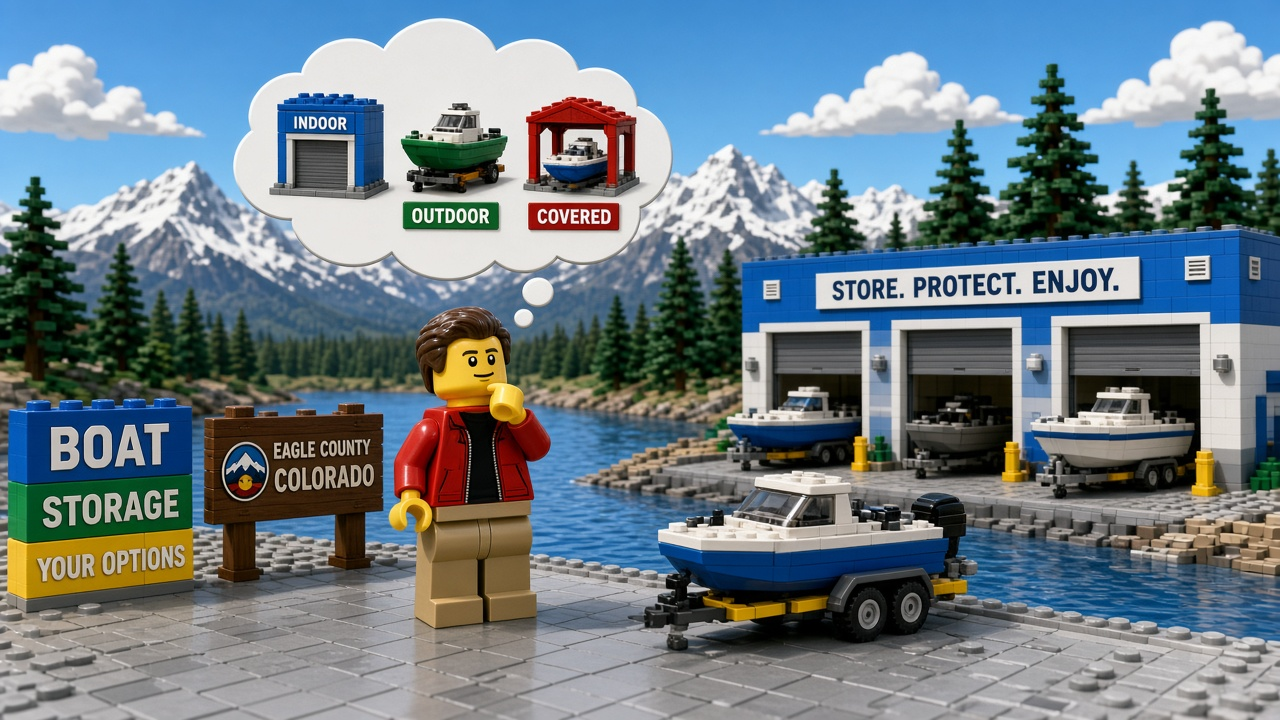
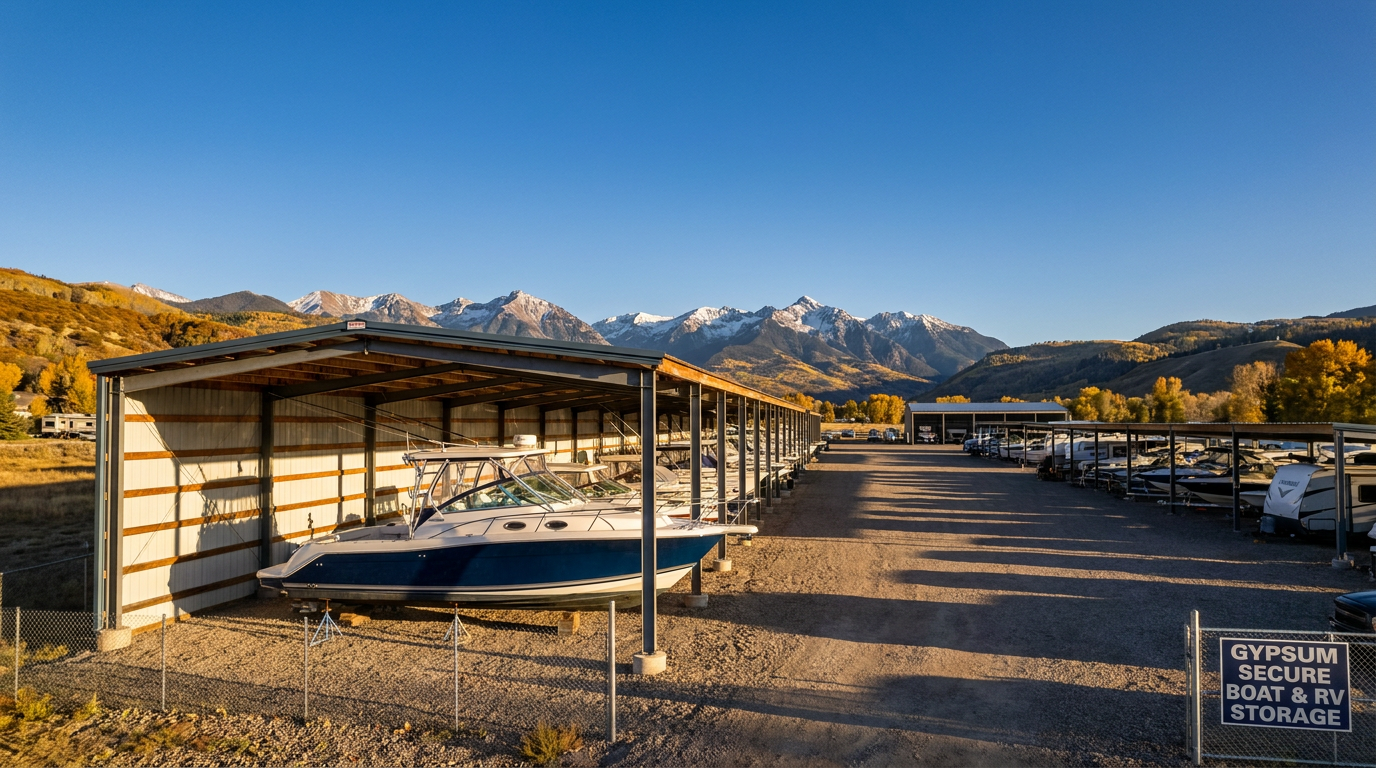
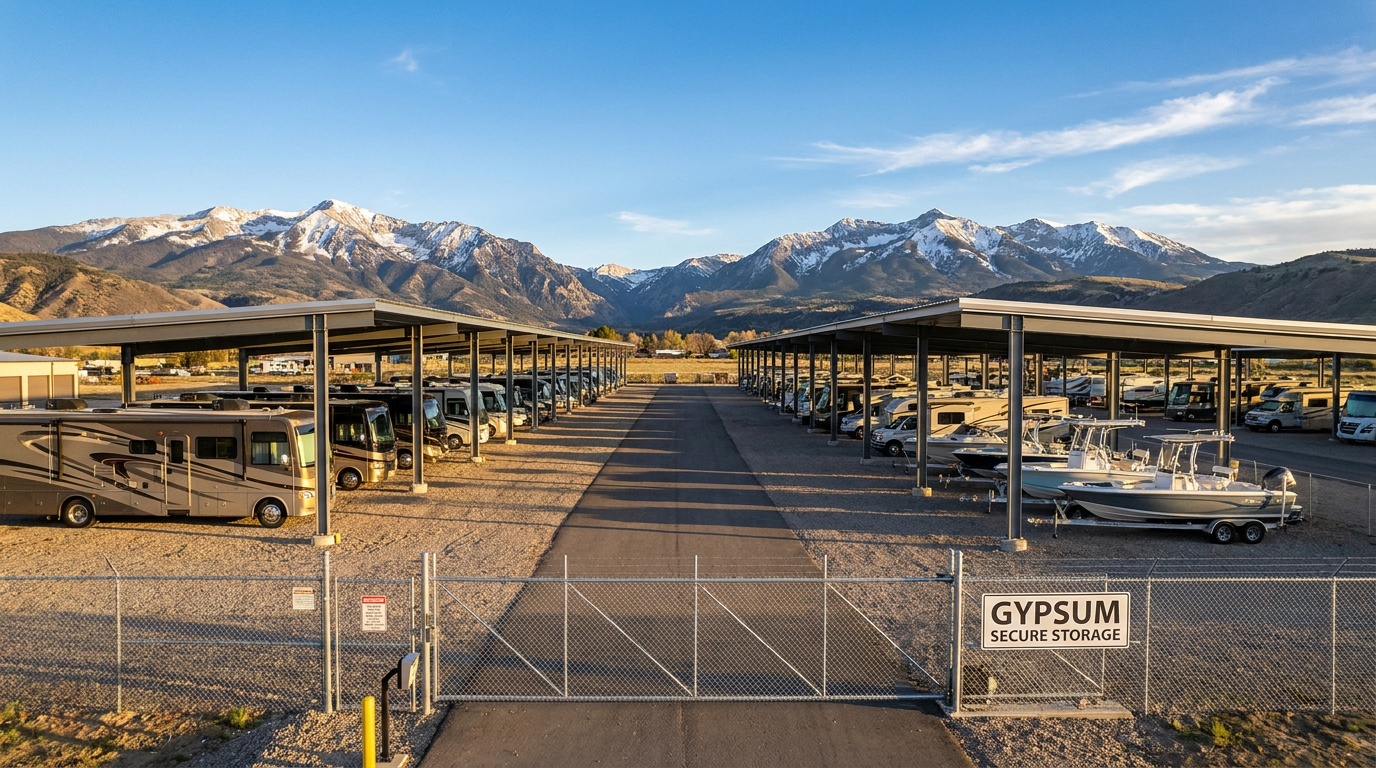
- Boat and watercraft storage needs vary from 8x15 to 10x30 depending on size
Summer season storage (May through October):
- Ski equipment, snowboards, and winter gear benefit from climate control
- Winter clothing and bedding should use vacuum bags in climate-controlled units
- Snow removal equipment requires proper fuel drainage before storage
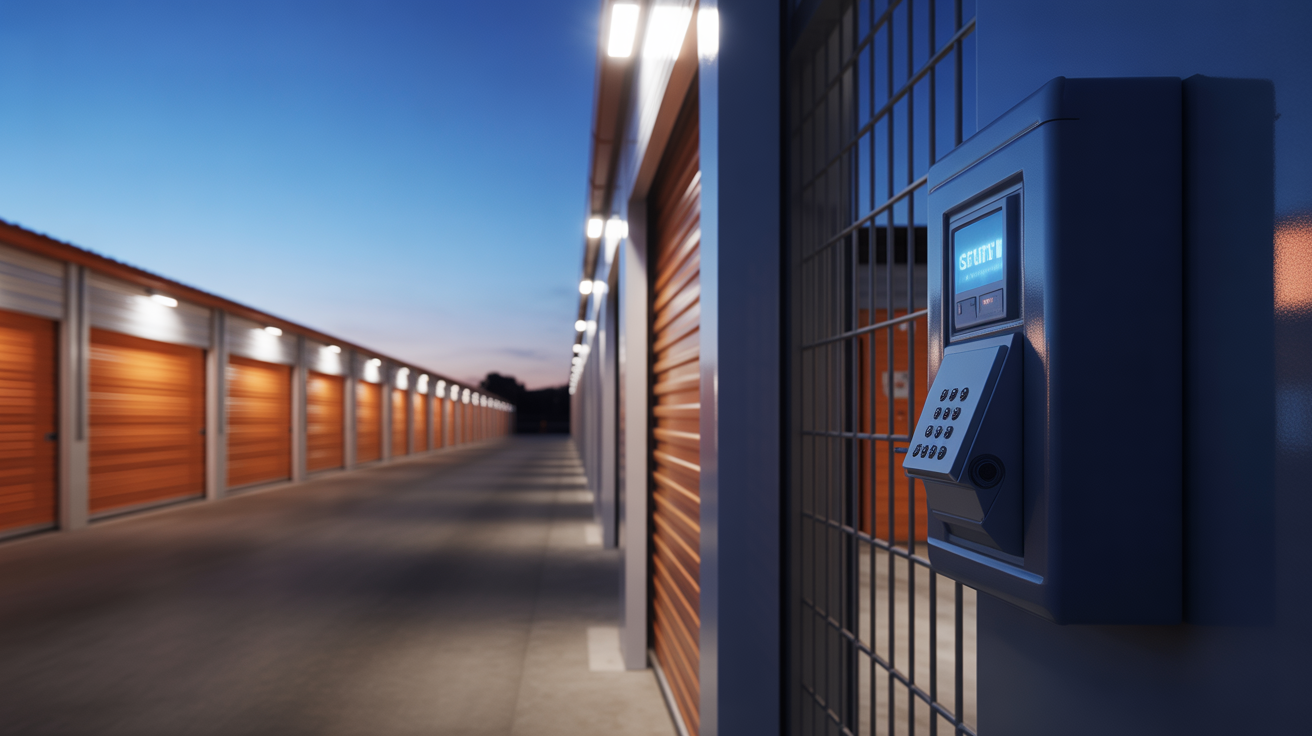
Our smart lock technology allows 24/7 access with digital key sharing, enabling property managers and housekeepers to retrieve items without coordinating schedules. This feature proves particularly valuable for vacation rental operators managing multiple properties across the Vail Valley.
College Student Storage: Smaller Options for Shared Apartments
Students at Colorado Mountain College and those returning home for summer from other universities often need storage for their portion of a shared 2-bedroom apartment. Individual bedroom contents typically require only 5x10 or 5x5 units, significantly reducing costs.
Typical college student storage needs:
- 5x5 unit (about $16/month): Twin bed, desk, chair, 5-10 boxes, mini-fridge
- 5x10 unit (about $30-$120/month): Full bedroom furniture, TV, bicycle, 15-20 boxes
- 5x7 unit (about $30-$50/month): Mid-size option for students with extra gear
Summer storage from May through August costs $111-369 depending on unit size and climate control selection. Students storing electronics, musical instruments, or valuable textbooks should choose climate-controlled options to prevent heat damage during summer months when temperatures regularly exceed 85 degrees.
Sustainable Storage Practices
The Environmental Protection Agency reports that Americans discard 12 million tons of furniture annually, much of which could be preserved through proper storage. Sustainable storage practices extend item lifespan while reducing environmental impact and replacement costs.
Eco-friendly packing materials:
- Use recycled cardboard boxes from local grocery stores or Buy Nothing groups
- Replace bubble wrap with newspaper, packing paper, or biodegradable alternatives
- Choose reusable plastic bins for items you access frequently
- Use old linens and towels as padding instead of disposable materials
Furniture preservation techniques:
- Apply furniture polish before storage to protect wood surfaces
- Use breathable cotton covers instead of plastic (prevents moisture trapping)
- Place pallets or boards under furniture to allow air circulation
- Include silica gel packets in boxes to absorb excess humidity
Properly stored furniture lasts 3-5 times longer than items stored without protection, according to the Furniture Industry Research Association. This longevity reduces replacement frequency and keeps usable items out of landfills.

Frequently Asked Questions
How big is a 10x10 storage unit?
A 10x10 storage unit measures 10 feet wide by 10 feet deep, providing 100 square feet of floor space. With standard 8-foot ceilings, total volume equals 800 cubic feet. This size approximates a small bedroom or half of a one-car garage, fitting approximately 3 rooms of furniture plus 15-25 boxes.
How big is a 10x5 storage unit?
A 10x5 (or 5x10) storage unit provides 50 square feet of floor space and 400 cubic feet of volume. This size accommodates one bedroom's furniture, a mattress set, dresser, and 10-15 boxes. It works well for students, single-room storage, or seasonal item rotation.
What size storage unit do I need for a small apartment?
A studio or 1-bedroom apartment typically requires a 5x10 to 10x10 unit. Studios with minimal furniture fit in 5x10 units (50 sq ft), while furnished 1-bedrooms need 10x10 units (100 sq ft). Add 25-50 square feet if storing appliances or extensive belongings.
Can I store a refrigerator in a non-climate-controlled unit?
Storing a refrigerator in a non-climate-controlled unit for under 3 months poses minimal risk in moderate climates. However, storage exceeding 3 months or in areas with temperature extremes (below 32 degrees or above 90 degrees) requires climate control to prevent compressor seal damage, rubber gasket deterioration, and electronic control board failure.
How do I protect furniture in storage long-term?
Long-term furniture protection requires climate-controlled storage, breathable covers (not plastic), furniture polish application before storage, and proper spacing for air circulation. Place items on pallets or boards to prevent moisture absorption from concrete floors. Check units every 2-3 months to identify potential issues early.
What cannot be stored in a storage unit?
Prohibited items include flammable materials (gasoline, propane, paint), perishable food, live plants, animals, hazardous chemicals, explosives, and illegal items. Most facilities also prohibit unregistered vehicles and items with active liens. Check your facility's specific prohibited items list before storing.
Find Your Perfect Storage Unit SizeVail Airport Storage offers climate-controlled and drive-up units from 5x4 to 15x20, with 24/7 smart lock access and no administrative fees. Take advantage of our current promotion: 3 months at 50% off on select units. View Available Units |