Self Storage Tax Deductions: What Business Expenses Are Allowed
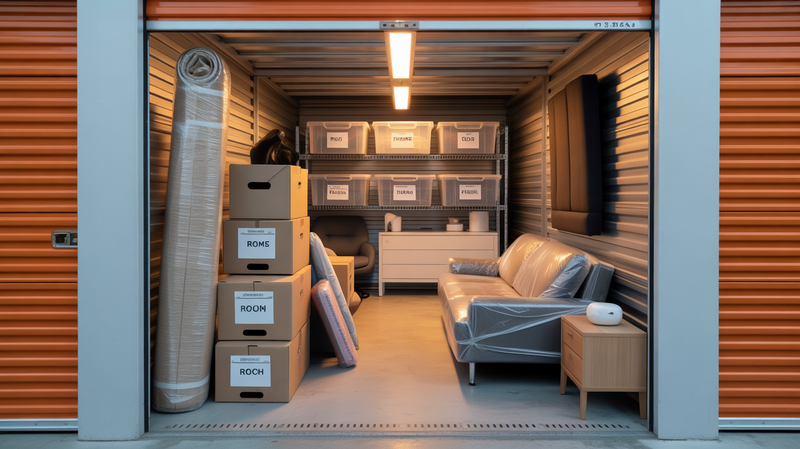
Self storage costs are tax deductible when the unit serves a legitimate business purpose, such as storing inventory, equipment, business records, or supplies. The IRS allows these expenses under ordinary and necessary business deductions on Schedule C, with facility owners eligible for additional deductions including depreciation, property taxes, and operating costs totaling 40 to 60 percent of gross rental income.

Key Points:
|
Who Qualifies for Self Storage Tax Deductions
The IRS recognizes three primary categories of taxpayers who can deduct self storage expenses. According to IRS Publication 535, business expenses must be both ordinary (common in your trade) and necessary (helpful and appropriate) to qualify. Storage costs meet these criteria when directly connected to income-producing activities.
Business owners and self-employed individuals represent the largest group of eligible taxpayers. Sole proprietors, LLCs, partnerships, and corporations can deduct storage unit rental fees when storing inventory, equipment, business records, or supplies. A 2024 Self Storage Association survey found that 31% of all storage renters use units for business purposes.
Rental property owners can deduct storage costs for materials, tools, and equipment used to maintain investment properties. These expenses appear on Schedule E as part of rental property operating costs.
Home-based business operators qualify for a special provision under IRS Topic 509. If you store inventory or product samples for your business, you can deduct the proportional cost without meeting the strict "exclusive use" requirement that applies to home office deductions.
Deductible Expenses for Storage Unit Renters
Business owners renting storage space can claim several categories of expenses. The key requirement is maintaining clear documentation connecting the storage use to business activities. According to data from the National Federation of Independent Business, storage and warehousing costs average 2.8% of operating expenses for small businesses with physical inventory.
| Expense Type | Tax Form Location | Deduction Rate |
|---|---|---|
| Monthly rental fees | Schedule C, Line 20b | 100% |
| Storage insurance | Schedule C, Line 15 | 100% |
| Lock and security purchases | Schedule C, Line 22 | 100% |
| Moving and transport costs | Schedule C, Line 27a | 100% |
| Shelving and organization | Schedule C, Line 22 | 100% |
For businesses in mountain communities like the Vail Valley, climate-controlled storage units provide essential protection for temperature-sensitive inventory. The additional cost of climate control is fully deductible when storing business goods that require temperature regulation between 55 and 80 degrees Fahrenheit.

Operating Expense Deductions for Facility Owners
Self storage facility owners face a different tax landscape with significantly more deduction opportunities. According to research from Marcus and Millichap, operating expenses typically consume 35 to 45 percent of effective gross income for professionally managed facilities. Nearly all these costs qualify as deductions.
Property-related expenses form the largest deduction category. Real estate taxes, mortgage interest, property insurance, and building maintenance are fully deductible against rental income. The IRS requires these expenses to be reported on Schedule E for most facility structures, though some operators use Schedule C depending on their level of involvement.
Administrative and operational costs include employee wages, payroll taxes, management software subscriptions, marketing expenses, and professional fees. Facilities using modern access systems can deduct the full cost of smart lock technology, security cameras, and gate systems as ordinary business expenses.
Utility costs for electricity, water, and climate control systems are deductible. Facilities offering climate-controlled units can deduct the higher utility costs associated with maintaining consistent temperatures, which typically adds $0.15 to $0.30 per square foot monthly to operating expenses according to Inside Self Storage industry data.
Depreciation Strategies for Self Storage Properties
Depreciation represents one of the most valuable tax benefits for self storage facility owners. The IRS requires commercial buildings to be depreciated over 39 years using the straight-line method. However, strategic approaches can dramatically accelerate these deductions.
Standard depreciation for a $2 million self storage building generates approximately $51,282 in annual deductions ($2 million divided by 39 years). While this provides consistent tax benefits, it fails to account for the reality that different building components have different useful lives.
Cost Segregation Studies
Cost segregation is an IRS-approved method that separates building components into different depreciation categories. According to CSSI Services, a leading cost segregation firm, self storage facilities typically benefit more from this strategy than other commercial property types due to their unique features.
A cost segregation study reclassifies building elements into shorter depreciation periods:
- 5-year property: Security systems, access controls, carpeting, certain electrical components
- 7-year property: Office furniture, computer equipment, specialized fixtures
- 15-year property: Land improvements including parking lots, fencing, landscaping, signage
- 39-year property: Structural building components, walls, roof structure
For a typical self storage facility, cost segregation studies identify 15 to 30 percent of building costs as eligible for accelerated depreciation. On a $2 million property, this could shift $300,000 to $600,000 from 39-year depreciation to 5 or 15-year schedules, generating substantial first-year tax savings.
Section 179 Deductions for 2025 and 2026
Section 179 of the Internal Revenue Code allows businesses to immediately deduct the full purchase price of qualifying equipment and property rather than depreciating it over multiple years. The One Big Beautiful Bill Act of 2025 significantly expanded these benefits for self storage operators.
The 2025 Section 179 deduction limit increased to $2.5 million , with the phase-out threshold rising to $4 million . This means businesses can deduct up to $2.5 million in qualifying property purchases immediately, with the deduction reducing dollar-for-dollar once total equipment purchases exceed $4 million.
Qualifying property for self storage facilities includes:
- Security systems and surveillance equipment
- Access control gates and kiosks
- Office equipment and computers
- HVAC systems and climate control equipment
- Certain building improvements (roofs, fire protection, alarm systems)
- Vehicles used more than 50% for business
Important limitation: Section 179 deductions cannot exceed your business's taxable income for the year. If your facility generates $150,000 in taxable income, your Section 179 deduction is capped at $150,000 regardless of how much qualifying equipment you purchased.
100% Bonus Depreciation Returns in 2025
Bonus depreciation allows businesses to deduct a percentage of qualifying asset costs in the first year of service. After declining from 100% in 2022 to 60% in 2024, the 2025 tax legislation restored 100% bonus depreciation for property placed in service after January 19, 2025.
Unlike Section 179, bonus depreciation has no annual dollar limit and can create a net operating loss. This makes it particularly valuable for self storage operators making significant capital investments.
| Feature | Section 179 | Bonus Depreciation |
|---|---|---|
| 2025 Deduction Rate | 100% (up to limit) | 100% |
| Annual Dollar Limit | $2.5 million | No limit |
| Taxable Income Limit | Cannot exceed income | Can create NOL |
| Used Property Eligible | Yes | Yes (if new to taxpayer) |
| Application Order | Applied first | Applied second |
Strategic application: The IRS requires Section 179 to be applied before bonus depreciation. Businesses should use Section 179 up to their taxable income limit, then apply bonus depreciation to remaining qualifying property. This approach maximizes immediate deductions while potentially creating loss carryforwards.
Section 179D Energy Efficiency Deductions
The Section 179D deduction rewards commercial building owners who invest in energy-efficient improvements. For 2026, base deductions range from $0.59 to $5.94 per square foot depending on energy savings achieved and whether prevailing wage requirements are met.
Self storage facilities can qualify through improvements to lighting systems, HVAC equipment, and building envelope (insulation, windows, doors). A 50,000 square foot facility achieving maximum energy efficiency standards could generate deductions exceeding $297,000.
Qualifying improvements must reduce total annual energy costs by at least 25% compared to ASHRAE reference standards. Facilities installing LED lighting throughout typically achieve 15 to 20% energy savings from that single improvement.
Home-Based Business Storage Deductions
The IRS provides special treatment for home-based businesses that store inventory or product samples. Under Topic 509, you can deduct home storage expenses without meeting the exclusive use test that normally applies to home office deductions.
To qualify, you must meet all of these requirements:
- Your business involves selling products at wholesale or retail
- You keep inventory or product samples in your home for business purposes
- Your home is the only fixed location of your business
- The storage space is used on a regular basis
- The space is separately identifiable and suitable for storage
Deductible expenses include a proportional share of rent or mortgage interest, utilities, insurance, repairs, and depreciation. Calculate the percentage by dividing the square footage used for storage by your home's total square footage.
For businesses needing additional storage beyond home capacity, renting a dedicated unit provides cleaner tax documentation. Facilities near transportation hubs, like airport storage locations, offer convenient access for businesses shipping products or managing traveling inventory.
Documentation Requirements for Storage Deductions
The IRS requires adequate records to substantiate business expense deductions. For storage-related deductions, maintain these documents for at least three years after filing:
For storage unit renters:
- Rental agreement showing business name
- Monthly payment receipts or bank statements
- Inventory list of items stored
- Photos documenting business use
- Insurance policy documents
For facility owners:
- Purchase documents and closing statements
- Cost segregation study (if applicable)
- Operating expense receipts organized by category
- Depreciation schedules
- Employee payroll records
- Property tax statements
According to the American Institute of CPAs, inadequate documentation is the leading cause of disallowed business deductions during IRS audits. Digital record-keeping systems like QuickBooks, Xero, or dedicated property management software help maintain organized records.
Common Questions About Storage Tax Deductions
Can I write off my storage unit as a business expense?
Yes, storage unit rental fees are fully deductible when the unit stores business inventory, equipment, records, or supplies. Report the expense on Schedule C, Line 20b (Rent or Lease) for sole proprietors, or the equivalent line for other business structures. Personal storage for household items does not qualify.
What expense category is a storage unit?
Storage unit rental payments fall under "Rent or Lease" expenses for tax purposes. The IRS classifies this as an ordinary business expense on Schedule C. Related costs like storage insurance belong under "Insurance" (Line 15), while locks and organizational supplies fall under "Supplies" (Line 22).
What is the most overlooked tax deduction for storage businesses?
Cost segregation studies represent the most underutilized deduction strategy for self storage facility owners. According to the National Real Estate Investor, fewer than 15% of commercial property owners conduct cost segregation studies, despite potential first-year tax savings of $50,000 to $200,000 for typical self storage facilities.
What business expenses are 100% tax-deductible?
Most ordinary and necessary business expenses are 100% deductible, including storage unit rent, business insurance, office supplies, professional fees, employee wages, and utilities. Meals remain limited to 50% deductibility under current tax law. Capital purchases may be 100% deductible through Section 179 or bonus depreciation rather than requiring multi-year depreciation.
How do I calculate depreciation for a self storage building?
Standard depreciation divides the building's cost basis (purchase price minus land value) by 39 years. A building with a $1.5 million cost basis generates $38,461 in annual depreciation. Cost segregation studies can reclassify 15 to 30 percent of costs into 5, 7, or 15-year categories, accelerating deductions significantly.

Strategic Tax Planning for Self Storage Operations
Effective tax planning for self storage requires coordination between multiple deduction strategies. Work with a CPA or tax advisor familiar with real estate and self storage operations to maximize benefits while maintaining compliance.
Key timing considerations for 2026:
- Equipment purchases: Buy and place in service before December 31 to claim current-year deductions
- Cost segregation: Commission studies before filing to capture accelerated depreciation
- Energy improvements: Complete projects meeting ASHRAE standards for Section 179D benefits
- Record organization: Implement digital systems to simplify documentation requirements
For businesses in the Vail Valley area, understanding the right storage unit size for your inventory needs helps optimize both operational efficiency and tax deductions. Paying for more space than necessary wastes money, while insufficient space may force multiple unit rentals with higher total costs.
The combination of restored bonus depreciation, increased Section 179 limits, and cost segregation opportunities makes 2025 and 2026 particularly favorable years for self storage capital investments. Facility owners considering expansions, renovations, or equipment upgrades should evaluate the tax implications before finalizing purchase decisions.
Need Business Storage in the Vail Valley?Vail Airport Storage offers climate-controlled and drive-up units with smart lock technology, 24/7 access, and no administrative fees. Store your business inventory, equipment, or seasonal goods with confidence. View Available Units |