Items Prohibited in Storage Units: Complete 2026 Guide |
| WHAT ITEMS ARE PROHIBITED IN STORAGE UNITS
⏱ 9 min read ·
📄 #1,727 words
Learn exactly what items are prohibited in storage units, from hazardous materials to perishables. Avoid fines and protect your belongings with this guide.
|
S torage units prohibit hazardous materials, perishable foods, living things, illegal items, weapons, and certain valuables. These restrictions exist to protect your belongings, other renters' property, and facility staff from fire, contamination, pest infestations, and legal liability.
| Key Points: | |
|---|---|
| • | Flammable materials (gasoline, propane, fireworks) are universally banned due to fire risk |
| • | Perishable food attracts pests within 24 to 72 hours and violates health codes |
| • | Living in storage units violates fire codes and carries fines of $500 to $5,000 |
| • | Firearms require written facility approval and proper licensing documentation |
| • | Violations can result in immediate lease termination and loss of belongings |
Understanding these restrictions before renting prevents costly mistakes. Storing prohibited items can void your rental agreement, eliminate insurance coverage, and in some cases result in criminal charges. This guide covers every category of banned items and explains the reasoning behind each restriction.
Hazardous and Flammable Materials
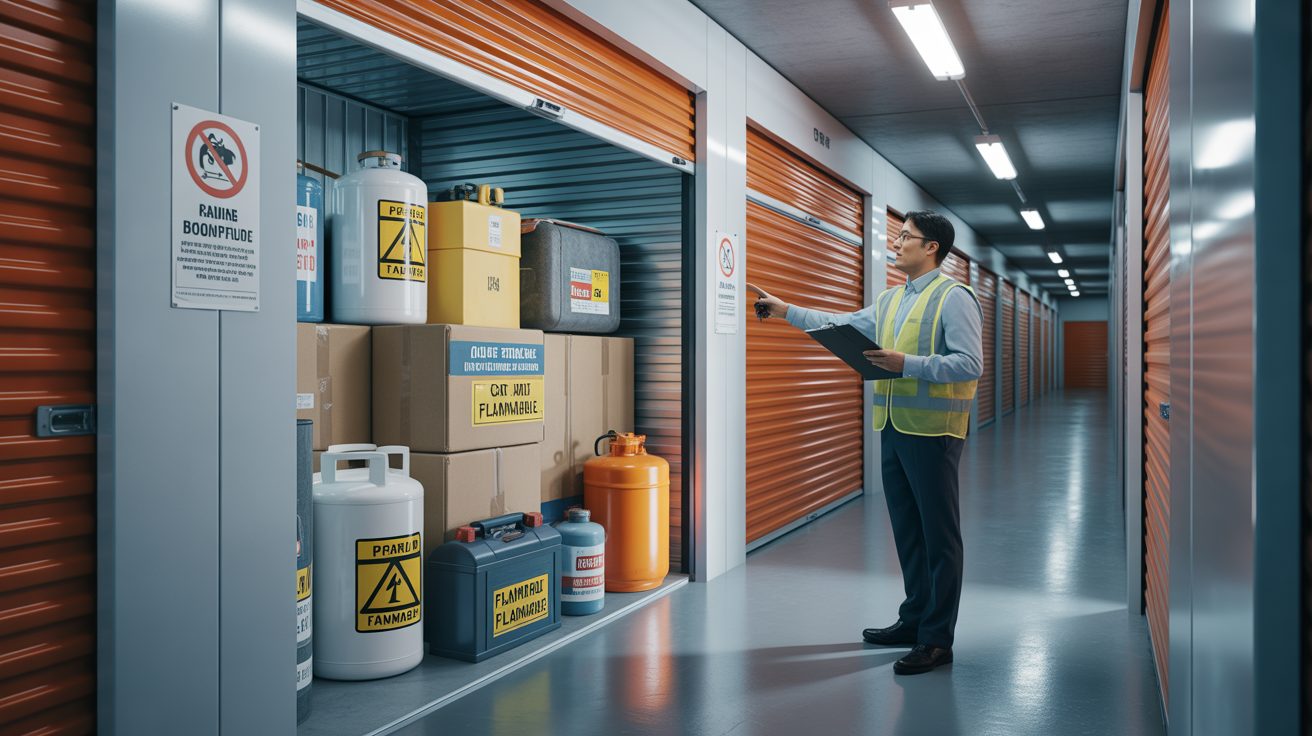
Hazardous materials represent the largest category of prohibited items. Storage facilities ban these substances because a single container of gasoline can cause an explosion affecting dozens of units. Insurance companies refuse coverage for facilities that allow flammable storage.
Flammable Liquids and Gases
The following items are prohibited at all storage facilities:
- Gasoline, diesel fuel, and kerosene in any quantity
- Propane tanks , including small camping canisters
- Lighter fluid and charcoal starter
- Paint thinner, turpentine, and mineral spirits
- Rubbing alcohol in quantities over 16 ounces
- Cooking oils in bulk containers
Even empty fuel containers pose risks. Residual vapors can ignite at temperatures as low as 45 degrees Fahrenheit. If you need to store lawn equipment or vehicles, drain all fuel before placing items in your unit.
Aerosol Products
Pressurized containers expand when temperatures rise above 120 degrees Fahrenheit, which occurs regularly in non-climate-controlled units during summer months. Banned aerosols include:
- Spray paint and primer
- Hairspray and deodorant
- Cooking sprays
- Air fresheners
- Compressed air dusters
- Insecticides and bug spray
A ruptured aerosol can releases flammable propellants that pool at floor level. One spark from static electricity can ignite the entire space.
Corrosive and Toxic Chemicals
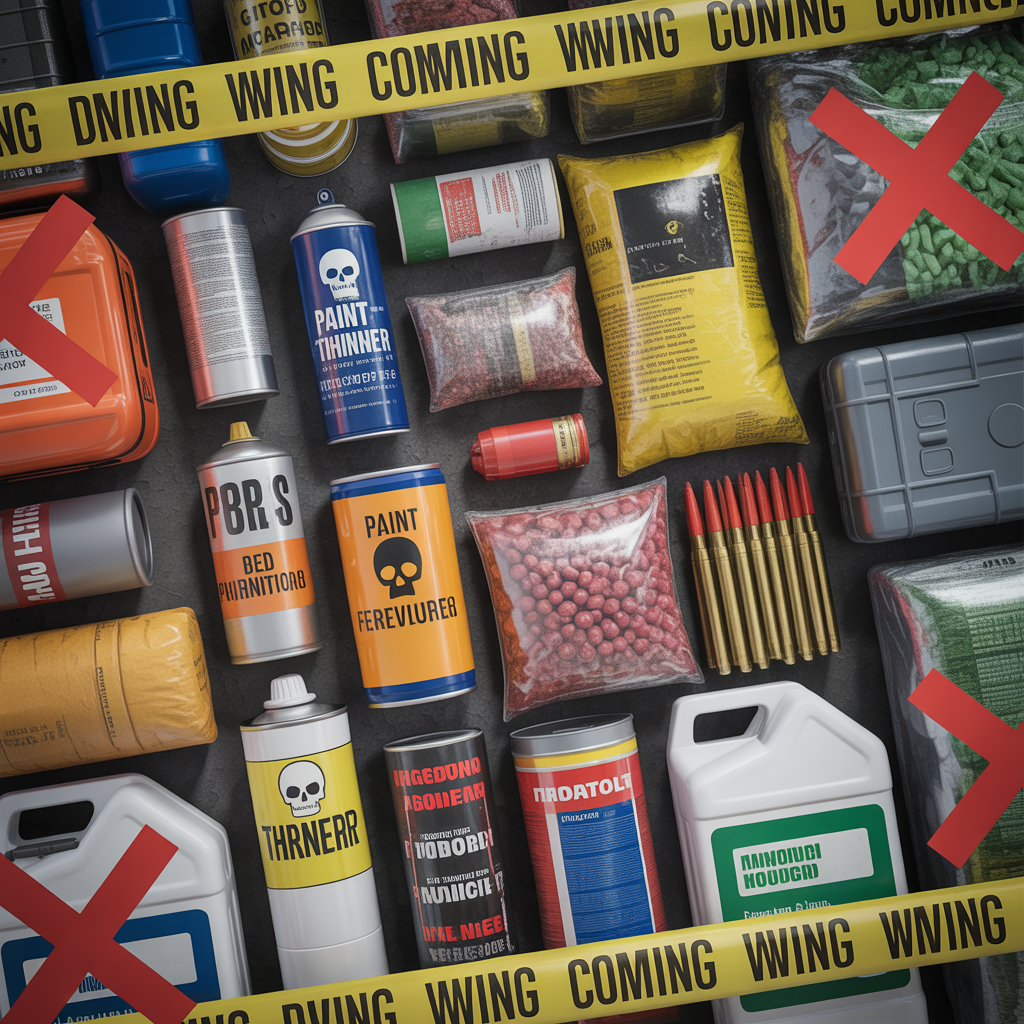
Chemical storage creates multiple hazards. Leaking containers contaminate neighboring units, and mixing certain chemicals produces toxic gases. Prohibited substances include:
- Bleach and ammonia (combining these creates chloramine gas)
- Drain cleaners and oven cleaners
- Pool chemicals (chlorine tablets, pH adjusters)
- Pesticides, herbicides, and fertilizers
- Antifreeze and brake fluid
- Car batteries containing sulfuric acid
Perishable Food and Organic Materials
Food storage attracts pests within 24 to 72 hours. A single mouse can produce 50 to 75 droppings per day, contaminating everything in your unit and spreading to adjacent spaces. Facilities prohibit all perishables to prevent infestations that cost thousands of dollars to remediate.
Completely Banned Food Items
- Fresh meat, fish, and dairy products
- Fruits and vegetables
- Opened food packages of any kind
- Pet food and bird seed
- Refrigerated or frozen items
Items Requiring Written Approval
Some facilities allow sealed, non-perishable items with advance written permission:
- Canned goods (sealed, unexpired)
- Commercially sealed dry goods
- Vacuum-sealed emergency rations
Even approved food items require proper storage in airtight, rodent-proof containers. Check with your facility before storing any food products.
Living Things and Biological Materials
Storage units are not designed for living organisms. No ventilation, temperature control, or sanitation exists to support life safely.
Animals
Storing animals in units violates animal cruelty laws in all 50 states. Penalties range from misdemeanor charges to felony convictions with prison time. This prohibition includes:
- Pets of any kind
- Livestock and farm animals
- Fish in aquariums
- Insects, reptiles, and exotic animals
Plants
Live plants cannot survive in storage units and create additional problems:
- Mold growth from soil moisture
- Pest introduction (fungus gnats, aphids, spider mites)
- Decomposition odors affecting other units
Human Habitation
Living in a storage unit violates fire codes, building codes, and lease agreements. Consequences include:
- Immediate eviction with 24 to 48 hours notice
- Fines ranging from $500 to $5,000
- Criminal trespassing charges
- Forfeiture of stored belongings
Facilities monitor for habitation through security cameras, utility usage patterns, and regular inspections. Signs of habitation (bedding, cooking equipment, personal hygiene items) trigger immediate investigation.
Weapons, Ammunition, and Explosives
Weapons storage policies vary significantly between facilities. Understanding the distinctions prevents lease violations and potential legal issues.
Universally Prohibited Items
- Explosives: Dynamite, C4, detonators, blasting caps
- Fireworks: All types, including consumer-grade sparklers
- Ammunition in bulk: Cases exceeding 1,000 rounds
- Illegal weapons: Unregistered firearms, silencers without proper tax stamps
Firearms: Facility-Dependent Policies
Approximately 60% of storage facilities prohibit all firearms. The remaining 40% allow properly stored firearms with conditions:
- Written approval from facility management
- Proof of legal ownership and licensing
- Firearms must be unloaded and locked in cases
- Ammunition stored separately from weapons
- Climate-controlled units required for long-term storage
Always verify your facility's specific policy before storing any weapons. Policies change, and what one location allows, another may prohibit.
Illegal and Stolen Property
Storage facilities cooperate with law enforcement investigations. Storing illegal items creates serious legal consequences.
Prohibited Illegal Items
- Controlled substances: All drugs, including marijuana (even in states with legal recreational use)
- Stolen property: Items obtained through theft, fraud, or illegal means
- Counterfeit goods: Fake designer items, pirated media, fraudulent documents
- Unlicensed items: Products requiring permits you do not possess
Legal Consequences
Storing illegal items in a rental unit does not protect you from prosecution. Law enforcement can obtain warrants to search storage units, and facility operators must comply. Consequences include:
- Criminal charges for possession
- Asset forfeiture of all unit contents
- Civil liability if items cause harm
- Permanent facility ban and industry blacklisting
Valuables and Irreplaceable Items
While not always explicitly prohibited, most facilities strongly discourage storing certain valuables. Standard storage insurance excludes these items, leaving you without recourse if loss occurs.
Items Typically Excluded from Insurance
- Cash and currency: No coverage regardless of amount
- Jewelry: Coverage caps at $200 to $500 total
- Important documents: Birth certificates, passports, deeds, wills
- Collectibles: Stamps, coins, trading cards, memorabilia
- Artwork and antiques: Require specialized insurance riders
- Prescription medications: Especially controlled substances
Better Alternatives for Valuables
Consider these options for high-value items:
- Bank safe deposit boxes: $50 to $300 annually for secure storage
- Home safes: Fire-rated models start at $150
- Specialty storage: Art storage facilities, wine storage, document archives
- Digitization: Scan documents and store encrypted copies online
Vehicles and Vehicle Components
Vehicle storage requires specific unit types and preparation. Standard units prohibit most vehicle-related storage.
Vehicle Storage Requirements
If your facility offers vehicle storage, requirements typically include:
- Current registration and insurance documentation
- Fuel tank drained to less than one-quarter capacity
- Battery disconnected or removed
- No fluid leaks (oil, coolant, transmission fluid)
- Tires properly inflated to prevent flat spots
Prohibited Vehicle Items
Even in vehicle-approved units, certain items remain banned:
- Loose tires not mounted on vehicles
- Fuel containers of any size
- Unregistered or non-operational vehicles (some facilities)
- Vehicles with active fluid leaks
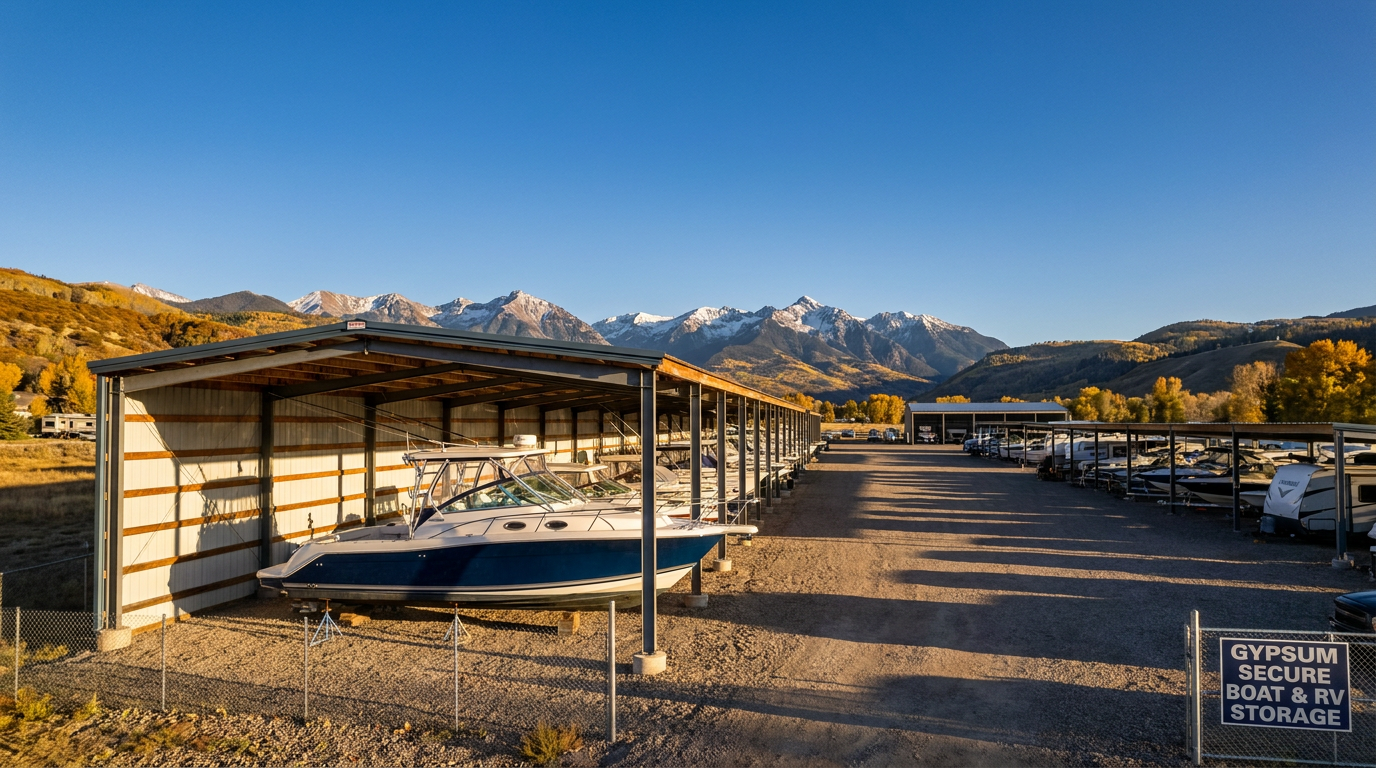
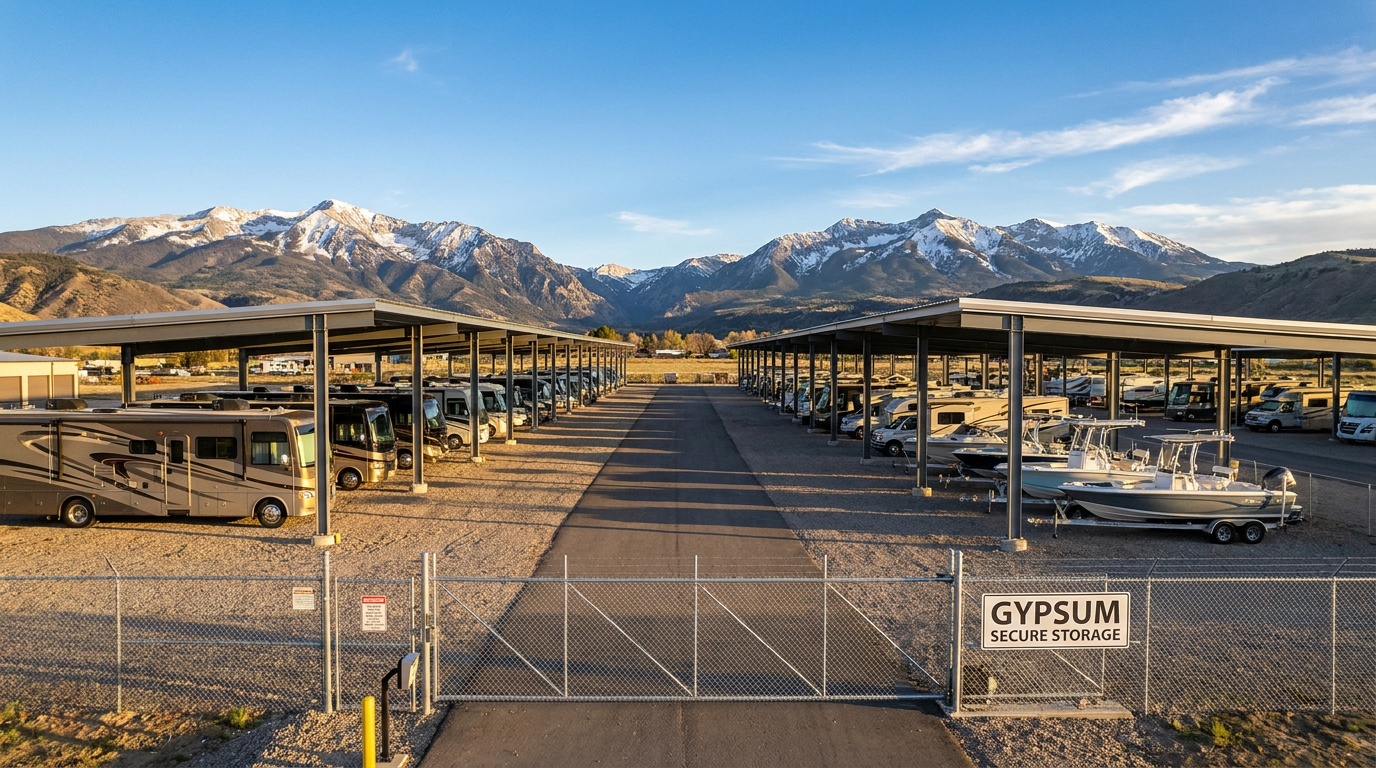
For outdoor enthusiasts in the Vail Valley area, our airport-adjacent storage facility offers drive-up units sized for boats, RVs, and recreational vehicles with proper preparation.
Items Requiring Climate Control
While not prohibited outright, certain items will sustain damage in standard units. Colorado's mountain climate presents unique challenges, with temperatures ranging from below zero to above 90 degrees Fahrenheit annually.
Items Requiring Temperature Control
- Electronics: Computers, televisions, audio equipment
- Musical instruments: Wood warps, strings corrode, pads deteriorate
- Photographs and film: Degrade above 75 degrees Fahrenheit
- Vinyl records: Warp at temperatures above 80 degrees
- Leather furniture: Cracks in low humidity, molds in high humidity
- Wine: Requires consistent 55 degrees Fahrenheit storage
Our climate-controlled storage units maintain temperatures between 55 and 80 degrees Fahrenheit year-round, protecting sensitive items from mountain weather extremes.
What Happens If Prohibited Items Are Discovered
Facilities conduct regular inspections and respond to complaints. Discovery of prohibited items triggers a standard response process.
Typical Enforcement Timeline
- Initial notice: Written warning with 24 to 72 hours to remove items
- Second violation: Lease termination notice with 7 to 14 days to vacate
- Hazardous materials: Immediate unit lockout pending removal
- Illegal items: Law enforcement notification, potential arrest
Financial Consequences
- Cleaning and remediation fees: $200 to $2,000
- Pest control costs: $500 to $3,000
- Hazmat disposal: $1,000 to $10,000
- Loss of security deposit (if applicable)
- Liability for damage to other units
Frequently Asked Questions
What cannot be stored in a storage unit?
Storage units prohibit hazardous materials (gasoline, propane, chemicals), perishable foods, living things (animals, plants), illegal items, and most weapons. Specific restrictions vary by facility, so review your rental agreement carefully before storing questionable items.
What is illegal to do in a storage unit?
Illegal activities include living in the unit, operating a business without proper permits, storing controlled substances, keeping stolen property, and manufacturing anything. These violations result in immediate eviction, criminal charges, and potential imprisonment.
What items can you not put in storage?
Beyond hazardous materials and illegal items, you cannot store wet or damp items (causes mold), items emitting strong odors, and anything requiring refrigeration. High-value items like cash, jewelry, and important documents are discouraged due to insurance limitations.
What can you not store at Public Storage?
Public Storage prohibits drugs, lithium batteries, explosives, live plants and animals, flammable liquids, and perishable food. Their policies align with industry standards, though specific enforcement varies by location. Always verify with your specific facility.
Can you keep guns in a storage unit?
Approximately 40% of facilities allow firearms with prior written approval, proof of legal ownership, and proper storage (unloaded, locked cases, ammunition stored separately). Always verify your facility's specific policy and local laws before storing any weapons.
Can you work out of a storage unit?
Most facilities prohibit operating businesses from storage units. Exceptions exist for inventory storage and occasional access for business purposes. Manufacturing, retail sales, and regular customer visits violate lease terms and local zoning laws.
Choosing the Right Storage for Your Needs
Understanding prohibited items helps you select appropriate storage solutions. For temperature-sensitive belongings, climate-controlled units prevent damage from Colorado's extreme temperature swings. Use our size guide to determine the right unit dimensions for your belongings.
Vail Airport Storage offers smart lock technology with 24/7 access, allowing you to manage your storage on your schedule. Digital key sharing enables authorized access for family members or business partners without coordinating schedules.
|