What to Do After a Storage Unit Break-In: Complete Guide |
| STORAGE UNIT BREAK-IN
⏱ 13 min read ·
📄 #2,590 words
Storage unit broken into? Follow these 8 critical steps within 24 hours to document theft, file claims, and recover your belongings. Expert checklist included.
|
I f your storage unit has been broken into, immediately document everything with photos before touching anything, notify facility management within 1 hour, file a police report the same day, and contact your insurance provider within 24 hours. These four steps in the first 24 hours determine whether you recover losses or lose everything permanently.
| Key Points: | |
|---|---|
| • | Document the scene within 15 minutes before moving any items; photograph damaged locks, forced entry points, and unit contents |
| • | Request surveillance footage preservation immediately; most facilities overwrite recordings within 7 to 30 days |
| • | File a police report the same day; insurance claims require report numbers for processing |
| • | Standard renters or homeowners insurance rarely covers storage unit theft; verify your policy limits before assuming coverage |
| • | Storage facility liability is typically limited to $1,000 to $5,000 by contract terms, regardless of actual losses |
First 60 Minutes: Critical Actions That Determine Recovery
The actions you take immediately after discovering a break-in directly impact your ability to recover losses. Evidence deteriorates quickly, surveillance footage gets overwritten, and insurance companies scrutinize claims filed late. Follow this sequence precisely.
Step 1: Secure Your Safety and Preserve the Scene
Before entering the unit, assess whether the intruder might still be present. If you see movement inside or the break-in appears recent (fresh tool marks, items still scattered), call 911 and wait for police. Do not touch broken locks, damaged doors, or disturbed items.
Once confirmed safe, resist the urge to clean up or organize. Every displaced item, broken lock component, and pry mark serves as evidence for police investigators and insurance adjusters. Moving items before documentation can void your claim.
Step 2: Document Everything Before Touching Anything
Use your smartphone to capture comprehensive evidence. Start with wide shots showing the entire unit entrance, damaged locks, and any forced entry points. Then photograph each section of the unit interior, focusing on empty spaces where items were stored and any remaining damaged property.
Essential photos to capture:
- Exterior of unit door showing damage, lock condition, and unit number visible
- Close-up shots of pry marks, cut locks, or drilling damage
- Interior wide shots from multiple angles
- Empty spaces where items were previously stored
- Any remaining items showing damage or displacement
- Surrounding area including hallways, adjacent units, and security cameras
Record a video walkthrough narrating what you observe: "This is unit 247 at Gypsum Storage on December 17, 2025. The padlock has been cut. Inside, my ski equipment that was stored against the back wall is missing." Timestamp metadata on photos and videos serves as legal evidence.
Step 3: Notify Facility Management Immediately
Contact the facility manager or on-site staff within one hour of discovery. Request three things in writing: an incident report documenting the break-in, preservation of all surveillance footage from the past 7 days, and access logs showing who entered the facility during that period.
Modern facilities with smart lock technology and digital access tracking can provide detailed entry logs showing exactly when your unit was accessed and by which credentials. This data proves invaluable for police investigations.
Get the facility manager's direct contact information and document the conversation in a follow-up email: "Per our conversation at 2:15 PM today, you confirmed the break-in to unit 247 and agreed to preserve surveillance footage. Please provide the incident report within 24 hours."
Filing the Police Report: What Officers Need
Call the non-emergency police line (or 911 if the break-in is in progress) to file a report. Officers may or may not visit the scene depending on jurisdiction and workload, but the report number is mandatory for insurance claims. Without it, most insurers will deny your claim outright.
Information to Provide Police
Prepare this information before calling:
| Required Information | Example |
|---|---|
| Facility name and address | Vail Airport Storage, 500 Plane St, Gypsum, CO |
| Unit number | Unit 247 |
| Date and time discovered | December 17, 2025 at 1:45 PM |
| Last known secure date | December 10, 2025 |
| Estimated value of stolen items | $4,500 |
| Description of stolen items | 2 pairs of skis, 1 snowboard, winter gear |
| Serial numbers (if available) | Ski serial: VK2024-8847 |
Request a copy of the police report or at minimum the report number and officer's badge number. Most departments provide reports within 3 to 5 business days, though some jurisdictions allow online access within 24 hours.
Insurance Claims: Understanding Your Actual Coverage
Here is the uncomfortable truth most renters discover too late: standard homeowners and renters insurance policies provide limited or zero coverage for items stored off-premises. The assumption that "my stuff is covered wherever it is" leads to devastating claim denials.
Types of Insurance That May Cover Storage Unit Theft
Homeowners Insurance: Typically covers off-premises theft at 10% of your dwelling coverage limit. If your home is insured for $300,000, off-premises coverage caps at $30,000. However, many policies exclude storage facilities entirely or require specific endorsements.
Renters Insurance: Similar to homeowners, but coverage percentages vary wildly between 10% and 100% of personal property limits. Read your declarations page carefully; the term "off-premises" coverage determines eligibility.
Self-Storage Insurance: Policies specifically designed for storage units cost $8 to $25 per month and cover $2,000 to $15,000 in contents. These policies typically have lower deductibles ($50 to $100) compared to homeowners claims ($500 to $2,500).
Facility-Offered Protection Plans: Many storage facilities offer tenant protection plans for $10 to $20 monthly. These are not insurance policies but rather contractual agreements with specific limitations. Read the terms carefully; many exclude high-value items like electronics, jewelry, and collectibles.
Filing Your Insurance Claim
Contact your insurance provider within 24 hours of discovery. Most policies require "prompt notification" and define prompt as 24 to 72 hours. Delays beyond this window give insurers grounds to reduce or deny claims.
Prepare these documents for your claim:
- Police report number and copy when available
- Facility incident report
- Photographs of the break-in scene
- Itemized inventory with descriptions, purchase dates, and values
- Receipts, credit card statements, or photos proving ownership
- Serial numbers for electronics and equipment
Insurance adjusters scrutinize storage claims more heavily than home theft claims due to higher fraud rates. Detailed documentation with purchase receipts accelerates approval and reduces disputes over item values.
Creating Your Stolen Items Inventory
Your inventory determines your claim value. Vague descriptions like "winter clothes" result in minimal payouts, while specific entries like "North Face Thermoball jacket, black, size L, purchased REI November 2023, $199" receive full replacement value.
Inventory Template for Insurance Claims
| Item Description | Brand/Model | Serial Number | Purchase Date | Original Price | Current Value |
|---|---|---|---|---|---|
| Downhill skis | Volkl Kendo 88 | VK2024-8847 | Jan 2024 | $649 | $500 |
| Ski boots | Salomon S/Pro 100 | N/A | Dec 2023 | $450 | $350 |
For items without receipts, gather alternative proof: credit card statements, bank records, photos showing the item in your possession, product registration emails, or warranty cards. Insurance companies accept multiple forms of ownership documentation.
Storage Unit Renters Rights: What the Facility Owes You
Storage facility liability is governed by your rental agreement, state law, and common law negligence standards. Understanding these three layers determines whether you can recover damages beyond insurance.
Contract Limitations on Facility Liability
Nearly every storage rental agreement contains a liability limitation clause, typically capping facility responsibility at $1,000 to $5,000 regardless of actual losses. These clauses are generally enforceable unless the facility demonstrated gross negligence.
Review your rental agreement for these key provisions:
- Liability cap: Maximum the facility will pay for any loss
- Insurance requirements: Whether you were required to maintain coverage
- Security representations: What security measures the facility promised
- Notice requirements: Timeframe for reporting incidents
- Dispute resolution: Arbitration clauses or jurisdiction limitations
When You Can Sue a Storage Facility for Theft
Liability limitation clauses do not protect facilities from gross negligence claims. If the facility failed to maintain advertised security measures, you may have grounds for legal action. Examples of actionable negligence include:
- Broken security gates that remained unfixed for weeks
- Non-functional surveillance cameras despite advertising 24/7 monitoring
- Failed lighting in storage areas creating security hazards
- Providing unit access to unauthorized individuals
- Failure to notify tenants of previous break-ins on the property
Consult an attorney specializing in consumer or property law if your losses exceed $5,000 and facility negligence appears evident. Many attorneys offer free consultations and work on contingency for strong cases.
State-Specific Renters Rights
Storage unit renters rights vary significantly by state. California, for example, requires facilities to provide specific disclosures about insurance and liability limitations. Colorado storage facilities must follow strict lien sale procedures if disputes arise over damaged or stolen property claims.
Military service members receive additional protections under the Servicemembers Civil Relief Act (SCRA), which limits certain contract enforcement actions and provides extended timelines for dispute resolution.
How Often Do Storage Units Get Broken Into?
Industry data indicates that storage unit break-ins occur at approximately 1 in 500 units annually at facilities with modern security, while facilities with minimal security experience rates as high as 1 in 50 units. The disparity highlights how facility selection directly impacts theft risk.
Factors That Increase Break-In Risk
| Risk Factor | Impact on Theft Risk |
|---|---|
| No on-site management | 3x higher risk |
| Exterior drive-up units | 2x higher risk vs interior units |
| Standard padlocks | 4x higher risk vs disc locks |
| No surveillance cameras | 5x higher risk |
| Poor lighting | 2.5x higher risk |
| No access control gates | 4x higher risk |
Interior climate-controlled units experience significantly lower break-in rates because thieves must bypass multiple security layers to access them. The additional time and exposure deters opportunistic theft.
Preventing Future Storage Unit Break-Ins
After experiencing a break-in, most renters either abandon storage entirely or become obsessive about security. The practical middle ground involves selecting the right facility, using proper locks, and maintaining regular oversight.
Choosing a Secure Storage Facility
Evaluate potential facilities using this security checklist:
- Perimeter security: Fencing at least 6 feet high with barbed wire or anti-climb features
- Access control: Individual gate codes with access logging, not shared entry codes
- Surveillance: Cameras covering all hallways, entry points, and exterior areas with 30+ day retention
- Lighting: Motion-activated lights throughout, no dark areas
- On-site presence: Staff during business hours, security patrols after hours
- Unit construction: Metal doors, concrete or block walls, no shared ceiling access
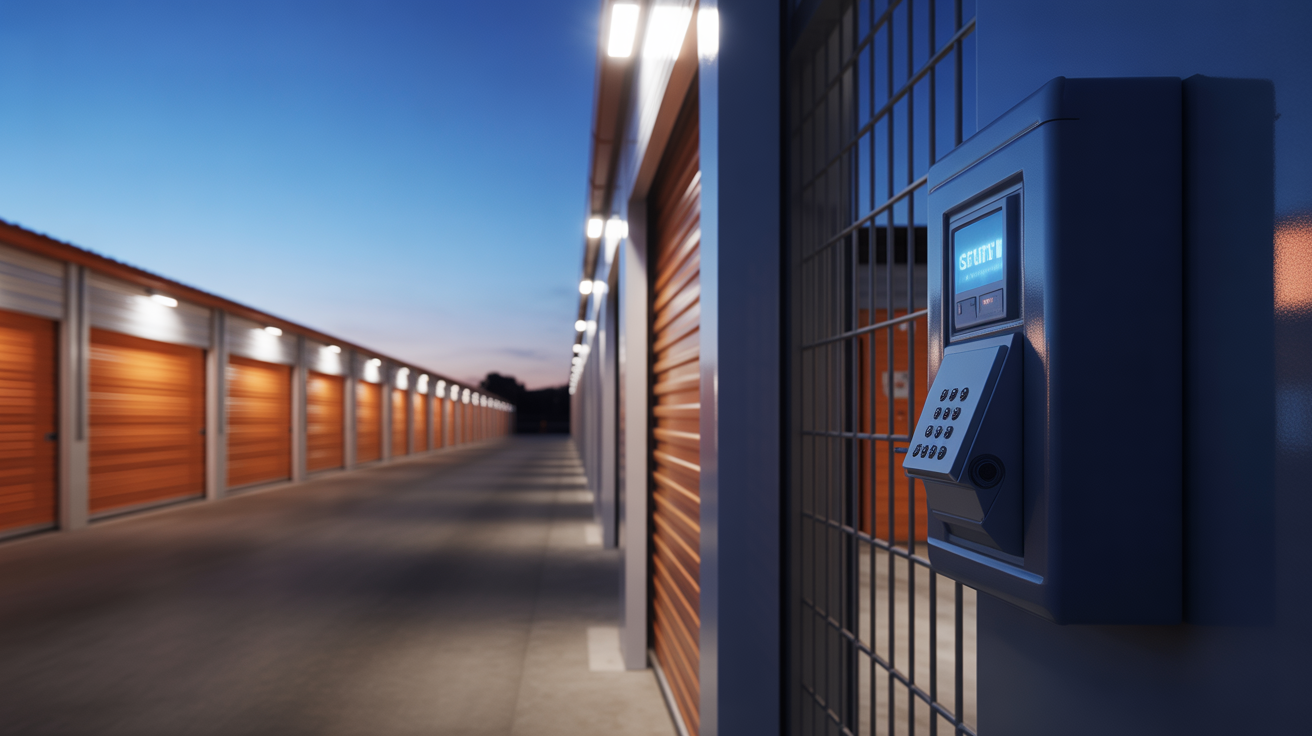
- Smart technology: Digital locks with access tracking and alerts
Facilities offering smart lock technology with digital key sharing and access tracking provide an additional security layer. You receive alerts when your unit is accessed and can review entry logs remotely.
Lock Selection: Your First Line of Defense
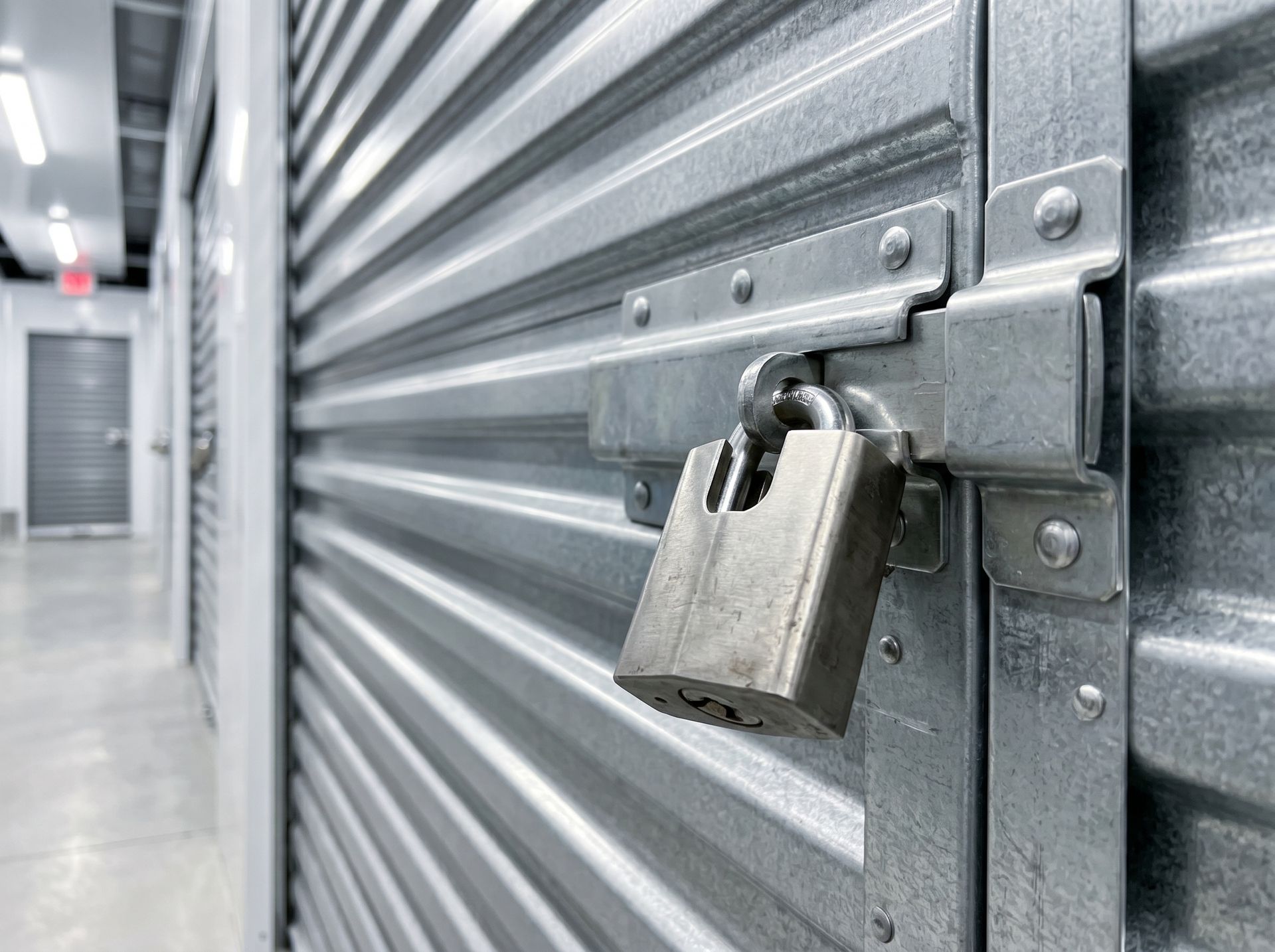
Standard padlocks can be cut in under 30 seconds with basic bolt cutters. Upgrade to disc locks or cylinder locks designed specifically for storage units. These locks cost $15 to $40 and resist cutting, picking, and drilling far better than standard padlocks.
Lock recommendations by security level:
- Basic: Shrouded shackle padlock ($15 to $25)
- Better: Disc lock with hardened steel ($25 to $35)
- Best: Cylinder lock with drill-resistant housing ($35 to $50)
Operational Security Practices
Visit your storage unit at least once monthly, varying the day and time of visits. Thieves often surveil facilities to identify units that are rarely accessed. Regular visits signal active monitoring.
Keep a current inventory with photos stored in cloud storage, not in the unit itself. Update the inventory whenever you add or remove items. This documentation proves invaluable if another incident occurs.
Consider placing motion-activated cameras or sensors inside your unit. Battery-powered devices with cellular connectivity cost $50 to $150 and send alerts if movement is detected. Even if thieves disable the camera, you receive immediate notification of unauthorized access.
Frequently Asked Questions About Storage Unit Break-Ins
Are storage unit break-ins common?
Break-in frequency varies dramatically by facility security level. Well-secured facilities with gated access, surveillance, and on-site management report break-in rates of approximately 0.2% annually (1 in 500 units). Facilities with minimal security experience rates up to 2% annually (1 in 50 units). Choosing a facility with robust security reduces your risk by 90% or more.
What should I do immediately if my storage unit is broken into?
Do not enter if you suspect an intruder may be present. Once safe, photograph everything before touching any items. Notify facility management within one hour and request surveillance footage preservation. File a police report the same day and contact your insurance provider within 24 hours. These four actions in the first 24 hours determine your recovery options.
Does homeowners or renters insurance cover theft from a storage unit?
Coverage varies significantly by policy. Most homeowners policies cover off-premises theft at 10% of dwelling coverage, while renters policies range from 10% to 100% of personal property limits. However, many policies exclude storage facilities entirely or require specific endorsements. Review your declarations page or call your agent to confirm coverage before assuming protection exists.
Can I sue a storage facility if my unit is broken into?
You can sue if the facility demonstrated gross negligence, such as failing to maintain advertised security systems, providing unauthorized access, or ignoring known security vulnerabilities. Standard rental agreements limit facility liability to $1,000 to $5,000, but these limitations may not apply in negligence cases. Consult an attorney if losses exceed $5,000 and evidence suggests facility negligence.
How can I prevent my storage unit from being broken into?
Select facilities with comprehensive security: gated access with individual codes, surveillance cameras with 30+ day retention, adequate lighting, and on-site management. Use disc locks or cylinder locks instead of standard padlocks. Choose interior climate-controlled units over exterior drive-up units when storing valuables. Visit monthly at varying times and maintain a cloud-stored inventory with photos and receipts.
Who is responsible if a storage unit gets broken into?
Responsibility depends on your rental agreement, facility negligence, and applicable state law. Storage facilities typically limit their liability through contract terms, placing primary responsibility on renters to insure their belongings. If the facility failed to provide advertised security or demonstrated negligence, they may bear partial or full responsibility. Your insurance policy provides the primary recovery mechanism in most cases.
How long do I have to report a storage unit break-in to insurance?
Most insurance policies require "prompt notification," typically defined as 24 to 72 hours from discovery. Delays beyond this window give insurers grounds to reduce or deny claims. File the police report and contact your insurer within 24 hours to protect your claim eligibility. Document the date and time you discovered the break-in and preserve all communications with the facility and police.
Protecting Your Belongings in Vail Valley Storage
Mountain communities like Vail Valley present unique storage challenges. Seasonal residents store valuable ski equipment, outdoor gear, and vacation home furnishings for months at a time. The combination of high-value items and extended absence periods creates attractive targets for thieves.
When selecting storage for seasonal equipment, prioritize facilities with climate-controlled units that protect against temperature extremes while providing interior security. Units with smart lock technology allow you to monitor access remotely, receiving alerts if your unit is opened while you are away.
For travelers using Eagle County Regional Airport, airport-adjacent storage facilities with smart lock technology offer convenience without sacrificing security. Look for facilities offering digital key sharing, allowing trusted contacts to access your unit without sharing physical keys or access codes.
Review the storage size guide to select an appropriately sized unit. Overstuffed units make inventory difficult and can mask theft for extended periods. Choose a unit size that allows clear organization and easy visual inspection during visits.
|
Storing in the Vail Valley?
Vail Airport Storage is a brand-new facility in Gypsum, CO, next to Eagle County Regional Airport: heated indoor units, drive-up units with power and lights, and vehicle parking, open 24/7 with smart-lock access.