Can You Run a Business From a Storage Unit? Rules and Risks |
| CAN YOU RUN A BUSINESS FROM A STORAGE UNIT?
⏱ 12 min read ·
📄 #2,282 words
Learn whether you can legally run a business from a storage unit, what activities are allowed, zoning restrictions, and better alternatives for entrepreneurs.
|

Y ou cannot legally operate a business from inside a storage unit in most cases. Storage facilities prohibit using units as workspaces, offices, or retail locations due to zoning laws, fire codes, and lease agreements. However, you can use storage units for legitimate business purposes like storing inventory, equipment, and supplies, with 78% of small businesses using self-storage for commercial needs according to the Self Storage Association.
| Key Points: | |
|---|---|
| • | Operating a business inside a storage unit violates zoning laws, fire codes, and facility lease agreements in 99% of cases |
| • | Permitted uses include inventory storage, equipment storage, and document archiving with monthly pricing that varies by unit size and current availability |
| • | Violations can result in immediate lease termination, substantial fines, and potential criminal charges |
| • | Legal alternatives include commercial storage units, coworking spaces with monthly memberships, or home-based business permits |
| • | Climate-controlled units protect business inventory from temperature damage, maintaining 55 to 80 degrees Fahrenheit year-round |
What Does "Running a Business" From a Storage Unit Mean?
The distinction between operating a business and using storage for business purposes determines legality. Operating means conducting daily business activities inside the unit: meeting clients, manufacturing products, processing orders, or working regular hours. This violates virtually every storage facility's terms of service.
Using storage for business purposes means storing inventory, equipment, or supplies that you access periodically. According to Extra Space Storage's commercial guidelines, this distinction is critical for compliance. An e-commerce seller storing products they ship from home operates legally. The same seller packing orders inside the unit does not.
The International Code Council building standards require commercial spaces to meet specific occupancy requirements that standard storage units cannot satisfy. These include emergency exits, ventilation systems, bathroom access, and fire suppression systems designed for occupied spaces.
Prohibited Activities in Storage Units
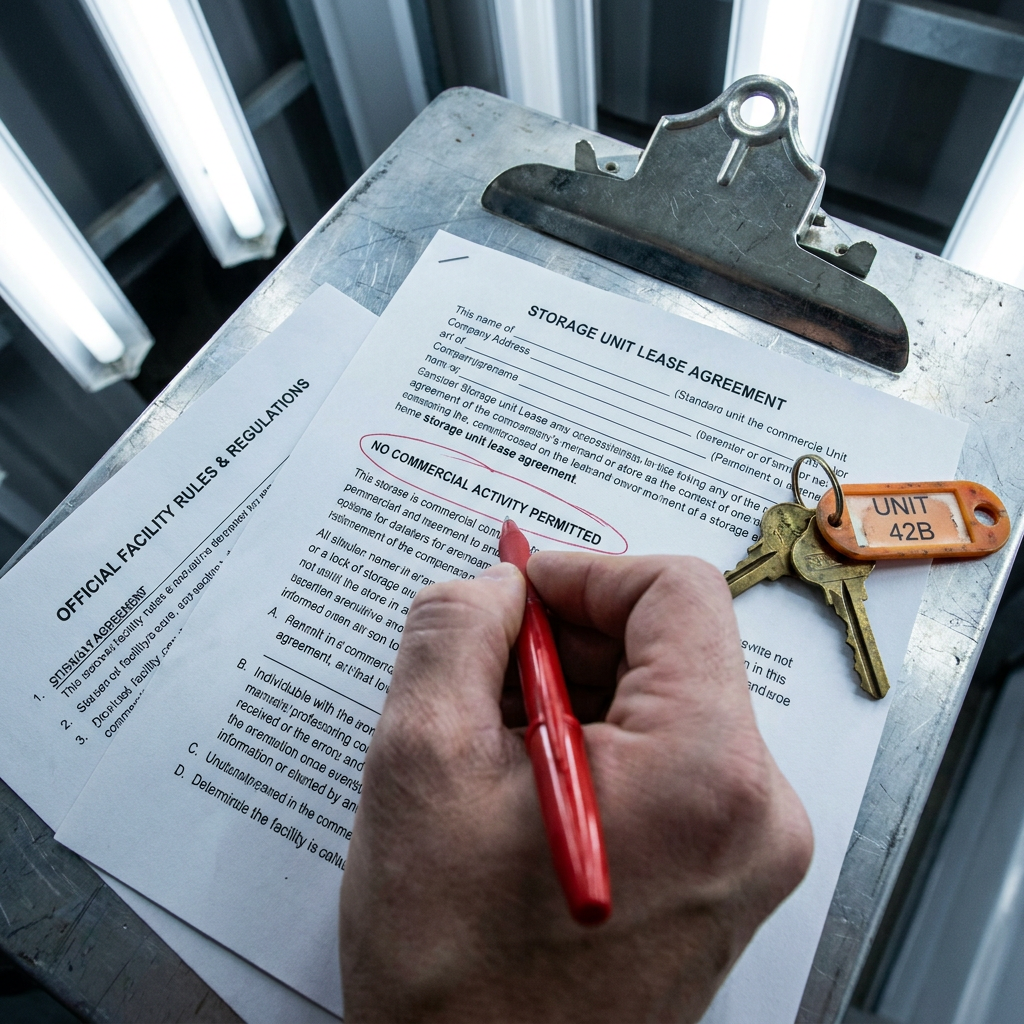
Storage facility lease agreements explicitly prohibit specific activities that constitute business operations. Understanding these restrictions prevents lease violations and potential legal consequences.
Activities That Will Get You Evicted
Manufacturing or production of any kind violates fire codes and zoning regulations. This includes assembling products, packaging items for extended periods, or any activity requiring power tools. The Occupational Safety and Health Administration (OSHA) requires specific ventilation and safety equipment for manufacturing spaces that storage units lack.
Conducting sales or customer meetings inside units violates commercial zoning requirements. Storage facilities operate under industrial or warehouse zoning classifications that prohibit retail activity. The U.S. Small Business Administration notes that operating in improperly zoned spaces can void business insurance coverage entirely.
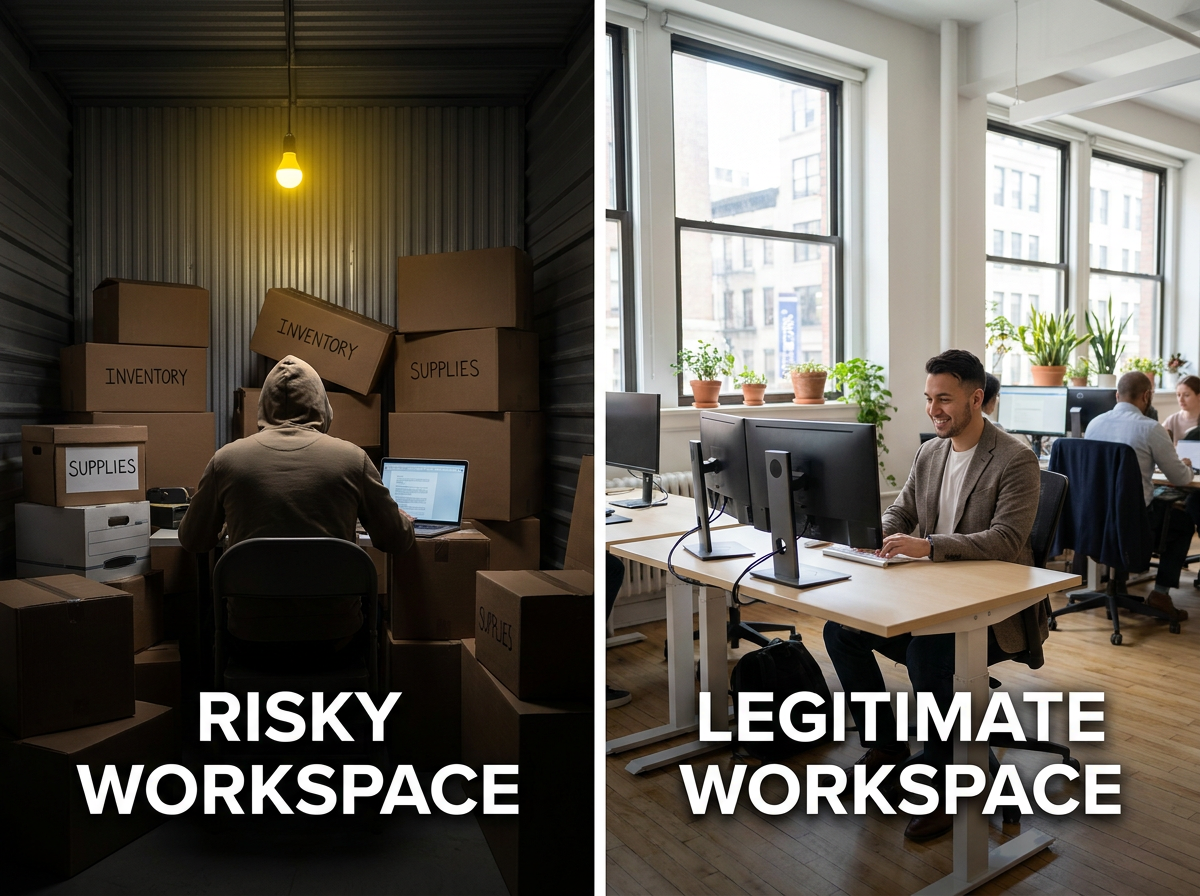
Using a storage unit as an office or workspace violates occupancy codes. Spending extended hours inside, installing desks or workstations, or using the space for administrative tasks creates liability issues. Most facilities monitor access patterns and will investigate units with unusually frequent or prolonged visits.
| Activity | Allowed? | Reason |
|---|---|---|
| Storing inventory | Yes | Standard permitted use |
| Packing orders occasionally | Limited | Brief visits only, not regular work |
| Working daily inside unit | No | Violates occupancy codes |
| Meeting customers | No | Violates zoning laws |
| Manufacturing products | No | Fire code and OSHA violations |
| Using as office space | No | Building code violations |
| Storing equipment overnight | Yes | Standard permitted use |
Legal Consequences of Operating a Business From Storage
Violating storage facility rules and local regulations carries significant consequences. According to Rec Nation Storage's legal analysis, penalties escalate quickly when authorities become involved.
Facility-Level Consequences
Immediate lease termination represents the most common outcome. Facilities typically provide 24 to 72 hours notice to vacate once violations are confirmed. You forfeit any prepaid rent and may lose your security deposit. Some facilities pursue civil damages if your activities caused property damage or liability exposure.
Denial of future rentals extends beyond the single facility. Storage operators share information through industry databases maintained by the Self Storage Association. A lease violation at one facility can prevent you from renting at competing locations within your region.
Government Penalties
Zoning violations carry fines ranging from market-rate depending on jurisdiction and violation severity. Colorado municipalities, including Eagle County where Gypsum is located, enforce zoning through code compliance officers who respond to complaints and conduct inspections.
Fire code violations trigger separate penalties from fire marshals. Operating in spaces without proper egress, fire suppression, or occupancy ratings can result in citations that can accrue daily. The National Fire Protection Association (NFPA) standards require commercial spaces to meet Life Safety Code requirements that storage units cannot satisfy.
Business license violations add another layer of liability. Operating without proper permits in an unauthorized location can result in license revocation, making it impossible to legally conduct business anywhere until violations are resolved.
Legitimate Business Uses for Storage Units
Storage units serve valuable purposes for businesses when used correctly. The key is treating the unit as storage space rather than operational space. Explore commercial storage solutions designed specifically for business inventory and equipment needs.
E-commerce Inventory Storage
Online sellers on platforms like Amazon, eBay, Etsy, and Shopify commonly use storage units to hold inventory. A 10x10 climate-controlled unit sized for small-business inventory can hold approximately 3,000 to 5,000 small to medium products. Sellers retrieve items as needed, packing and shipping from their home or a proper commercial space.
Climate control proves essential for protecting inventory value. Temperature fluctuations damage electronics, cosmetics, food products, and many other goods. Units maintaining 55 to 80 degrees Fahrenheit prevent warping, melting, and moisture damage that destroys sellable merchandise. Learn more about when climate-controlled storage is necessary for your specific products.
Contractor and Trade Business Storage
Contractors, landscapers, and trade professionals store tools, equipment, and materials between jobs. A 10x20 drive-up unit provides space for power tools, ladders, scaffolding, and seasonal equipment. Drive-up access allows loading heavy equipment directly from vehicles without navigating hallways.
Seasonal businesses benefit from flexible month-to-month leases. Landscaping companies store snow removal equipment in summer and lawn care equipment in winter. This approach costs significantly less than maintaining year-round commercial warehouse space at commercial warehouse rates.
Document and Record Storage
Businesses must retain financial records, contracts, and legal documents for 3 to 7 years depending on document type. The Internal Revenue Service requires businesses to keep tax records for at least 3 years, with some records requiring 7-year retention. A 5x10 climate-controlled unit holds approximately 50 to 75 standard file boxes.
Climate control prevents document degradation from humidity and temperature swings. Paper documents stored in non-climate-controlled spaces develop mold, yellowing, and brittleness within 2 to 3 years in variable climates like Colorado's mountain regions.
Storage Unit Costs for Business Use
Business storage costs vary based on unit size, climate control, and access features. Understanding pricing helps determine whether storage makes financial sense compared to alternatives.
| Unit Size | Type | Monthly Cost | Best For |
|---|---|---|---|
| 5x5 | Climate Control | Varies | Small inventory, documents |
| 5x10 | Drive-Up | Varies | Tools, small equipment |
| 10x10 | Climate Control | Varies | Medium inventory, records |
| 10x15 | Drive-Up with Lights | Varies | Contractor equipment |
| 10x20 | Drive-Up with Power | Varies | Vehicles, large equipment |
| 10x30 | Drive-Up with Power | Varies | Large inventory, vehicles |
Business storage costs qualify as tax-deductible expenses. According to IRS Publication 535, storage rental fees for business inventory and equipment count as ordinary business expenses. Learn about self storage tax deductions to maximize your business write-offs.
Better Alternatives to Operating From a Storage Unit
Entrepreneurs seeking affordable workspace have several legal alternatives that provide proper facilities without the risks of storage unit operations.
Coworking Spaces
WeWork, Regus, and local coworking facilities offer flexible workspace starting at market-rate per month. These spaces provide desks, meeting rooms, internet, and business amenities. Many offer month-to-month memberships similar to storage leases but with proper commercial zoning and facilities.
Coworking spaces in Colorado mountain communities like Vail, Avon, and Glenwood Springs cater to remote workers and small businesses. Pricing typically runs 30 to 50 percent lower than traditional office leases while providing professional meeting spaces for client interactions.
Home-Based Business Permits
Most municipalities allow home-based businesses with proper permits. Eagle County, Colorado permits home occupations that meet specific criteria: no external signage, no customer visits exceeding 2 per day, no employees working on-site, and no inventory storage exceeding 200 square feet.
Combining a home-based business permit with storage unit inventory creates a compliant structure. You operate and ship from home while storing excess inventory in a properly used storage unit. This hybrid approach costs significantly less than commercial space while remaining fully legal.
Commercial Storage Solutions
Some storage facilities offer commercial units specifically designed for business use. These units include features like power outlets, lighting, and loading docks. While still not intended as workspaces, they accommodate business storage needs more effectively than standard units.
Units with built-in power and lighting, like 10x20 drive-up units with power, allow brief equipment charging and inventory organization. The key distinction remains: these are storage spaces, not workspaces. Use them for storing and organizing, not for conducting business operations.
How to Use Storage Units Legally for Your Business
Following best practices ensures your business storage use remains compliant while maximizing value. Proper planning prevents violations and protects your business interests.
Choose the Right Unit Features
Select climate control for temperature-sensitive inventory. Electronics, cosmetics, pharmaceuticals, food products, and paper goods require consistent temperatures between 55 and 80 degrees Fahrenheit. Climate-controlled storage units prevent the significant inventory loss businesses experience from temperature damage annually.
Drive-up access reduces loading time for businesses with heavy or bulky items. Contractors and equipment-intensive businesses save 15 to 30 minutes per visit compared to navigating interior hallways. Units with wider doors, like 15-foot openings, accommodate pallets and large equipment.
Implement Security Best Practices
Business inventory requires enhanced security measures. Facilities with smart lock technology provide access logs showing exactly when units were accessed. This creates documentation for insurance claims and theft investigations.
Digital key sharing allows authorized employees to access inventory without sharing physical keys. Business owners maintain control by revoking access instantly when employees leave. Motion-detection alerts notify owners of unexpected unit access, providing real-time security monitoring.
Organize for Efficiency
Proper organization minimizes time spent at the storage unit, reducing the appearance of operating from the space. Use shelving systems to maximize vertical space and keep frequently accessed items near the door. Label all boxes clearly to enable quick retrieval.
Create an inventory management system tracking what items are stored and their locations within the unit. Spreadsheet software or inventory apps like Sortly, Boxmeup, or Encircle help businesses track stored inventory without extended time inside units.
Frequently Asked Questions
Can I use my storage unit address as my business address?
No. Storage facilities prohibit using unit addresses for business registration, mail delivery, or official correspondence. Most states require registered business addresses to be locations where you can receive service of process during business hours. Storage units do not qualify. Use a registered agent service, virtual office, or your home address instead.
What if I only work in my storage unit occasionally?
Occasional work still violates lease agreements and building codes. The frequency of violation does not change its nature. Even brief periods of conducting business operations inside a storage unit create liability for both you and the facility. Retrieve items and work elsewhere.
Can I run an online business and store inventory in a storage unit?
Yes, storing inventory for an online business represents a permitted use. The business operations, including order processing, customer communication, and shipping, must occur elsewhere. Many successful Amazon and eBay sellers use storage units for inventory while operating from home offices.
Are there storage facilities that allow business operations?
Traditional self-storage facilities do not permit business operations inside units. However, some industrial flex spaces and business parks offer units with commercial zoning that allow light manufacturing, offices, and customer visits. These spaces cost higher commercial rates, significantly more than standard storage.
What happens if I get caught operating a business from my storage unit?
Consequences escalate based on violation severity. Initial discovery typically results in a warning and 30-day cure period. Continued violations lead to immediate lease termination with 24 to 72 hours to vacate. Serious violations involving fire code or zoning issues may result in facility-reported complaints to local authorities, triggering fines and potential criminal charges.
Can I store business equipment that requires power?
Yes, storing equipment that uses power is permitted. Using that equipment for extended periods inside the unit is not. Facilities offering units with power outlets intend them for brief equipment charging or lighting during loading, not ongoing operations. A contractor can store power tools and charge batteries briefly but cannot operate a workshop.
Making the Right Choice for Your Business Storage Needs
Storage units provide valuable, cost-effective solutions for legitimate business storage needs. The critical distinction lies between using storage for its intended purpose and attempting to operate a business from an inappropriate space. Understanding and respecting this boundary protects your business from legal consequences while providing the storage flexibility you need.
For businesses in the Vail Valley, Eagle County, and surrounding Colorado mountain communities, commercial storage options provide the features businesses need: climate control protecting inventory from extreme temperature swings, 24/7 access accommodating variable business schedules, and smart security features creating accountability and protection.
Consider your actual needs carefully. If you need workspace, explore coworking options or home-based business permits. If you need storage with convenient access, modern self-storage facilities offer features that support business operations conducted elsewhere. The right combination of workspace and storage creates a compliant, cost-effective business infrastructure.
|