How to Store Holiday Decorations Year-Round Without Damage |
| HOW TO STORE HOLIDAY DECORATIONS YEAR-ROUND WITHOUT DAMAGE
⏱ 14 min read ·
📄 #2,733 words
Protect ornaments, lights, and wreaths from breakage and fading. Expert storage tips for Vail Valley's mountain climate, plus container recommendations.
|
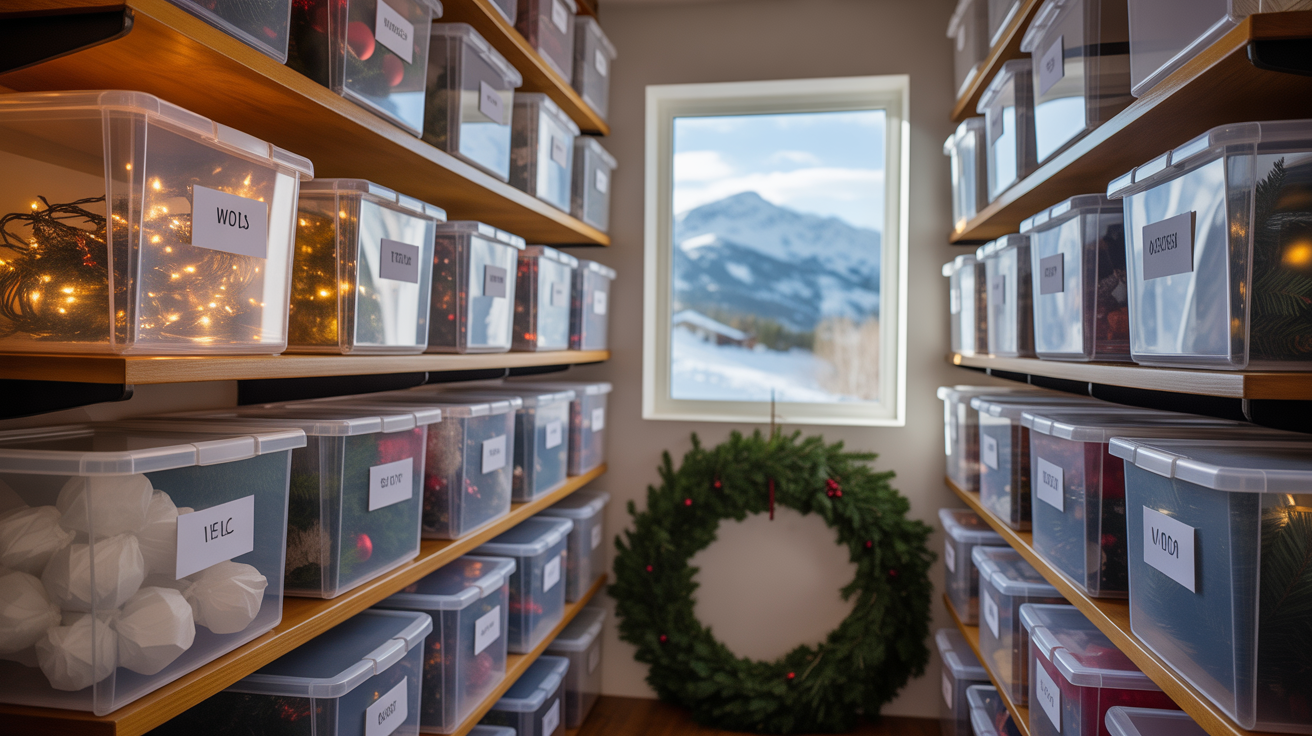
S tore holiday decorations without damage by using airtight plastic bins, wrapping fragile ornaments in tissue paper or bubble wrap, controlling temperature and humidity below 50%, and organizing items by category with clear labels. These four steps prevent the crushing, fading, moisture damage, and pest infestations that destroy 20-30% of improperly stored decorations annually.
| Key Points: | |
|---|---|
| • | Use rigid plastic bins with tight lids; cardboard attracts moisture and pests |
| • | Maintain storage temperatures between 55-80°F to prevent warping and cracking |
| • | Wrap lights around cardboard cores in figure-8 patterns to eliminate tangling |
| • | Store ornaments in divided containers with tissue padding; egg cartons work for small items |
| • | Label bins by room or category to reduce handling and potential breakage |
The Vail Valley's mountain climate presents unique challenges for decoration storage. Temperature swings from below zero to 90°F, low humidity levels, and intense UV exposure at elevation can destroy decorations faster than sea-level storage. This guide covers protection strategies specifically designed for Colorado's high-altitude conditions.
Why Proper Storage Matters for Holiday Decorations
Holiday decorations face four primary threats during storage: physical damage from crushing or impact, moisture damage from humidity and condensation, temperature extremes causing warping or cracking, and pest infestations from insects and rodents. Each threat requires specific countermeasures.
Physical damage accounts for most decoration losses. Ornaments stacked without padding crack under weight. Lights tangled into knots develop broken bulbs and frayed wires. Wreaths crushed flat lose their shape permanently. Proper containers and organization prevent these issues entirely.
Moisture creates hidden damage that appears months later. Mold growth on fabric decorations, rust on metal ornaments, and warped wooden pieces all result from humidity above 50%. In mountain climates, condensation forms when cold decorations are moved to warm spaces, creating moisture even in dry environments.
Choosing the Right Storage Containers
Plastic bins with secure, snap-tight lids outperform every other container option for holiday storage. They block dust, resist moisture, deter pests, and stack safely. Avoid cardboard boxes entirely; they absorb moisture, attract silverfish and mice, and collapse under weight within 2-3 years.
Container Size Recommendations by Decoration Type
| Decoration Type | Recommended Container | Approximate Cost |
|---|---|---|
| Standard ornaments | 64-ornament divided box | $12-18 |
| Oversized ornaments | Adjustable cardboard divider box | $15-25 |
| String lights | Reel storage or 18-gallon bin | $8-20 |
| Wreaths (24-30 inch) | Wreath storage bag with handle | $10-15 |
| Artificial trees (6-7 ft) | Rolling tree bag | $25-45 |
| Tabletop decorations | 30-quart clear bin | $8-12 |
Color-coded bins simplify retrieval. Use red or green containers exclusively for holiday items so they stand out from general storage. Clear bins work well for quick identification but require UV-blocking storage locations to prevent fading.
Specialty Containers Worth the Investment
Ornament storage boxes with adjustable cardboard dividers protect up to 64 ornaments per container for under $15. These dividers accommodate various ornament sizes and prevent items from touching during transport. For heirloom or hand-blown glass ornaments, individual tissue wrapping inside these divided spaces provides double protection.
Wreath storage bags with rigid sides maintain circular shapes and prevent crushing. Choose bags 2-4 inches larger than your wreath diameter to allow for natural expansion. Avoid vacuum bags for wreaths; the compression damages artificial needles and flattens decorative elements permanently.
Protecting Fragile Ornaments from Breakage
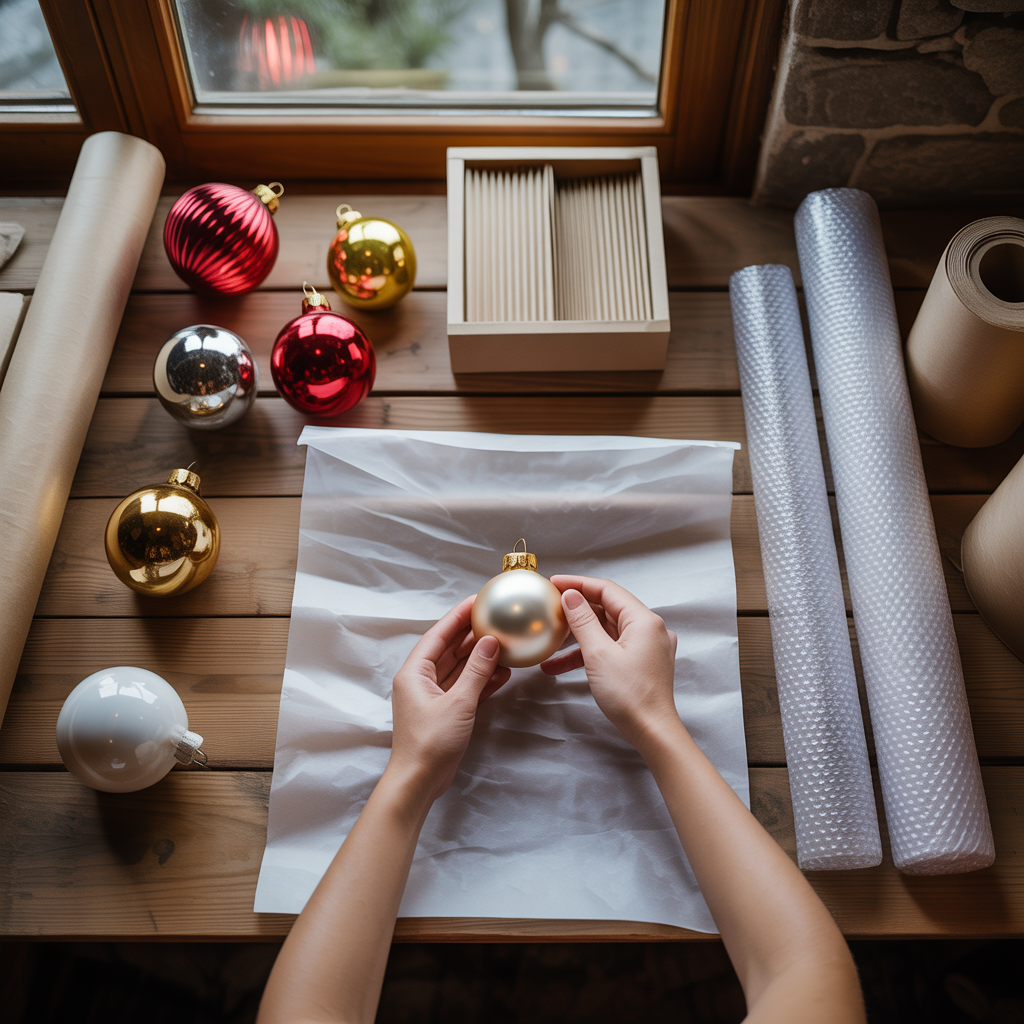
Glass and ceramic ornaments require individual wrapping regardless of container type. Tissue paper provides adequate protection for standard ornaments. Use bubble wrap for heirloom pieces, hand-painted items, or ornaments with protruding elements like 3D figures or dangling components.
Step-by-Step Ornament Wrapping Method
- Remove hooks first. Store hooks separately in a small bag to prevent scratching.
- Wrap each ornament individually. Use 2-3 sheets of tissue paper, covering all surfaces.
- Place wrapped ornaments in divided containers. One ornament per compartment prevents contact.
- Fill empty spaces with tissue. Ornaments should not shift when the container moves.
- Store heaviest items on bottom. Place lightweight ornaments in upper compartments.
Egg cartons and plastic cups work as budget dividers for small ornaments under 2 inches in diameter. Nest cups inside larger bins, filling gaps with crumpled newspaper. This method costs nothing but provides excellent protection.
Special Handling for Valuable Ornaments
Antique, heirloom, or irreplaceable ornaments deserve extra precautions. Wrap these pieces in acid-free tissue paper, which prevents chemical reactions that can discolor or damage surfaces over decades. Store high-value ornaments in a separate, clearly labeled container that receives careful handling.
Photograph valuable ornaments before storage. Document any existing damage or wear. This record helps identify new damage and provides documentation for insurance purposes if needed.
Storing Holiday Lights Without Tangles
Tangled lights waste hours during setup and cause bulb breakage from pulling and twisting. The solution requires wrapping lights around a core before storage, not coiling them into loose bundles.
The Figure-8 Wrapping Method
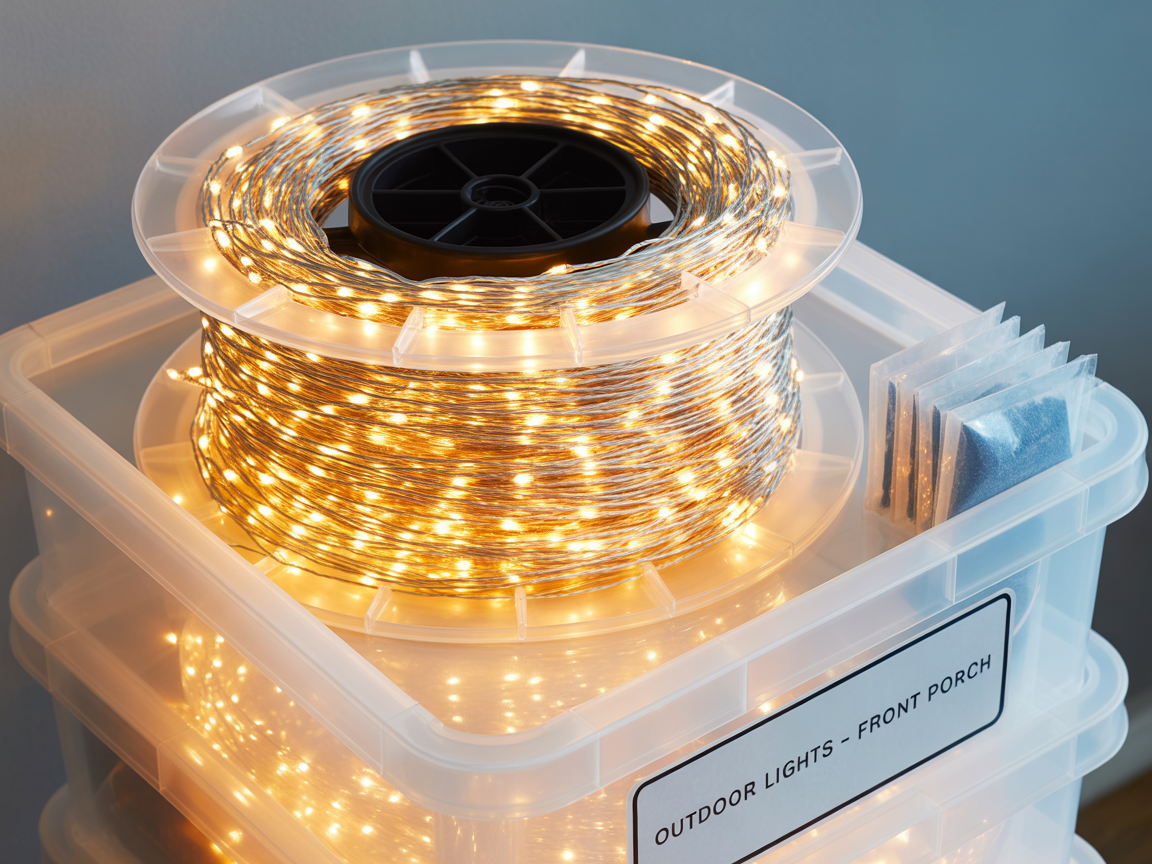
Wrap lights in a figure-8 pattern around cardboard, paper towel tubes, or dedicated light reels. This technique prevents the twisting that creates tangles. Start at the plug end, wrap in consistent loops, and secure the end with a twist tie or rubber band.
Traffic cones or plastic hangers work for larger light strands. The cone shape keeps wraps separated and allows easy unwinding from the top. Label each wrapped strand with its length and location (front porch, tree, mantle) for quick identification.
Testing Lights Before Storage
Test all light strands before packing. Replace burned-out bulbs immediately; oxidation on empty sockets can spread to working connections during storage. Discard strands with frayed wires, cracked sockets, or intermittent connections rather than storing them for "future repair."
LED lights last 25,000-50,000 hours compared to 1,000-2,000 hours for incandescent bulbs. If your incandescent strands are more than 5 years old, consider replacing them before next season rather than storing aging equipment.
Wreath and Garland Storage Solutions
Wreaths and garlands present unique storage challenges due to their size and shape. Crushing destroys their appearance, while loose storage allows dust accumulation and pest access.
Wreath Storage Best Practices
Store wreaths in dedicated wreath bags or boxes designed to maintain their circular shape. Hang wreaths on hooks in closets if bag storage is unavailable; hanging prevents the flattening that occurs when wreaths lie flat under other items.
Fresh wreaths cannot be stored; they must be disposed of after the season. Compost fresh wreaths or repurpose them as garden mulch. Artificial wreaths with proper storage last 10-15 years before showing significant wear.
Garland Storage Techniques
Coil garlands loosely around your arm, creating 12-18 inch loops. Tie loops with ribbon or fabric strips (not wire, which can damage garland surfaces) and place in large bins. Avoid tight coiling that compresses artificial needles or bends wire frames.
Beaded garlands require special handling. Slide beaded strands into empty plastic water bottles to prevent tangling. Cut the bottle top wider if needed to accommodate larger beads. This method keeps delicate beaded garlands separated and protected.
Climate Control Requirements for Decoration Storage
Temperature and humidity control prevent the hidden damage that ruins decorations over months of storage. Mountain climates like the Vail Valley require particular attention due to extreme temperature swings and low humidity levels.
Ideal Storage Conditions
Maintain storage temperatures between 55-80°F year-round. Temperatures below freezing cause plastic to become brittle and crack. Temperatures above 90°F warp plastic, melt adhesives, and fade colors. Keep humidity between 30-50% to prevent mold growth while avoiding the extreme dryness that cracks leather and wood.
Attics and garages typically fail these requirements. Uninsulated attics reach 120°F or higher in summer and drop below freezing in winter. Garages experience similar extremes plus potential exposure to vehicle exhaust, gasoline fumes, and pest entry points.
Climate-Controlled Storage Benefits
For valuable decoration collections or items sensitive to temperature extremes, climate-controlled storage units maintain consistent conditions year-round. These units prevent the thermal cycling that causes cumulative damage over multiple storage seasons.
Climate control becomes essential for specific decoration types:
- Vintage or antique ornaments: Temperature stability prevents stress fractures in old glass
- Electronic decorations: Consistent humidity protects circuit boards and wiring
- Fabric items: Controlled conditions prevent mold, mildew, and pest infestations
- Candles and wax decorations: Temperature control prevents melting and warping
- Wooden nutcrackers and figurines: Humidity control prevents cracking and splitting
Organizing Decorations for Easy Retrieval
Effective organization reduces handling time and minimizes damage from repeated searching through containers. The goal is locating any item within 2-3 minutes without unpacking multiple bins.
Labeling Systems That Work
Label every container on at least two sides with specific contents, not vague descriptions. "Tree ornaments, fragile, red/gold theme" works better than "Christmas stuff." Include the year if decorations rotate seasonally or if you track when items were purchased.
Create a master inventory list stored separately from the decorations. Photograph container contents before sealing. This documentation eliminates the need to open containers when searching for specific items.
Categorization Strategies
Organize decorations by one of these methods based on your setup routine:
- By room: Living room, dining room, bedroom, outdoor. Best for large collections.
- By type: Tree ornaments, lights, tabletop, wreaths. Best for shared spaces.
- By holiday: Christmas, Hanukkah, New Year, general winter. Best for multi-holiday households.
- By setup order: First up, last down. Best for systematic decorators.
Whichever method you choose, store frequently used items in easily accessible containers. Place "last up, first down" items like tree toppers at the front of storage areas.
Storing Decorations in Apartments and Small Spaces
Limited storage space requires creative solutions that maximize protection while minimizing footprint. Vertical storage, multi-purpose containers, and off-site options extend your capacity.
Space-Saving Storage Techniques
Use under-bed storage containers for flat items like table runners, placemats, and folded fabric decorations. These shallow containers maximize unused space while keeping items dust-free and accessible.
Stackable bins with uniform dimensions maximize vertical space in closets. Avoid mixing container sizes; uniform stacks reach higher safely and use space more efficiently.
Vacuum storage bags work for soft items like fabric stockings, tree skirts, and plush decorations. Compression reduces volume by 50-75%. Avoid vacuum bags for items with rigid elements, wire frames, or dimensional shapes that could be damaged by compression.
When to Consider Off-Site Storage
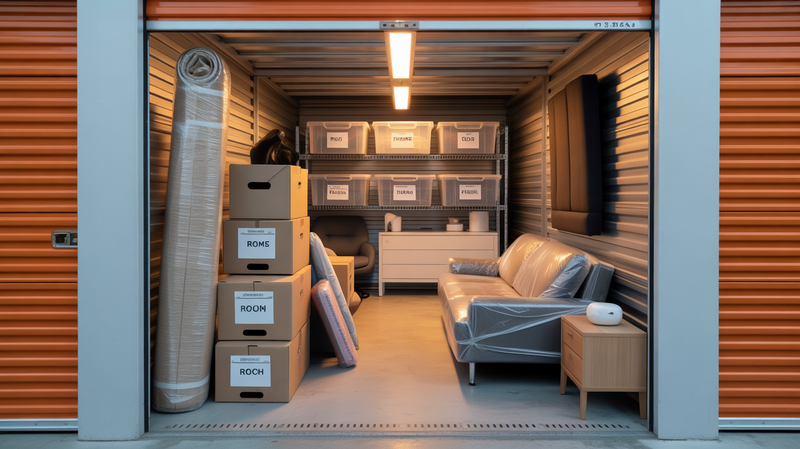
Off-site storage makes sense when decoration collections exceed available home space or when home storage conditions cannot maintain proper temperature and humidity. A 5x5 storage unit holds approximately 20-30 standard storage bins, enough for most household decoration collections.
Off-site storage also protects decorations during home renovations, moves, or extended travel. The convenience of 24/7 access with smart lock technology allows retrieval whenever needed without coordinating schedules.
Preventing Pest Damage to Stored Decorations
Mice, moths, silverfish, and other pests target stored decorations for nesting materials and food residue. Prevention requires eliminating attractants and creating physical barriers.
Pest Prevention Strategies
Clean all decorations before storage. Wipe surfaces to remove dust, fingerprints, and food residue. Vacuum artificial trees to remove fallen needles and debris that attract pests. Launder fabric items before packing.
Use sealed plastic containers exclusively. Cardboard boxes provide no pest barrier; mice chew through cardboard within minutes. Ensure container lids snap completely closed with no gaps.
Add cedar blocks or lavender sachets to containers with fabric items. These natural repellents deter moths without the chemical residue of mothballs. Replace cedar and lavender annually for continued effectiveness.
Signs of Pest Damage
Inspect stored decorations at least once during the off-season, ideally in mid-summer when pest activity peaks. Look for droppings, chew marks, nesting materials, or unusual odors. Address any infestation immediately before it spreads to other containers.
Storing Outdoor and Inflatable Decorations
Outdoor decorations face additional challenges from weather exposure, larger sizes, and electrical components. Proper end-of-season care extends their lifespan significantly.
Preparing Outdoor Decorations for Storage
Clean all outdoor decorations thoroughly before storage. Remove dirt, salt residue, and debris accumulated during display. Allow items to dry completely; storing damp decorations guarantees mold growth.
Inspect electrical connections for damage from weather exposure. Replace cracked plugs, frayed wires, or corroded connections before storage. Test all lights and motors to identify repairs needed before next season.
Inflatable Decoration Storage
Deflate inflatables completely and allow them to dry for 24-48 hours before folding. Any trapped moisture creates mold inside the sealed material. Fold loosely along seams; tight folding creates permanent creases.
Store inflatables in their original boxes when available, or in large plastic bins. Keep blower motors with their corresponding inflatables; label both pieces if stored separately. Blower motors should be stored in climate-controlled conditions to protect electrical components.
Decluttering Before Storage
Reducing decoration volume before storage saves space, time, and money. The post-holiday period provides the perfect opportunity to evaluate what deserves continued storage.
Questions to Ask About Each Item
- Did I display this item in the past two years?
- Does this item still match my current decorating style?
- Is this item damaged beyond reasonable repair?
- Do I have duplicates or similar items that serve the same purpose?
- Does this item hold genuine sentimental value, or am I keeping it from obligation?
Items not displayed for two consecutive years rarely return to rotation. Donate these pieces to thrift stores, community organizations, or neighbors who might appreciate them. Discard broken items rather than storing them for repairs that never happen.
Sustainable Disposal Options
Artificial Christmas trees can be donated if in good condition or recycled through specialized programs. Check local recycling centers for holiday-specific collection events typically held in January.
Fresh wreaths and garlands can be composted or repurposed as garden mulch. Some communities collect fresh greenery for wildlife habitat programs. Contact local nature centers about donation opportunities.
Frequently Asked Questions
How to protect decorations from weather damage?
Protect decorations from weather damage by storing them in airtight plastic containers in climate-controlled spaces. Avoid attics, garages, and sheds that experience temperature extremes. For outdoor decorations, clean and dry all items completely before storage, and inspect electrical components for weather-related damage.
Can I keep Christmas decorations up all year?
You can keep Christmas decorations up year-round, but prolonged display accelerates wear. UV exposure fades colors within 6-12 months. Dust accumulation requires regular cleaning. Electrical components in lights and animated decorations have limited operational hours. Most decorations last 3-5 times longer with seasonal display and proper storage.
How to store Christmas decorations in garage in winter?
Garage storage in winter requires insulated containers and elevated placement. Use heavy-duty plastic bins with tight seals. Place bins on shelving at least 6 inches off the floor to avoid moisture and temperature extremes at ground level. Avoid storing temperature-sensitive items like candles, electronics, or vintage glass in unheated garages where temperatures drop below freezing.
Where do people store all their holiday decorations?
Most households store holiday decorations in closets, basements, attics, or garages. Optimal locations maintain temperatures between 55-80°F with humidity below 50%. Climate-controlled storage units provide ideal conditions when home storage lacks proper climate control or sufficient space. A 5x5 unit accommodates most household decoration collections.
What are the best containers for fragile holiday ornaments?
The best containers for fragile ornaments feature adjustable cardboard dividers, rigid sides, and secure lids. Purpose-built ornament boxes holding 64 ornaments cost $12-18 and provide superior protection. For budget alternatives, use egg cartons for small ornaments or create custom dividers from cardboard in standard plastic bins.
How do you store Christmas lights without tangling them?
Store Christmas lights without tangling by wrapping them around a core using the figure-8 method. Wrap strands around cardboard pieces, paper towel tubes, or dedicated light reels. Secure ends with twist ties. Label each wrapped strand with its length and intended location for easy identification during setup.
Creating Your Decoration Storage System
Effective holiday decoration storage requires upfront investment in proper containers and organization systems, but this investment pays dividends in reduced replacement costs and setup time. A complete storage system for an average household costs $100-200 in containers and materials but prevents hundreds of dollars in annual decoration replacement.
Start by assessing your current collection and storage conditions. Identify items at highest risk from your current storage situation. Address those vulnerabilities first, then expand your system as budget allows. Even incremental improvements, like replacing cardboard boxes with plastic bins, significantly reduce damage rates.
For Vail Valley residents dealing with mountain climate challenges, climate-controlled storage provides the consistent conditions that protect valuable decoration collections. The combination of proper containers, careful organization, and appropriate storage conditions ensures your holiday decorations remain beautiful and functional for years to come.
|