Storage Unit Cleaning and Maintenance Checklist for 2026 |
| STORAGE UNIT CLEANING AND MAINTENANCE CHECKLIST
⏱ 16 min read ·
📄 #3,008 words
Complete storage unit cleaning and maintenance checklist to protect your belongings. Expert tips for seasonal care, organization, and preventing damage.
|

R enting a storage unit is only the first step in protecting your belongings. What happens after you close that door determines whether your items emerge months or years later in pristine condition or covered in dust, damaged by moisture, or worse. A proper storage unit cleaning and maintenance routine is the difference between peace of mind and unpleasant surprises.
Whether you store seasonal gear, business inventory, or household items during a move, this comprehensive guide to storage unit cleaning and maintenance covers everything you need to know. From initial preparation to ongoing care, we will walk you through the best practices that protect your investment and keep your stored items in excellent condition.
Why Storage Unit Maintenance Matters
Many renters assume that once items are placed in storage, they can be forgotten until needed. This approach often leads to preventable damage. Dust accumulation, pest intrusion, moisture buildup, and shifting temperatures can all compromise your belongings over time.
Regular maintenance serves several critical purposes:
- Prevents pest infestations before they damage items
- Identifies moisture problems early, protecting against mold and mildew
- Maintains organization for easy access when you need specific items
- Extends the lifespan of stored furniture, electronics, and textiles
- Provides peace of mind knowing your belongings are properly cared for
For those storing valuable items in the Vail Valley area, where mountain weather brings significant temperature swings and humidity changes, maintenance becomes even more important. Facilities offering climate-controlled storage units provide an excellent foundation, but personal maintenance still plays a vital role.
Before You Store: Initial Preparation Checklist
The best storage unit cleaning and maintenance routine starts before you even place items inside. Proper preparation prevents most common storage problems.
Cleaning Your Items Before Storage
Never store dirty items. Soil, food residue, and organic matter attract pests and can cause permanent staining over time.
Furniture:
- Wipe down all surfaces with appropriate cleaners
- Vacuum upholstered pieces thoroughly
- Treat wood furniture with polish to prevent drying
- Remove cushions and store separately in breathable covers
Clothing and Textiles:
- Wash or dry clean all items before storage
- Ensure everything is completely dry to prevent mildew
- Use acid-free tissue paper for delicate items
- Avoid plastic bags, which trap moisture; use breathable garment bags instead
Electronics:
- Clean screens and surfaces with appropriate products
- Remove batteries to prevent corrosion
- Coil cords neatly and secure with ties
- Store in original packaging when possible
Appliances:
- Clean and dry thoroughly, especially refrigerators and washing machines
- Leave doors slightly ajar to prevent mold growth
- Disconnect and properly store hoses
Preparing the Storage Unit Itself
Before moving anything in, inspect and prepare your unit:
- Check for cleanliness: Quality facilities maintain clean units, but verify floors and walls are free of debris
- Look for signs of pests: Droppings, gnaw marks, or dead insects indicate potential problems
- Inspect for moisture: Check corners and along walls for dampness or water stains
- Test the door seal: Ensure it closes properly without gaps
- Note the lighting: Good visibility makes maintenance visits easier
If you notice any concerns, report them to facility management immediately. Reputable facilities like those with drive-up access and proper construction standards maintain units between tenants, but a quick inspection protects your interests.
Essential Supplies for Storage Unit Maintenance
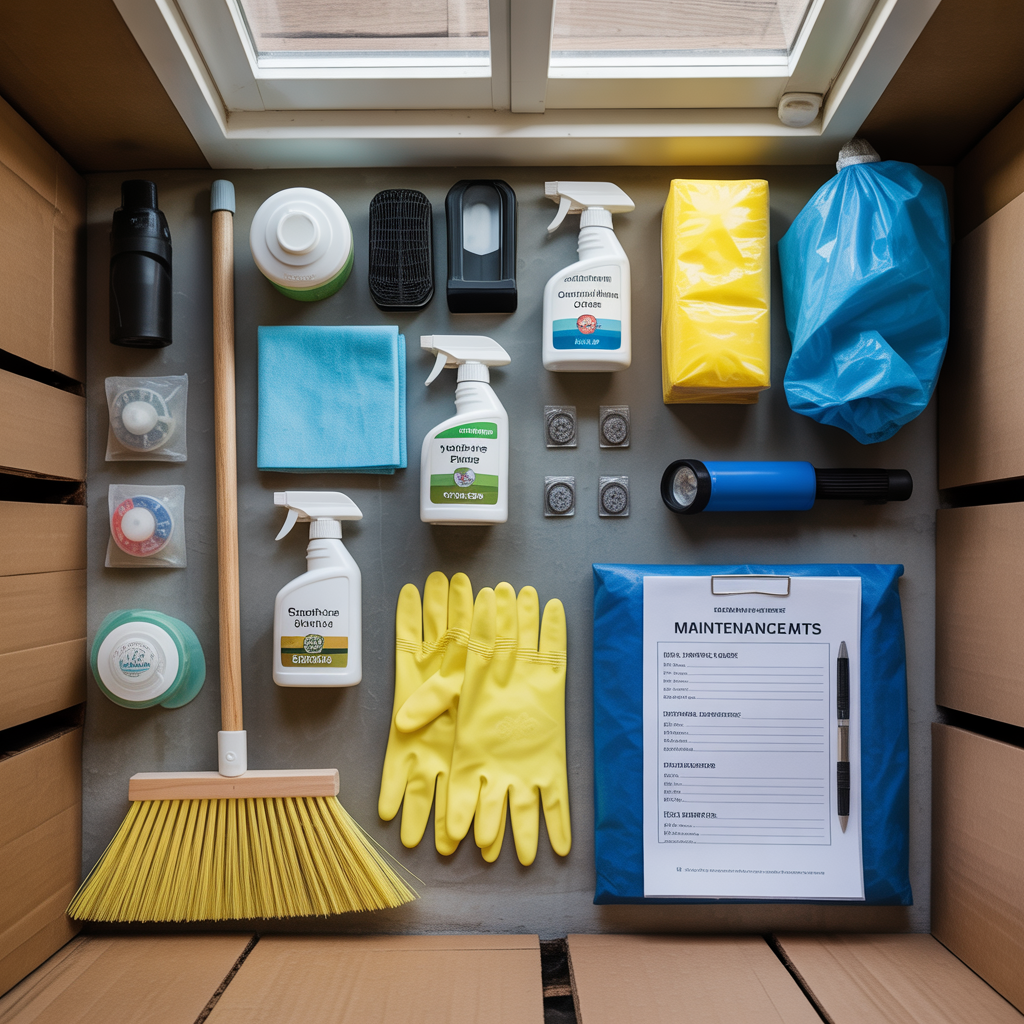
Keep these items on hand for regular maintenance visits:
Cleaning Supplies
- Broom and dustpan
- Microfiber cloths for dusting
- All-purpose cleaner (avoid harsh chemicals near stored items)
- Vacuum with attachments (for upholstered items)
- Flashlight for inspecting corners and behind items
Organizational Tools
- Labels and markers for boxes
- Inventory list or app
- Plastic bins for items needing extra protection
- Shelving units to maximize space and improve airflow
- Pallets to elevate items off the floor
Protective Materials
- Moving blankets or furniture covers
- Silica gel packets for moisture absorption
- Cedar blocks or lavender sachets (natural pest deterrents)
- Plastic sheeting for additional moisture protection
Monthly Maintenance Checklist
For optimal protection, visit your storage unit at least monthly. This schedule allows you to catch problems early while they are still manageable.
Quick Visual Inspection (5 to 10 minutes)
Start each visit with a thorough visual check:
- Check the floor: Look for water, pest droppings, or debris near the door
- Inspect visible items: Note any shifting, settling, or visible damage
- Smell the air: Musty odors indicate moisture problems; chemical smells may suggest pest issues
- Check your lock: Ensure it operates smoothly without signs of tampering
- Examine corners: Use a flashlight to check dark areas where pests hide
Basic Cleaning Tasks (15 to 20 minutes)
After your inspection, perform these maintenance tasks:
- Sweep the floor, especially near the entrance where debris enters
- Dust accessible surfaces and box tops
- Check and replace moisture absorbers if needed
- Verify covers remain properly positioned on furniture
- Ensure nothing has fallen or shifted in ways that could cause damage
Organization Check
Maintaining organization makes future access easier and improves airflow:
- Verify pathways remain clear for accessing items in the back
- Check that heavy items remain on bottom, lighter items on top
- Ensure boxes are not crushing under weight
- Confirm labels remain visible and legible
- Update your inventory list if you have added or removed items
Seasonal Maintenance Guide
Beyond monthly visits, certain seasons require additional attention. This is particularly true in mountain climates like the Vail Valley, where seasonal extremes are significant.
Spring Maintenance
As temperatures rise and snow melts, spring brings specific challenges:
- Check for winter moisture damage: Inspect items for any signs of condensation or water intrusion
- Pest prevention: Warmer weather activates insects; refresh pest deterrents
- Air circulation: If possible, leave the door open briefly during your visit to refresh air
- Review winter items: Ensure ski equipment, winter clothing, and holiday decorations are properly stored for the off-season
Spring is an ideal time to rotate stored items, bringing summer gear to the front and moving winter items to the back. For those storing ski equipment and winter sports gear, proper temperature-regulated storage protects against the adhesive breakdown and material degradation that occurs with temperature swings.
Summer Maintenance
Heat and humidity create specific storage challenges:
- Monitor temperature-sensitive items: Electronics, vinyl records, photographs, and candles can warp or melt
- Increase moisture control: Add extra silica gel packets during humid periods
- Check for pest activity: Summer is peak season for insects and rodents
- Inspect plastic containers: Ensure lids remain sealed and materials have not warped
Fall Maintenance
Prepare your unit for the coming winter:
- Deep cleaning: Perform a thorough cleaning before winter limits access
- Rotate seasonal items: Bring winter gear forward, move summer items back
- Check weatherstripping: Report any door seal issues to management before cold weather
- Inventory review: Assess what you actually need to keep storing
Winter Maintenance
Cold weather requires vigilance, especially in mountain locations:
- Prevent freezing damage: Remove any liquids that could freeze and burst containers
- Check for drafts: Note any cold air entering around doors or walls
- Protect against condensation: Temperature differentials can cause moisture buildup
- Maintain access: Keep pathways to your unit clear after snowfall
Climate-controlled units eliminate many winter concerns by maintaining consistent temperatures regardless of outside conditions. This protection proves especially valuable for storing items like musical instruments, artwork, wine collections, and antique furniture that are sensitive to temperature extremes.
Specialized Maintenance for Specific Items
Different belongings require different care approaches. Here are maintenance tips for commonly stored items:
Furniture Care
Wood, upholstered, and metal furniture each need specific attention:
Wood Furniture:
- Apply furniture polish every three to six months to prevent drying and cracking
- Keep away from exterior walls where temperature changes are most extreme
- Use furniture covers but avoid plastic, which traps moisture
- Store tables with legs removed when possible to prevent stress damage
Upholstered Furniture:
- Vacuum during maintenance visits to remove dust
- Use breathable covers, never plastic
- Place cedar blocks nearby to deter moths and other fabric pests
- Stand cushions on end periodically to prevent permanent compression
Metal Furniture:
- Wipe with a dry cloth to remove moisture
- Apply light oil to hinges and moving parts
- Check for rust development, especially in humid conditions
Electronics and Appliances
Modern electronics are particularly vulnerable to storage conditions:
- Store in original packaging when available for optimal protection
- Remove all batteries before storage
- Use silica gel packets inside boxes with electronics
- Avoid stacking heavy items on top of electronics boxes
- Consider climate control for long-term electronics storage
- Run appliances briefly after removal from storage before regular use
Documents and Photographs
Paper items require careful protection:
- Use acid-free boxes and folders
- Store flat rather than standing when possible
- Keep away from exterior walls
- Include silica gel packets in storage containers
- Consider digitizing irreplaceable documents and photos as backup
Clothing and Textiles
Proper textile storage prevents damage and maintains quality:
- Clean everything before storage; stains set permanently over time
- Use breathable garment bags, not plastic
- Fold heavy items like sweaters to prevent stretching
- Add cedar or lavender as natural moth deterrents
- Check periodically for signs of pest damage
Outdoor and Sports Equipment
Recreational gear needs special attention, particularly in active communities like the Vail Valley:
Ski and Snowboard Equipment:
- Clean and dry thoroughly before storage
- Apply wax to ski bases for protection
- Release binding tension to preserve springs
- Store in a climate-controlled environment to protect adhesives and materials
- Check periodically for any signs of delamination
Bicycles:
- Clean and lubricate chain and gears
- Inflate tires to recommended pressure or slightly below
- Store hanging or on a rack to protect tires
- Cover to protect from dust
Camping and Hiking Gear:
- Ensure all items are completely dry before storage
- Store sleeping bags uncompressed in large breathable bags
- Check fuel canisters and remove from storage
- Inspect for any pest damage during maintenance visits
Pest Prevention and Control
Pests represent one of the most serious threats to stored belongings. A proactive approach prevents infestations.
Prevention Strategies
- Never store food: This includes pet food, birdseed, and forgotten snacks in pockets
- Use plastic bins: Cardboard attracts and houses pests; plastic bins provide better protection
- Seal everything: Ensure containers close tightly with no gaps
- Natural deterrents: Cedar blocks, lavender sachets, and peppermint oil discourage many pests
- Elevate items: Use pallets to keep belongings off the floor
Signs of Pest Activity
During maintenance visits, watch for:
- Droppings near walls or in corners
- Gnaw marks on boxes or stored items
- Nesting materials (shredded paper, fabric scraps)
- Dead insects or shed skins
- Unusual odors
- Small holes in boxes or fabric items
Responding to Pest Problems
If you discover pest activity:
- Report immediately to facility management
- Identify and remove any attractants
- Inspect all items for damage
- Consider professional treatment if infestation is significant
- Replace cardboard boxes with plastic containers
- Increase visit frequency until problem is resolved
Moisture Control and Prevention
Moisture causes mold, mildew, rust, and warping. Effective moisture control is essential for long-term storage success.
Understanding Moisture Sources
Moisture enters storage units through several pathways:
- Humidity in the air
- Condensation from temperature changes
- Water intrusion through doors or walls
- Moisture already present in stored items
Moisture Prevention Strategies
- Choose climate control: Climate-controlled units maintain consistent humidity levels
- Use moisture absorbers: Silica gel, DampRid, or similar products absorb excess humidity
- Ensure items are dry: Never store damp clothing, towels, or equipment
- Avoid direct wall contact: Leave space between items and exterior walls
- Use pallets: Elevate items off concrete floors, which can transfer moisture
- Allow airflow: Do not pack items too tightly; air circulation helps prevent moisture buildup
Responding to Moisture Problems
If you discover moisture issues:
- Identify the source immediately
- Report water intrusion to management
- Remove affected items and allow to dry completely
- Inspect for mold growth on items and unit surfaces
- Increase moisture absorbers
- Consider upgrading to a climate-controlled unit if problems persist
Annual Deep Cleaning Protocol
Once per year, perform a comprehensive cleaning and reorganization of your storage unit. This thorough maintenance prevents accumulated problems and keeps your unit optimally organized.
Annual Cleaning Checklist
- Remove all items: Take everything out of the unit
- Clean the unit thoroughly: Sweep, mop if appropriate, and wipe down walls
- Inspect the unit: Check for any structural issues, pest entry points, or moisture problems
- Inspect all items: Check each item for damage, pest activity, or moisture issues
- Clean items as needed: Dust, vacuum, and treat items requiring attention
- Replace protective materials: Install fresh moisture absorbers, pest deterrents, and covers
- Reorganize strategically: Place frequently accessed items near the front
- Update your inventory: Create a current list of all stored items
- Reassess storage needs: Determine if you need more or less space
Deciding What to Keep
The annual deep clean is an ideal time to evaluate your storage needs:
- Have you accessed the item in the past year?
- Is the item still in usable condition?
- Does the cost of storage exceed the item's replacement value?
- Could someone else benefit from this item more than you?
Reducing stored items not only saves money but makes maintenance easier and improves air circulation around remaining belongings.
Choosing the Right Storage Unit for Easy Maintenance
The type of storage unit you choose significantly impacts maintenance requirements. Consider these factors when selecting your unit:
Climate Control Benefits
Climate-controlled units offer significant advantages for maintenance:
- Consistent temperature prevents condensation and material stress
- Humidity control reduces mold and mildew risk
- Protected from extreme cold that can damage electronics and wood
- Reduced pest activity in controlled environments
For those storing valuable items, sensitive materials, or planning long-term storage, climate control often pays for itself in prevented damage.
Drive-Up Access Advantages
Units with drive-up access make maintenance visits more convenient:
- Easy to bring cleaning supplies
- Simple to remove items for inspection
- Better ventilation during visits when doors can be opened wide
- Convenient for loading and unloading during reorganization
Size Considerations
Proper sizing affects maintenance in several ways:
- Adequate space allows for airflow between items
- Room to create access pathways for inspections
- Space for shelving improves organization and reduces stacking damage
- Avoid overpacking, which makes maintenance difficult and promotes moisture buildup
Not sure what size you need? A storage size guide can help you determine the right unit for your belongings while leaving adequate space for proper maintenance.
Creating Your Maintenance Schedule
Consistency is key to effective storage unit maintenance. Create a schedule that works with your lifestyle:
Minimum Recommended Schedule
| Frequency | Tasks | Time Required |
|---|---|---|
| Monthly | Visual inspection, basic cleaning, moisture check | 20 to 30 minutes |
| Quarterly | Detailed inspection, replace moisture absorbers, pest check | 45 to 60 minutes |
| Seasonally | Rotate items, seasonal preparation, thorough cleaning | 1 to 2 hours |
| Annually | Complete cleanout, deep cleaning, inventory review | Half day |
Setting Reminders
Use technology to maintain your schedule:
- Set recurring calendar reminders for monthly visits
- Note seasonal tasks on your calendar at the start of each year
- Keep a maintenance log to track visits and observations
- Use a notes app to maintain your inventory list
Frequently Asked Questions
How often should I visit my storage unit for maintenance?
At minimum, visit your storage unit monthly for a quick inspection and basic cleaning. More frequent visits may be necessary during extreme weather seasons or if you are storing particularly valuable or sensitive items. Quarterly deep inspections and annual complete cleanouts round out an effective maintenance schedule.
What cleaning supplies should I keep for my storage unit?
Essential supplies include a broom and dustpan, microfiber cloths, all-purpose cleaner, a flashlight, and moisture absorbers like silica gel packets. Avoid harsh chemicals that could damage stored items or leave residues. Keep supplies in a small container that stays in your vehicle or at home for easy transport during visits.
How can I prevent pests in my storage unit?
Never store food of any kind, including pet food and birdseed. Use plastic bins instead of cardboard boxes, which attract and harbor pests. Place cedar blocks or lavender sachets throughout your unit as natural deterrents. Elevate items off the floor using pallets, and seal all containers tightly. Regular inspections help catch pest activity early before it becomes an infestation.
Is climate-controlled storage worth the extra cost?
Climate-controlled storage is worth the investment for temperature-sensitive items like electronics, wooden furniture, musical instruments, photographs, artwork, and wine. It is also valuable for long-term storage of any items, as consistent conditions prevent the cumulative damage caused by temperature and humidity fluctuations. In mountain climates with extreme seasonal variations, climate control provides significant protection.
How do I prevent moisture damage in my storage unit?
Start by ensuring all items are completely dry before storage. Use moisture absorbers throughout your unit and replace them regularly. Avoid placing items directly against exterior walls or on concrete floors. Leave space between items for air circulation. Climate-controlled units provide the most reliable moisture protection by maintaining consistent humidity levels.
What should I do if I find mold in my storage unit?
Report the issue to facility management immediately. Remove affected items and allow them to dry in sunlight if possible. Clean hard surfaces with appropriate mold-killing products. Soft items like upholstered furniture or clothing may need professional cleaning or disposal if mold penetration is significant. Identify and address the moisture source before returning items to storage.
Protect Your Investment with Proper Maintenance
A storage unit represents more than just space; it protects your belongings, memories, and investments. Whether you are storing family heirlooms, business inventory, seasonal equipment, or household items during a transition, proper cleaning and maintenance ensures everything remains in excellent condition.
The time invested in regular maintenance pays dividends in protected belongings and peace of mind. By following this comprehensive storage unit cleaning and maintenance checklist, you establish habits that prevent problems before they occur and catch issues while they are still easily addressed.
For those in the Vail Valley area seeking storage solutions that make maintenance easier, facilities with modern amenities, climate control options, and convenient access provide an excellent foundation for protecting your belongings. Combined with your personal maintenance routine, the right storage facility keeps your items safe for months or years to come.
|
Storing in the Vail Valley?
Vail Airport Storage is a brand-new facility in Gypsum, CO, next to Eagle County Regional Airport: heated indoor units, drive-up units with power and lights, and vehicle parking, open 24/7 with smart-lock access.