Storage Unit Size Guide: Find Your Perfect Fit in Minutes

STORAGE UNIT SIZE GUIDE
⏱ 14 min read 📄 #2,781 words

Compare storage unit sizes from 5x5 to 10x30. See what fits in each size, calculate space needs, and choose the right unit for your belongings.

Storage Unit Size Guide: Find Your Perfect Fit in Minutes

A 5x5 unit (25 sq ft) holds closet contents, a 5x10 (50 sq ft) fits a studio apartment, a 10x10 (100 sq ft) stores a one-bedroom home, a 10x15 (150 sq ft) handles two bedrooms, and a 10x20 (200 sq ft) accommodates a three-bedroom house or vehicle. Choose based on room count and add 20% buffer space for access aisles.

Key Points:
  • 5x10 units (50 sq ft) fit studio apartments with furniture, boxes, and small appliances for $39-123/month
  • 10x10 units store one-bedroom homes including bed, sofa, dining set, and 20-30 boxes
  • Climate-controlled units cost 20-30% more but protect wood, electronics, and leather from temperature damage
  • Add 20% extra space to your estimate for walking aisles and easy item retrieval
  • Standard unit height is 8 feet, providing 200-1,600 cubic feet depending on floor dimensions

Complete Storage Unit Size Chart

Storage units range from small 5x5 lockers to large 10x30 spaces capable of holding vehicles. Each size serves specific needs, from seasonal item storage to full home contents during a move. The chart below shows exact dimensions, capacity, and typical uses for every standard size.

Unit Size Square Feet Cubic Feet Best For
5x4 20 sq ft 160 cu ft Small closet, seasonal decor
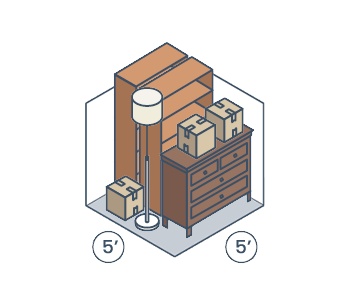
5x5 25 sq ft 200 cu ft Walk-in closet contents, boxes
5x7 35 sq ft 280 cu ft Large closet, small furniture
5x8 40 sq ft 320 cu ft Mattress set, dresser, boxes
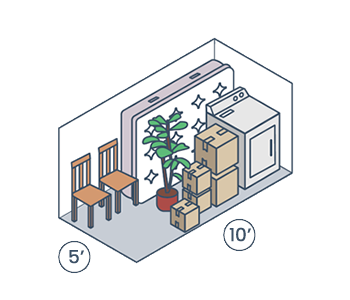
5x10 50 sq ft 400 cu ft Studio apartment, small office
5x15 75 sq ft 600 cu ft Large studio, small vehicle
10x5 50 sq ft 400 cu ft Same as 5x10, different layout
8x10 80 sq ft 640 cu ft Large studio, small 1-bedroom
10x10 100 sq ft 800 cu ft 1-bedroom home, half garage
10x12 120 sq ft 960 cu ft 1-2 bedroom apartment
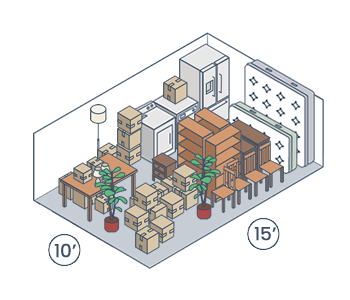
10x15 150 sq ft 1,200 cu ft 2-bedroom home, large furniture
10x17 170 sq ft 1,360 cu ft 2-3 bedroom home
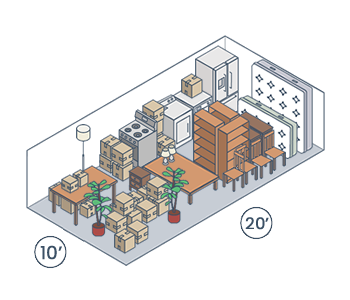
10x20 200 sq ft 1,600 cu ft 3-bedroom home, vehicles
10x25 250 sq ft 2,000 cu ft Large home, business inventory
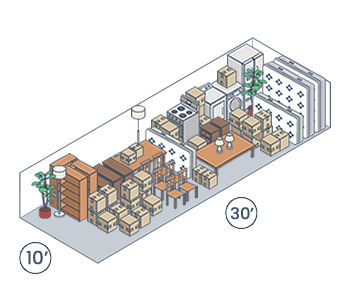
10x30 300 sq ft 2,400 cu ft 4+ bedroom home, multiple vehicles
15x20 300 sq ft 2,400 cu ft Large home, commercial use

How Big Is a 10x10 Storage Unit?

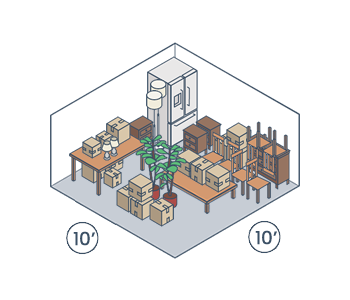
A 10x10 storage unit measures 10 feet wide by 10 feet deep with 8-foot ceilings, providing 100 square feet of floor space and approximately 800 cubic feet of total volume. This equals roughly half a standard one-car garage or a 10x10 bedroom without furniture.

The 10x10 size represents the most popular storage unit choice, handling contents from a typical one-bedroom apartment or small two-bedroom home. You can fit a queen-size bed, dresser, dining table with chairs, sofa, and 20-30 medium boxes with room for a narrow walking aisle.

What Fits in a 10x10 Storage Unit

  • Queen or king mattress set (disassembled bed frame)
  • Full living room set: sofa, loveseat, coffee table, end tables
  • Dining table with 4-6 chairs
  • Dresser, nightstands, and small desk
  • 20-30 medium moving boxes
  • Several lamps, rugs, and wall decor
  • Small appliances (microwave, vacuum, fans)

For efficient packing, place heavy furniture against back walls first, stack boxes from floor to ceiling, and leave a 2-foot aisle down the center for access. Disassemble bed frames and table legs to maximize space.

Storage Unit Size Guide: Find Your Perfect Fit in Minutes - Content Image

5x10 vs 10x5 Storage Unit: Understanding the Difference

Both 5x10 and 10x5 storage units provide identical 50 square feet and 400 cubic feet of space. The only difference is orientation: a 5x10 unit is 5 feet wide and 10 feet deep, while a 10x5 is 10 feet wide and 5 feet deep.

The 10x5 layout works better for wide items like sofas positioned lengthwise or accessing multiple items without moving things around. The 5x10 layout suits long, narrow items and allows deeper stacking when you need to pack densely and access items infrequently.

When to Choose Each Layout

Choose 5x10 when: You have long items like skis, surfboards, or lumber. You plan to stack boxes deep and access them rarely. You prefer a narrower door opening for security.

Choose 10x5 when: You need to access items frequently without unpacking. You have wide furniture like sofas or king mattresses. You want to see all contents at a glance from the doorway.

How to Determine What Size Storage Unit You Need

Calculate your storage needs by inventorying items room by room, measuring your largest pieces, and adding 20% buffer space for access aisles. Most people underestimate by 40%, leading to costly mid-rental upgrades that disrupt organization.

Step 1: Create a Room-by-Room Inventory

Walk through each room and list every item you plan to store. Group items by size category: large furniture, medium furniture, boxes and containers, and odd-shaped items. Take photos of each room for reference when packing.

Count your boxes carefully. A typical bedroom generates 8-12 medium boxes, a kitchen produces 10-15 boxes, and a living room creates 5-10 boxes plus furniture. Garages and basements vary widely based on accumulated items.

Step 2: Measure Your Largest Items

Measure length, width, and height of sofas, mattresses, tables, and appliances. Note which items can be disassembled. A standard sofa measures 7-8 feet long, a queen mattress is 60x80 inches, and a dining table typically spans 4-6 feet.

Check door dimensions at your chosen facility. Standard storage unit doors measure 4 feet wide for small units and 8-10 feet wide for drive-up units. Your largest item must fit through the door opening.

Step 3: Match Inventory to Unit Size

Home Size Recommended Unit Typical Contents
Studio apartment 5x10 (50 sq ft) Bed, small sofa, boxes, small appliances
1-bedroom apartment 10x10 (100 sq ft) Full bedroom and living room sets
2-bedroom home 10x15 (150 sq ft) Multiple bedrooms, dining, living room
3-bedroom home 10x20 (200 sq ft) Full house contents, appliances
4+ bedroom home 10x25 or 10x30 Large home, vehicles, equipment

Should I Get a 10x10 or 10x15 Storage Unit?

Choose a 10x10 for one-bedroom apartments or partial home contents. Choose a 10x15 for two-bedroom homes or when you need frequent access to items. The 50 extra square feet in a 10x15 provides 400 additional cubic feet and significantly easier navigation.

The 10x15 size represents the "sweet spot" for most residential storage needs, covering approximately 70% of two-bedroom requirements. The extra space costs roughly $10-30 more per month but prevents the frustration of cramped packing and difficult item retrieval.

Cost Comparison

A 10x10 climate-controlled storage unit typically costs $75-150 per month, while a 10x15 ranges from $87-200 per month. Drive-up units cost 20-30% less than climate-controlled options. Calculate your per-square-foot cost to compare value across facilities.

What Are the Sizes of Storage Units Available?

Storage facilities offer units ranging from 5x4 (20 sq ft) locker-size spaces to 15x20 (300 sq ft) warehouse-scale units. Common sizes include 5x5, 5x10, 10x10, 10x15, and 10x20. Specialty sizes like 8x10, 10x12, and 10x17 fill gaps between standard options.

Small Storage Units (25-50 sq ft)

Small units work for seasonal items, sports equipment, business documents, and college student belongings. A 5x5 unit holds approximately 10-15 boxes plus a few small furniture pieces like chairs or nightstands. A 5x10 accommodates a mattress set, dresser, and 20+ boxes.

Outdoor enthusiasts in mountain communities often use small units for ski equipment, bikes, and camping gear. Climate-controlled options protect expensive gear from temperature extremes that damage bindings, carbon frames, and technical fabrics.

Medium Storage Units (80-150 sq ft)

Medium units suit apartment dwellers, small families, and businesses storing inventory or equipment. The 10x10 and 10x15 sizes handle most residential moves and provide enough space for organized access to stored items.

These sizes work well for vacation homeowners storing furniture between seasons. The Vail Valley sees significant demand from second-home owners who rotate furnishings or store belongings during rental periods.

Large Storage Units (200+ sq ft)

Large units accommodate full home contents, vehicles, boats, and commercial inventory. A 10x20 equals a standard one-car garage and fits most sedans, SUVs, or small boats. Units with power outlets support vehicle battery maintenance during extended storage.

Drive-up access becomes essential at larger sizes. Loading a 10x20 or 10x30 unit requires backing a truck directly to the door for efficient furniture and appliance transfer.

Climate-Controlled vs. Standard Storage Units

Climate-controlled units maintain temperatures between 55-80°F and regulate humidity below 55%. Standard units experience temperature swings matching outdoor conditions, ranging from below freezing to over 100°F depending on location and season.

Items Requiring Climate Control

  • Wood furniture: Prevents warping, cracking, and joint separation
  • Electronics: Protects circuit boards from condensation damage
  • Leather goods: Prevents drying, cracking, and mold growth
  • Musical instruments: Maintains proper humidity for strings and wood
  • Artwork and photographs: Prevents fading, warping, and adhesive failure
  • Documents and books: Stops yellowing, mold, and paper degradation
  • Wine collections: Maintains proper aging conditions
  • Ski and snowboard equipment: Protects bindings, edges, and base materials

In mountain climates like the Vail Valley, temperature swings from 0°F winter nights to 90°F summer afternoons create extreme stress on stored items. Climate-controlled storage eliminates this risk for valuable belongings.

When Standard Units Work Fine

Standard drive-up units suit metal items, plastic containers, outdoor furniture, tools, and vehicles. Items designed for outdoor use or manufactured from temperature-stable materials store safely without climate control.

How Much Does a 10x10 Storage Unit Cost Per Month?

A 10x10 storage unit costs $57-150 per month depending on location, features, and promotions. Climate-controlled 10x10 units average $75-150 monthly, while drive-up units range from $57-100. Urban areas and high-demand locations charge premium rates.

Factors Affecting Storage Unit Prices

  • Climate control: Adds 20-30% to base price
  • Location: Urban facilities cost 40-60% more than suburban
  • Floor level: Ground floor units command 10-15% premium
  • Access features: Drive-up access adds 5-10% to cost
  • Security features: Smart locks and individual alarms increase rates
  • Promotions: First month free or 50% off first 3 months common

Many facilities offer promotional pricing for new customers. A 50% discount for the first three months on a $75 unit saves $112.50 over the promotional period. Compare total costs including any administrative fees or deposits when selecting a facility.

Vehicle and Specialty Storage Sizes

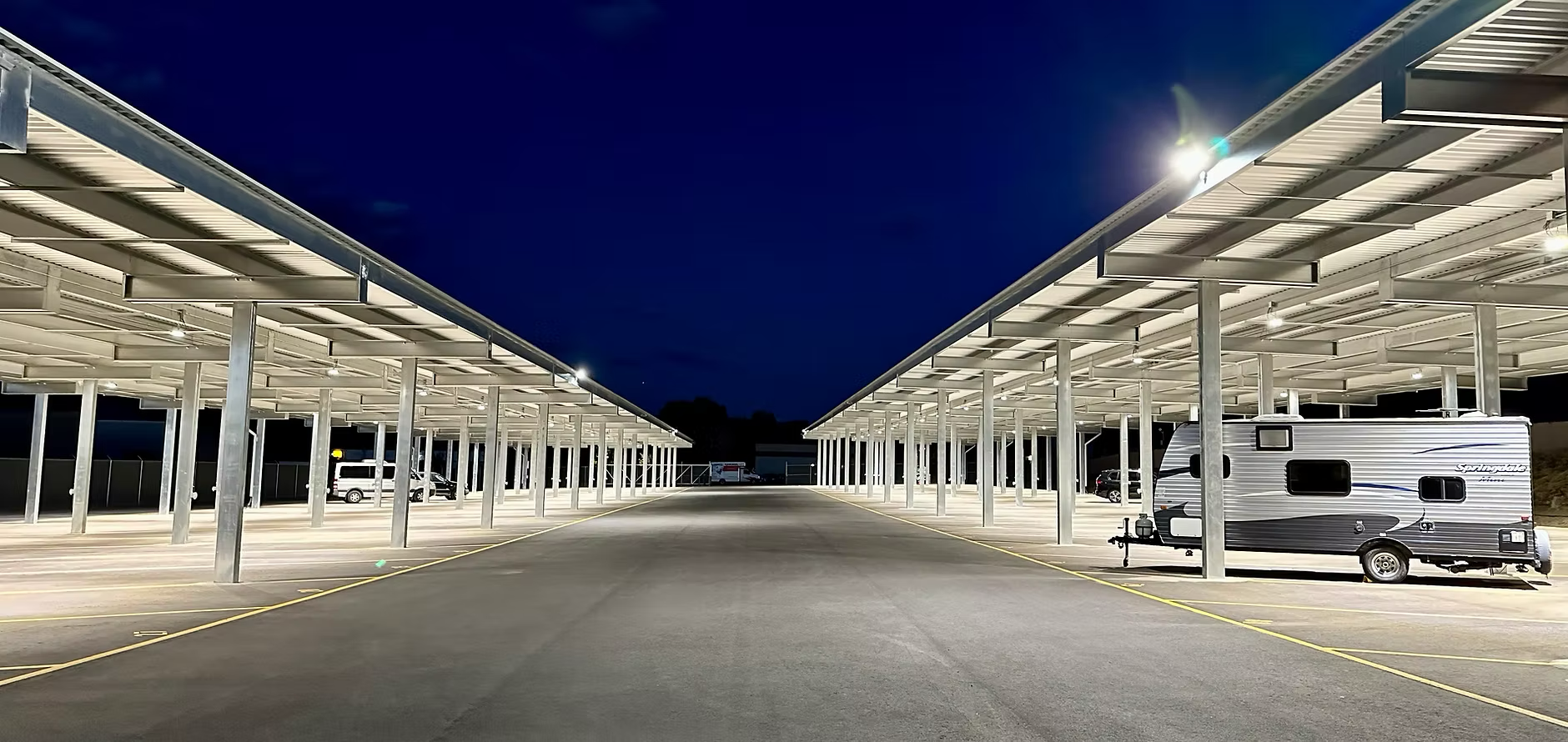
Cars require 10x20 minimum (200 sq ft), SUVs and trucks need 10x25 (250 sq ft), and boats or RVs demand 10x30 or larger (300+ sq ft). Open parking spaces accommodate oversized vehicles that exceed enclosed unit dimensions.

Vehicle Storage Requirements

Vehicle Type Minimum Size Recommended Size
Compact car 10x15 10x20
Sedan/SUV 10x20 10x25
Truck/Large SUV 10x25 10x30
Small boat (under 20 ft) 10x25 10x30
RV/Large boat Open parking Covered parking
Motorcycle 5x10 5x15

Measure your vehicle before selecting a unit. Add 2-3 feet to length for door clearance and walking space. Check unit door height for lifted trucks or vehicles with roof racks. Units with power outlets allow battery tenders for long-term vehicle storage.

How to Pack a Storage Unit Efficiently

Maximize space by disassembling furniture, using uniform box sizes, stacking heavy items on bottom, and creating a center aisle for access. Proper packing can reduce required unit size by 20-30%, saving $20-50 monthly on rental costs.

Packing Strategy by Zone

Back wall (least accessible): Place items you need least often. Stack mattresses vertically against walls. Position large furniture pieces like dressers and bookshelves here.

Middle zone: Stack boxes uniformly from floor to ceiling. Place heavier boxes on bottom, lighter boxes on top. Use shelving units to organize smaller items and prevent crushing.

Front zone (most accessible): Keep frequently needed items near the door. Leave a 2-foot aisle from door to back wall. Store seasonal items you might retrieve mid-rental here.

Space-Saving Techniques

  • Disassemble bed frames, tables, and shelving units
  • Remove table and chair legs, store hardware in labeled bags
  • Stack chairs seat-to-seat to interlock
  • Fill dresser drawers with clothing or linens
  • Use wardrobe boxes for hanging clothes
  • Place small items inside appliances (pots in oven, towels in washer)
  • Wrap mirrors and artwork in blankets, store vertically
  • Use pallets to elevate items and improve airflow

Business Storage Solutions

Businesses typically need 10x15 to 10x30 units for inventory, equipment, and document storage. Calculate based on inventory volume, access frequency, and growth projections. Add 30% buffer for seasonal fluctuations and business expansion.

Common Business Storage Uses

Retail inventory: Seasonal merchandise, overstock, and e-commerce fulfillment supplies. Climate control protects temperature-sensitive products.

Contractor equipment: Tools, materials, and machinery between job sites. Drive-up access simplifies loading heavy equipment.

Document archives: Financial records, client files, and legal documents requiring 7+ year retention. Climate control prevents paper degradation.

Restaurant supplies: Extra furniture, seasonal decor, and backup equipment. Health regulations may require climate-controlled food service item storage.

Storage Unit Size Guide: Find Your Perfect Fit in Minutes - Footer Image

Frequently Asked Questions

How do I determine what size storage unit I need?

Create a room-by-room inventory of items you plan to store, measure your largest furniture pieces, and match your total to the size chart. For a one-bedroom apartment, start with a 10x10. For a two-bedroom home, consider a 10x15. Add 20% extra space for access aisles and easier retrieval. When uncertain, choose one size larger to avoid cramped packing and mid-rental upgrades.

How many bedrooms can fit in a 10x10 storage unit?

A 10x10 storage unit (100 sq ft, 800 cu ft) holds contents from a one-bedroom apartment or the equivalent of two bedrooms worth of furniture and boxes. This includes a bed, dresser, nightstands, and 20-30 boxes. For a full one-bedroom apartment with living room and kitchen items, the 10x10 works well. For two complete bedrooms plus common areas, upgrade to a 10x15.

What are the sizes of a storage unit?

Standard storage unit sizes include: 5x5 (25 sq ft) for closet contents, 5x10 (50 sq ft) for studio apartments, 10x10 (100 sq ft) for one-bedroom homes, 10x15 (150 sq ft) for two-bedroom homes, 10x20 (200 sq ft) for three-bedroom homes, and 10x30 (300 sq ft) for large homes or vehicles. Specialty sizes like 5x7, 8x10, 10x12, and 10x17 fill gaps between standard options. Most units have 8-foot ceilings.

Should I get a 10x10 or 10x15 storage unit?

Choose a 10x10 if storing one-bedroom apartment contents or partial home belongings you rarely need to access. Choose a 10x15 if storing two-bedroom home contents, need frequent access to items, or want comfortable working space inside the unit. The 10x15 costs $10-30 more monthly but provides 50% more space and significantly easier organization. When in doubt, the 10x15 prevents frustration and potential upgrade costs.

Do I need climate-controlled storage for furniture?

Wood furniture requires climate control in regions with temperature extremes or high humidity. Temperature swings cause wood to expand and contract, leading to warped surfaces, cracked joints, and veneer separation. Leather furniture needs climate control to prevent drying and cracking. Metal and plastic furniture stores safely in standard units. In mountain climates with freezing winters and hot summers, climate control protects valuable wood and upholstered pieces.

Can I store a car or RV in a storage unit?

Yes, cars fit in 10x20 or larger enclosed units with drive-up access. Measure your vehicle and add 3 feet to length for door clearance. Most sedans and SUVs fit 10x20 units, while trucks need 10x25 or larger. RVs and large boats typically require open or covered parking spaces rather than enclosed units due to height restrictions. Units with electrical outlets allow battery tender connections for long-term vehicle storage.

How do I pack a storage unit efficiently?

Start by placing large furniture and rarely-needed items against the back wall. Stack uniform-sized boxes from floor to ceiling in the middle zone, with heavy boxes on bottom. Leave a 2-foot center aisle from door to back for access. Disassemble furniture to save space, fill drawers and appliances with small items, and store mattresses vertically. Label all boxes on multiple sides and create an inventory list with photos for easy retrieval.

Choosing the Right Storage Unit at Vail Airport Storage

Vail Airport Storage offers units from 5x4 climate-controlled spaces starting at $69/month to 15x20 drive-up units for large-scale storage needs. Located near Eagle County Regional Airport in Gypsum, the facility serves Vail Valley residents, vacation homeowners, and travelers needing convenient storage access.

Climate-controlled units protect belongings from mountain temperature extremes ranging from subzero winters to warm summers. Smart lock technology provides 24/7 access with digital key sharing for property managers and family members. Drive-up units with power and lights simplify vehicle storage and large item loading.

View the complete storage unit size guide to compare available options and current pricing. Current promotions include 50% off the first three months on select unit sizes.

Find Your Perfect Storage Unit Size

Vail Airport Storage offers climate-controlled and drive-up units with smart lock technology and 24/7 access. Get 50% off your first 3 months on select sizes.

View Available Units
What to Do Before Renting Your First Storage Unit
By Jimmy Bedoya December 26, 2025
Complete checklist for first-time storage renters: assess needs, compare facilities, prepare belongings, avoid costly mistakes. Expert tips included, and more.
RV and Boat Storage Options: Requirements, Sizes, and Costs
By Jimmy Bedoya December 23, 2025
Compare RV and boat storage options including enclosed, covered, and open parking. Learn size requirements, costs, what to look for in Vail Valley and more.
Moving Truck Rental vs Storage Delivery Services
By Jimmy Bedoya December 22, 2025
Compare moving truck rentals to storage container delivery services. Learn costs, pros/cons, and which option saves money for your Vail Valley move in 2026.
By Jimmy Bedoya December 21, 2025
A 10x10 storage unit provides 100 square feet and 800 cubic feet. Learn exactly what fits, compare sizes, and find the right unit for your needs and much more.
7.5x10 Storage Unit Size Guide
By Jimmy Bedoya December 20, 2025
A 7.5x10 storage unit provides 75 square feet of space, fitting 1-2 bedroom apartment contents. Learn dimensions, capacity, costs, what fits inside and more.
Storage Units in Gypsum, CO - Near Eagle County Airport.
By Jimmy Bedoya December 19, 2025
Find the best storage units in Gypsum, CO near Eagle County Airport. Climate-controlled & drive-ups units options. Serving Vail Valley residents & businesses.
Climate Controlled Storage Units: Complete Guide for 2026
By Jimmy Bedoya December 19, 2025
Climate controlled storage units maintain 55-80°F and 30-50% humidity. Learn costs, benefits, and what items need temperature-regulated storage, and which not.
Edwards Colorado Storage Solutions
By Jimmy Bedoya December 19, 2025
Edwards, CO storage at Vail Airport Storage in nearby Gypsum. Climate-controlled units, smart locks, drive-up units, 24/7 access. Just a few minutes from Edwards!
Storage Unit Contract Terms to Understand Before Signing
By Jimmy Bedoya December 18, 2025
The 12 essential storage unit contract terms you need to know, including liability limits, lien rights, and rate increases before signing your rental agreement.
What to Do After a Storage Unit Break-In
By Jimmy Bedoya December 17, 2025
Storage unit broken into? Follow these 8 critical steps within 24 hours to document theft, file claims, and recover your belongings. Expert checklist included.