
How to Store Ski Equipment and Winter Sports Gear Safely |
| HOW TO STORE SKI EQUIPMENT AND WINTER SPORTS GEAR?
⏱ 9 min read ·
📄 #1,657 words
Learn expert techniques for storing ski equipment and winter sports gear. Protect your investment with proper cleaning, waxing, and climate-controlled storage.
|
W hen the snow melts and the lifts close for the season, your ski equipment and winter sports gear face their greatest threat: improper storage. The months between ski seasons can cause more damage to your gear than an entire winter on the slopes if you neglect proper storage techniques. From warped skis to mildewed boots, the consequences of careless off-season storage can be costly and frustrating.
Whether you are a weekend warrior hitting the slopes at Vail or a dedicated backcountry enthusiast, protecting your investment requires understanding how moisture, temperature fluctuations, and physical stress affect your equipment. This comprehensive guide covers everything you need to know about storing winter sports gear properly, ensuring your equipment performs flawlessly when the first snowflakes fall.
Why Proper Winter Gear Storage Matters
Winter sports equipment represents a significant financial investment. A quality ski setup can cost thousands of dollars, and even mid-range gear requires hundreds in spending. Beyond the monetary value, properly maintained equipment performs better and keeps you safer on the mountain.
Moisture and temperature swings are the primary degradation factors for synthetic fabrics and ski bases. When gear sits in damp conditions, mold and mildew develop rapidly. Temperature fluctuations cause materials to expand and contract repeatedly, leading to structural weaknesses and premature aging. Professional ski technicians emphasize that consistent climate conditions significantly extend gear lifespan.
Preparing Skis and Snowboards for Storage
Before storing your skis or snowboard, thorough preparation is essential. This process takes about 30 minutes but pays dividends in equipment longevity.
Cleaning Your Equipment
Start by removing all dirt, salt, and old wax from your skis or snowboard. Use a soft cloth dampened with water to wipe down the topsheet and sidewalls. For stubborn grime, a mild soap solution works well. Pay special attention to the binding mounting areas where moisture tends to collect.
Inspect the edges for rust spots. Light surface rust can be removed with a gummy stone or fine-grit sandpaper. Address any deep scratches or gouges in the base before storage, as these can worsen over time.
Applying Storage Wax
Storage wax is a widely accepted technique among professional ski technicians to preserve base integrity during months of non-use. Apply a thick coat of all-temperature wax to the entire base, but do not scrape it off. This protective layer prevents the base material from drying out and oxidizing.
The wax creates a barrier against moisture and air, maintaining the base structure until you are ready to ski again. When the season returns, simply scrape and brush the storage wax before applying your preferred temperature-specific wax.
Binding Considerations
Release the DIN settings on your bindings to reduce spring tension during storage. Keeping bindings under constant pressure can weaken the springs over time, potentially affecting their release characteristics. Note your settings before adjusting so you can reset them accurately next season.
Storing Ski Boots and Footwear
Ski boots require careful attention during off-season storage. Their combination of plastic shells, foam liners, and metal hardware creates multiple vulnerability points.
Cleaning and Drying
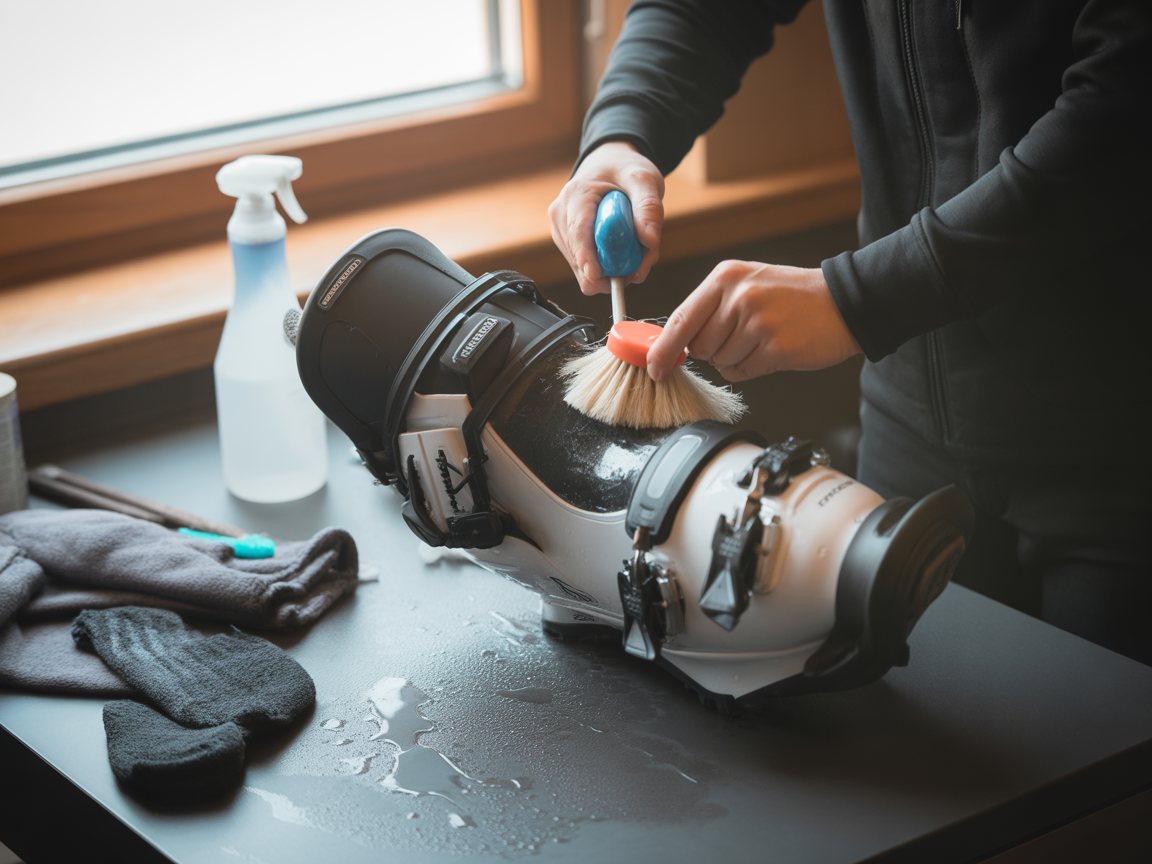
Remove the liners from your boots and allow both components to dry completely. This process may take several days in a well-ventilated area. Never use direct heat sources like hair dryers or heaters, as excessive heat can damage the foam and plastic.
Clean the shells with a damp cloth and mild soap. Inspect the buckles and power straps for damage or wear. Lubricate metal buckle mechanisms with a silicone-based lubricant to prevent corrosion.
Maintaining Boot Shape
Use boot trees or stuff your boots with newspaper to help them maintain their shape during storage. Replace the newspaper periodically if storing in humid conditions, as it absorbs moisture from the air. Buckle the boots loosely to preserve the shell shape without creating pressure points.

Winter Apparel Storage Techniques
Your ski jackets, pants, base layers, and accessories need proper care to maintain their waterproofing and insulation properties.
Cleaning Technical Fabrics
Always clean winter apparel according to manufacturer instructions before storage. Dirt and body oils can break down waterproof membranes and insulation over time. Use technical fabric cleaners designed for Gore-Tex and similar materials.
After washing, tumble dry on low heat to reactivate the durable water repellent coating. This step is crucial for maintaining the fabric's ability to shed water and breathe properly.
Proper Hanging and Folding
Store jackets and pants hanging in breathable garment bags. Avoid plastic bags, which trap moisture and promote mildew growth. If hanging space is limited, fold items loosely rather than compressing them tightly, as this can damage insulation loft.
For down-filled items, occasional fluffing during storage helps maintain insulation performance. Store these items in the largest space possible to prevent compression damage.
Protecting Gloves, Helmets, and Accessories
Smaller items often get overlooked during storage preparation, but they deserve equal attention.
Glove and Mitten Care
Conditioning leather items annually prevents cracking and stiffness, especially in gloves and boots. Use a leather conditioner appropriate for your glove type after cleaning and drying thoroughly. Store gloves flat or hanging to maintain their shape.
For synthetic gloves, ensure they are completely dry before storage. Turn them inside out periodically during the off-season to air out the interior.
Helmet Storage
Clean your helmet with a damp cloth and mild soap. Remove any removable padding and wash according to instructions. Store helmets away from direct sunlight, which can degrade the foam and shell materials over time.
Place helmets on a shelf or in a helmet bag rather than hanging by the chin strap, which can stretch and weaken the strap material.
Choosing the Right Storage Environment
The storage location you choose significantly impacts your gear's condition. Understanding environmental factors helps you make informed decisions.
Temperature and Humidity Control
Avoid storing winter gear in damp garages or basements where humidity and temperature swings can degrade materials rapidly. The ideal storage environment maintains consistent temperatures between 50 and 70 degrees Fahrenheit with relative humidity below 50 percent.
For those in mountain communities like the Vail Valley, climate-controlled storage facilities offer ideal conditions for protecting valuable equipment from extreme temperature variations common at altitude.
Avoiding Chemical Exposure
Never store ski equipment near fertilizers, pool chemicals, or other corrosive substances. Chemical fumes can damage metal edges, bindings, and fabric coatings. Keep gear in a dedicated storage area away from automotive fluids and household chemicals.
Space-Saving Organization Solutions
Efficient organization makes seasonal transitions smoother and helps protect your gear from damage.
Wall-Mounted Rack Systems
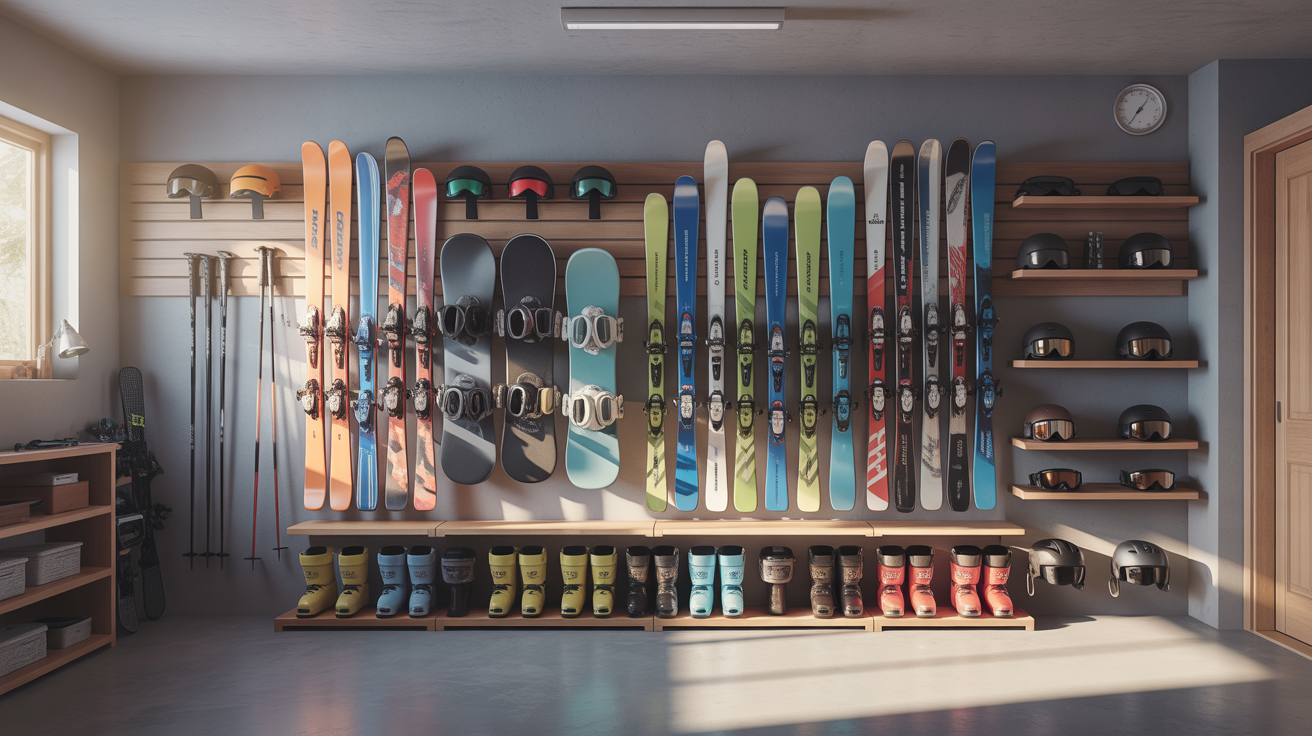
Store skis off the floor on padded racks or hooks to preserve camber and prevent warping. Wall-mounted systems save floor space while keeping equipment accessible and organized. Look for racks with protective padding to prevent scratches on ski topsheets.
Multi-hook systems accommodate various gear types, from helmets and poles to boots and clothing. This approach keeps everything visible and organized in one location.
Labeling and Inventory
Label storage containers and bags for quick retrieval when the season returns. Maintain an inventory list noting any repairs needed or items requiring replacement. This preparation ensures you are ready to hit the slopes without last-minute scrambling.
Seasonal Resident and Traveler Storage Solutions
For seasonal visitors to Colorado's ski resorts, storing gear locally eliminates the hassle of transporting equipment each trip. Convenient airport-adjacent storage solutions allow you to fly in, grab your gear, and head directly to the mountain.
This approach protects equipment from airline damage while ensuring it remains in optimal condition between visits. Climate-controlled units maintain consistent temperatures year-round, addressing the primary concerns of moisture and temperature fluctuation damage.
Common Storage Mistakes to Avoid
Understanding what not to do is equally important as knowing proper techniques.
Storing Wet or Damp Gear
Never store any equipment that has not dried completely. Even slight dampness promotes mold growth, odor development, and material degradation. Take the time to dry everything thoroughly before packing away.
Neglecting Pre-Storage Maintenance
Skipping the cleaning and waxing steps may save time initially but costs more in the long run. Damaged bases, rusted edges, and degraded fabrics require professional repair or replacement.
Overcrowding Storage Spaces
Cramming gear into tight spaces causes unnecessary pressure and deformation. Allow adequate space for air circulation and avoid stacking heavy items on delicate equipment.
Frequently Asked Questions
How do I prevent mold and mildew on ski boots during storage?
Ensure boots are completely dry before storage by removing liners and allowing both components to air dry for several days. Store in a climate-controlled environment with good air circulation. Using boot trees or newspaper stuffing helps absorb residual moisture.
What is the best way to maintain ski wax during the off-season?
Apply a thick coat of storage wax to clean, dry ski bases without scraping it off. This protective layer prevents oxidation and maintains base moisture throughout the off-season. Scrape and brush the wax before your first day back on snow.
Can I store my winter gear in the basement?
Basements can work if they remain dry and temperature-stable. However, many basements experience humidity issues and temperature fluctuations that damage equipment. Use a dehumidifier and monitor conditions carefully, or consider a dedicated climate-controlled storage option.
How do I organize winter sports equipment in a small space?
Wall-mounted rack systems maximize vertical space while keeping gear accessible. Use hooks for helmets and bags, padded racks for skis and boards, and shelving for boots and accessories. Label everything for easy seasonal transitions.
How often should I clean and condition my ski gloves and jackets?
Clean technical apparel at the end of each season before storage. Condition leather gloves annually with appropriate leather care products. Mid-season cleaning may be necessary for heavily used items or after exposure to unusual dirt or contamination.
|