
Moving and Storage Coordination Timeline: 8-Week Checklist |
| MOVING AND STORAGE COORDINATION TIMELINE AND CHECKLIST
⏱ 15 min read ·
📄 #2,905 words
Plan your move with this 8-week moving and storage coordination checklist. Week-by-week tasks for packing, reserving storage, and organizing a stress-free relocation.
|
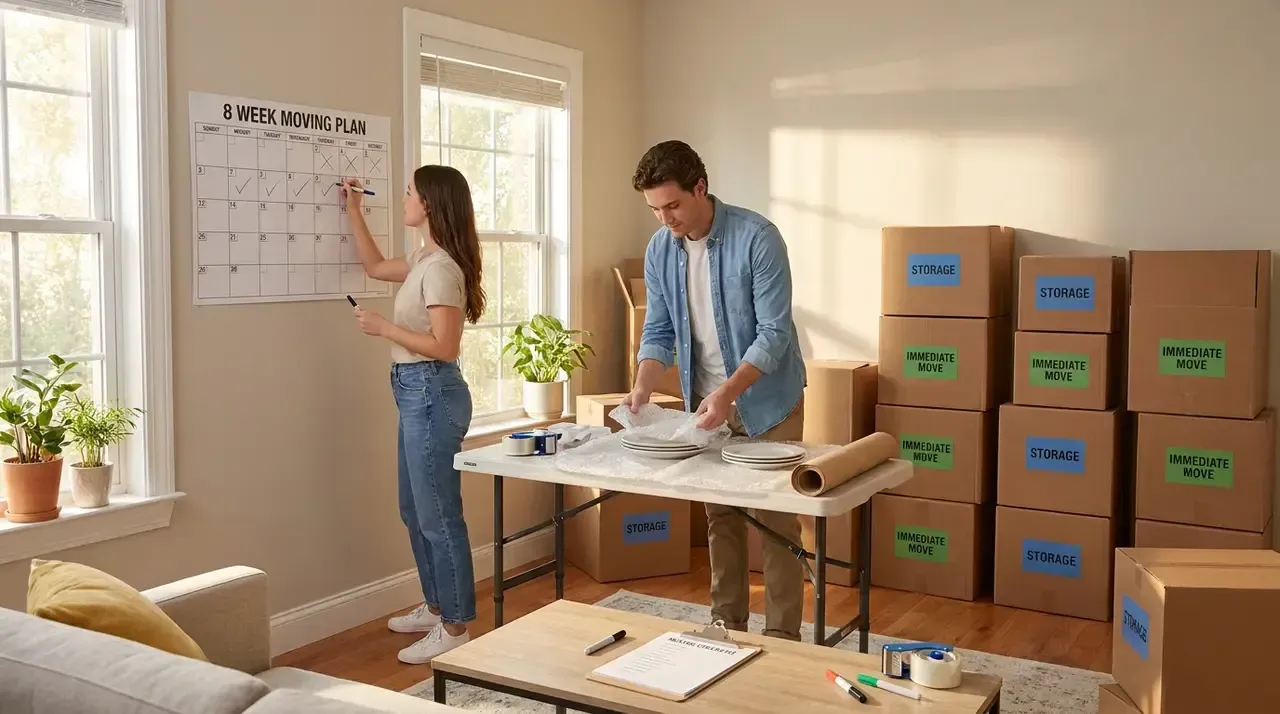
A successful move with storage requires starting 8 weeks before your move date, reserving your storage unit at least 6 weeks out, and separating items destined for storage from those going directly to your new home. The average American move takes 12 weeks to fully complete, and coordinating storage adds 3 to 5 additional planning tasks per week.
| Key Points: | |
|---|---|
| • | Begin sorting belongings 8 weeks before your move date to identify storage versus keep items |
| • | Reserve storage units 6 weeks out; popular sizes like 10x10 and 10x15 fill quickly during peak season (May through September) |
| • | Climate-controlled storage costs $50 to $150 per month for a 10x10 unit and protects temperature-sensitive items |
| • | Label boxes on three sides with room name, contents, and priority level (1 for immediate access, 3 for long-term storage) |
| • | Create a detailed inventory spreadsheet; this reduces retrieval time by 60% according to professional organizers |
Why Moving and Storage Coordination Matters
Moving without a storage plan creates bottlenecks. According to the United Van Lines moving checklist, 68% of moves involve a gap between move-out and move-in dates. Storage bridges this gap, but only when integrated into your timeline from the start.
The National Association of Realtors reports that staged homes sell 73% faster than non-staged homes. Storage enables staging by removing excess furniture and personal items. For Vail Valley residents selling mountain properties, this translates to faster sales during the competitive summer listing season.
Storage also reduces moving day chaos. When you separate storage-bound items from items going directly to your new home, movers work more efficiently. The result is lower labor costs (professional movers charge $25 to $50 per hour per person) and fewer damaged items.
8 Weeks Before Your Move
The 8-week mark is when successful moves begin. This phase focuses on inventory, estimation, and early reservations. According to Browning Moving and Storage, starting at this point reduces last-minute stress by 40%.
Sort Belongings Into Four Categories
Walk through every room and assign each item to one of four categories: keep and move, keep and store, donate or sell, and discard. The average American household contains 300,000 items according to the Los Angeles Times. This sorting process typically takes 10 to 15 hours spread across two weekends.
Focus on items you have not used in 12 months. Seasonal equipment like skis, snowboards, and camping gear often belongs in storage rather than cluttering your new space. Holiday decorations, off-season clothing, and sentimental items with limited daily use are storage candidates.
Estimate Storage Space Requirements
Storage unit sizes follow standard dimensions. A 5x5 unit (25 square feet) holds the contents of a small closet. A 10x10 unit (100 square feet) accommodates a one-bedroom apartment. A 10x20 unit (200 square feet) fits a three-bedroom house. Use our storage unit size guide to calculate your specific needs.
| Unit Size | Square Feet | Best For | Monthly Cost Range |
|---|---|---|---|
| 5x5 | 25 sq ft | Seasonal items, boxes, small furniture | $35 to $60 |
| 5x10 | 50 sq ft | Studio apartment, office contents | $50 to $125 |
| 10x10 | 100 sq ft | One-bedroom apartment | $60 to $150 |
| 10x15 | 150 sq ft | Two-bedroom apartment | $85 to $225 |
| 10x20 | 200 sq ft | Three-bedroom house, vehicles | $150 to $400 |
Reserve Storage and Moving Services
Book your storage unit and moving company during week 8. Peak moving season runs from May through September, when 80% of annual moves occur. During this period, storage facilities in mountain communities like Gypsum, Eagle, and Vail often reach 95% occupancy. Early reservation guarantees availability and locks in pricing.
When selecting storage, verify access hours, security features, and climate control options. Facilities with Noke smart lock technology provide 24/7 access via smartphone, eliminating the risk of lost keys during a chaotic move.
Week 8 Checklist
- Complete room-by-room inventory of all belongings
- Categorize items: move, store, donate, discard
- Measure large furniture pieces (sofas, beds, dressers)
- Calculate storage unit size requirements
- Research and reserve storage unit
- Get quotes from 3 moving companies
- Create a moving binder or digital folder for documents
- Start a moving expense spreadsheet
6 Weeks Before Your Move
Week 6 focuses on logistics, supplies, and confirmations. This is the deadline for booking professional movers, as reputable companies book 4 to 6 weeks in advance during peak season.
Book Your Moving Company
Compare at least three moving company quotes. According to the New York Times Wirecutter moving checklist, local moves average $300 to $1,500 while long-distance moves range from $2,000 to $5,000. Request in-home estimates for accuracy; phone estimates can be off by 20% or more.
Verify licensing and insurance. Interstate movers must have a USDOT number from the Federal Motor Carrier Safety Administration. Check reviews on Google, Yelp, and the Better Business Bureau. Avoid companies that require large deposits or provide estimates significantly below competitors.
Gather Packing Supplies
The average three-bedroom home requires 60 to 80 boxes, 3 rolls of packing tape, 2 pounds of packing paper, and 1 roll of bubble wrap per fragile item category. Purchase uniform box sizes when possible; standard 18x18x16 medium boxes stack efficiently in storage units and moving trucks.
Specialty boxes protect specific items. Wardrobe boxes with hanging rods cost $10 to $15 each but prevent wrinkled clothing. Dish pack boxes with cell dividers protect glassware. Picture boxes accommodate artwork up to 40x60 inches.
Week 6 Checklist
- Finalize and book moving company
- Confirm storage unit reservation and access details
- Purchase or collect packing supplies
- Begin packing non-essential items (books, decor, off-season clothing)
- Schedule utility disconnection at current address
- Schedule utility connection at new address
- Notify post office of address change (USPS charges $1.10 for online changes)
4 Weeks Before Your Move
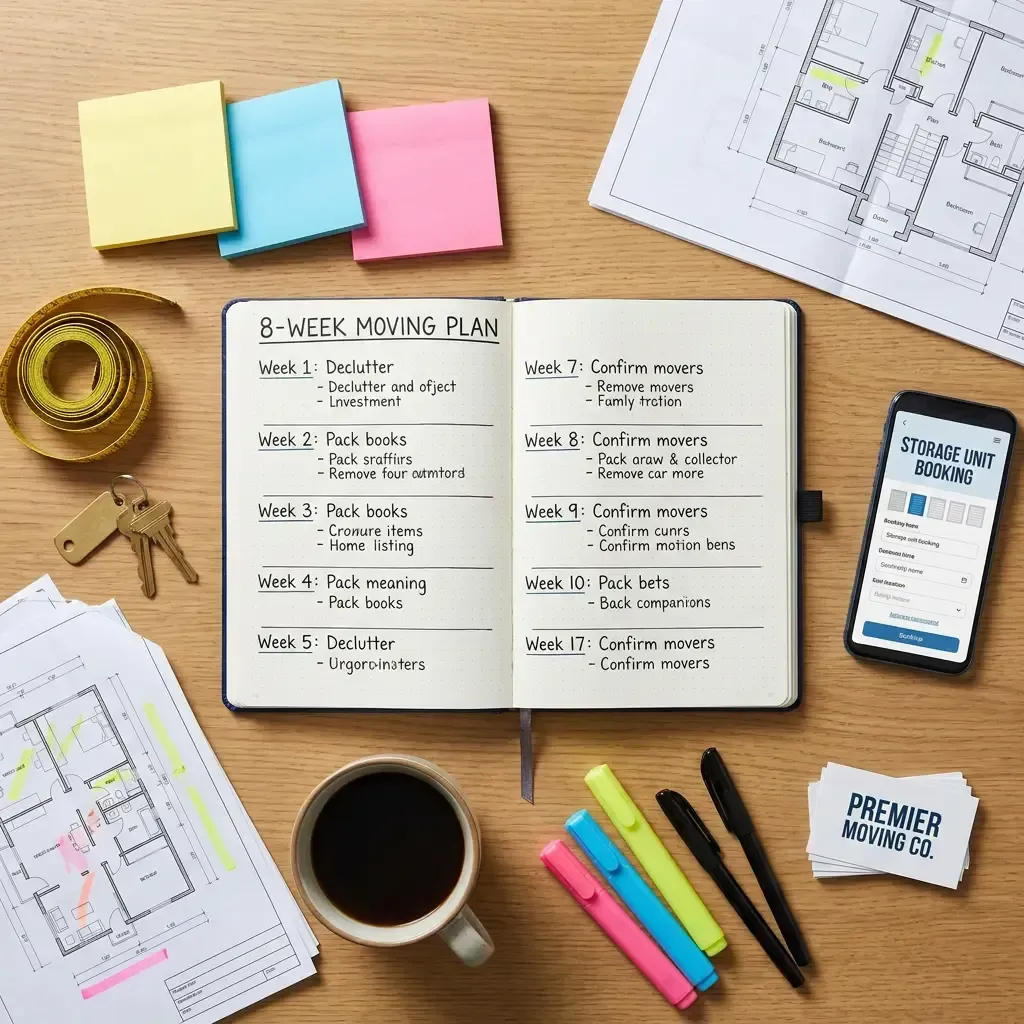
The 4-week mark intensifies packing efforts. By now, 25% to 30% of your belongings should be boxed. This phase emphasizes organization systems that will save hours during unpacking and storage retrieval.
Implement a Labeling System
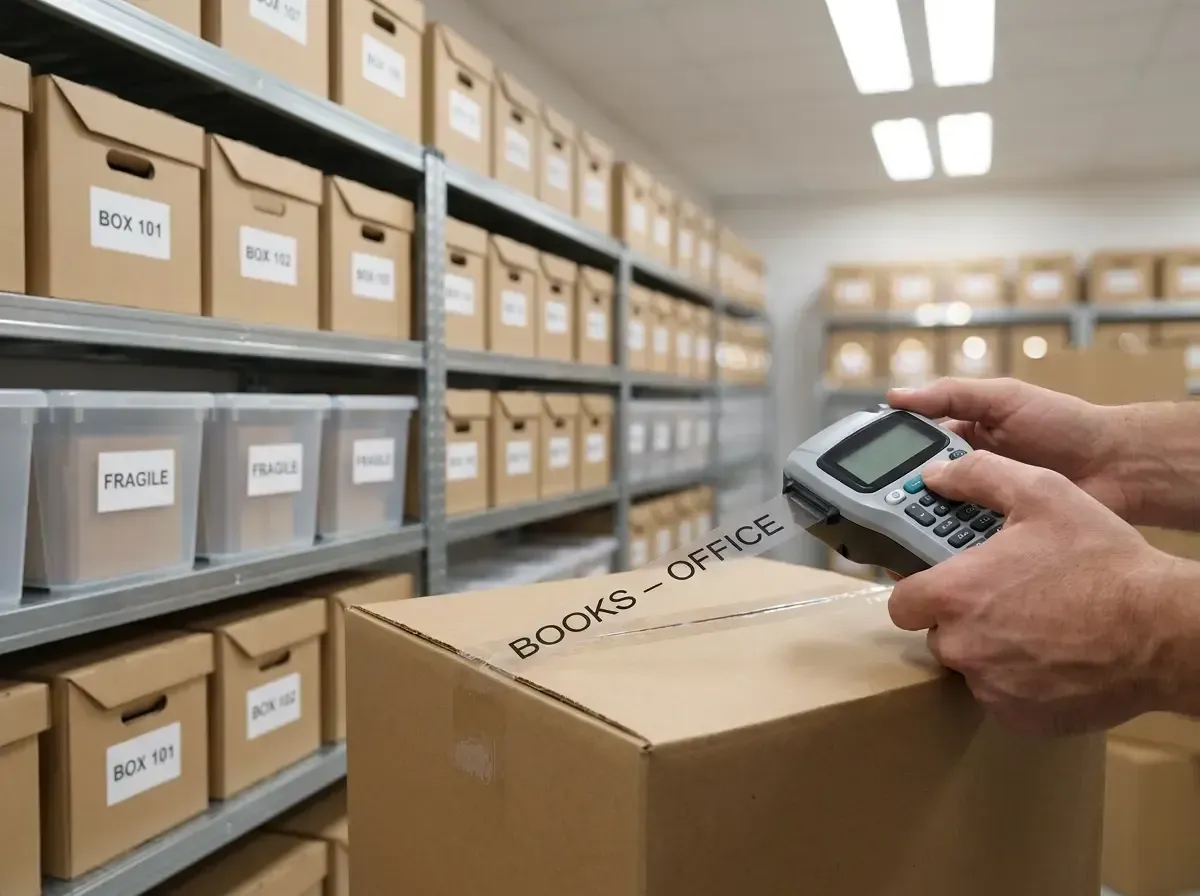
Professional organizers recommend labeling boxes on three sides: top and two adjacent sides. This ensures visibility regardless of how boxes are stacked. Include four pieces of information on each label: room destination, general contents, priority level (1 for immediate need, 2 for first week, 3 for long-term storage), and box number.
Color coding accelerates sorting. Assign each room a color using colored tape or markers. Blue for bedroom, green for kitchen, yellow for living room, and red for storage-only items. Movers can then place boxes in correct locations without reading every label.
Create a Detailed Inventory
Document every box and valuable item in a spreadsheet or inventory app. Include box number, contents list, destination (new home or storage), and estimated value for insurance purposes. Photograph valuable items before packing. This documentation proves essential for insurance claims and reduces retrieval time when accessing storage.
For items going to storage, note which boxes contain frequently needed items. Place these boxes near the front of your unit. Create a simple unit map showing box locations by number.
Week 4 Checklist
- Pack 25% to 30% of belongings (non-essentials first)
- Implement color-coded labeling system
- Create digital inventory spreadsheet
- Photograph valuable items for insurance documentation
- Separate storage-bound items from items going to new home
- Confirm moving company details (arrival time, crew size, payment method)
- Arrange pet care or childcare for moving day
- Update address with banks, insurance companies, and subscriptions
2 Weeks Before Your Move
Two weeks out, packing becomes the primary focus. Most rooms should be partially packed, with only daily-use items remaining accessible. This phase also involves final confirmations and contingency planning.
Pack Seasonal and Overflow Items
Items destined for storage should be fully packed by now. Seasonal items like holiday decorations, ski equipment, and camping gear benefit from climate-controlled storage that maintains temperatures between 55 and 80 degrees Fahrenheit. This prevents warping, cracking, and moisture damage common in mountain climates where temperatures fluctuate 40 degrees or more in a single day.
Follow proper storage preparation for sensitive items. Clean and dry all outdoor gear before packing. Drain fuel from gas-powered equipment. Remove batteries from electronics. Wrap furniture in moving blankets, not plastic, which traps moisture.
Prepare a First-Night Box
Pack one clearly labeled box containing everything you need for the first 24 hours in your new home. Include toiletries, medications, phone chargers, a change of clothes, basic tools (screwdriver, hammer), snacks, paper towels, and toilet paper. Keep this box in your personal vehicle, not the moving truck.
Week 2 Checklist
- Complete packing of storage-bound items
- Pack 60% to 70% of remaining belongings
- Prepare first-night essentials box
- Confirm storage unit access instructions and gate codes
- Verify moving truck can access both current and new addresses
- Arrange parking permits if required for moving truck
- Clean out refrigerator and freezer (defrost 24 hours before move)
- Return borrowed items and collect loaned items
1 Week Before Your Move
The final week requires finishing packing and completing last-minute tasks. Stress levels peak during this period; a detailed checklist prevents overlooked items.
Complete Packing
By day 7 before your move, only daily essentials should remain unpacked: one set of dishes, basic cooking supplies, bedding, and toiletries. Pack these items the morning of your move. Disassemble furniture that requires it, keeping hardware in labeled plastic bags taped to the furniture piece.
Verify your storage unit is ready. If using a facility with smartphone access, download the app and test your credentials. Confirm the unit is empty and clean. Measure the doorway to ensure your largest items will fit.
Coordinate Moving Day Logistics
Confirm arrival time with your moving company. Professional movers typically arrive between 8 AM and 10 AM. Verify payment method; most companies accept credit cards, certified checks, or cash but not personal checks. Prepare cash tips ($20 to $50 per mover for a full-day move is standard).
Plan the loading sequence. Items going to storage should load last if making a storage stop first, or load separately if using different trucks. Create a loading priority list for movers.
Week 1 Checklist
- Finish packing all rooms except daily essentials
- Disassemble furniture and secure hardware
- Defrost and clean refrigerator
- Test storage unit access (app, gate code, or key)
- Confirm moving company arrival time and payment
- Prepare mover tips in cash
- Pack suitcase with 3 days of clothing (in case of delays)
- Charge all devices and portable batteries
- Take final meter readings for utilities
Moving Day Coordination
Moving day requires active management. Your role shifts from packer to coordinator, directing movers and making real-time decisions.
Morning Preparation
Wake 2 hours before movers arrive. Pack final items, strip beds, and do a complete walkthrough. Check every closet, cabinet, and drawer. According to moving industry data, 15% of moves result in forgotten items, most commonly found in attics, basements, and medicine cabinets.
Clear pathways from all rooms to the front door. Remove rugs that could cause tripping. Protect floors with cardboard or plastic sheeting in high-traffic areas.
Loading Strategy for Storage
If loading storage items, place frequently needed boxes near the unit entrance. Stack heavier boxes on the bottom, lighter boxes on top. Leave a center aisle if you anticipate accessing the unit regularly. Position furniture against walls to maximize floor space.
Use furniture pads between items to prevent scratching. Stand mattresses on edge to save floor space but never stack items on top of them. Place fragile items on shelves or elevated surfaces, never directly on concrete floors where moisture can accumulate.
Moving Day Checklist
- Complete final walkthrough of all rooms, closets, and storage areas
- Pack remaining daily essentials
- Direct movers on loading priorities and fragile items
- Supervise loading of storage-bound items separately
- Verify all boxes and furniture are loaded before departure
- Lock all doors and windows
- Return keys to landlord or leave for new owners as arranged
- Take final photos of empty property for deposit documentation
First Week After Your Move
The first week in your new home involves unpacking priorities and storage organization. Resist the urge to unpack everything immediately; strategic unpacking reduces overwhelm.
Unpack by Priority
Day 1: Unpack first-night box, set up beds, and arrange bathroom essentials. Day 2 to 3: Unpack kitchen basics (dishes, cookware, food storage). Day 4 to 5: Unpack remaining kitchen items and living room essentials. Day 6 to 7: Unpack bedrooms, office, and remaining boxes.
Leave priority-3 boxes sealed for now. These contain items you can live without for weeks or months. After 30 days, reassess whether these items should remain in your home or move to storage.
Organize Your Storage Unit
Visit your storage unit within the first week to verify all items arrived undamaged. Update your inventory with final box locations. Take photos of the organized unit for reference. If you discover items you no longer need, donate or discard them rather than paying monthly storage fees.
Consider whether your storage needs are temporary or long-term. Short-term storage during a move typically lasts 1 to 3 months. Long-term storage for seasonal items, business inventory, or overflow belongings may continue indefinitely. Adjust your unit size accordingly; downsizing from a 10x15 to a 10x10 saves $50 to $100 monthly.
First Week Checklist
- Unpack priority-1 boxes (essentials)
- Set up beds, bathroom, and kitchen basics
- Verify all utilities are functioning
- Visit storage unit to confirm item condition
- Update inventory with final storage unit layout
- Return or recycle packing materials
- Update address with remaining accounts (doctor, dentist, subscriptions)
- Register vehicles and update driver's license if required
Storage-Specific Tips for Mountain Moves
Moving in Eagle County and the Vail Valley presents unique challenges. Elevation changes, temperature swings, and seasonal timing affect both moving logistics and storage requirements.
Climate Considerations
Mountain temperatures can swing 50 degrees in 24 hours. Summer days reach 85 degrees while nights drop to 40 degrees. Winter temperatures range from 30 degrees during the day to negative 10 degrees at night. These fluctuations damage wood furniture, electronics, vinyl records, photographs, and leather goods.
Climate-controlled storage units maintain consistent temperatures between 55 and 80 degrees Fahrenheit year-round. This protection is essential for storing ski equipment with temperature-sensitive bindings, musical instruments, wine collections, and business documents.
Seasonal Timing
Avoid moving during ski season (December through March) when I-70 traffic peaks and weather delays are common. The ideal moving window in the Vail Valley is September through November or April through May. Summer moves are possible but coincide with construction season and tourist traffic.
For seasonal residents with vacation properties, storage provides year-round solutions. Store summer gear during ski season and winter equipment during summer months. This rotation maximizes living space in mountain homes where square footage commands premium prices.
Local Storage Advantages
Choosing storage near your new home or between your old and new locations saves time and fuel costs. Facilities adjacent to Eagle County Regional Airport offer convenient access for frequent travelers and aviation professionals. Learn more about 24/7 storage access options that accommodate irregular schedules.
Complete Moving and Storage Checklist
Use this comprehensive checklist to track your progress. Print it or save it digitally, checking off tasks as you complete them.
| Timeline | Task Category | Key Actions |
|---|---|---|
| 8 Weeks | Planning | Inventory, sort belongings, reserve storage, get moving quotes |
| 6 Weeks | Booking | Book movers, gather supplies, begin packing non-essentials |
| 4 Weeks | Organization | Labeling system, inventory spreadsheet, pack 30% of items |
| 2 Weeks | Packing | Complete storage items, pack 70% of belongings, first-night box |
| 1 Week | Final Prep | Finish packing, confirm logistics, test storage access |
| Moving Day | Execution | Direct movers, load storage items strategically, final walkthrough |
| Week 1 After | Settlement | Priority unpacking, verify storage contents, update addresses |
Frequently Asked Questions
How far in advance should I start planning a move?
Begin planning 8 to 12 weeks before your move date. This timeline allows adequate time to sort belongings, reserve storage and movers, and pack systematically without last-minute rushing. Moves during peak season (May through September) require earlier planning due to limited availability.
What should I pack first when moving?
Pack items you use least frequently first: off-season clothing, books, decorations, guest room contents, and storage-bound items. Save daily essentials like toiletries, cooking supplies, and work materials for the final days before your move.
How do I choose the right storage unit size?
Calculate based on room equivalents. A 5x5 unit holds one closet worth of items. A 10x10 unit fits a one-bedroom apartment. A 10x20 unit accommodates a three-bedroom house. When uncertain, choose one size larger; the cost difference of $20 to $50 monthly is less than renting a second unit.
What should not be stored in a storage unit?
Never store perishable food, hazardous materials (paint, gasoline, propane), living plants, or animals. Most facilities prohibit firearms, ammunition, and flammable items. Check your facility's specific prohibited items list before storing.
Is climate-controlled storage worth the extra cost?
Climate control is worth the 20% to 50% premium for temperature-sensitive items including electronics, wooden furniture, photographs, vinyl records, leather goods, and musical instruments. In mountain climates with extreme temperature swings, climate control prevents warping, cracking, and moisture damage that occurs in standard units.
How do I organize a storage unit for easy access?
Place frequently needed items near the entrance. Create a center aisle if you will access the unit regularly. Stack heavier boxes on the bottom and lighter boxes on top. Label boxes on multiple sides. Keep an inventory map showing box locations by number.
|