How to Pack a Storage Unit Like a Professional Organizer |
| HOW TO PACK A STORAGE UNIT LIKE A PROFESSIONAL ORGANIZER
⏱ 12 min read ·
📄 #2,279 words
Learn expert techniques for packing a storage unit efficiently. Get pro tips on zone planning, stacking methods, and inventory systems that maximize space.
|
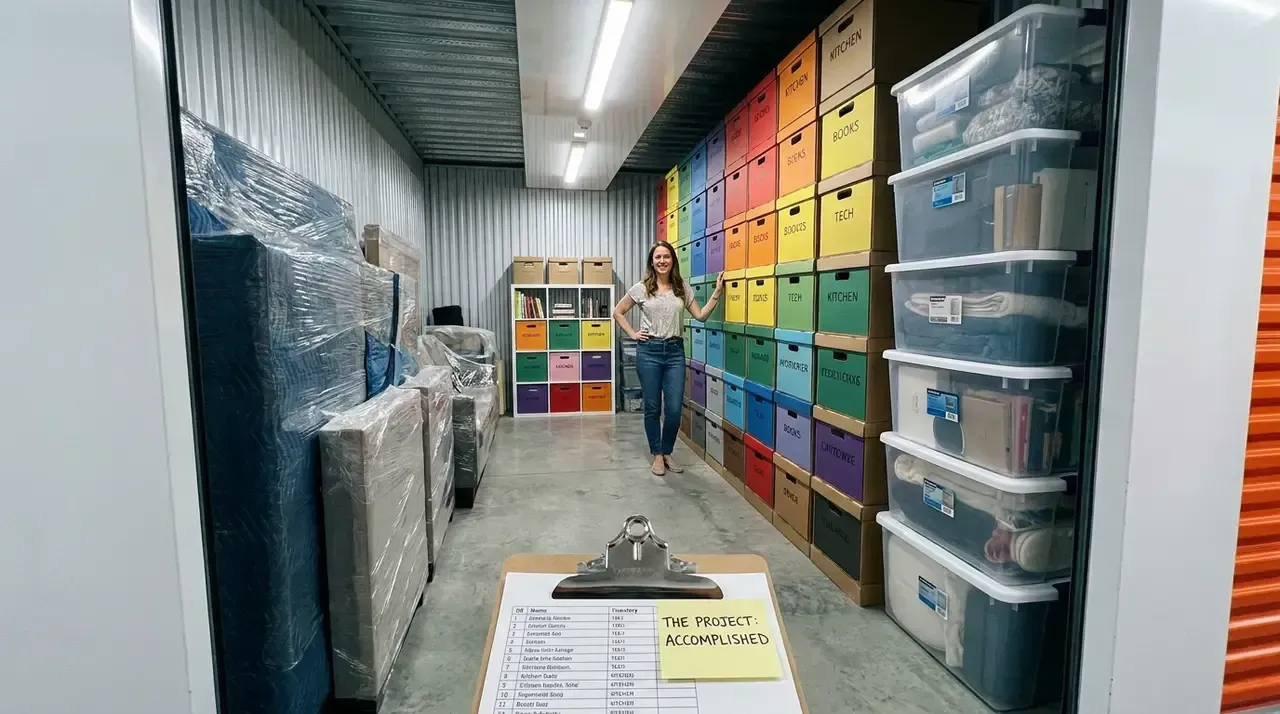
P acking a storage unit like a professional organizer requires a zone-based layout, uniform box sizes, vertical stacking to 6-7 feet, and a detailed inventory system. Professional organizers from the National Association of Productivity and Organizing Professionals (NAPO) recommend allocating 15-20% of floor space for a center aisle and placing frequently accessed items within the first 3 feet of the entrance.
| Key Points: | |
|---|---|
| • | Create 3-4 distinct zones: bulky items in back, seasonal items middle, frequently accessed items near the door |
| • | Use uniform box sizes (18x18x16 inches is standard) to maximize vertical stacking up to 6-7 feet |
| • | Maintain a 2-3 foot center aisle for access; this uses only 15-20% of floor space but doubles retrieval efficiency |
| • | Label boxes on three sides with contents and zone number; photograph each section for a digital inventory |
| • | Place pallets or 2x4 boards under bottom boxes to protect against moisture and improve airflow |
The 4 D's of Self-Storage Organization
Professional organizers use the 4 D's framework before any item enters a storage unit: Declutter, Donate, Discard, and Designate. According to the Extra Space Storage organization guide, applying this method reduces storage volume by 20-40% on average. Start by sorting items into these four categories at least one week before your move-in date.
Decluttering means removing items you have not used in 12-18 months. Donating sends usable goods to organizations like Goodwill or Habitat for Humanity ReStore. Discarding applies to broken, expired, or worthless items. Designating assigns each remaining item to a specific zone in your unit. This systematic approach prevents the common mistake of storing items you will never retrieve.
Zone Planning: The Professional's Secret Weapon
Zone planning transforms a chaotic storage unit into an organized, accessible space. Divide your unit into 3-4 distinct zones based on access frequency and item weight. Zone A (back wall) holds bulky furniture and items accessed once per year or less. Zone B (middle section) contains seasonal items accessed 2-4 times annually. Zone C (near entrance) stores frequently needed items accessed monthly or more.
For a standard 10x10 unit (100 square feet), allocate approximately 40 square feet to Zone A, 35 square feet to Zone B, and 25 square feet to Zone C including your access aisle. Sketch this layout on paper before loading begins. Professional organizers at Moving.com recommend photographing your zone plan and taping a copy inside the unit door for quick reference.
Zone Layout by Unit Size
| Unit Size | Zone A (Back) | Zone B (Middle) | Zone C (Front) | Aisle Width |
|---|---|---|---|---|
| 5x5 (25 sq ft) | 10 sq ft | 8 sq ft | 7 sq ft | 18 inches |
| 5x10 (50 sq ft) | 20 sq ft | 17 sq ft | 13 sq ft | 24 inches |
| 10x10 (100 sq ft) | 40 sq ft | 35 sq ft | 25 sq ft | 30 inches |
| 10x15 (150 sq ft) | 60 sq ft | 50 sq ft | 40 sq ft | 36 inches |
| 10x20 (200 sq ft) | 80 sq ft | 65 sq ft | 55 sq ft | 36 inches |
Not sure which unit size fits your belongings? Use our storage unit size guide to calculate the right fit before you start packing.
The Golden Rule of Organizing for Storage
The golden rule of organizing states: everything must have a designated home, and that home must be documented. In storage unit terms, this means every box has an assigned zone, every zone has a labeled section, and every item appears on your master inventory list. According to the Institute for Challenging Disorganization, following this rule reduces retrieval time by 60-70% compared to unplanned storage.
Implement this rule by creating a simple numbering system. Assign each zone a letter (A, B, C) and each stack within that zone a number (1, 2, 3). A box labeled "B-3" sits in Zone B, stack 3. Record box contents in a spreadsheet or app like Sortly, Encircle, or a simple Google Sheet. Update this inventory every time you add or remove items.
Professional Box Packing Techniques
Professional organizers standardize box sizes for maximum stacking efficiency. The most versatile size is 18x18x16 inches (medium moving box), which holds 30-40 pounds when packed properly. Use small boxes (16x12x12 inches) for heavy items like books, limiting weight to 25 pounds per box. Large boxes (18x18x24 inches) work best for lightweight bulky items like bedding and pillows.
Pack boxes to 90-95% capacity to prevent crushing when stacked. Fill empty space with packing paper, not newspaper (ink transfers to items). Reinforce box bottoms with an H-pattern of packing tape. The StoreSpace packing guide recommends double-taping seams on boxes storing items over 30 pounds.
Box Weight Limits by Size
| Box Size | Dimensions | Max Weight | Best For |
|---|---|---|---|
| Small | 16x12x12 in | 25 lbs | Books, tools, canned goods |
| Medium | 18x18x16 in | 40 lbs | Kitchen items, toys, decor |
| Large | 18x18x24 in | 35 lbs | Bedding, pillows, lampshades |
| Wardrobe | 24x24x48 in | 50 lbs | Hanging clothes, coats |
Vertical Stacking Strategy
Vertical stacking maximizes cubic footage rather than just square footage. A 10x10 unit with 8-foot ceilings contains 800 cubic feet of potential storage space. Most renters use only 400-500 cubic feet by stacking to just 4-5 feet. Professional organizers stack boxes to 6-7 feet, increasing usable space by 25-35%.
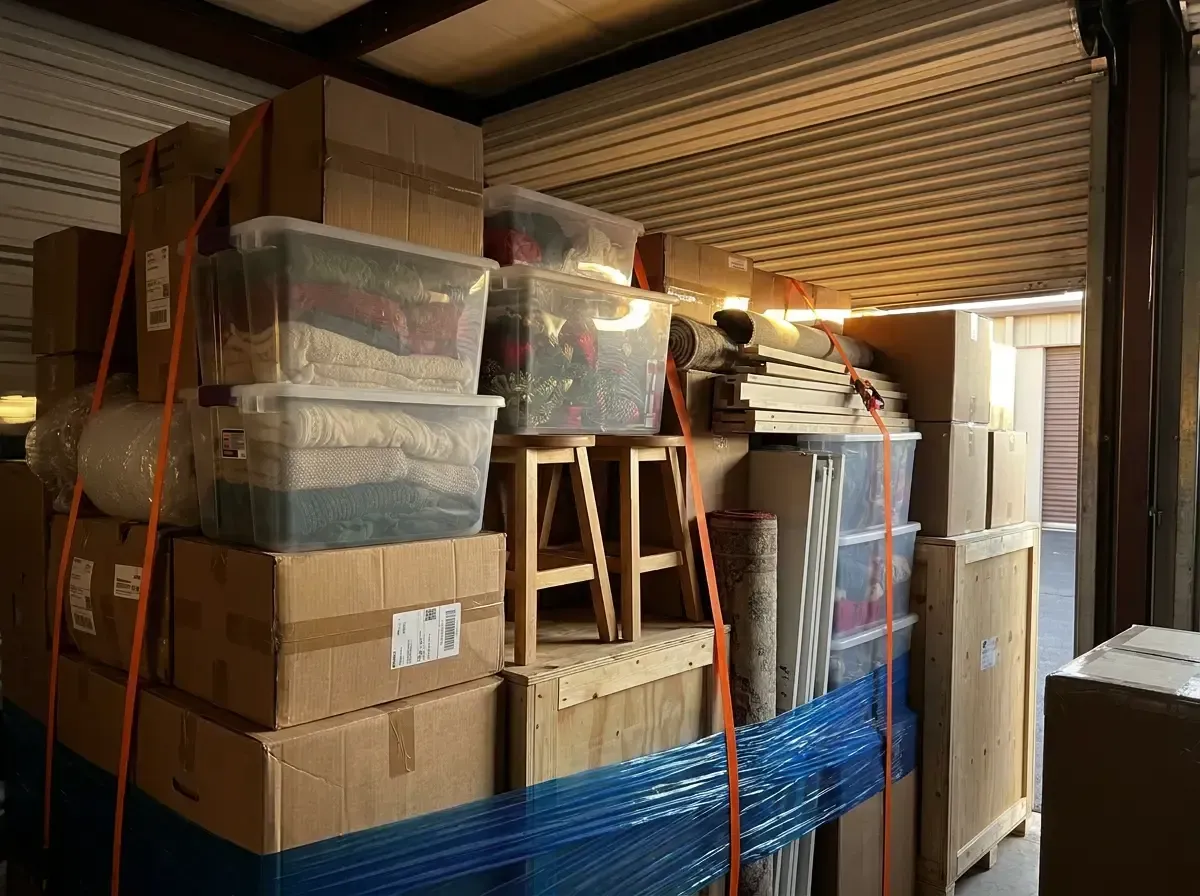
Follow the pyramid principle: heaviest boxes on bottom, lightest on top. Never stack boxes more than 6-7 high, even with uniform sizes. Place a sheet of plywood or thick cardboard between every third layer to distribute weight evenly. Keep all box labels facing outward toward your access aisle for easy identification without unstacking.
Furniture Stacking Order
Large furniture pieces form the foundation of your storage unit. Position sofas vertically on end to save 40-50% floor space compared to laying flat. Disassemble bed frames and store rails vertically against walls. Remove table legs when possible and store tabletops vertically. Wrap furniture in moving blankets, not plastic wrap, which traps moisture and causes mildew.
Stack mattresses vertically against the back wall, never flat with items on top. Flat storage causes permanent indentations within 2-3 months. Use mattress bags rated for storage (thicker than moving bags) to protect against dust and pests. For valuable furniture, consider climate-controlled storage units that maintain 55-80 degrees Fahrenheit year-round.
Labeling Systems That Actually Work
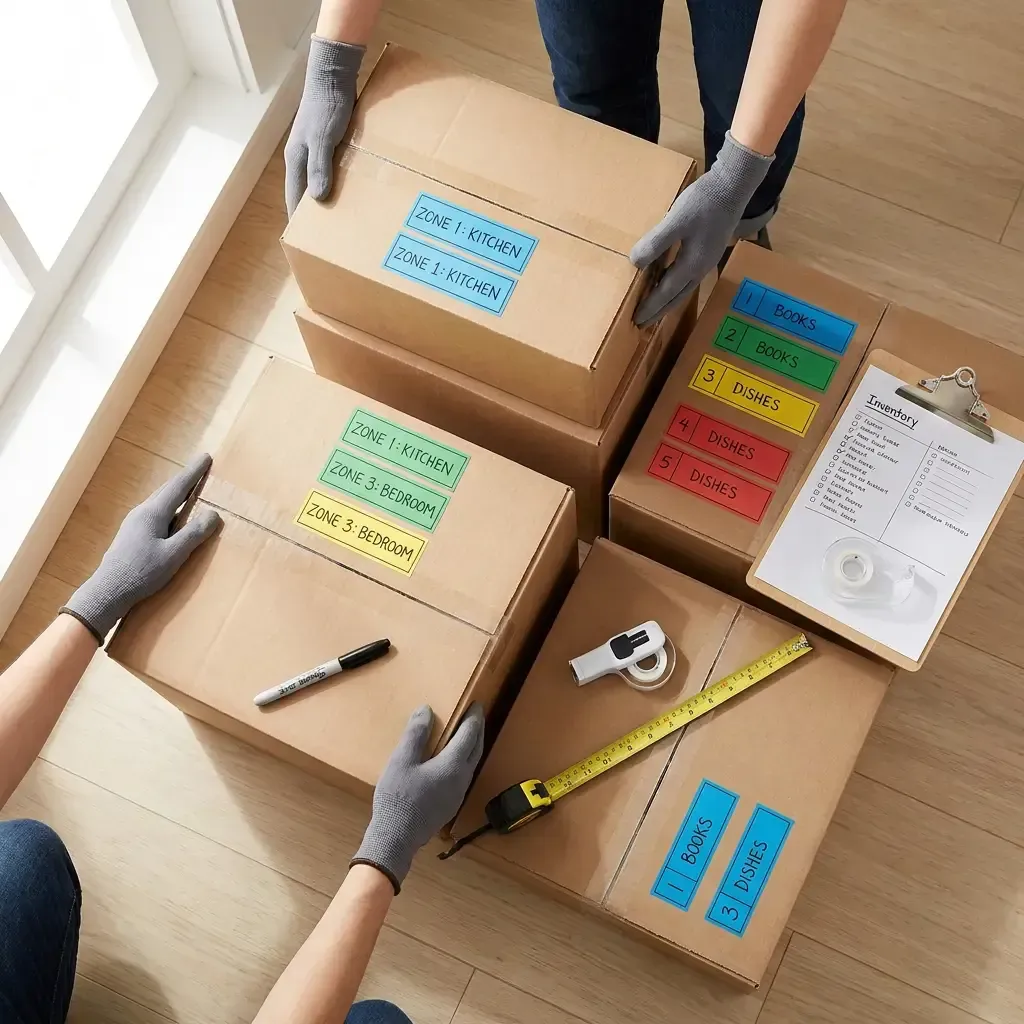
Effective labeling requires visibility from multiple angles. Label every box on three sides: top and two adjacent sides facing your aisle. Use 4-inch or larger letters in black marker on white labels. Color-code by zone using colored tape or stickers: red for Zone A, yellow for Zone B, green for Zone C.
Each label should include four pieces of information: zone code (A, B, or C), stack number, general contents category, and specific notable items. For example: "B-2 / Kitchen / Stand mixer, coffee maker, utensils." This system lets you locate specific items in under 2 minutes rather than the 15-20 minutes typical of unlabeled units.
Digital Inventory Best Practices
Photograph every box before sealing and every section after loading. Store photos in a dedicated album on your phone or cloud service like Google Photos, iCloud, or Dropbox. Apps like Sortly (free tier available) let you scan barcodes, add photos, and search your inventory from anywhere. The Self Storage Association reports that renters with digital inventories visit their units 40% less frequently because they know exactly what they have stored.
Create a master spreadsheet with columns for: box ID, zone, contents summary, date packed, and estimated value. This document serves double duty as an insurance inventory. Learn more about protecting your stored belongings with our tenant protection plans starting at $10 per month.
Climate and Moisture Protection
Temperature fluctuations cause more storage damage than any other factor. Items stored in non-climate-controlled units experience temperature swings of 40-60 degrees Fahrenheit between seasons. This causes wood to warp, leather to crack, electronics to corrode, and photographs to stick together. In mountain climates like Colorado's Vail Valley, winter lows reach negative 10 degrees Fahrenheit while summer highs exceed 90 degrees.
Moisture protection starts from the ground up. Place wooden pallets, 2x4 boards, or plastic sheeting under all items to create a 2-4 inch air gap. This prevents concrete moisture from wicking into cardboard boxes. Use silica gel packets (1-2 per box) to absorb humidity inside sealed containers. Avoid plastic storage bins for long-term storage of fabrics, which need breathability to prevent mildew.
Learn what climate-controlled storage actually means and when it is worth the additional investment for your specific items.
The Most Valuable Storage Unit Finds in History
Storage unit auctions have uncovered remarkable treasures, though such finds remain extremely rare. The most documented valuable discovery was a collection of artwork valued at $2.5 million found in a Los Angeles unit in 2007. Other notable finds include a rare 1937 Action Comics issue worth $175,000, a collection of vintage Rolex watches valued at $85,000, and a Pablo Picasso painting authenticated at $38,000.
These stories highlight why proper packing and inventory matter. Many valuable items end up in abandoned units because owners forgot what they stored or lost track of payments. Modern facilities with smartphone-based access systems send automatic payment reminders and access notifications, reducing the risk of accidental abandonment.
Loading Sequence for Maximum Efficiency
Professional movers follow a specific loading sequence that most DIY storers overlook. Load your unit in reverse access order: items needed least go in first (back wall), items needed most go in last (near door). This seems obvious but requires planning your entire load before placing the first item.
The optimal loading sequence follows these steps:
- Back wall first: Large furniture pieces, mattresses standing vertically, and rarely accessed boxes
- Side walls second: Medium furniture and seasonal items, leaving center clear
- Center stacks third: Uniform box stacks with heaviest on bottom
- Front zone last: Frequently accessed items, important documents, and emergency supplies
Leave 2-3 feet of clearance in front of the door for maneuvering. According to SROA's storage efficiency research, this sequence reduces average retrieval time from 25 minutes to under 8 minutes.
Special Item Storage Guidelines
Electronics and Appliances
Store electronics in original boxes whenever possible; manufacturers design these for optimal protection. Without original packaging, wrap items in anti-static bubble wrap, not regular bubble wrap which generates static. Remove batteries from all devices to prevent corrosion and leakage. Store appliances with doors slightly ajar to prevent mold growth in seals.
Documents and Photographs
Paper items require climate control for storage beyond 3 months. Use acid-free boxes and archival sleeves for photographs. Store documents vertically like files, not stacked flat. The Library of Congress recommends temperatures between 65-70 degrees Fahrenheit with 30-40% relative humidity for paper preservation.
Outdoor and Sports Gear
Clean all outdoor gear thoroughly before storage to remove salt, dirt, and organic material that attracts pests. Deflate balls and tires to 50% pressure to prevent cracking. Store skis and snowboards waxed and in bags, bindings loosened. For detailed guidance, read our seasonal gear storage guide covering equipment common to Colorado outdoor enthusiasts.
Access Planning for Long-Term Storage
Plan for future access before sealing your unit. Create a "quick access" box containing items you might need unexpectedly: important documents, seasonal decorations, spare keys, or sentimental items. Place this box immediately inside the door, clearly labeled "OPEN FIRST."
Schedule quarterly visits to inspect for moisture, pests, or shifting items. Check that boxes have not settled or crushed. Verify that your inventory matches actual contents. Facilities with 24/7 access via smartphone make these check-ins convenient regardless of your schedule.
Common Mistakes Professional Organizers Never Make
Professional organizers avoid these frequent errors that cause damage and frustration:
- Overpacking boxes: Boxes over 50 pounds cause injuries and crush items below
- Using newspaper for wrapping: Ink transfers permanently to dishes, fabrics, and photos
- Storing food items: Even sealed food attracts pests; remove all food products
- Plastic-wrapping furniture: Traps moisture and causes mildew; use breathable blankets
- Skipping the inventory: 67% of storage renters cannot list their unit contents from memory
- Blocking the aisle: No access path means unstacking everything to reach back items
Frequently Asked Questions
What is the best way to pack a storage unit?
The best way to pack a storage unit combines zone planning, uniform box sizes, vertical stacking to 6-7 feet, and a detailed inventory system. Start by creating a zone map with bulky items in back, seasonal items in the middle, and frequently accessed items near the door. Use medium boxes (18x18x16 inches) for most items, stack heavy boxes on bottom, and maintain a 2-3 foot center aisle for access.
What are the 4 D's of self-storage?
The 4 D's of self-storage are Declutter, Donate, Discard, and Designate. Declutter removes items unused for 12-18 months. Donate sends usable items to charity. Discard eliminates broken or worthless items. Designate assigns remaining items to specific zones in your unit. This framework typically reduces storage volume by 20-40%.
What is the golden rule of organizing?
The golden rule of organizing states that everything must have a designated home, and that home must be documented. For storage units, this means every box has an assigned zone, every zone has labeled sections, and every item appears on a master inventory list. Following this rule reduces retrieval time by 60-70%.
What is the most money found in a storage unit?
The most documented valuable storage unit discovery was an art collection valued at $2.5 million found in Los Angeles in 2007. Other notable finds include rare comic books worth $175,000 and vintage watch collections valued at $85,000. These discoveries highlight why proper inventory documentation matters for both access and insurance purposes.
|