Storage Unit Size Chart and Calculator Guide for 2026 |
| STORAGE UNIT SIZE CHART AND CALCULATOR GUIDE
⏱ 12 min read ·
📄 #2,277 words
Find the right storage unit size with our complete size chart and calculator guide. Compare dimensions from 5x5 to 10x30 with specific capacity details.
|
A 10x10 storage unit holds the contents of a two-bedroom apartment, while a 5x10 fits a one-bedroom. Use square footage as your baseline: multiply unit dimensions (length times width), then compare against your inventory list. Most households need 100 to 200 square feet, costing $50 to $200 monthly depending on location and climate control.
| Key Points: | |
|---|---|
| • | Small units (5x5 to 5x10) hold 25 to 50 square feet and cost $24 to $125 monthly |
| • | Medium units (10x10 to 10x15) fit 100 to 150 square feet of belongings from 1 to 3 bedroom homes |
| • | Large units (10x20 to 10x30) accommodate 200 to 300 square feet, including vehicles and full households |
| • | Climate-controlled units add 20 to 50 percent to base pricing but protect items from temperature swings between 32°F and 95°F |
| • | Drive-up units provide ground-level access, reducing loading time by 30 to 45 minutes compared to interior hallway units |
Complete Storage Unit Size Chart with Dimensions
Storage unit sizes follow standard industry dimensions established by the Self Storage Association. Units range from 20 square feet (locker-style) to 300 square feet (garage-sized). Ceiling heights typically measure 8 to 10 feet, adding vertical storage capacity that many calculators overlook.
According to SpareFoot's size guide research, the average American renter underestimates their storage needs by 15 to 20 percent. This leads to costly upgrades mid-lease or cramped units that damage belongings.
| Unit Size | Square Feet | Cubic Feet (8ft ceiling) | Best For | Typical Monthly Cost |
|---|---|---|---|---|
| 5x4 | 20 | 160 | Seasonal items, small boxes | $24 to $40 |
| 5x5 | 25 | 200 | Large closet, 10 to 15 boxes | $37 to $60 |
| 5x10 | 50 | 400 | Studio apartment, mattress set | $37 to $125 |
| 10x10 | 100 | 800 | 2-bedroom apartment contents | $58 to $74 |
| 10x15 | 150 | 1,200 | 3-bedroom home, large furniture | $85 to $225 |
| 10x20 | 200 | 1,600 | 4-bedroom home, vehicles | $325 to $389 |
| 10x25 | 250 | 2,000 | Large home plus vehicle | $405 to $450 |
| 10x30 | 300 | 2,400 | Commercial inventory, boats, RVs | $299 to $500 |
How Storage Unit Calculators Work
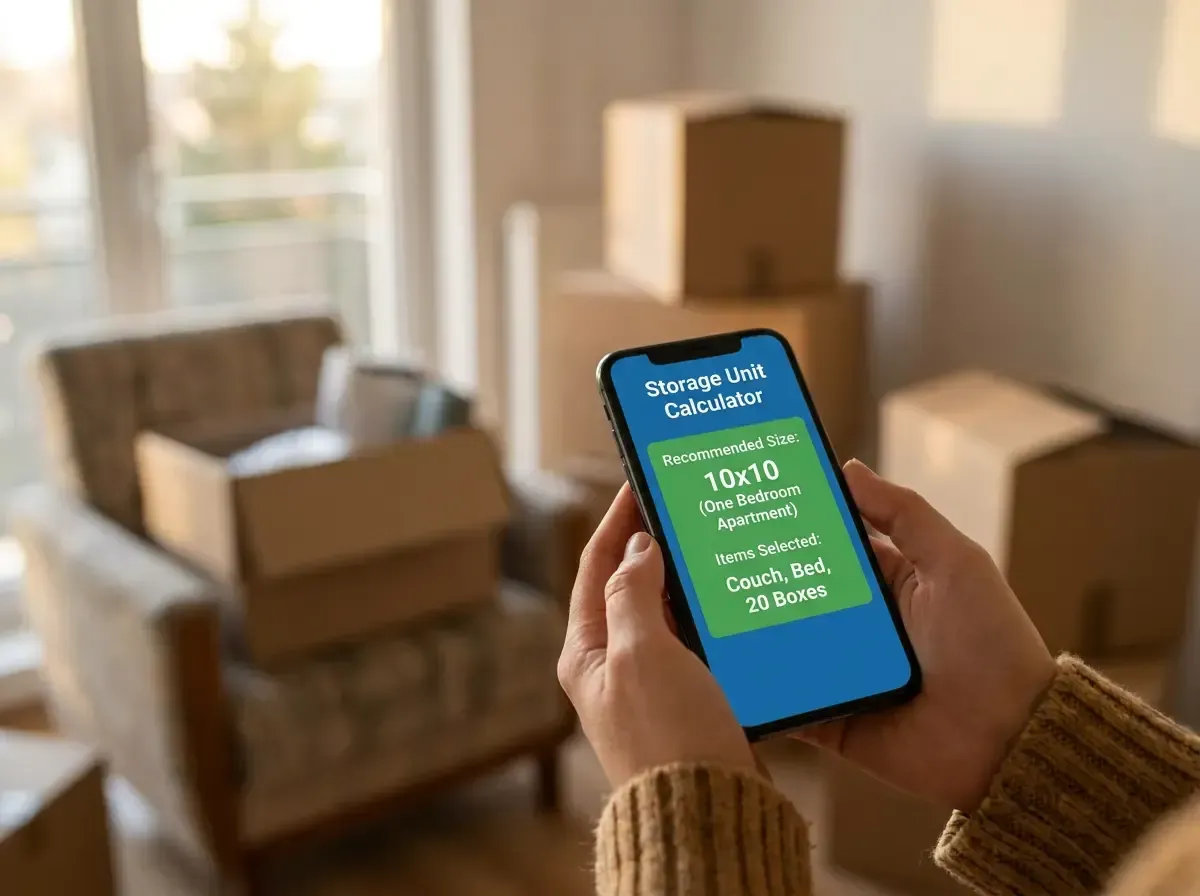
Storage calculators use item-based algorithms to estimate total cubic footage. You select furniture pieces, appliances, and box quantities from a predefined list. The calculator multiplies each item's average dimensions, adds 15 to 20 percent buffer space for walkways, then recommends the smallest unit that fits.
The limitation with most online calculators, including those from Extra Space Storage and StorageMart, is that they assume standard furniture dimensions. A California king bed frame requires 42 square feet of floor space, while a standard queen needs only 33 square feet. Custom or oversized furniture throws off calculations by 10 to 25 percent.
Manual Calculation Method
For accurate sizing, measure your largest items first. Record length, width, and height in inches. Convert to cubic feet by multiplying all three dimensions and dividing by 1,728. Sum all items, then add 20 percent for access aisles and stacking limitations.
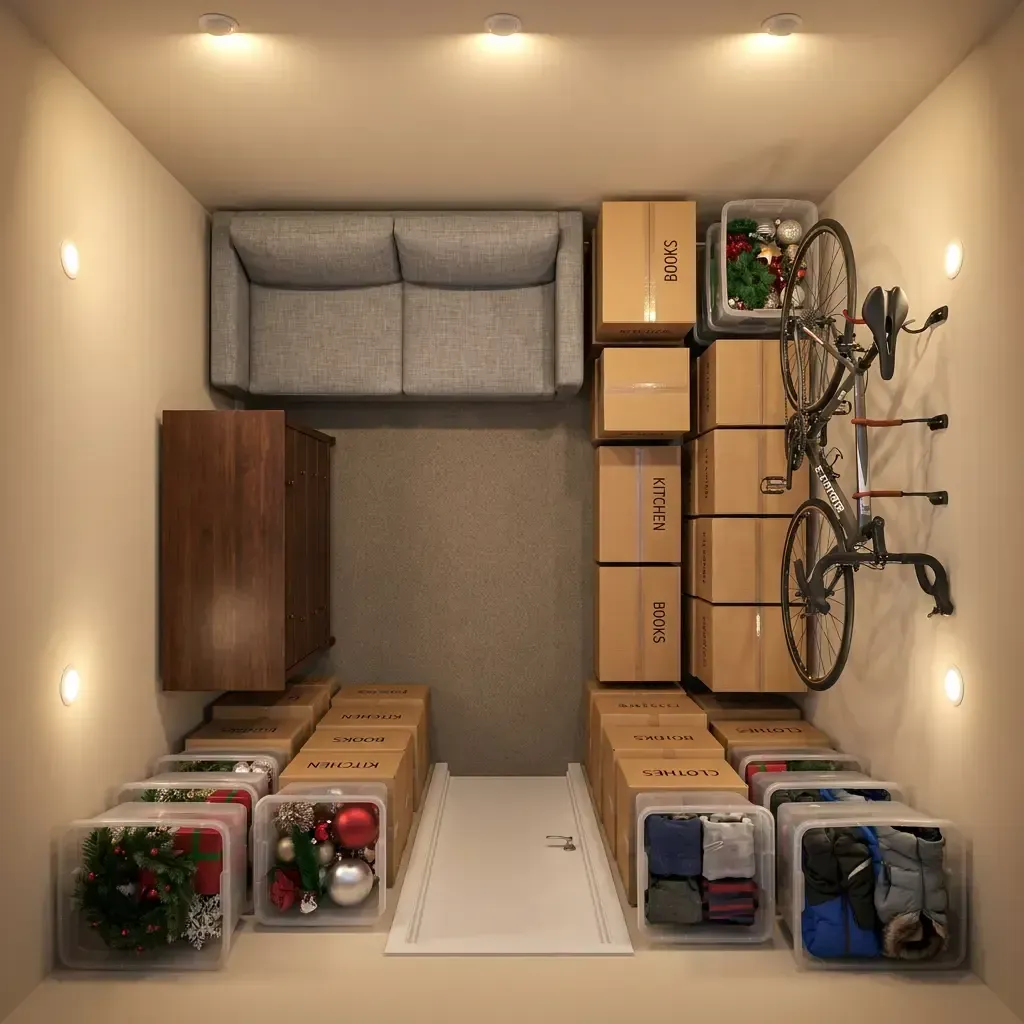
A typical sofa measures 84 inches long, 36 inches deep, and 34 inches tall, equaling 59.5 cubic feet. Standing it on end reduces floor footprint to 21 square feet but requires a unit with at least 7-foot ceilings. Most facilities offer 8 to 10 foot ceilings, making vertical storage viable for most furniture.
Storage Size Guide by Living Situation
Your current living space provides the most reliable sizing indicator. Industry data from the Self Storage Association shows that apartment contents require approximately 10 square feet of storage per 100 square feet of living space. A 1,000 square foot apartment typically needs a 10x10 unit.
Studio and One-Bedroom Apartments
Studios under 500 square feet fit comfortably in a 5x10 unit (50 square feet). This accommodates a twin or full mattress set, small dresser, desk, 2-seat sofa, and 15 to 20 medium boxes. One-bedroom apartments between 500 and 750 square feet require 5x10 to 10x10 units depending on furniture volume.
For detailed guidance on apartment storage, our complete guide to storage unit sizes for 2-bedroom apartments breaks down specific furniture combinations and space requirements.
Two to Three Bedroom Homes
Two-bedroom homes averaging 1,000 to 1,400 square feet need 10x10 to 10x15 units. This range accommodates queen bedroom sets, full living room furniture, dining tables with 4 to 6 chairs, and 30 to 50 boxes. Three-bedroom homes push into 10x15 to 10x20 territory, especially with children's furniture and accumulated belongings.
Four-Plus Bedroom Homes
Larger homes require 10x20 or 10x30 units. A 2,500 square foot home typically generates 200 to 250 cubic feet of furniture plus 75 to 100 boxes. The 10x20 size (1,600 cubic feet with 8-foot ceilings) provides adequate space with room for access aisles.
Climate Control vs Standard Units: When Size Matters
Climate-controlled units maintain temperatures between 55°F and 80°F year-round. According to Move.org research, items stored in uncontrolled units experience temperature swings of 40 to 60 degrees in regions with seasonal variation. This causes wood furniture to warp, electronics to corrode, and leather to crack.
In mountain climates like Colorado's Eagle County, where temperatures range from negative 20°F in winter to 90°F in summer, climate-controlled storage units prevent damage to sensitive belongings. Wine collections, musical instruments, antique furniture, and electronics require consistent temperature regulation.
Items Requiring Climate Control
Electronics: computers, televisions, gaming consoles, and audio equipment contain capacitors and solder joints that degrade with temperature cycling. Store these items in climate-controlled units for periods exceeding 30 days.
Wooden furniture: solid wood expands and contracts with humidity changes. Joints loosen, veneers peel, and finishes crack when exposed to humidity swings greater than 20 percent. Climate control maintains 30 to 50 percent relative humidity.
Photographs and documents: paper products absorb moisture, causing warping, mold growth, and ink bleeding. Archival storage requires consistent 65°F to 70°F temperatures and 30 to 40 percent humidity.
Learn more about what climate-controlled storage actually means and when the additional cost provides genuine protection.
Drive-Up vs Indoor Units: Access Considerations
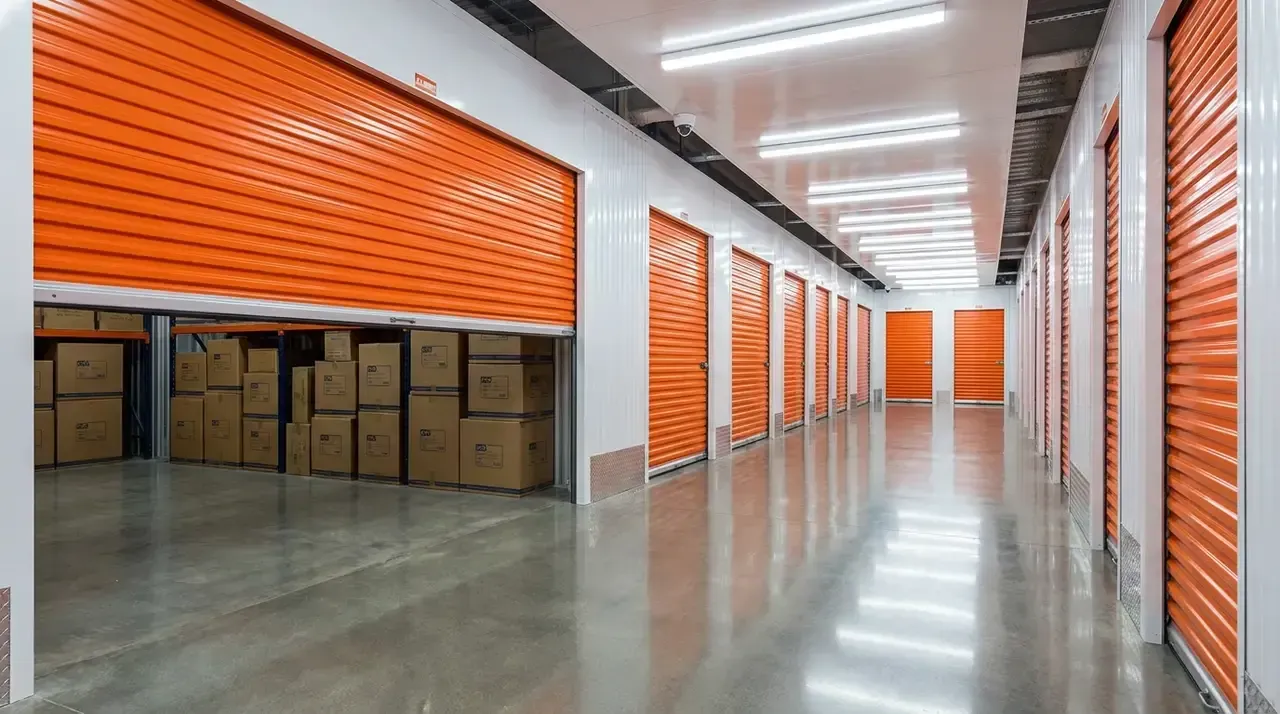
Unit type affects loading efficiency as much as size selection. Drive-up units allow vehicle parking directly at the unit door, eliminating hallway navigation and elevator waits. Indoor units offer better climate control and security but require cart transport from loading docks.
| Feature | Drive-Up Units | Indoor Units |
|---|---|---|
| Loading time (full unit) | 2 to 3 hours | 3 to 5 hours |
| Vehicle access | Direct to door | Loading dock only |
| Climate control availability | Limited | Standard |
| Best for | Frequent access, vehicles, heavy items | Long-term storage, sensitive items |
| Typical price premium | 10 to 20 percent higher | Base pricing |
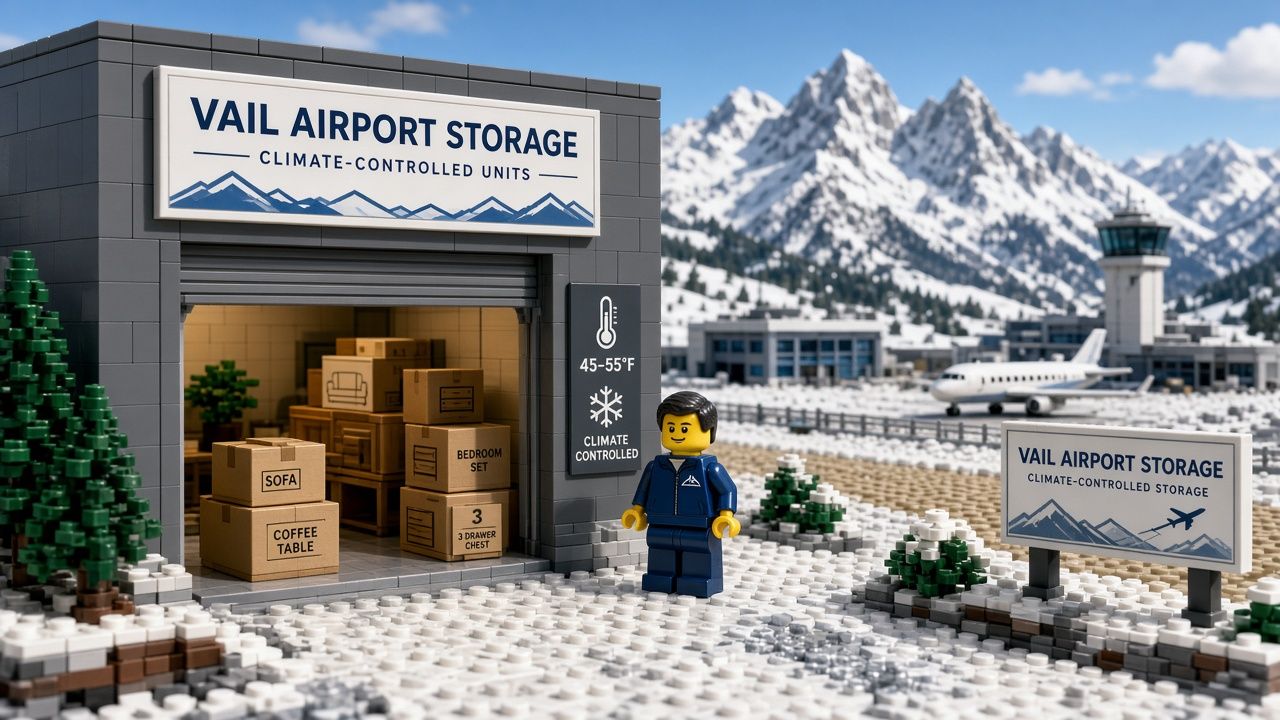
Facilities like Vail Airport Storage offer both options, with drive-up units featuring built-in lighting and power outlets for added convenience. The 10x30 drive-up units with power accommodate workshop setups, vehicle maintenance, and commercial inventory staging.
Vehicle Storage Sizing Guide
Storing cars, motorcycles, boats, or RVs requires specific unit dimensions beyond standard furniture calculations. Vehicle length determines minimum unit depth, while width requirements include door-opening clearance of 24 to 36 inches on at least one side.
Standard Vehicle Dimensions
Compact cars (Honda Civic, Toyota Corolla) measure 14 to 15 feet long and 6 feet wide. A 10x20 unit provides adequate space with room for additional storage boxes. Mid-size sedans (Toyota Camry, Honda Accord) reach 16 feet and require 10x20 minimum.
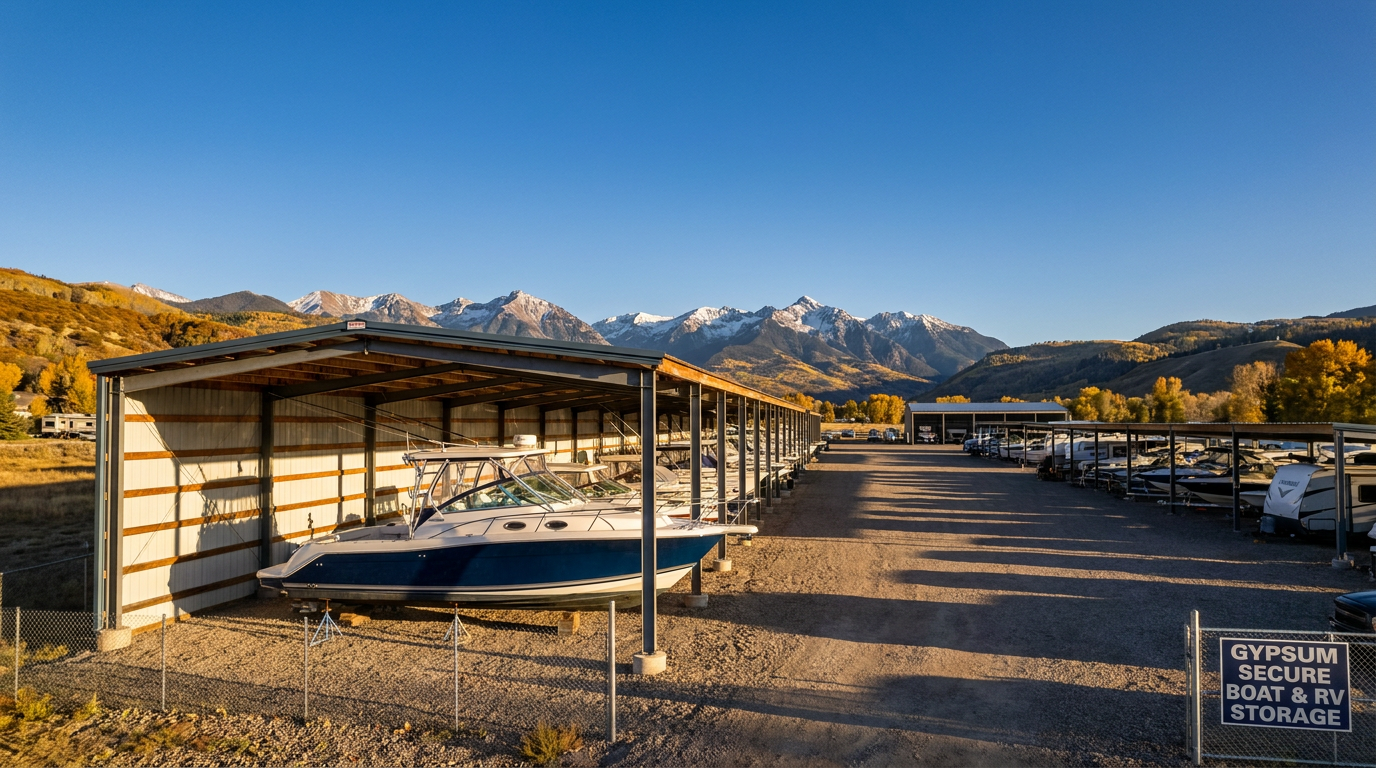
Full-size trucks and SUVs (Ford F-150, Chevrolet Tahoe) extend 18 to 20 feet with widths approaching 7 feet including mirrors. These vehicles need 10x25 or 10x30 units for comfortable access. Boat trailers add 4 to 8 feet beyond vessel length.
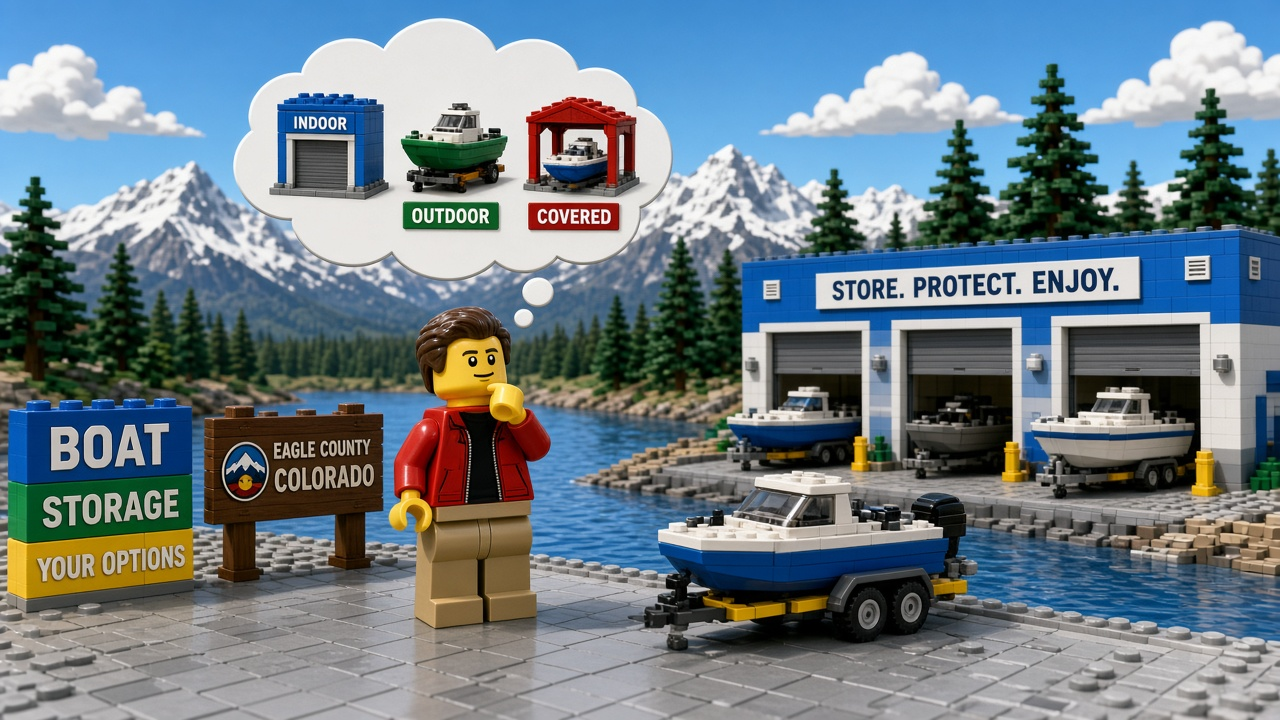
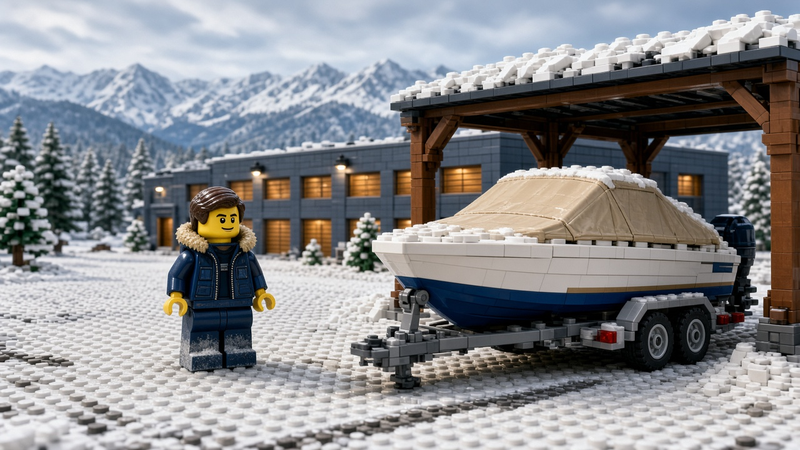
For RV, boat, and trailer storage options, visit our vehicle storage page to compare covered and open parking solutions.
Commercial and Business Storage Calculations
Business storage requirements differ from residential needs. Inventory turnover, seasonal fluctuations, and access frequency drive sizing decisions. Retail businesses typically need 1.5 to 2 times their peak inventory volume to accommodate receiving and staging areas.
Contractors storing tools and equipment should calculate based on largest single-item dimensions. A table saw requires 36 by 48 inches of floor space; a miter saw station needs 24 by 60 inches. Stack-able items like lumber and pipe reduce floor requirements but increase ceiling height needs.
Explore our commercial storage solutions designed for Eagle County businesses and contractors requiring flexible month-to-month terms.
Document and Records Storage
Standard banker's boxes measure 15 by 12 by 10 inches, holding approximately 1.04 cubic feet each. A 5x5 unit (200 cubic feet with 8-foot ceilings) stores approximately 150 boxes when stacked 5 high with access aisles. Legal and medical practices requiring 7-year document retention often need 5x10 to 10x10 units.
Seasonal Storage Considerations
Ski equipment, camping gear, and holiday decorations create predictable storage cycles. Colorado residents frequently rotate seasonal items between home and storage, requiring units sized for peak inventory rather than average needs.
A complete ski setup (skis, boots, poles, helmet, goggles, outerwear) for a family of four requires 15 to 20 cubic feet. Summer gear including camping equipment, bikes, and water toys can exceed 50 cubic feet. A 5x5 or 5x10 unit accommodates most seasonal rotation needs.
Follow our seasonal gear storage guide to protect your equipment between ski seasons and summer adventures.
Security Features That Affect Unit Selection
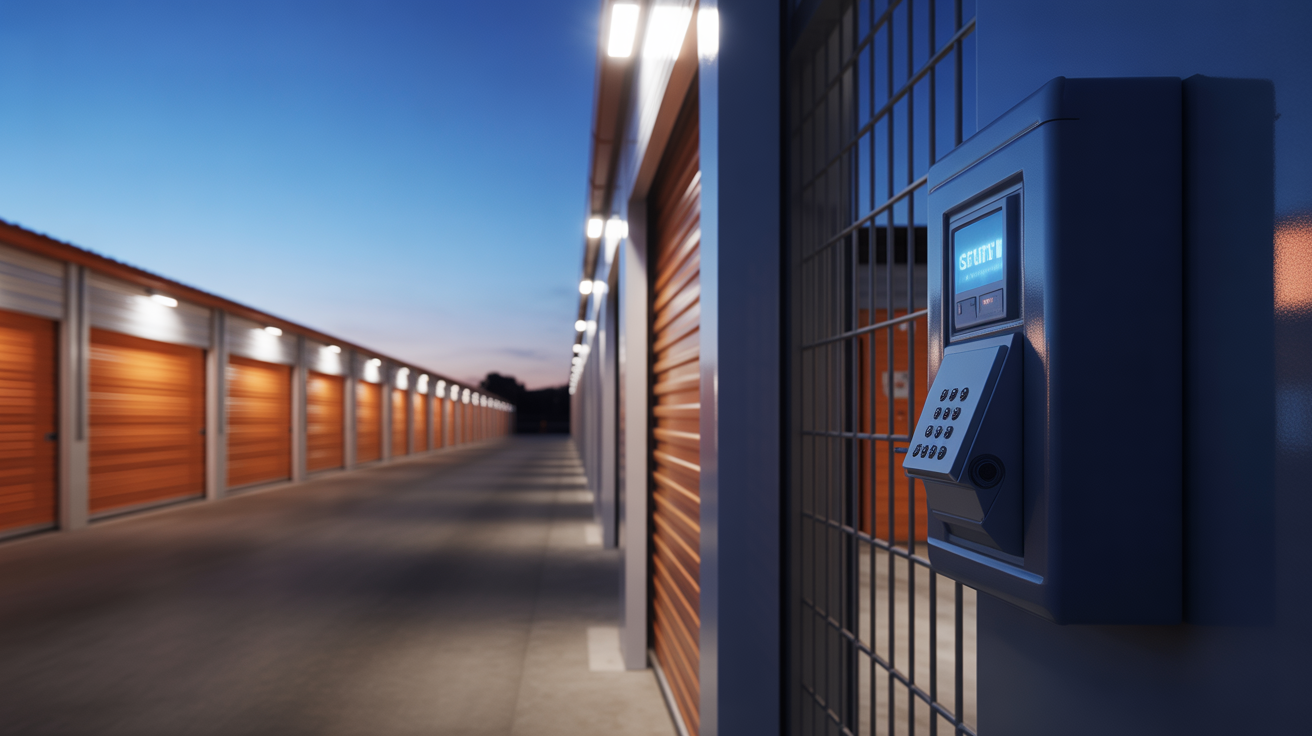
Modern storage facilities offer varying security levels that may influence unit choice. Facilities with Noke smart lock technology provide smartphone-based access, complete entry logs, and digital key sharing. These features eliminate lost key concerns and provide audit trails for business storage.
Interior units within secured buildings offer additional protection layers: perimeter fencing, building access controls, and individual unit locks. High-value item storage benefits from these multiple barriers despite slightly reduced access convenience.
Learn more about how 24/7 storage access works and what security features make round-the-clock availability safe.
Common Sizing Mistakes to Avoid
Underestimating box quantities ranks as the most frequent sizing error. The average 3-bedroom home generates 60 to 80 boxes during a complete move. Each medium box (18 by 18 by 16 inches) occupies 3 cubic feet. Eighty boxes alone require 240 cubic feet before furniture consideration.
Ignoring disassembly potential wastes space. Bed frames, dining tables, and desks often disassemble into flat components requiring 50 to 70 percent less volume. A king bed frame occupies 42 square feet assembled but only 8 square feet when broken down.
Forgetting access aisles creates inaccessible units. Reserve 20 to 25 percent of unit volume for walkways to reach items stored in back. A 10x10 unit should hold 600 to 640 cubic feet of items maximum, not the full 800 cubic feet of available space.
Step-by-Step Size Selection Process
Follow this systematic approach to determine your optimal unit size with 95 percent accuracy:
- Inventory large furniture: List all items taller than 36 inches or wider than 24 inches. Measure length, width, and height of each piece.
- Count boxes by size: Estimate small (1.5 cubic feet), medium (3 cubic feet), and large (4.5 cubic feet) box quantities. Most households need 10 to 15 boxes per room.
- Calculate total cubic footage: Sum furniture volumes plus box volumes. Use online calculators for standard furniture dimensions if measuring proves impractical.
- Add 25 percent buffer: Multiply total by 1.25 to account for access aisles, irregular shapes, and underestimated items.
- Match to unit size: Divide buffered cubic footage by ceiling height (typically 8 feet) to determine minimum square footage needed.
- Consider access frequency: If accessing weekly, size up one tier for easier navigation. Monthly access allows tighter packing.
Use our storage unit size guide to visualize specific unit dimensions and see what fits in each size category.
Pricing Factors Beyond Unit Size
Unit size determines base pricing, but location, features, and lease terms create significant variation. Urban facilities in Denver or Vail charge 40 to 60 percent more than suburban locations like Gypsum for equivalent sizes. Climate control adds 20 to 50 percent to base rates.
Month-to-month leases offer flexibility but may cost 5 to 15 percent more than 6 or 12-month commitments. First-month specials (often 50 percent off or first month free) reduce effective costs for shorter storage periods.
Facilities requiring deposits add $50 to $100 upfront costs. Vail Airport Storage operates with no deposit requirements and fully online rental processes, reducing move-in friction for customers needing immediate storage solutions.
Frequently Asked Questions
What size storage unit fits a queen bed and dresser?
A 5x10 unit (50 square feet) accommodates a queen mattress set, standard 6-drawer dresser, and 10 to 15 boxes. If adding a bed frame, nightstands, or additional furniture, upgrade to a 10x10 unit for comfortable access.
How do I calculate storage for mixed furniture and boxes?
Measure furniture pieces individually, converting to cubic feet (length times width times height, divided by 1,728 for inch measurements). Add box volumes (small: 1.5 cubic feet; medium: 3 cubic feet; large: 4.5 cubic feet). Sum all items and add 25 percent for access space.
Is a 10x10 unit big enough for a 2-bedroom apartment?
Yes, a 10x10 unit (100 square feet, 800 cubic feet) holds typical 2-bedroom apartment contents including living room furniture, bedroom sets, and 40 to 50 boxes. Apartments with oversized furniture or extensive belongings may require 10x15 units.
What fits in a 5x5 storage unit?
A 5x5 unit equals a large walk-in closet. It holds a twin mattress set, small dresser, several boxes, and seasonal items. This size works well for college students, seasonal gear rotation, or supplemental household storage.
Do I need climate control for furniture storage?
Climate control protects wood furniture, leather, electronics, and documents from temperature and humidity damage. In regions with temperature swings exceeding 40 degrees seasonally (like Colorado mountain communities), climate control prevents warping, cracking, and mold growth for storage periods beyond 30 days.
|